
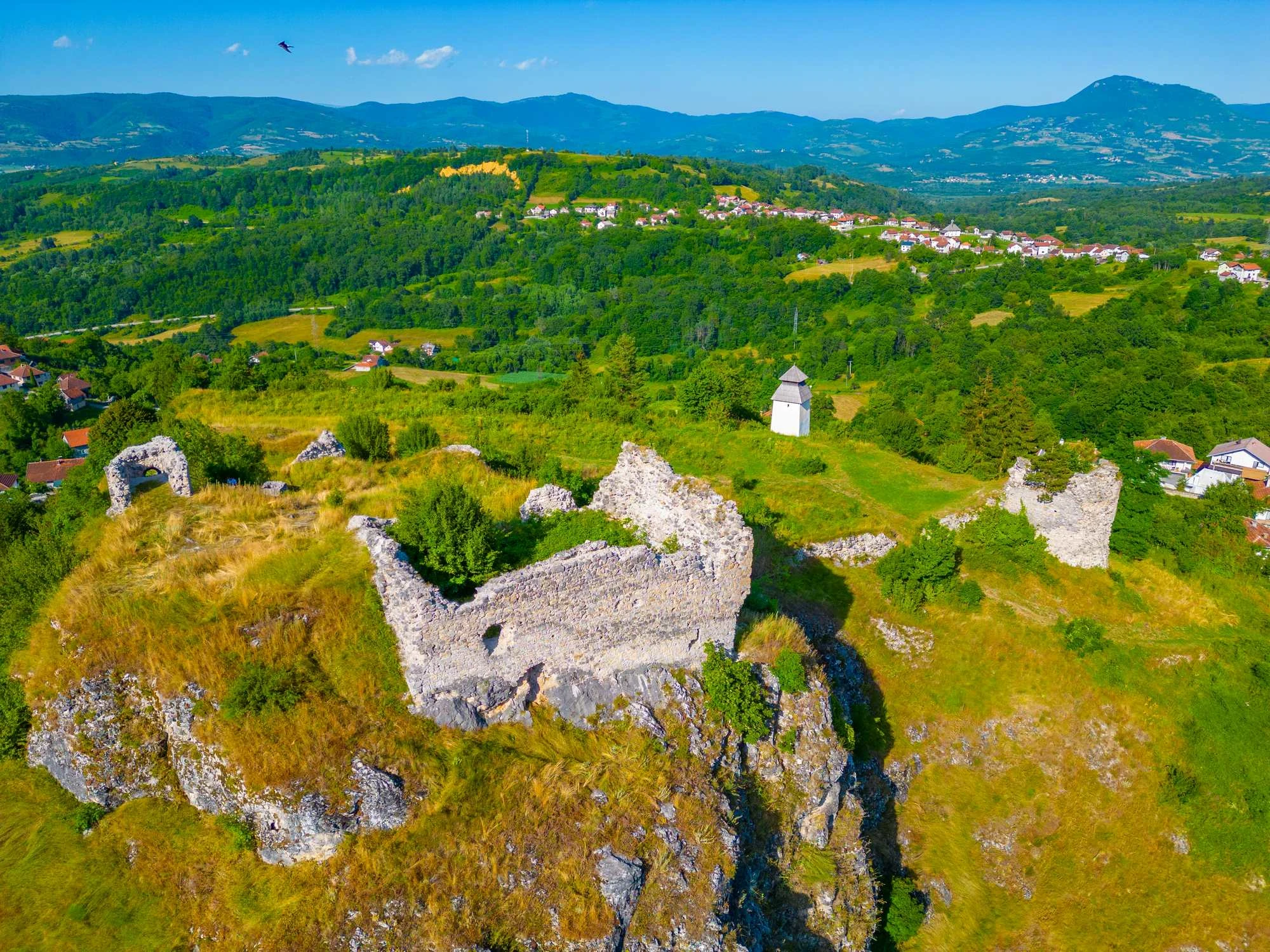
The Prusac Fortress has guarded the heart of Bosnia for centuries
On a steep limestone hill above today’s Prusac, where central Bosnia breaks between the mountains of Raduša and Vranica, rise the remains of one of the most important medieval fortresses of the Bosnian Kingdom. The stone walls of the Old Town of Prusac watched over the routes that connected the Vrbas valley with the Lašva region and further toward the Adriatic for centuries. Although today it quietly decays under wind and forest, this fortress was once a key military, trade, and political stronghold of inner Bosnia.
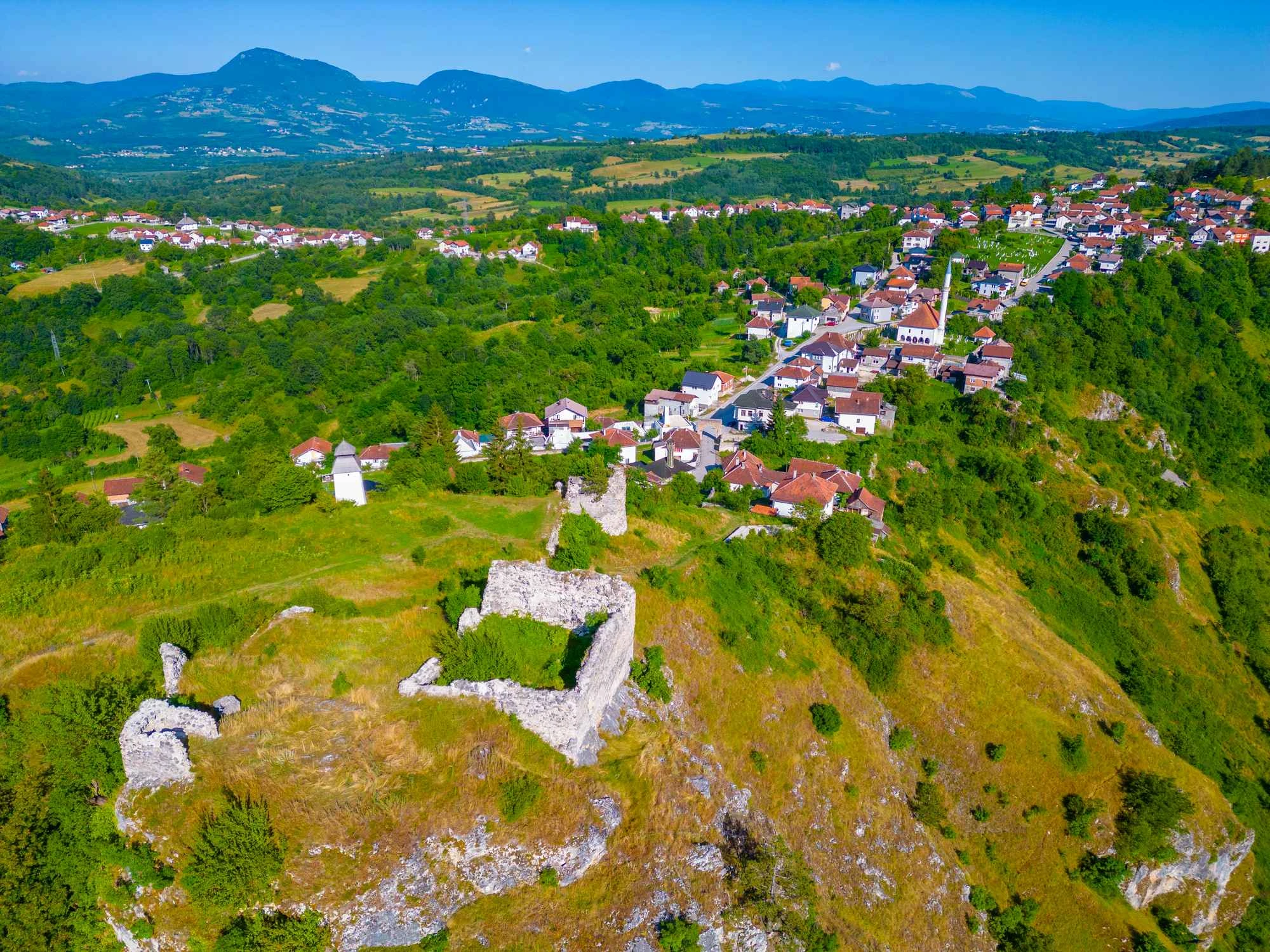
Stari grad Prusac Photo: Dudlajzov Depositphotos
Prusac is first mentioned in written sources in the 14th century, during the period when the Bosnian Kingdom was strengthening under the rule of the Kotromanić dynasty. It is believed that the fortress was built as early as the second half of the 13th century, most likely on the foundations of an older fortification that guarded the natural passage between northern and central Bosnia. The location itself was almost ideal. Cliffs protected three sides of the hill, while access was possible only by a narrow northern path, making the fortress extremely difficult to conquer.
During the reign of Ban Stephen II Kotromanić and later King Tvrtko I, Prusac played an important role in the defensive system of the kingdom. It was part of a chain of towns that protected the interior of the country from Hungarian incursions, as well as from feudal conflicts among Bosnian nobles. Over different periods, the fortress was governed by powerful noble families, most notably the Hrvatinić family, one of the most influential lineages of medieval Bosnia.
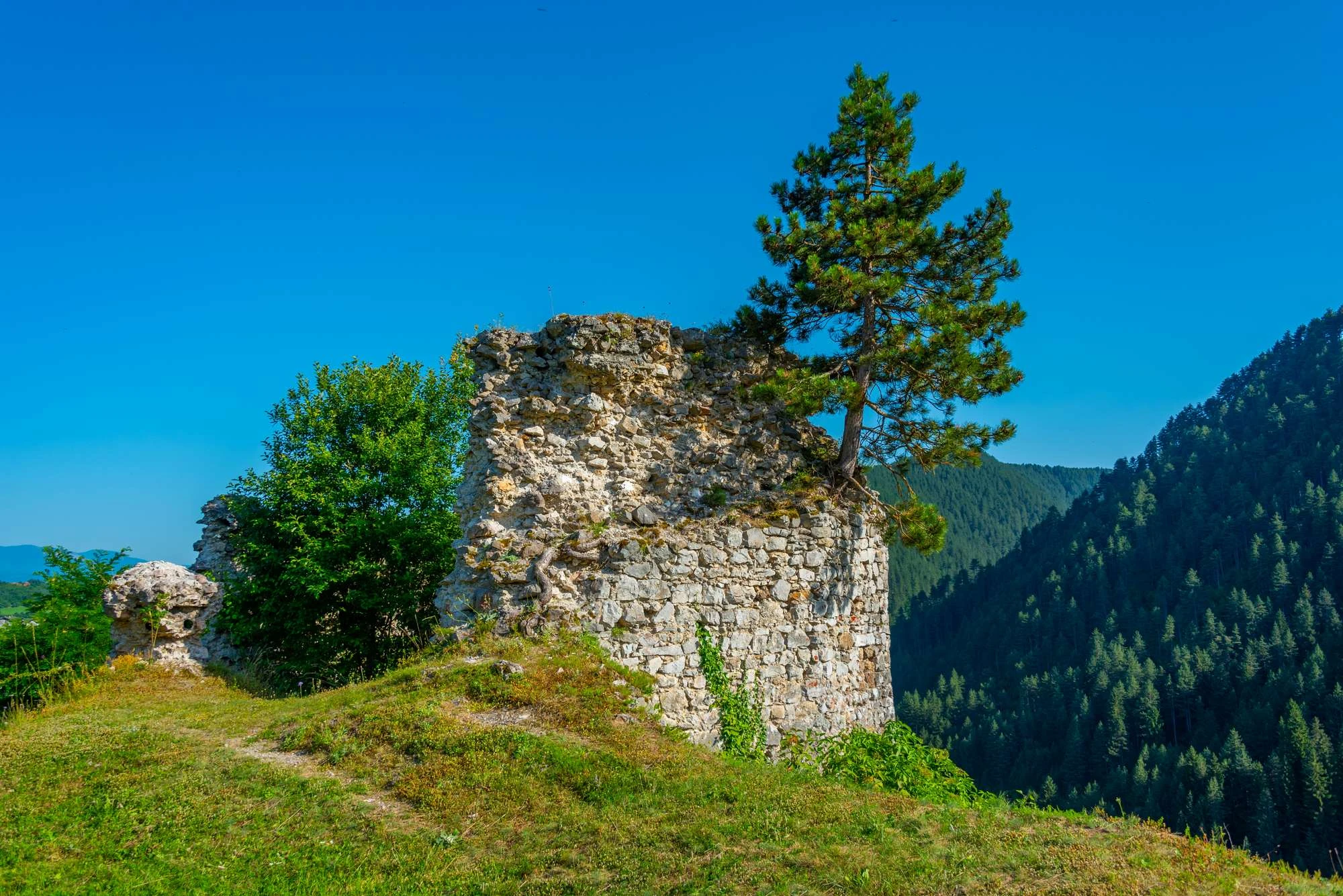
Old town Prusac Photo: Dudlajzov Depositphotos
The town was built in several phases. The oldest section consisted of the upper fortress with a massive tower that served as the final refuge in the event of a siege. Around it were residential quarters, a water cistern, and food storage facilities. In later centuries, a lower defensive belt was added, with additional towers and ramparts adapted to the development of siege weapons. In some places, the walls exceeded two meters in thickness, bearing witness to the seriousness of the military threats of the time.
With the arrival of the Ottomans in the second half of the 15th century, the fate of Prusac underwent a major turning point. After the fall of the Bosnian Kingdom in 1463, the fortress resisted for some time but was soon incorporated into the Ottoman defensive system. Unlike many medieval towns that were abandoned, Prusac gained a new life. The Ottomans transformed it into an important military garrison and administrative center of the nahiyah.
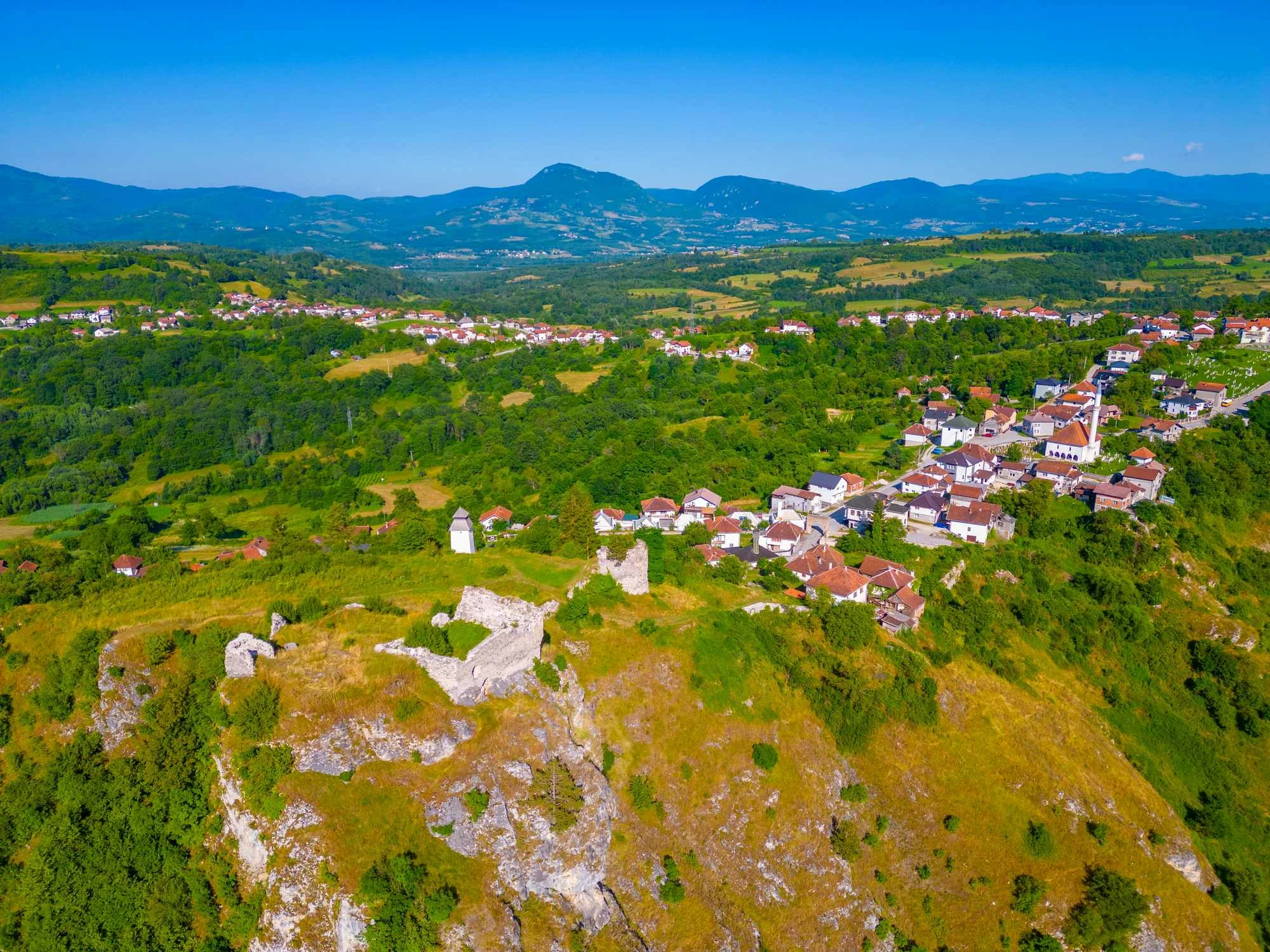
Old town Prusac Photo: Dudlajzov Depositphotos
During this period, the town expanded down the slopes below the fortress, where an oriental settlement emerged with mosques, caravanserais, and a bazaar. Prusac became one of the more significant towns of central Bosnia, especially in the 16th century. It was here that Hasan Kafija Pruščak was born, one of the most prominent Islamic scholars of the Ottoman Empire, whose works would later be studied in Istanbul, Damascus, and Cairo.
Throughout the Ottoman period, the fortress was repeatedly renovated and adapted to the use of firearms. Lower artillery towers were added, and certain walls were reduced in height to better withstand cannon fire. Despite this, as the imperial frontier shifted northward in the 17th century, Prusac gradually lost its strategic importance. The garrison was reduced, maintenance declined, and everyday life increasingly moved into the settlement below.
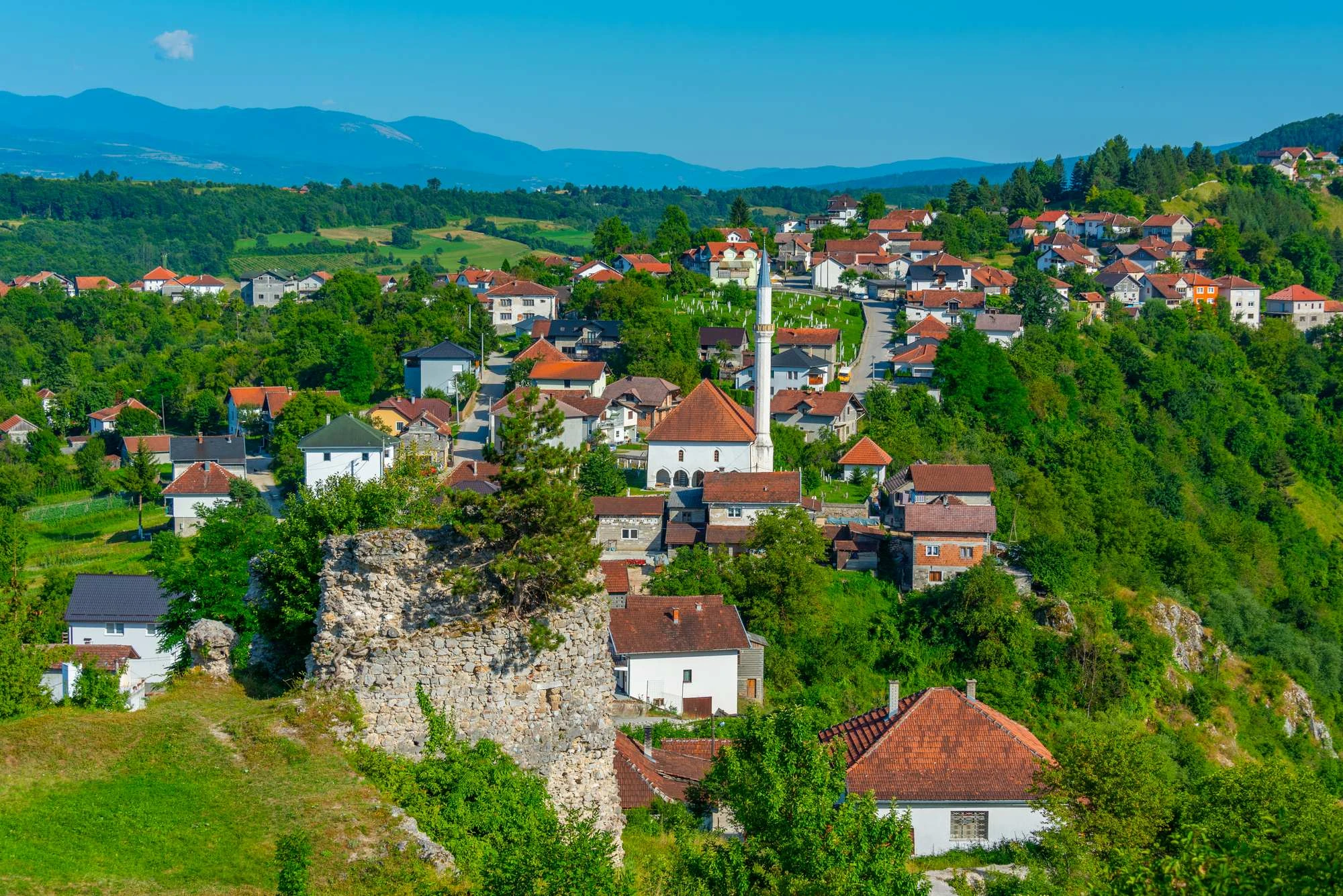
Old town Prusac Photo: Dudlajzov Depositphotos
By the time of the Austro-Hungarian occupation in 1878, the fortress was already partially abandoned. New military systems rendered medieval fortifications obsolete, and Prusac was never thoroughly restored. Stone from its walls was used in the construction of houses, while nature slowly reclaimed what human hands had built over centuries.
Today, the remains of the fortress still clearly reveal its former power. The layout of the town, its towers, ramparts, and dominant position above the valley testify to a time when a large part of central Bosnia was controlled from these walls. The view from the summit reveals why the town was built precisely here. From this vantage point, trade routes, valleys, and mountain passes are visible, routes that in the Middle Ages meant survival or downfall.
Although silent today, Prusac still stands as a reminder that towns like this were the backbone of the history of Bosnia and Herzegovina. Be sure to visit it.

Ahmed Taha
Peace, love and music! ☮️

Leave a Reply