
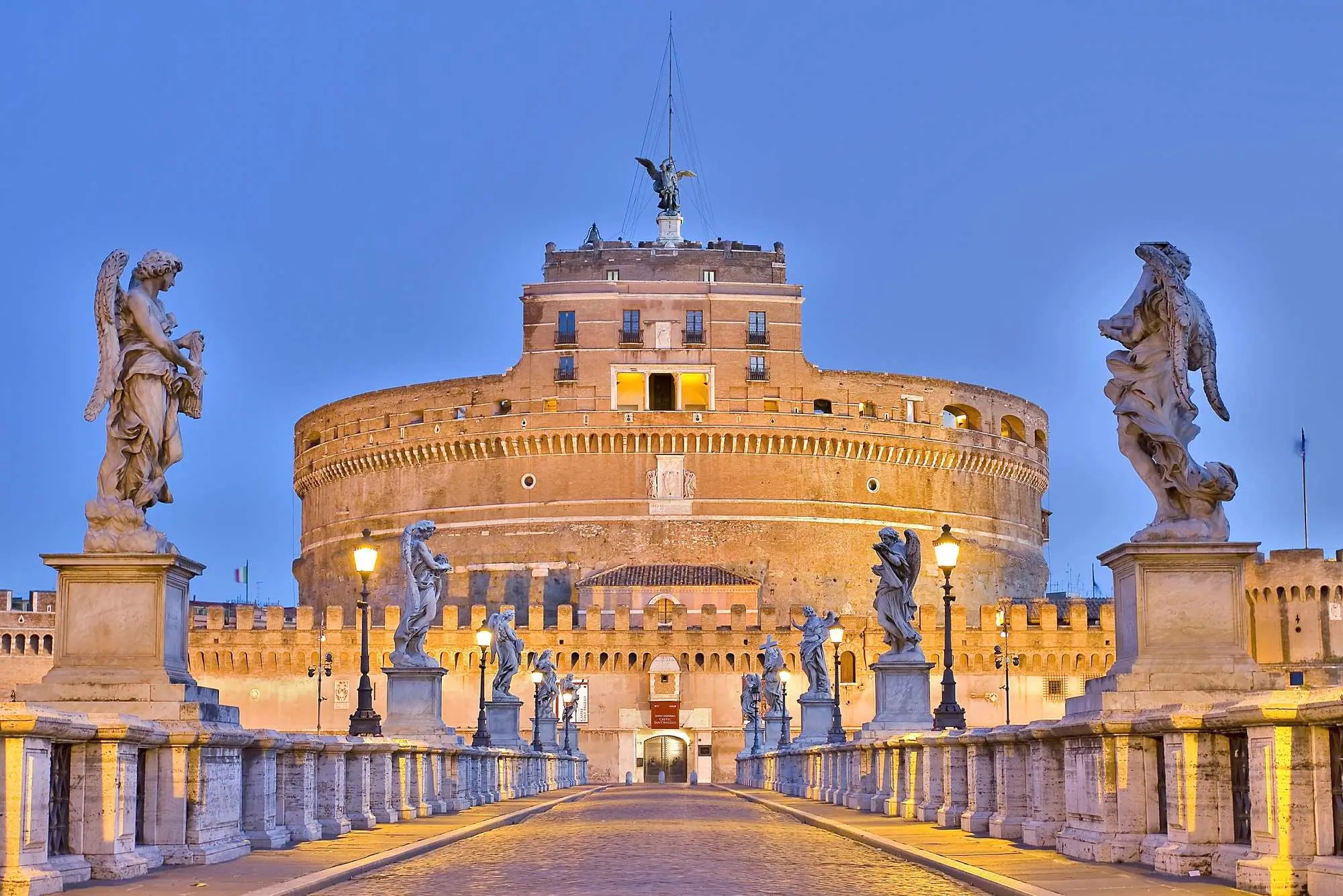
Castel Sant’Angelo in Rome is a fortress, mausoleum, prison, and angelic guardian of the Eternal City
In Rome, where every stone tells a story, on the right bank of the Tiber stands one of the most unusual and long-standing buildings in the city, Castel Sant’Angelo. Although today we know it as a medieval fortress tied to papal history, its foundations are deeply rooted in antiquity, and its purpose has changed more than that of almost any other Roman structure over the centuries.
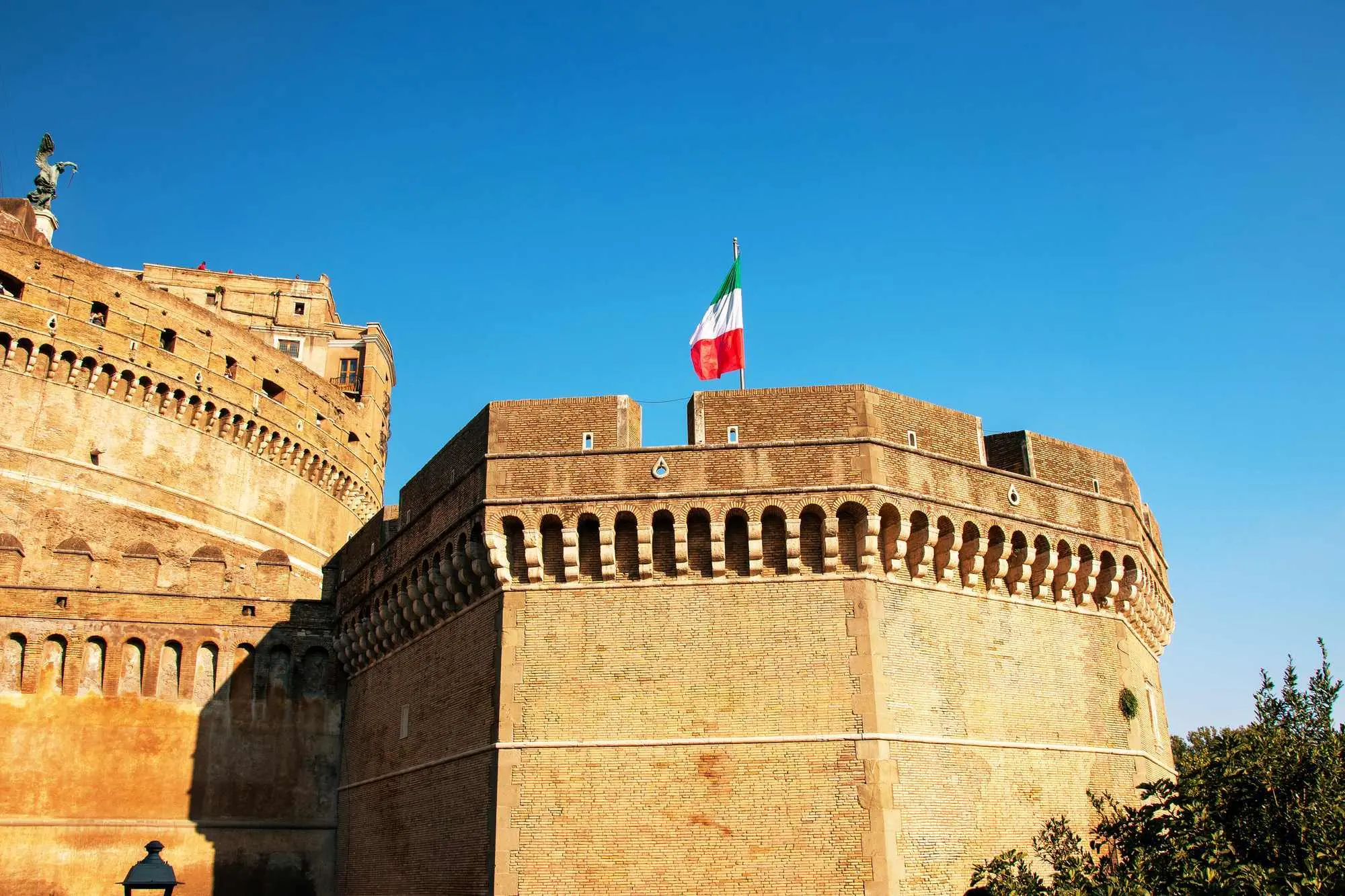
Castel Sant’Angelo, Rome, Photo: OlgaGi Depositphotos
FROM IMPERIAL MAUSOLEUM TO MILITARY FORTRESS
It all begins in the year 135, when Emperor Hadrian, one of Rome’s most enlightened rulers, decides to build his mausoleum. It was not meant to be just a tomb, but a monumental structure reflecting the greatness of an empire. Inspired by the Mausoleum of Augustus, Hadrian commissioned the construction of a massive circular marble building crowned with sculptures and topped by a garden. The bridge that led to it, built especially for that purpose, still stands today and is known as Ponte Sant’Angelo. Hadrian himself was buried there, followed by a number of Roman emperors, including Antoninus Pius and Caracalla.
But as the Empire began to crumble, so too did the fate of the mausoleum shift. By the fifth century, during waves of barbarian invasions and the collapse of ancient institutions, the tomb ceased to be a sacred place of rest. Instead, it was transformed into a military fortress, becoming part of Rome’s defensive system. Later, in the sixth century, under Pope Gregory I, the structure entered the Christian memory of the city thanks to a moment that would give it a new name and meaning.
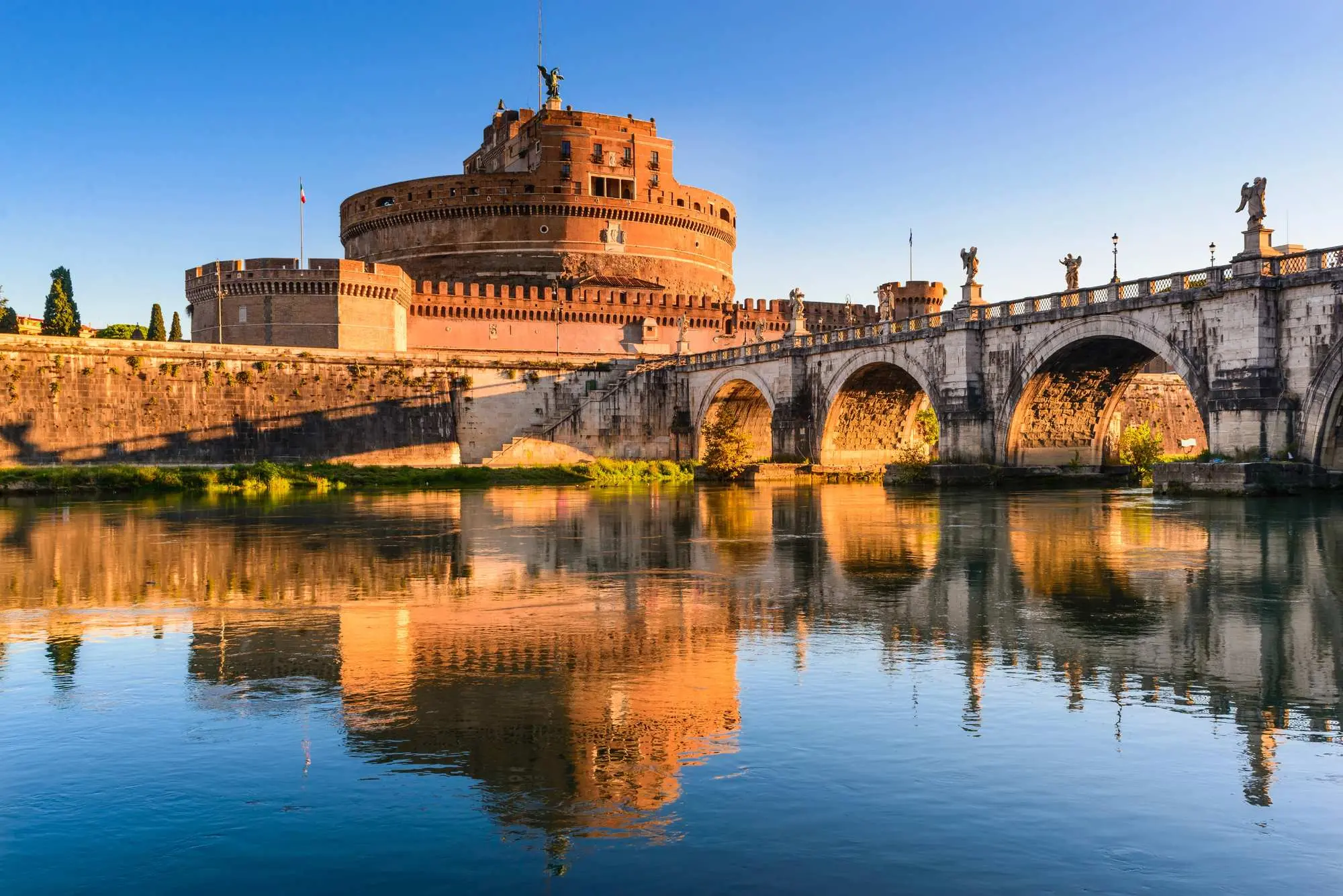
Castel Sant’Angelo Rome, Photo: emicristea Depositphotos
THE ANGEL ON TOP OF THE FORTRESS
According to legend, in the year 590, Rome was struck by a terrible plague. Pope Gregory the Great, still not canonized at the time, led a procession through the city carrying holy relics, praying for the end of the suffering. When the procession reached Hadrian’s mausoleum, the Archangel Michael appeared above the roof, sheathing his sword – a sign of divine mercy and the end of the plague. This powerful visual and spiritual moment left such a strong impression on Rome that the building was given a new name: Castel Sant’Angelo, or the Castle of the Holy Angel. A statue of the angel was later placed on top, where it still stands, watching over the city.
PAPAL FORTRESS AND SECRET PASSAGE
As Rome became the center of papal power, Sant’Angelo took on a new role. During the Middle Ages, it was transformed into a papal fortress and residence, a place of safety in turbulent times. In the 13th century, Pope Nicholas III connected the castle to the Apostolic Palace via a covered passage known as the Passetto di Borgo. This strategic link between the Vatican and the fortress allowed popes to escape to safety in moments of crisis. The most famous escape occurred in 1527, when Pope Clement VII used the Passetto to flee the onslaught of Emperor Charles V’s army during the brutal Sack of Rome.
Inside the castle, in addition to the papal quarters, there were also prison cells. Many prisoners were held here, including the famous sculptor and goldsmith Benvenuto Cellini. His writings describe the harsh prison conditions as well as his attempted escape, which later became part of the fortress’s legend.
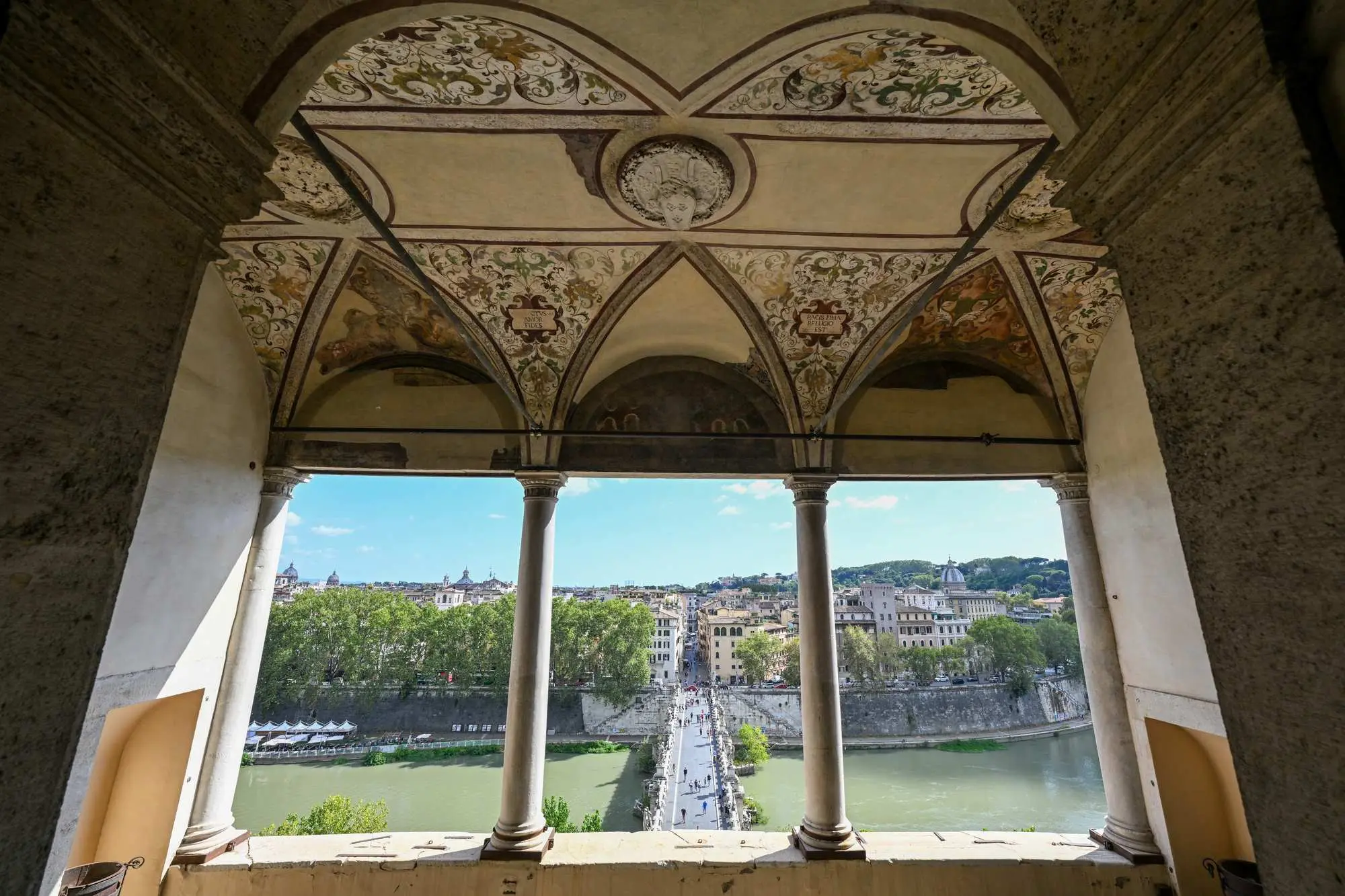
Castel Sant’Angelo Rome, Photo: demerzel21 Depositphotos
ART AND ARCHITECTURE IN THE SERVICE OF POWER
Sant’Angelo is like a layered book carved in stone. Its interior speaks the language of every era it has lived through. Renaissance frescoes adorn the papal chambers, baroque architecture intertwines with the remnants of the ancient core, and medieval fortifications still clearly reveal their function. Over the centuries, the castle has served as an imperial mausoleum, a fortress, a papal palace, a prison, a treasury, and finally a museum.
Today, the terrace of the castle offers one of the most breathtaking views in Rome. Looking out across the Tiber toward the dome of St. Peter’s Basilica, visitors become aware of the layers of history stretching before them, layers that have been woven together within this very building.
WHY VISIT IT?
Castel Sant’Angelo is not just a historical monument, but also one of the most impressive viewpoints in Rome. Climbing the spiral ramp, passing by medieval dungeons, Renaissance frescoes, and papal lodges, you arrive at the terrace where a stunning panorama of the Tiber, the Angel’s Bridge, and St. Peter’s Basilica unfolds before you.
At the top awaits the bronze statue of the Archangel Michael, the eternal guardian of the city. You can sit beneath him and watch Rome while the wind carries the scents of its past. The castle regularly hosts exhibitions, and evening visits during the summer add an extra layer of mystery and atmosphere.
Admission for adults is 16 euros, while young people aged 18 to 25 who are citizens of a European Union country pay only 2 euros. Children and teenagers under 18 enter for free, and on the first Sunday of each month, entrance is free for everyone.
If you’re looking for a place where Roman emperors, medieval walls, Renaissance luxury, and breathtaking views all meet in a single breath.
If your trip takes you to Rome, you simply have to see these 6 waterfalls

Ahmed Taha
Peace, love and music! ☮️


Leave a Reply