
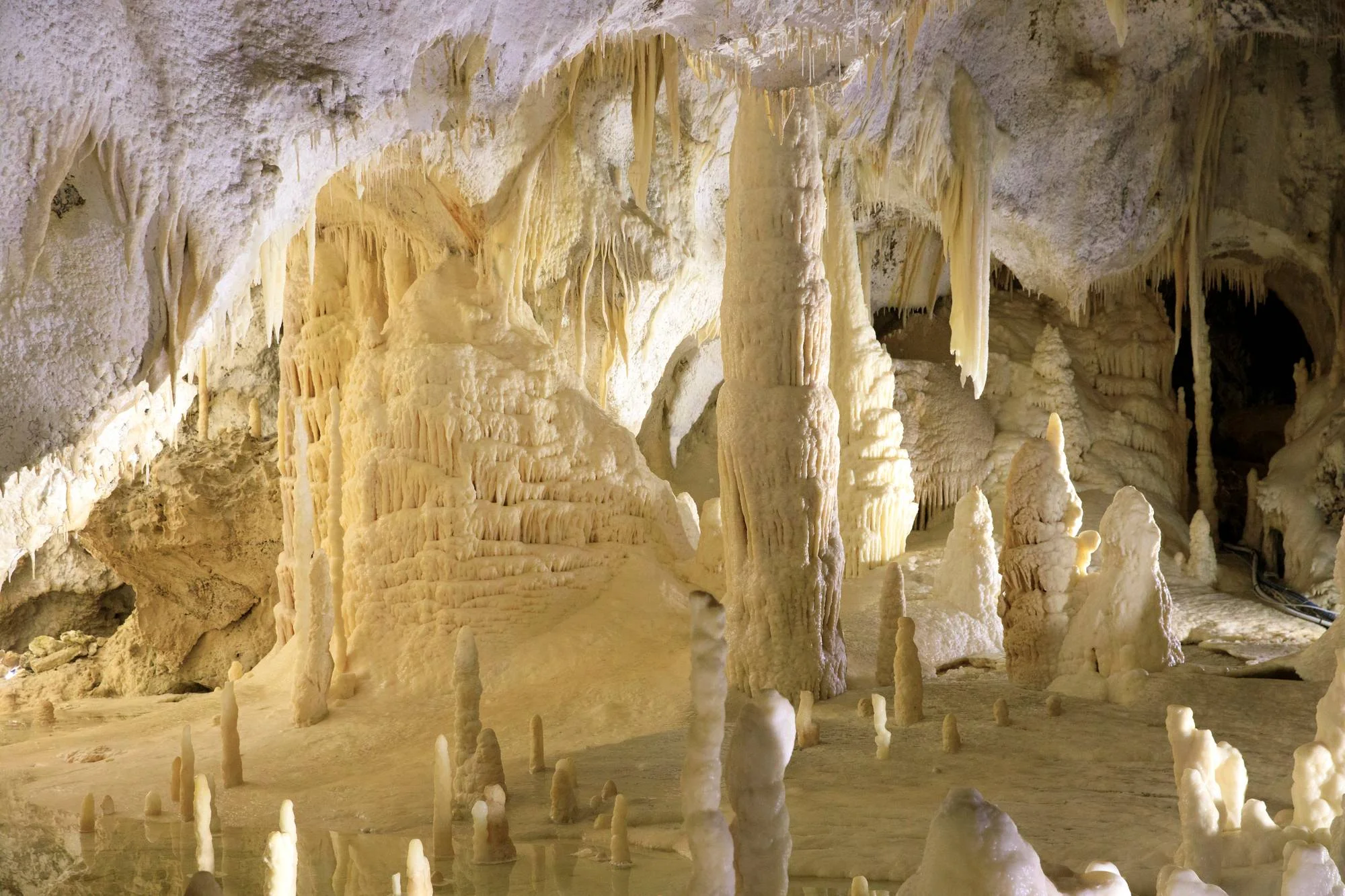
Frasassi cave hides an underground world bigger than Milan cathedral
In the hills of the Marche region, not far from the town of Genga in the province of Ancona, one of Europe’s most spectacular underground landscapes lies hidden. The Frasassi cave is not merely a natural curiosity, but a vast system of chambers and corridors that resemble a monumental cathedral carved by the patient work of water and time.
The story of Frasassi begins around 190 million years ago, at a time when this area was covered by the sea. The accumulation of marine organisms formed thick layers of limestone, and later tectonic movements and the penetration of water through cracks set in motion a long process of shaping the underground world. Drop by drop, over millions of years, water widened cavities and created spaces that today give the impression of almost otherworldly architecture.
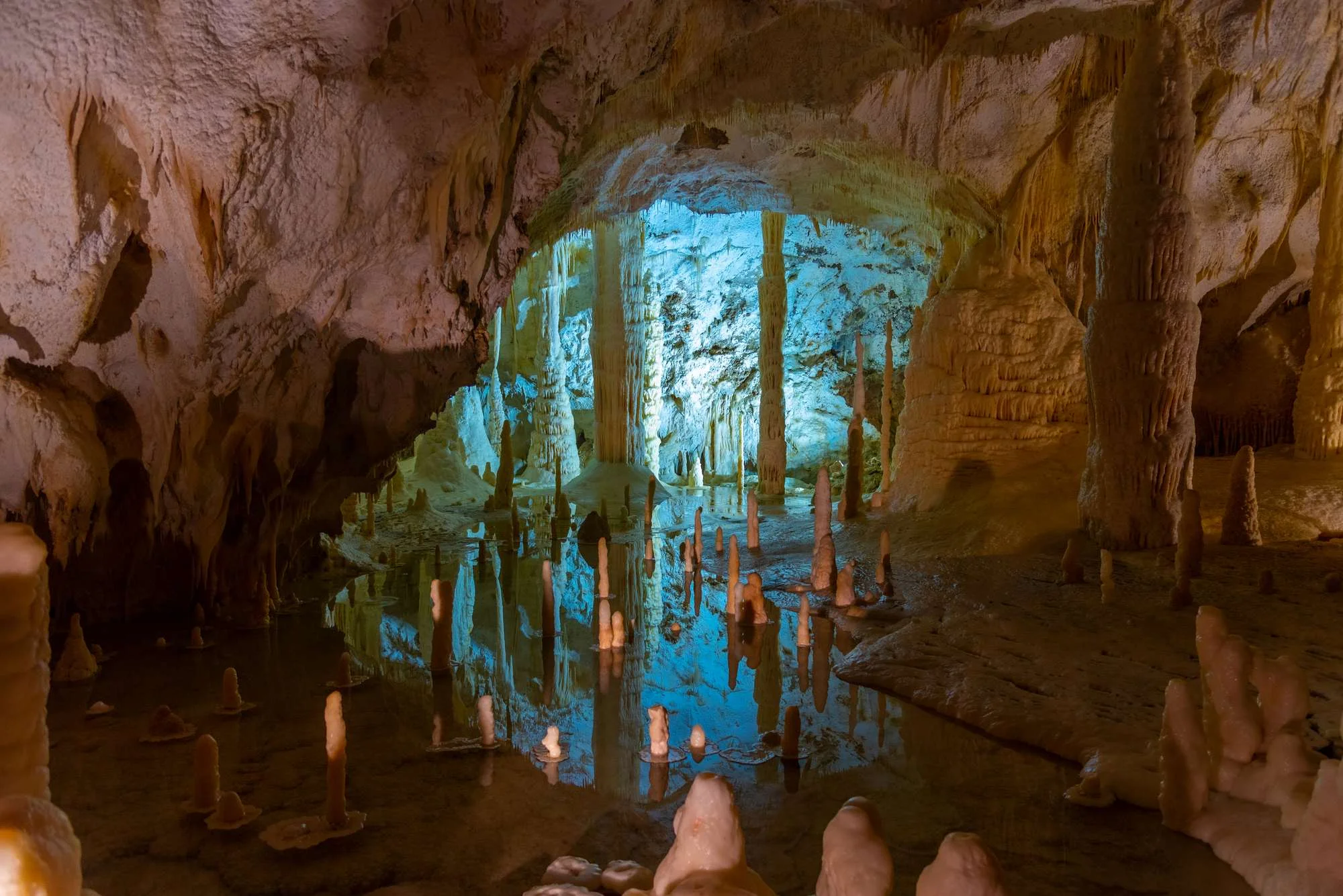
Frasassi Photo: Dudlajzov Depositphotos
The cave system was discovered in 1971, when speleologists from Ancona came across the entrance to what was then an unknown underground complex. From the very first explorations, it was clear that this was an exceptional discovery. The most famous chamber, Abisso Ancona, is one of the largest underground halls in Europe. It is so vast that Milan Cathedral could easily fit inside it, and its height and width erase the feeling of being beneath the surface of the earth.
Today, more than a kilometre and a half of paths are arranged for visitors, while the entire system extends for over 30 kilometres. A walk through Frasassi leads through a sequence of chambers where immense spaces alternate with more intimate passages, stalactites that descend from the ceiling like stone curtains, and stalagmites that rise from the ground toward a light they have never seen. Each chamber has its own character and atmosphere, and carefully designed lighting highlights the textures and shapes of the rock without disturbing the delicate microclimate.
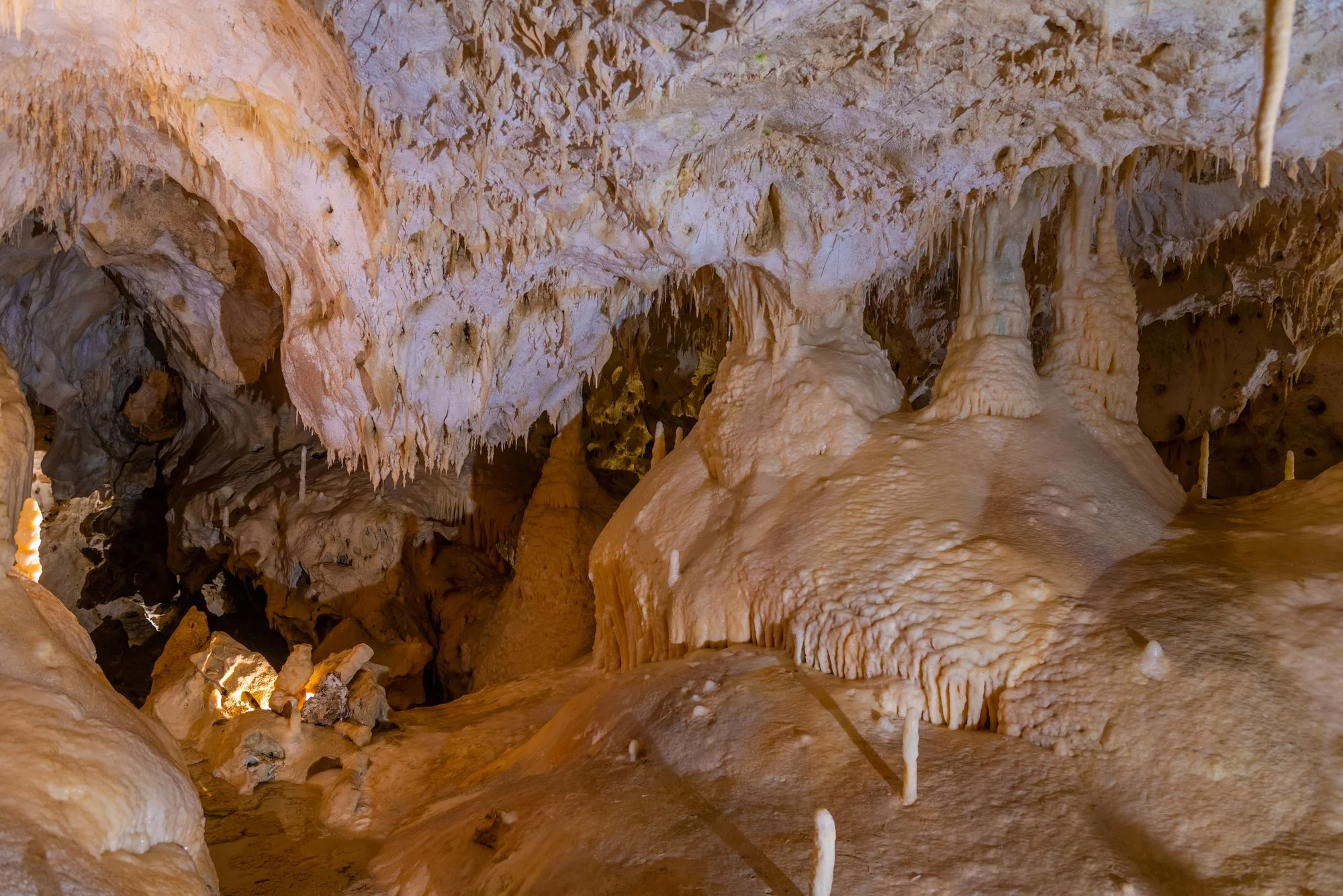
Frasassi Photo: Dudlajzov Depositphotos
A special dimension of Frasassi is given by its underground lakes, whose calm surfaces reflect the stone formations and create a sense of perfect symmetry. In these silent spaces, it is easy to lose track of time and understand how slow and patient the process of their formation truly was. The cave also has great scientific value, as rare bacteria have been discovered here that live without sunlight, feeding on sulphur compounds, making it an important site for research into extreme forms of life.
The temperature inside the cave remains stable throughout the year at around 14 degrees Celsius, with high humidity. These conditions have allowed fragile mineral structures that grew over thousands of years to be preserved. For this reason, movement is strictly controlled and possible only with a guide, ensuring the long-term protection of this exceptional natural phenomenon.
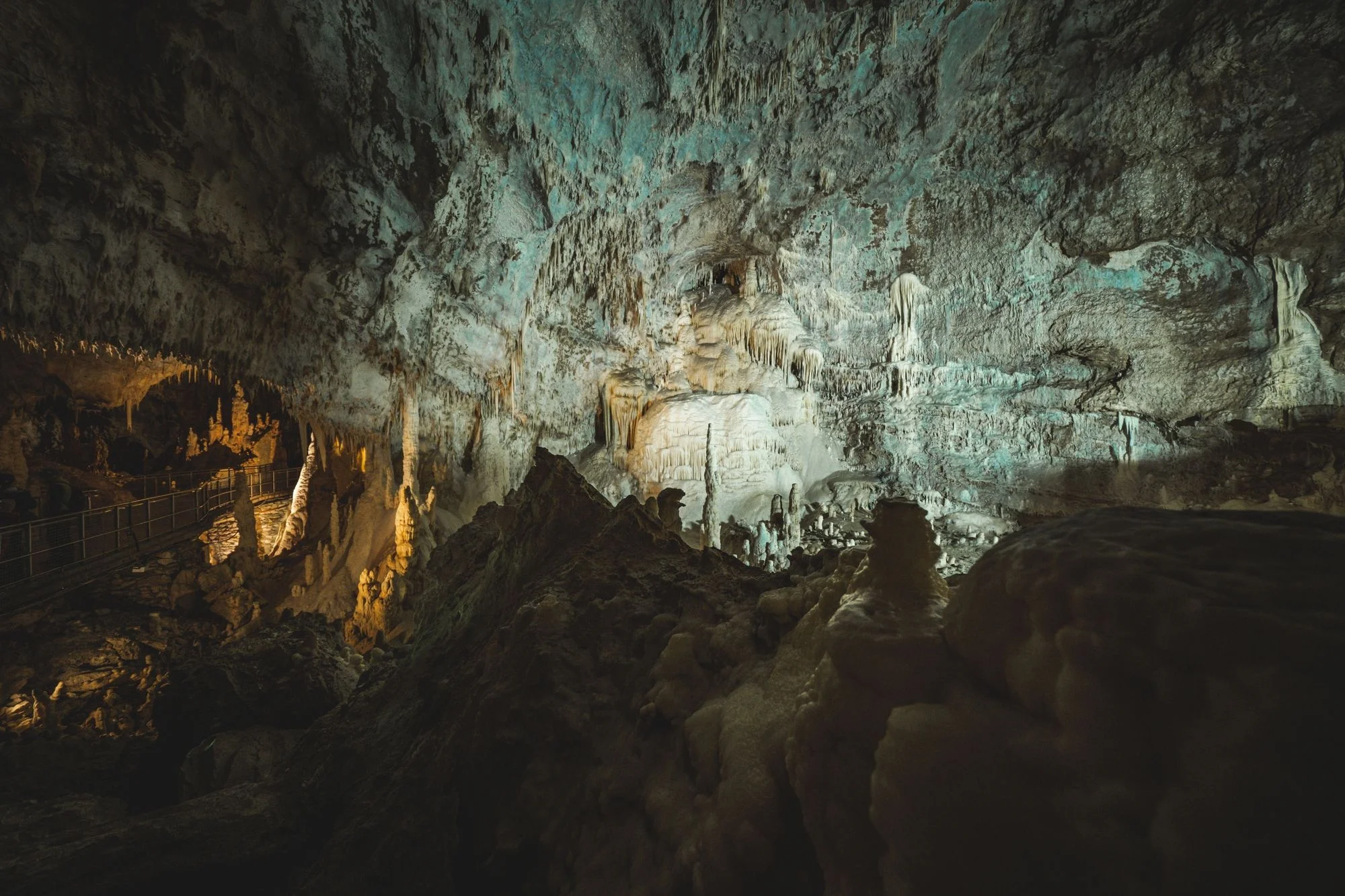
Frasassi Photo: wirestock_creators Depositphotos
A visit to the Frasassi caves is possible only as part of a guided tour lasting about 75 minutes, with a standard ticket price of around 18 euros, reduced prices for children, and free entry for the youngest visitors. The caves are open all year round with seasonal variations in opening hours, usually from morning until late afternoon, and due to the constant temperature, it is advisable to bring warmer clothing. If you find yourself in the region, Frasassi is a place that should be experienced in person, as the scale, silence, and atmosphere of its underground chambers leave a far stronger impression than any photograph.

Sara Sedić
I plan to live in the moment :)
Leave a Reply