
From the Greeks to the Romans! The most impressive ancient theaters in Italy and where to find them
Italy is one of the few places in Europe where the history of theatre can be traced almost continuously for over two thousand years. From the first Greek colonies that began spreading across the southern parts of the Apennine Peninsula and Sicily, to the monumental Roman cities of late antiquity, theatres stood at the centre of public life, art, religion, and politics.
The Greeks built the earliest theatres in Italy between the 6th and 3rd centuries BC. They emerged within the colonies of Magna Graecia and were strongly connected to the surrounding landscape. The seating area was almost always carved into a natural slope, while the theatre space opened towards the sea, valleys, or mountains.
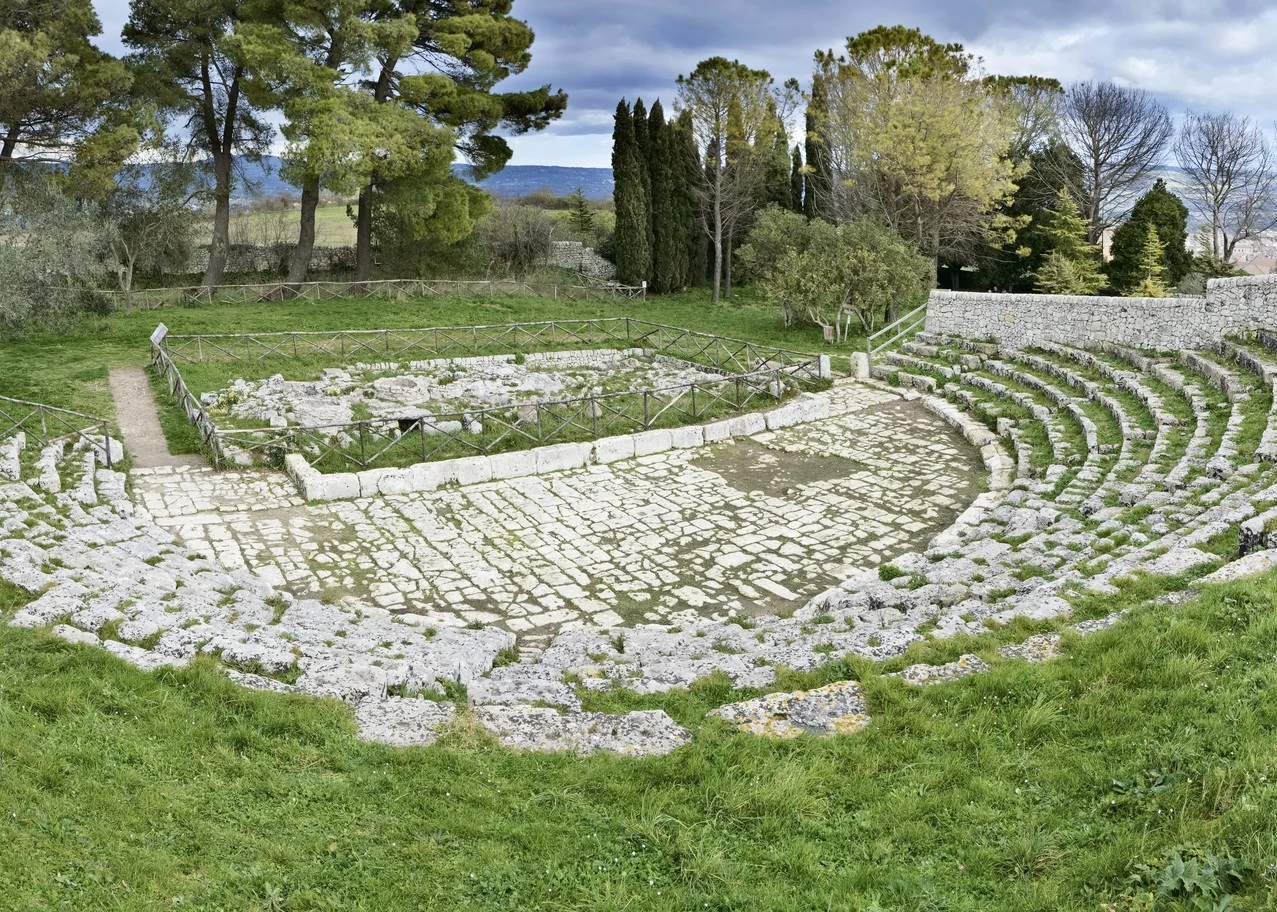
Greek Theater Palazzolo Acreide Photo: agiampiccolo Depositphotos
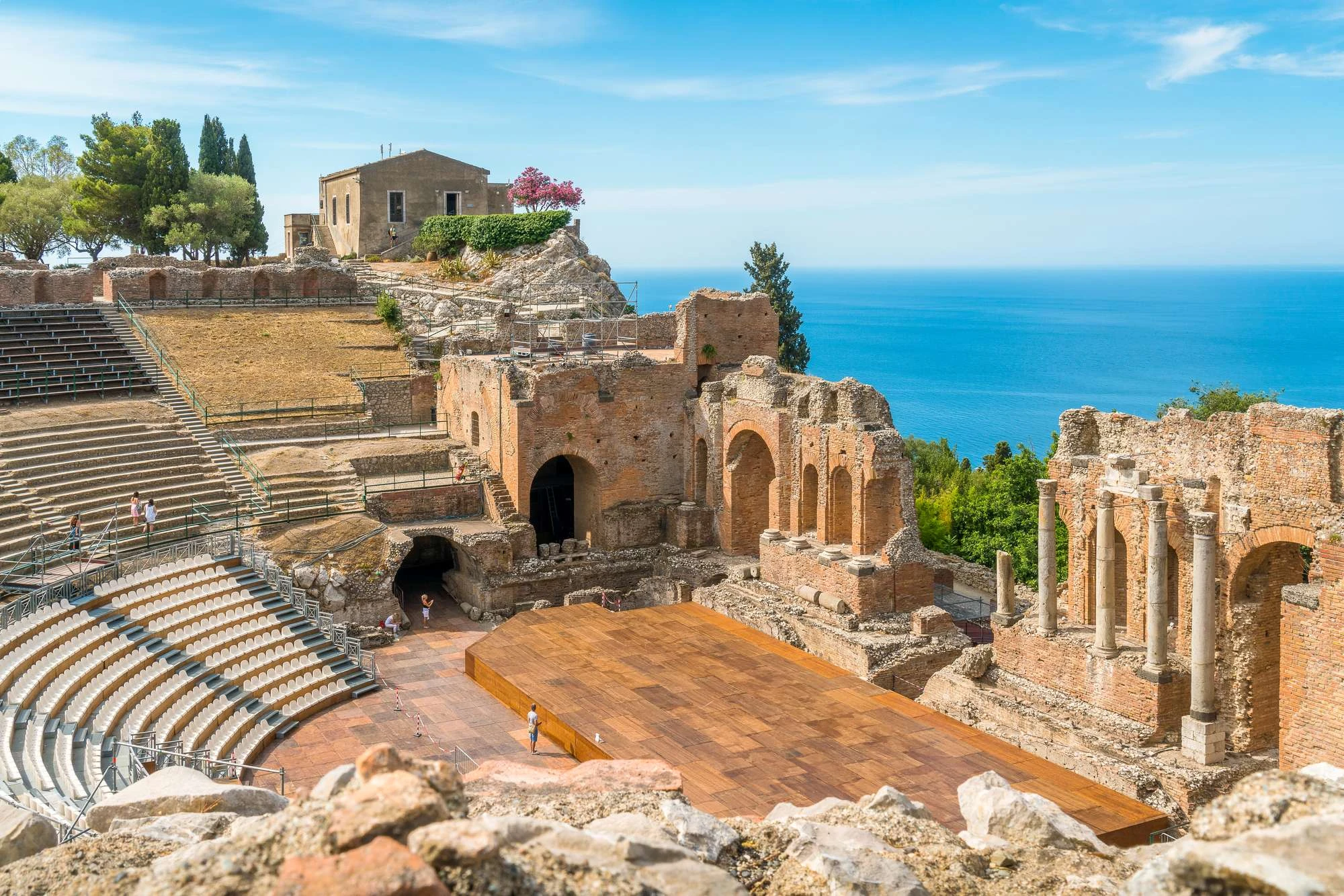
At the westernmost edge of the Greek world, on Sicily, lies the most impressive group of Greek theatres in the entire Mediterranean. In Syracuse rises a monumental Greek theatre carved into the rock of the Temenite Hill, built in the 5th century BC and counted among the largest theatres of the ancient world. On the eastern coast of the island, in Taormina, a Greek theatre was constructed in the 3rd century BC, renowned for its exceptional position above the sea with a view of Mount Etna. Western Sicily preserves the remarkably well-preserved Greek theatre of Segesta, while traces of Hellenistic theatre architecture can also be found in Tindari, Morgantina, Heraclea Minoa, Akrai near Palazzolo Acreide, and in the former city of Kamarina.
Although Sicily is primarily a landscape of strong Greek theatrical tradition, the island also contains one of the most important Roman theatres of southern Italy. In Catania, during the 1st and 2nd centuries AD, a large Roman theatre was built from volcanic stone from Mount Etna, together with an odeon, turning the city into one of the major theatrical centres of Roman Sicily.
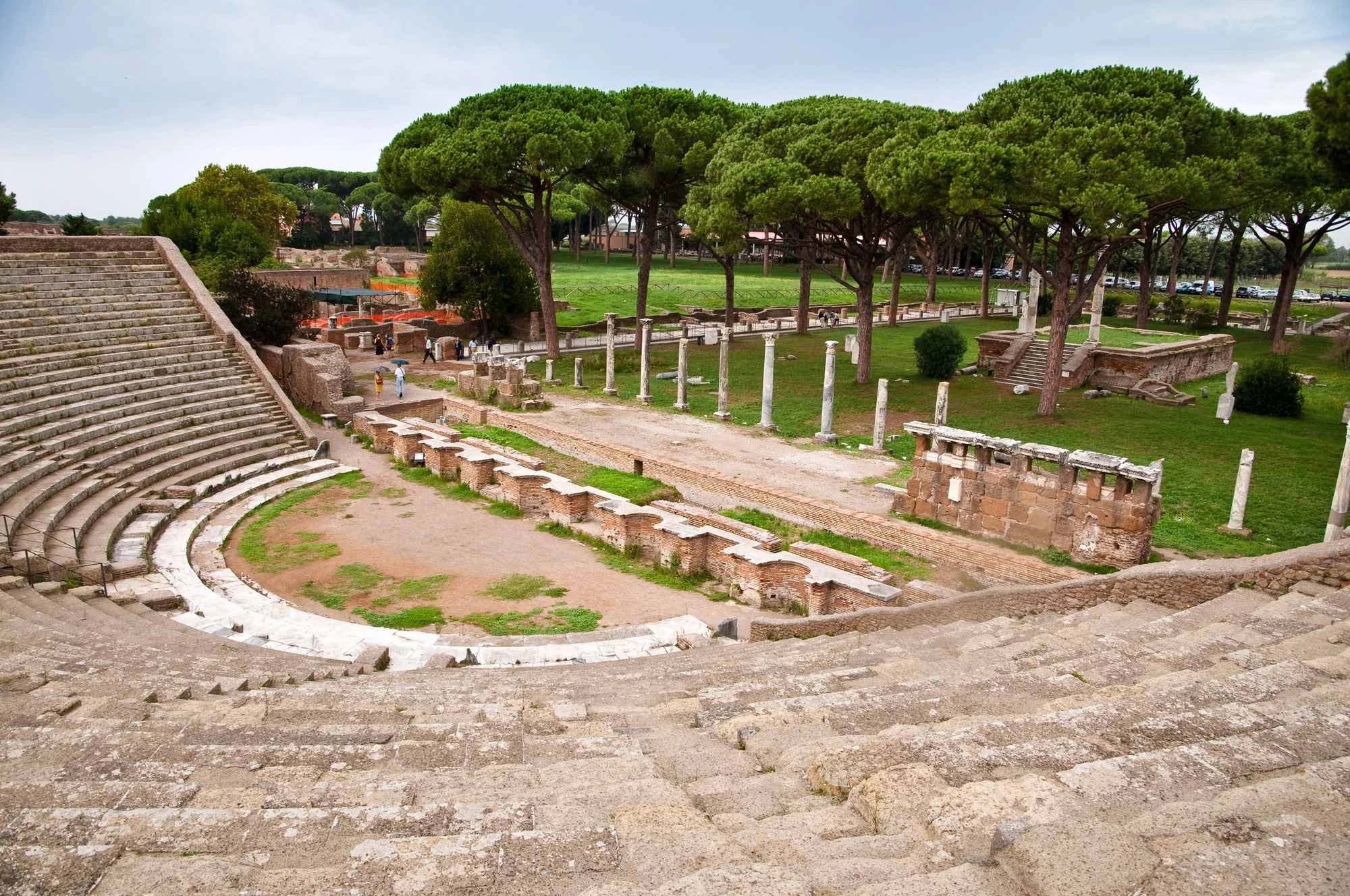
Roman Theater in Ostia Photo: pablodebat Depositphotos
Further north, in the area of present-day Calabria, the chain of Greek colonies of southern Italy continues. In Locri Epizefiri, Kaulonia, and Metauros near modern Gioia Tauro, theatres existed that served as centres of public life for the colonies. In Hipponion, today’s Vibo Valentia, the Greek theatre bears witness to the strong Hellenic influence that extended along the entire Ionian coast.
Outside Sicily and Calabria, there are almost no original Greek theatres. This clear geographical limitation is precisely what makes them distinctive and easily recognisable in contrast to the later Roman network.
Roman theatres began to appear from the 1st century BC, when Rome adopted Greek cultural models but adapted them to its own urban and political needs. Unlike Greek theatres, Roman theatres were freestanding structures, built with concrete and vaults, capable of rising vertically and being placed directly within city centres.
In southern Italy, Roman theatres were often constructed on the sites of earlier Greek cities. On Sicily, several theatres developed, such as those in Termini Imerese and Agrigento, as well as on the Aeolian Islands, while in Taormina, a monumental Roman stage building was added.
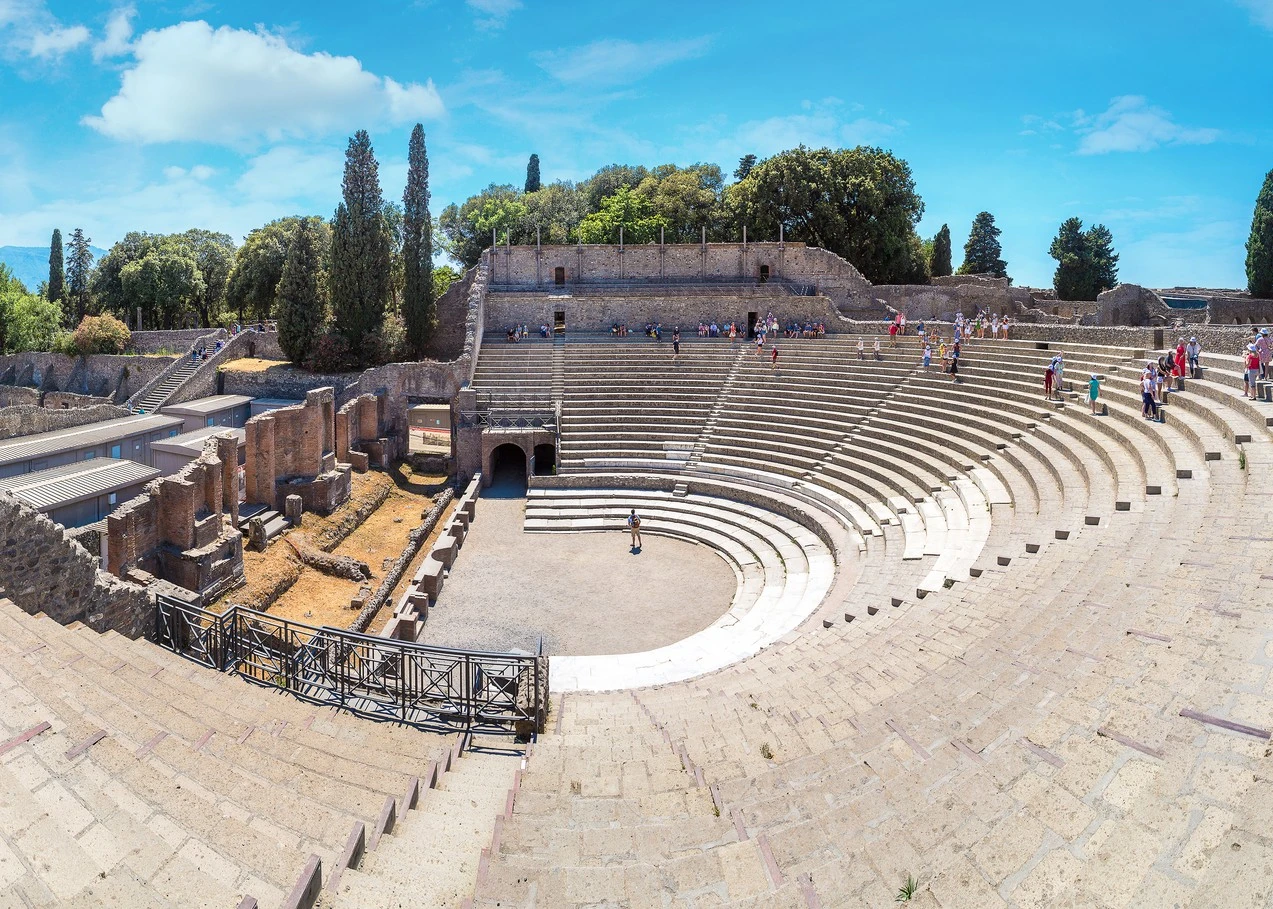
Rimsko kazalište u gradu Pompeji Photo: blooduaa Depositphotos
In Campania, Roman theatre architecture reached its full expression. Pompeii preserves a large theatre for dramatic performances and a smaller theatre for music, Herculaneum hides its theatre beneath the modern town, and Naples retains the remains of the Roman theatre of ancient Neapolis within its underground corridors. Theatres also operated in Capua, Pozzuoli, Nuceria Alfaterna, Avella, and Benevento.
In central Italy, theatres became an integral part of every urban centre. In Rome, the Theatre of Marcellus, the Theatre of Balbus, and the Theatre of Pompey were constructed, the latter being the first permanent stone theatre in the city’s history. Outside Rome, theatres can be visited in Ostia Antica, Tivoli, Palestrina, Ferento, and Minturnae.
As Roman rule expanded northwards, theatres followed the army, trade, and administration. In Tuscany, remains are preserved in Volterra, Fiesole, Lucca, Arezzo, Roselle, and Populonia. Umbria preserves theatres in Spoleto, Gubbio, Todi, and Carsulae, while the Marche region contains theatres in Fano, Ascoli Piceno, Urbisaglia, and Ancona.
In the northern part of the Apennine Peninsula, Roman theatres confirm the complete Romanisation of the region. Verona preserves one of the most picturesque theatres along the Adige River, while theatre complexes also existed in Padua, Vicenza, Altinum, Aquileia, and Trieste, where in the ancient city of Tergeste a well-preserved Roman theatre from the 1st century AD lies at the foot of San Giusto hill. In Lombardy, remains of theatres can be seen in Brescia, Milan, Como, and Bergamo, while among the best preserved in the Alps stands the theatre of Aosta.
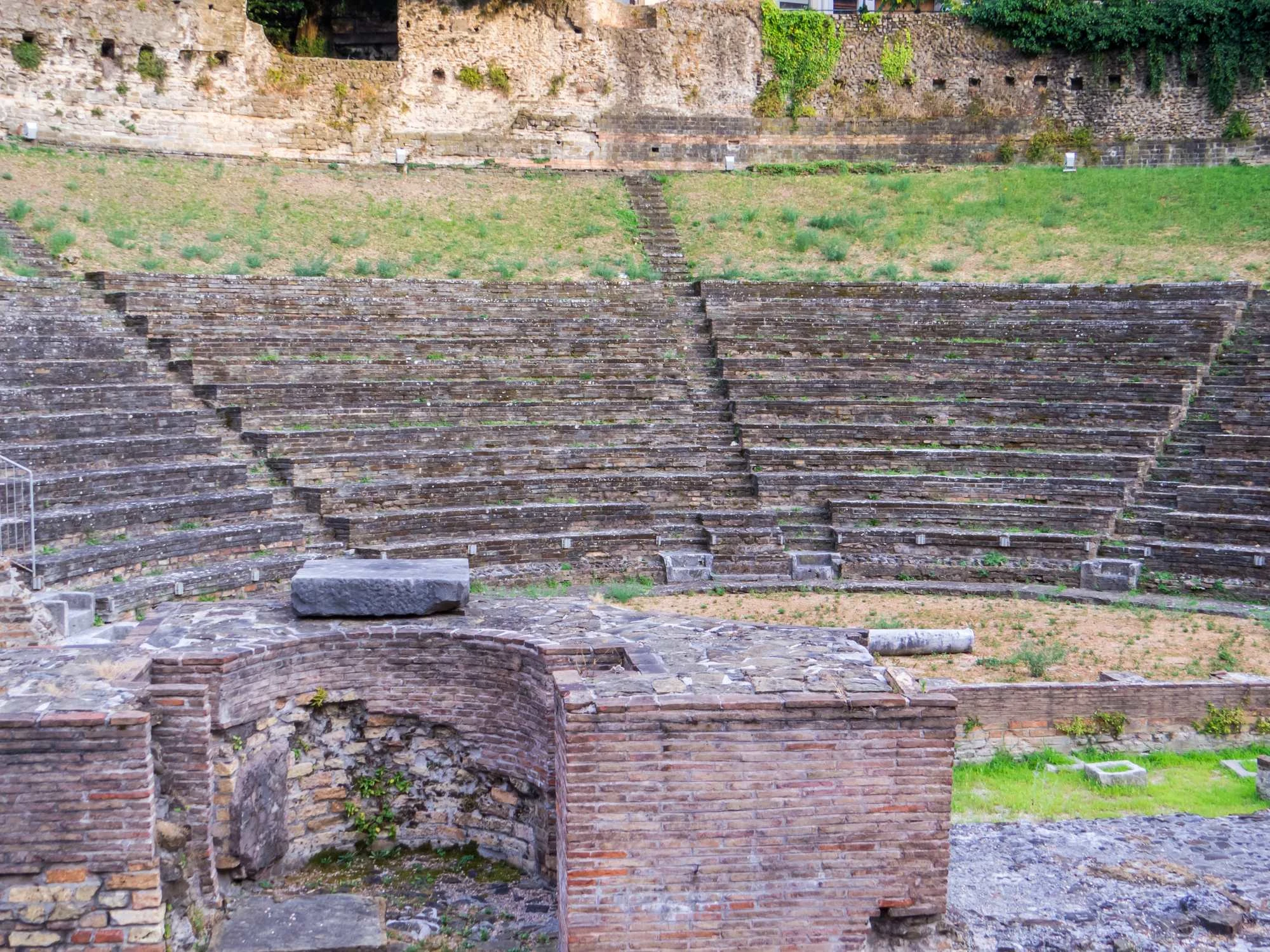
Rimsko kazalište u Trstu Photo: Diego. fiore Depositphotos
On the islands and in peripheral provinces, theatres functioned as symbols of Roman identity. Sardinia preserves the theatre in Cagliari as well as complexes in Nora and Tharros. In Apulia, theatres can be seen in Lecce, Brindisi, Canosa, and Egnazia, while in Basilicata the remains of theatres survive in Grumentum and Venosa.
In the interior of the Apennines, especially in Abruzzo, only Roman theatres are found. Remains are visible in ancient Teate Marrucinorum, today’s Chieti, as well as in Alba Fucens, in the former Amiternum near L’Aquila, and in Interpromium near present-day San Valentino.
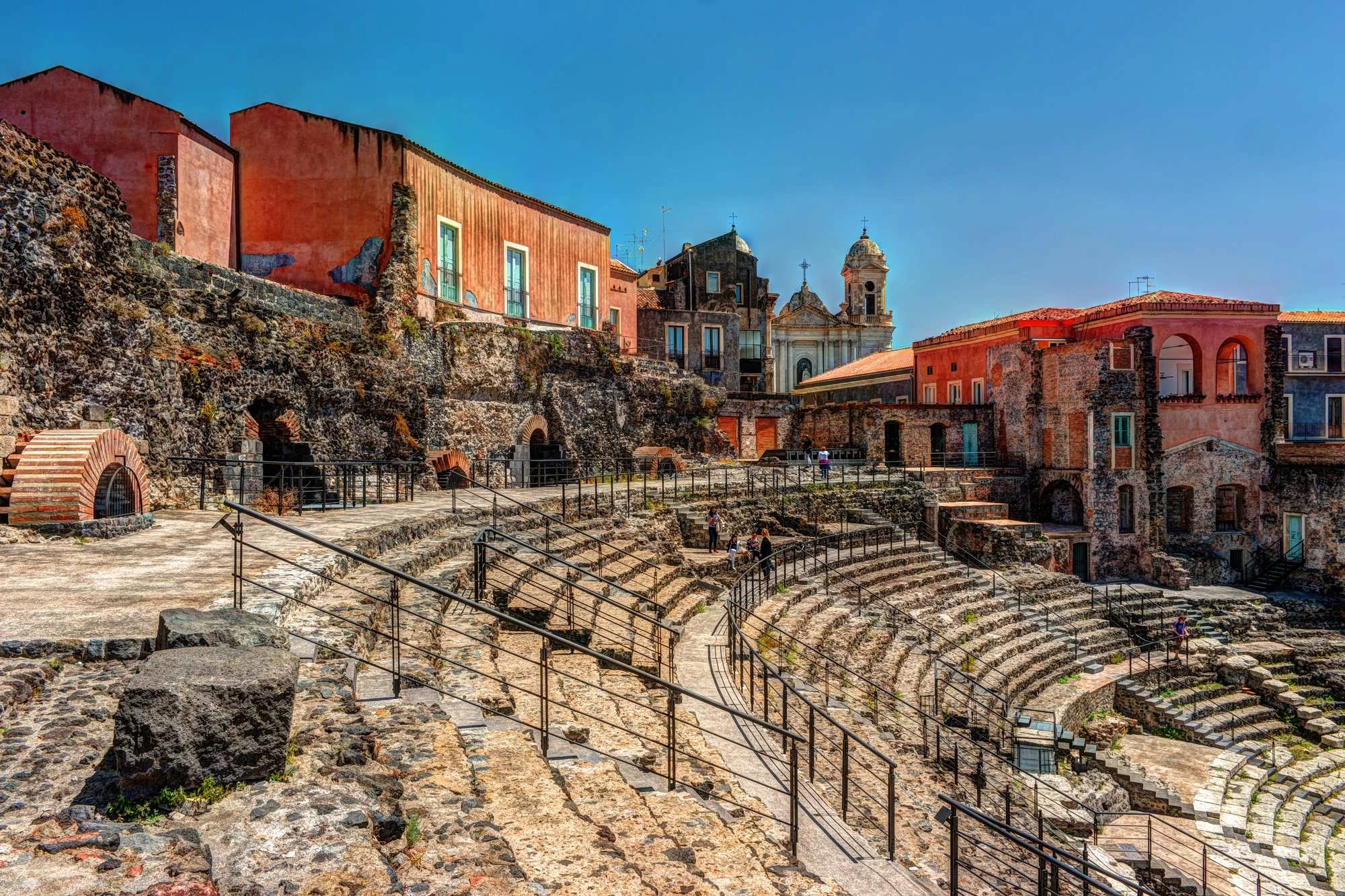
Roman Theater in Catania Photo: Romas_ph Depositph
Viewed together, Greek and Roman theatres reveal Italy as a landscape in which ancient culture developed not through interruption, but through layers. From stone seating carved into the slopes of Sicily to monumental Roman theatres beside forums and city squares, each of them tells the story of the era in which it was created. Today, these theatres are not merely archaeological remains, but places where one can still sense how art, politics, and everyday life shared the same open-air space for thousands of years.

Ahmed Taha
Peace, love and music! ☮️
Leave a Reply