
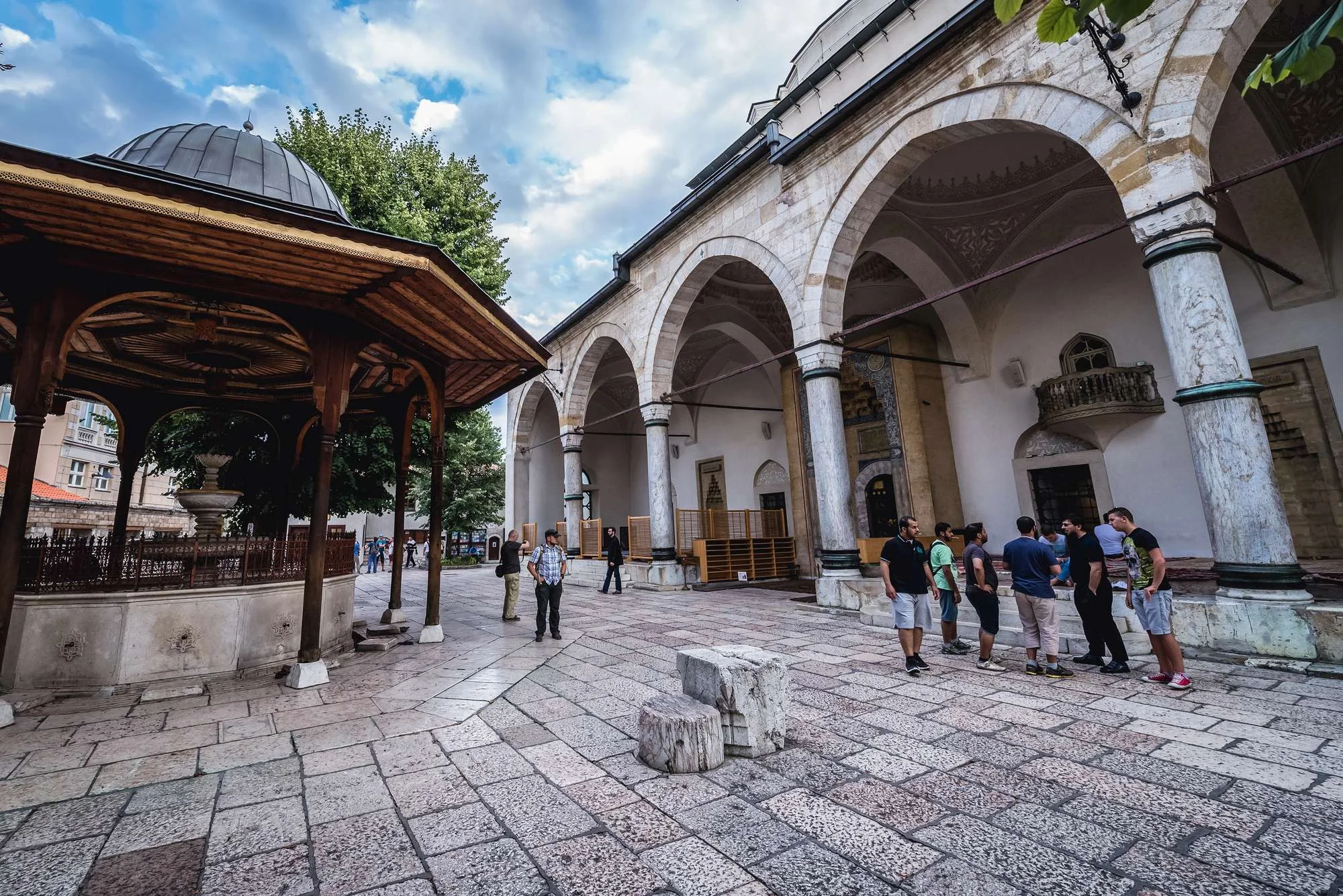
Gazi Husrev Bey Mosque is the most famous mosque in Sarajevo!
In the very heart of Baščaršija, where the everyday life of Sarajevo has intertwined with its history for centuries, stands the Gazi Husrev Beg Mosque. Built in 1531, this mosque is not only one of the most important sacred buildings in Bosnia and Herzegovina, but also a key symbol of Ottoman Sarajevo. Its presence has shaped the space, rhythm, and identity of the old town, and its role goes far beyond the boundaries of religious architecture.
The mosque was commissioned by Gazi Husrev beg, the Ottoman governor of Bosnia and one of the most significant figures in the history of Sarajevo. His legacy was not based on a single building, but on a comprehensive vision of the city. Through a system of endowments, he established educational, economic, and social institutions that transformed the city into a powerful urban and cultural center. Thanks to this vision, the city acquired in the sixteenth century the outlines that we largely recognize even today. If you want to understand more deeply who the man behind this urban transformation was, it is worth reading this story.
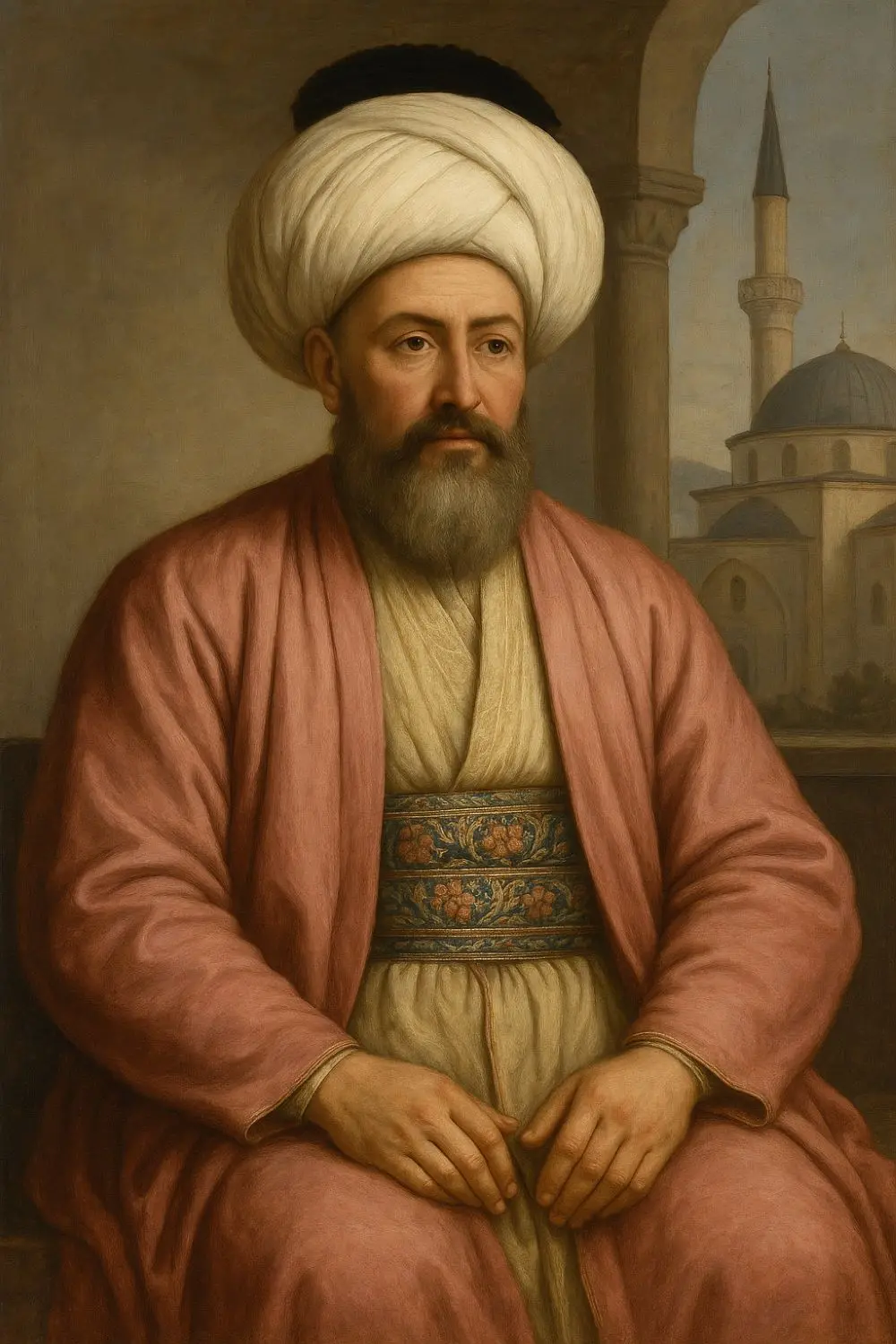
Gazi Husrev-beg Illustration AI reconstruction, ChatGPT
Architecturally, the mosque represents the pinnacle of classical Ottoman construction. It was designed by Adžem Esir Ali, an architect of Persian origin and a contemporary of Mimar Sinan, whose name is associated with the most important buildings of the Ottoman Empire. Although Sinan himself was not the author of this structure, the spirit of his era is clearly visible in the perfect proportions of the space and its decoration.
A large stone dome dominates the central prayer hall, the walls are built of finely carved limestone, and the interior is adorned with calligraphic inscriptions and geometric motifs that emphasize the spiritual dimension of the space. The slender minaret rises above Baščaršija and has for centuries served as one of its most recognizable visual landmarks.
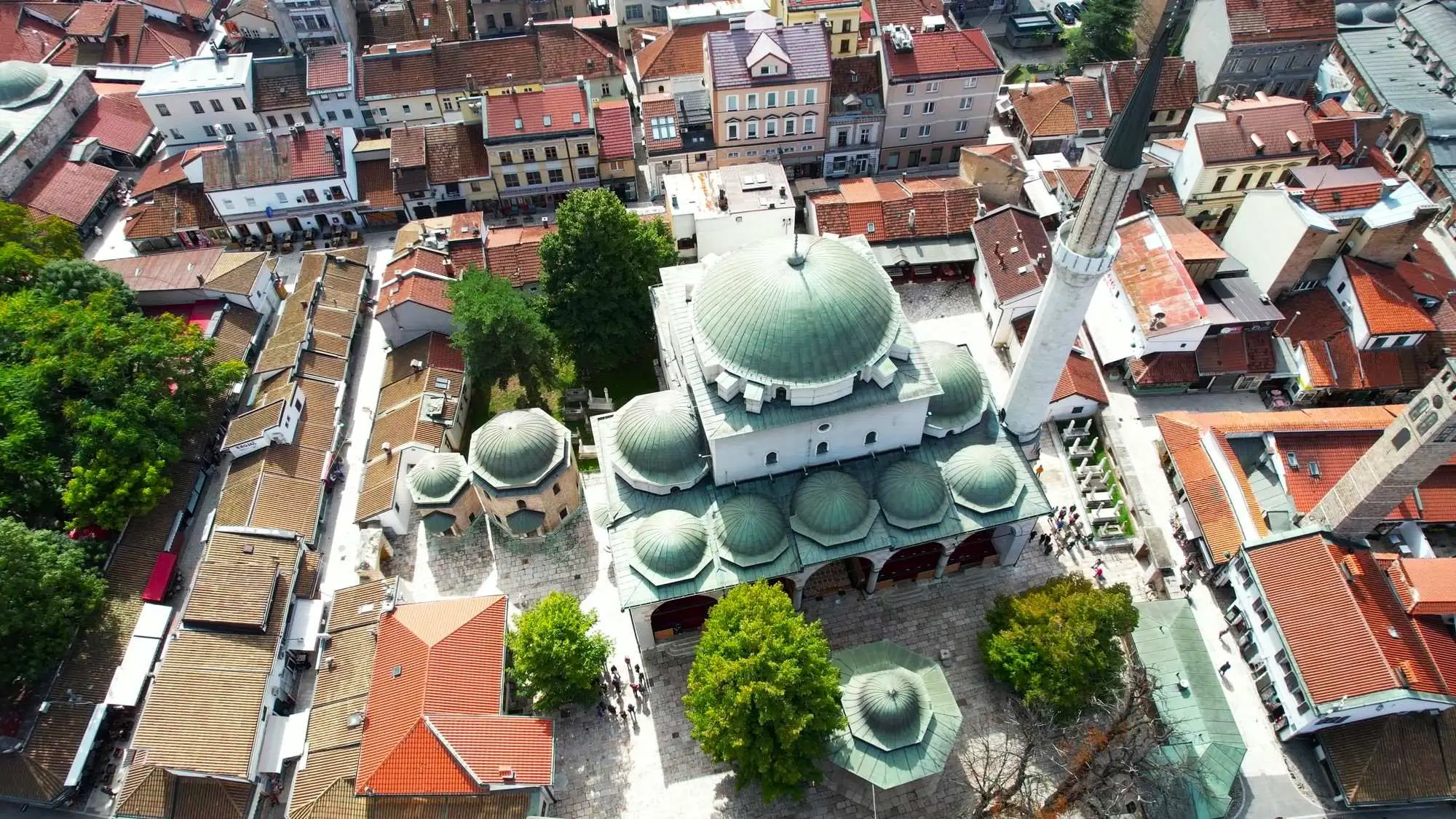
Gazi Husrev-beg Mosque, Photo: GiraffeStockStudio Depositphotos
The mosque courtyard, with a fountain at its center, holds special significance. It represents a transition between the bustle of the city and silence, a place for a brief pause before entering the space of prayer.
The Gazi Husrev Beg Mosque was never an isolated building. It is part of a broader urban complex that formed the heart of Ottoman Sarajevo. In its immediate vicinity stood Tašlihan, a caravanserai that was a key point of trade and travel routes. While Tašlihan connected Sarajevo with distant parts of the Empire, the mosque represented the spiritual and social center of the city. Together, they created a space where commerce, faith, and everyday life intersected, making Baščaršija a unique urban whole.
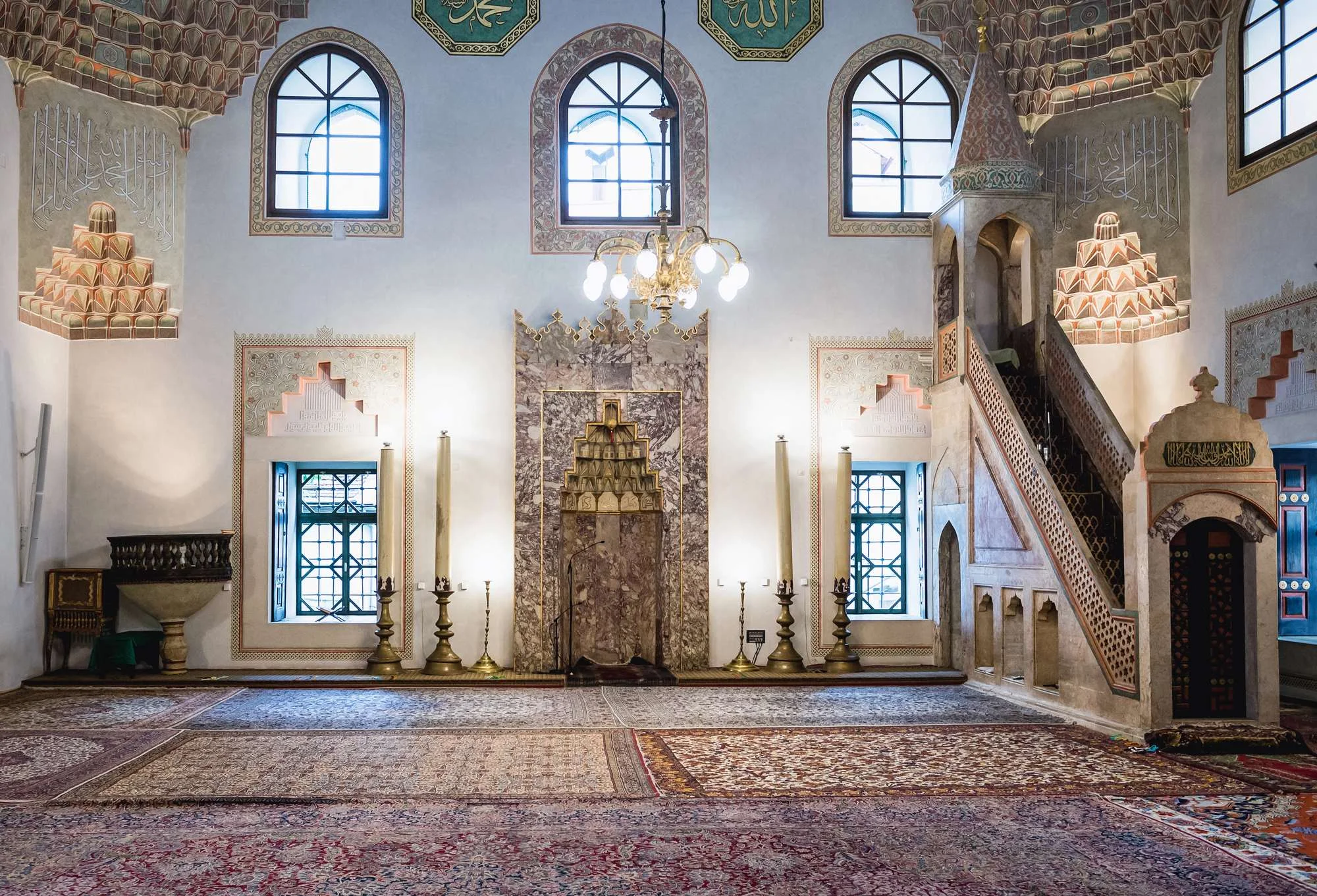
Gazi Husrev-beg Mosque, Photo: fotokon Depositphotos
The mosque also played a special role in education and culture. Within Husrev Beg’s endowment operated a madrasa, and later a library. This institution has preserved manuscripts and books of invaluable worth for centuries, bearing witness to the importance of knowledge and literacy in the development of the city.
During the Siege of Sarajevo between 1992 and 1996, the mosque suffered damage, but after the war, it was carefully restored using traditional materials and techniques. Today, it is once again fully active and open, not only to worshippers but also to visitors from around the world.
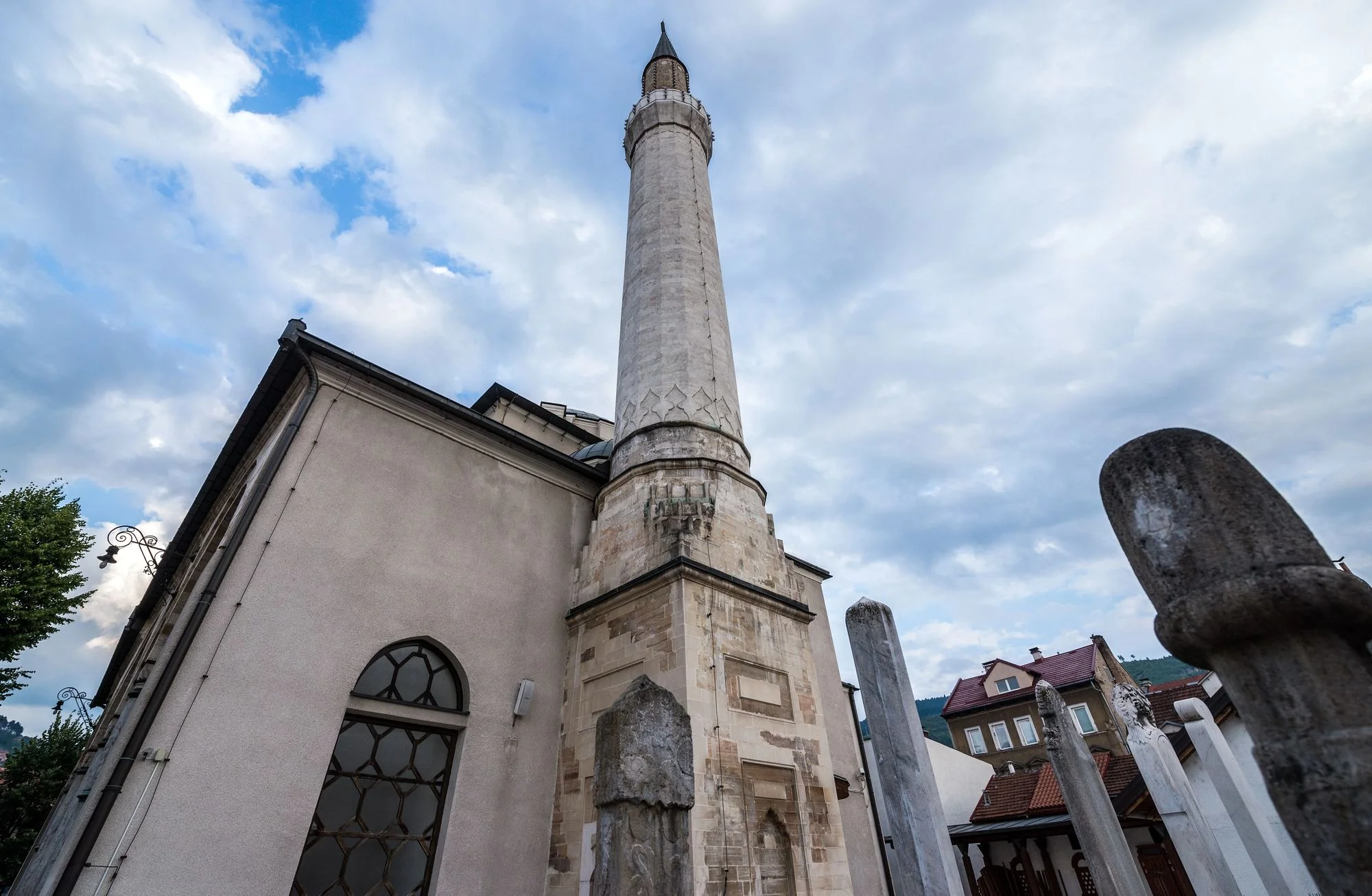
Gazi Husrev-beg Mosque, Photo: fotokon Depositphotos
Today, the Gazi Husrev Beg Mosque stands as a lasting symbol of the city. Its dome and minaret are not merely architectural elements, but signs of the continuity of a city that has survived centuries of change, destruction, and renewal. A visit to this place is not simply a tour of a historical landmark, but an encounter with the spirit of Sarajevo, which, despite the passage of time, can still be clearly felt among the stone walls of Baščaršija.

Ahmed Taha
Peace, love and music! ☮️
Leave a Reply