
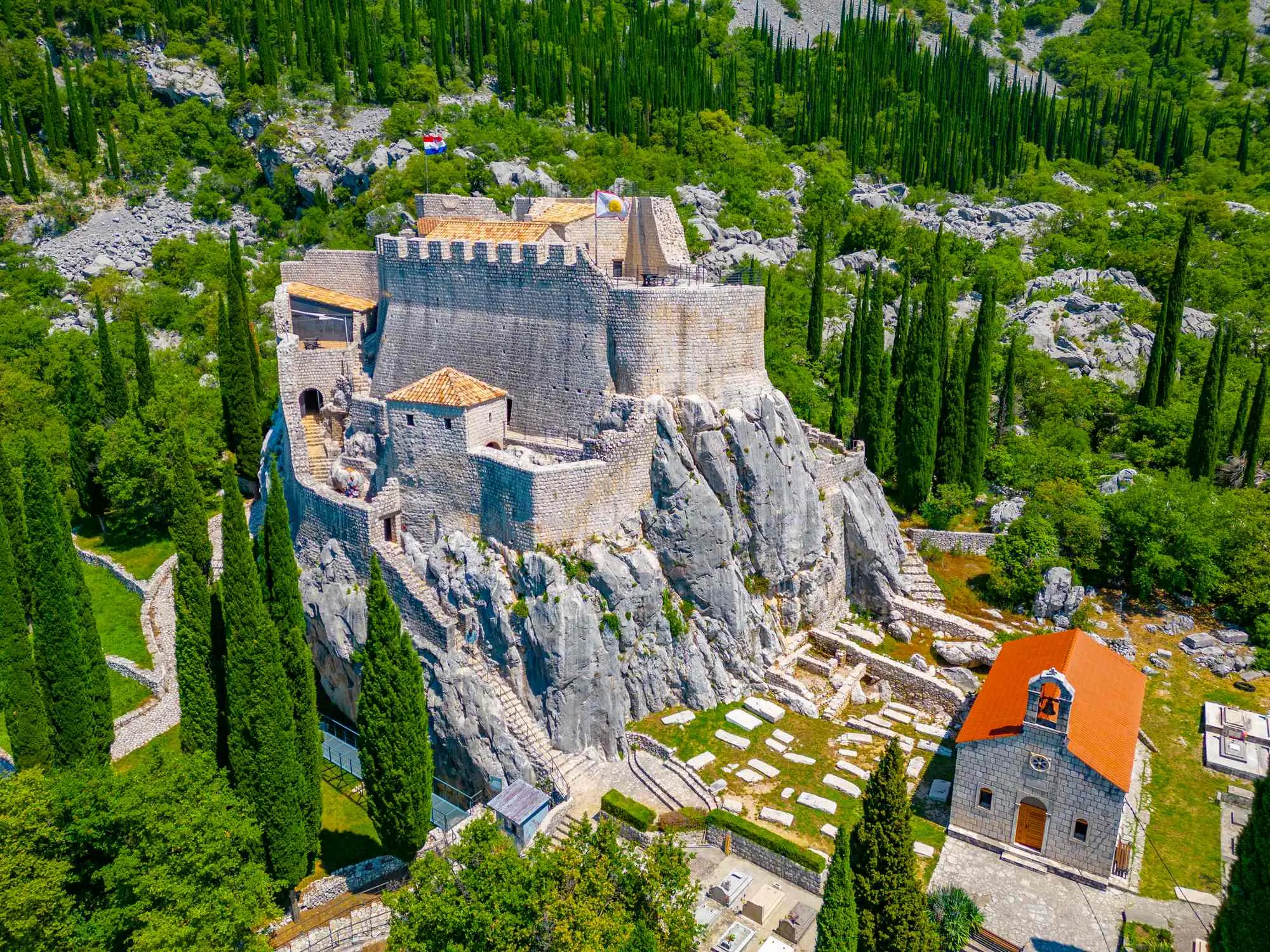
For centuries, Sokol grad has guarded the eastern border of the Republic of Dubrovnik
At the very eastern edge of Konavle, where karst rises above valleys and ancient routes, stands Sokol Grad, a fortress that was not created as a symbol of power but as its instrument. Positioned on an almost vertical rock face twenty-five meters high, Sokol served for centuries as the point from which the entire Konavle region was supervised, governed, and defended. Its history is inseparably linked to the transfer of Konavle into the hands of the Republic of Dubrovnik and to the long process of transforming a peripheral feudal territory into a strictly controlled part of a state system.
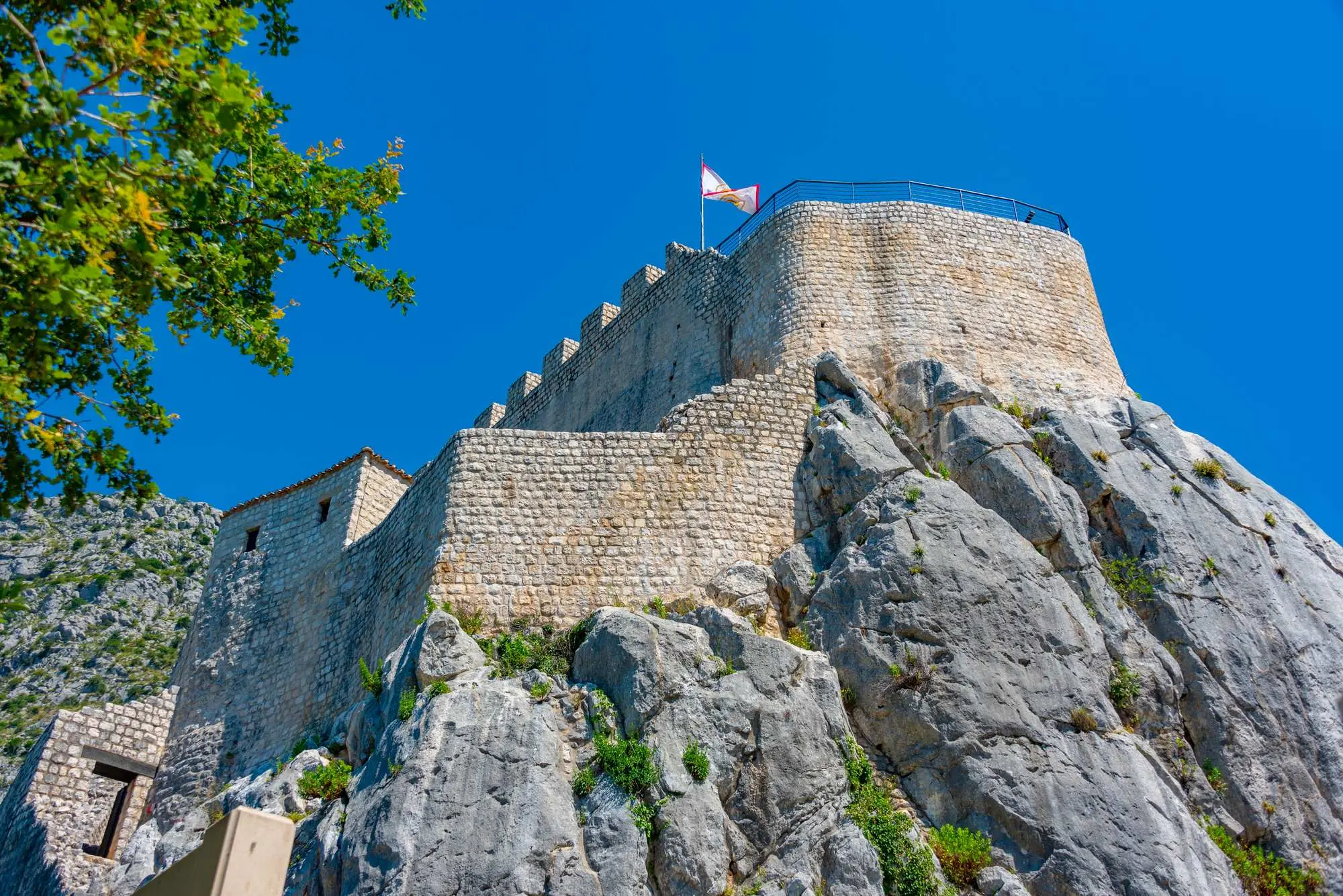
Sokol grad Photo: Dudlajzov Depositphotos
Before the arrival of the Dubrovnik authorities, Sokol is mentioned in sources as Sokol Grad, a fortified town governed by a knez. This designation was not accidental. In the late medieval context, a grad denoted an administrative and military center from which authority over the surrounding area was exercised, revenues collected, and order maintained. Only after 1420, when the Dubrovnik Republic effectively took control of the fortress, did the term kastel become established in documents, with its commander referred to as a kastelan. This change in terminology reflects a change in the system. Sokol was no longer a feudal town but a precisely organized military fortress of the Republic.
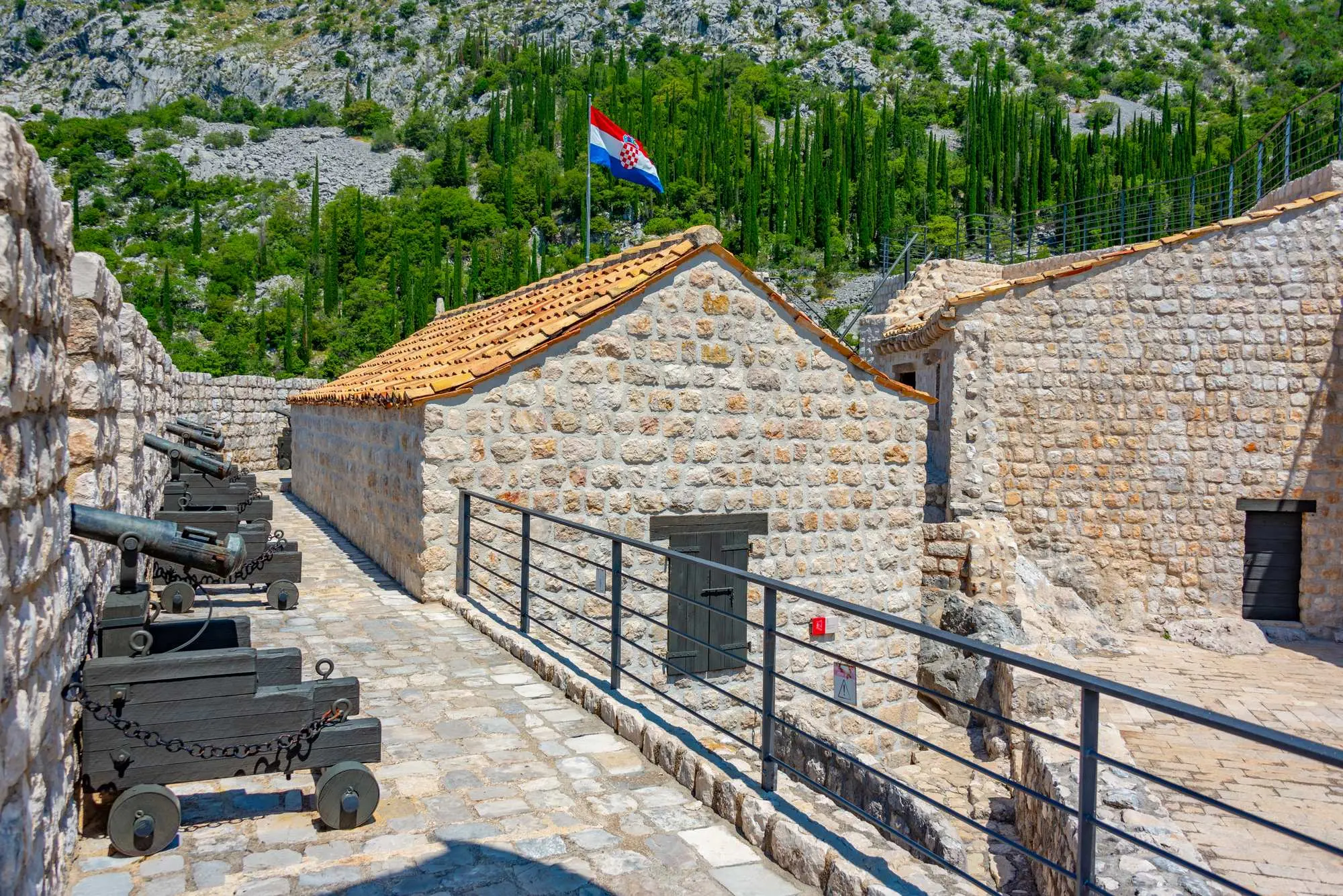
From the moment of takeover, the Dubrovnik authorities began an almost uninterrupted series of works to strengthen the fortress. The reason was clear. Although the civil administration of Konavle operated from the Rector’s Palace in Pridvorje, Sokol served an exclusively defensive role. It protected the Konavle county from external threats, especially from the east and south, and ensured the stability of the border toward the Ottoman territories and lands under the rule of the herceg. Precisely because of this role, the Republic invested substantial resources over decades into its walls, weaponry, and garrison.
The present appearance of Sokol was largely shaped in the fifteenth century, between 1420 and 1482, when its walls and internal structures were systematically repaired and expanded. The fortress has an irregular oval ground plan, adapted to the rocky ridge on which it was built, and develops across three clearly defined levels. The lowest level, known as Kamen, was enclosed by walls in 1477 so that in times of danger it could shelter the population of nearby villages. This decision reveals that Sokol was conceived not only as a military stronghold but also as a place of last refuge.
Sokol grad Photo: Dudlajzov Depositphotos
Above Kamen lies the outer ward, designed and expanded as early as around 1420. It contained the everyday but essential facilities of fortress life. A kitchen with a large oven, food storage rooms, a cistern, houses for mercenary troops, quarters for crossbowmen above the main gate, a guard tower, and sanitary spaces formed a clearly organized defensive ring protecting the inner core.
At the very top of the rock stands the upper fortress, the citadel, the safest and most heavily defended part of Sokol. Here were located the key resources for prolonged defense. A large cistern, food and weapons stores, deep pits for grain, the castellan’s residence with a hearth, a church, the canon’s quarters, a blacksmith’s workshop, and a circular oven formed a closed world capable of withstanding a siege. The architecture clearly shows that isolation and long-term uncertainty were fully anticipated.
Military discipline at Sokol was exceptionally strict. The castellan was chosen from among the Dubrovnik nobility for a six-month term and held judicial authority. He had to be younger than twenty-five, was not allowed to leave the fortress, personally guarded the keys, and unlocked the main gates himself. He was forbidden to admit anyone without special permission, whether foreigners, local inhabitants of Konavle, or even citizens of Dubrovnik. This level of isolation illustrates how sensitive a point Sokol was considered within the defensive system. In later centuries, especially in the second half of the sixteenth century, control of the fortress increasingly passed to vice castellans and commoners, reflecting changes in the military organization of the Republic.
Sokol grad Photo: Dudlajzov Depositphotos
In times of crisis, Sokol also had a clearly defined role as a refuge. In 1471, a precise decision was made regarding the placement of the population in case of danger. Children under the age of ten were to be accommodated in the upper fortress, women and the unarmed in the space between the walls of the outer ward, while all those capable of bearing arms were to remain outside the walls. This cold, almost mathematical distribution once again shows that Sokol was conceived as a functional defensive mechanism rather than an improvised shelter.
Despite the strength of its walls, the history of Sokol eventually came to an end. The great earthquake of 1667 did not destroy it, but after 1672, the fortress was no longer mentioned in archival records. It is assumed that it was abandoned after that date. Like many other fortifications, it became a quarry for the surrounding population, who used its stone blocks to build houses, boundary walls, and agricultural structures.
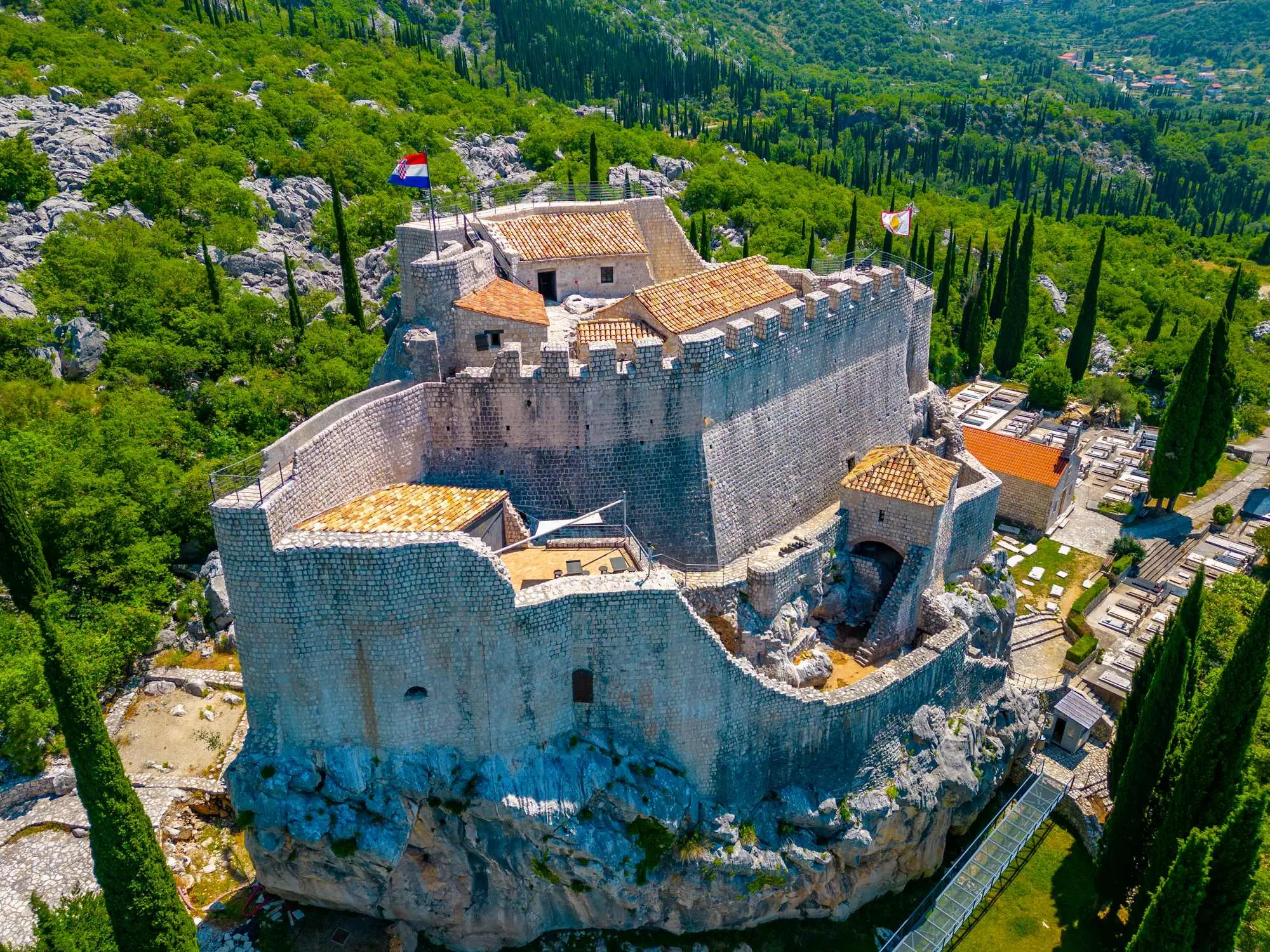
Sokol grad Photo: Dudlajzov Depositphotos
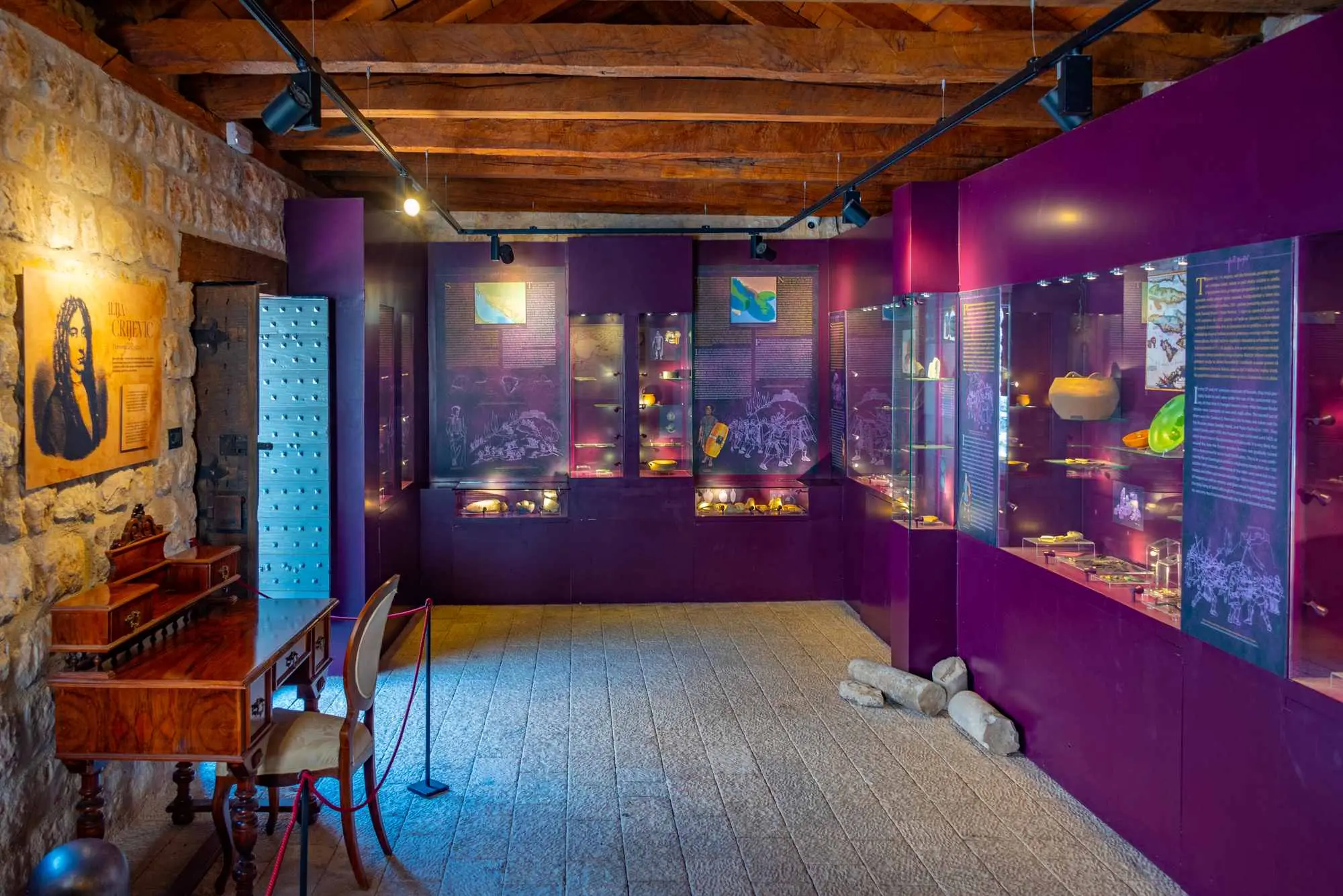
A turning point came in the mid-twentieth century, when the Society of Friends of Dubrovnik Antiquities initiated systematic restoration. Under the leadership of Lukša Beritić, cleaning and the first major interventions began in the late nineteen fifties and early nineteen sixties. After the Society became the owner of Sokol in 1966, restoration work intensified. Entrances were repaired, walls stabilized, cisterns returned to function, grain stores cleared, and ramparts reinforced. Conservation works followed in 1982, detailed documentation in 2002, and finally a major restoration campaign between 2007 and 2013.
In April 2013, the restored Sokol Grad was reopened to the public. Today, it stands as a rare example of a fortress that has not lost its identity. It has not been turned into a stage set but into a readable historical document. From its walls it is still possible to understand how the Republic of Dubrovnik thought, planned, and defended its borders. In this sense, Sokol is not merely a fortress above Konavle but a stone record of a state that understood security as something built patiently and layer by layer, just like its walls.

Sara Sedić
I plan to live in the moment :)


Leave a Reply