
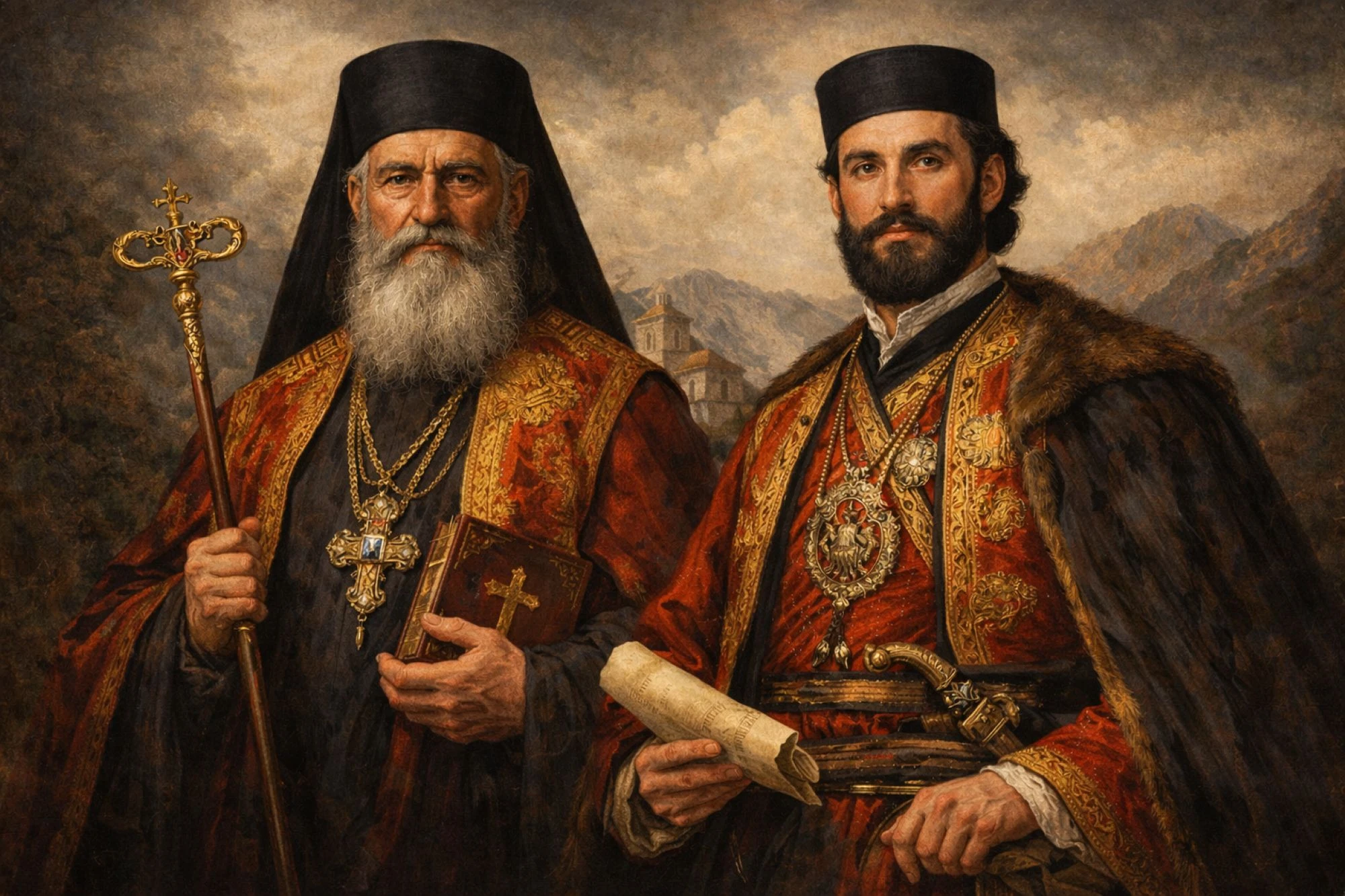
How did the Petrović Njegoš family shape the history of Montenegro?
In the history of Montenegro, few names are as deeply woven into the identity of the country as the Petrović Njegoš family. Their story is not merely a dynastic chronicle but the history of a people who survived for centuries between great empires, relying on mountains, faith and an unyielding sense of freedom. While borders around it constantly shifted, Montenegro preserved continuity of rule, statehood, and internal order thanks to the Petrović dynasty, a rarity in European history.
The roots of the Petrović family lie in Njeguši, a highland plateau above the Bay of Kotor, an area from which emerged one of the most influential brotherhoods in Montenegrin history. From this region came the name Njegoš, which gradually became a symbol of authority, spirituality, and national identity.
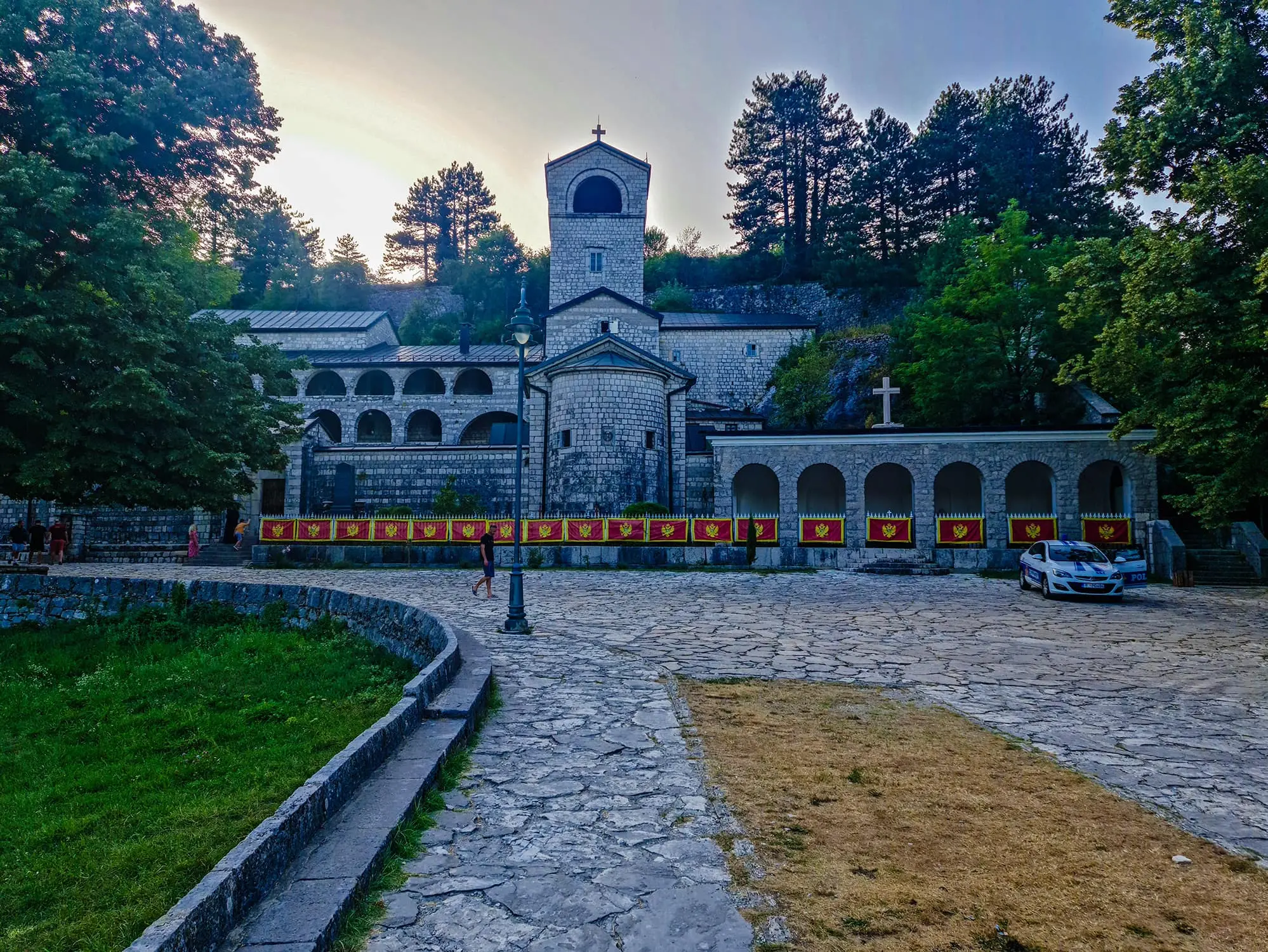
Cetinje Monastery, Photo: Adria.fun
What made Montenegro unique was its system of theocratic rule. At the head of the country stood an Orthodox bishop who served simultaneously as spiritual leader and secular ruler. Because these rulers lived as monks without descendants, power did not pass from father to son but from uncle to nephew. This system allowed one family to govern Montenegro for more than two centuries without dynastic collapse or internal civil war.
One of the earliest strong rulers of this lineage was Danilo I Petrović Njegoš, who at the end of the seventeenth century consolidated the authority of the Petrović family and laid the foundations of their long rule. His successors continued strengthening political unity, but the true rise of the dynasty began at the end of the eighteenth century.
At that time, Petar I Petrović Njegoš came to power, one of the most important figures in Montenegrin history. He was a warrior, lawgiver, and statesman who achieved what had previously seemed impossible. He united feuding tribes, introduced the first written legal code, established order, and created the foundations of state administration. His authority was so strong that Montenegro gained the respect of European powers during his reign. In popular memory, he remained a symbol of justice and protection, and the Church later proclaimed him a saint.
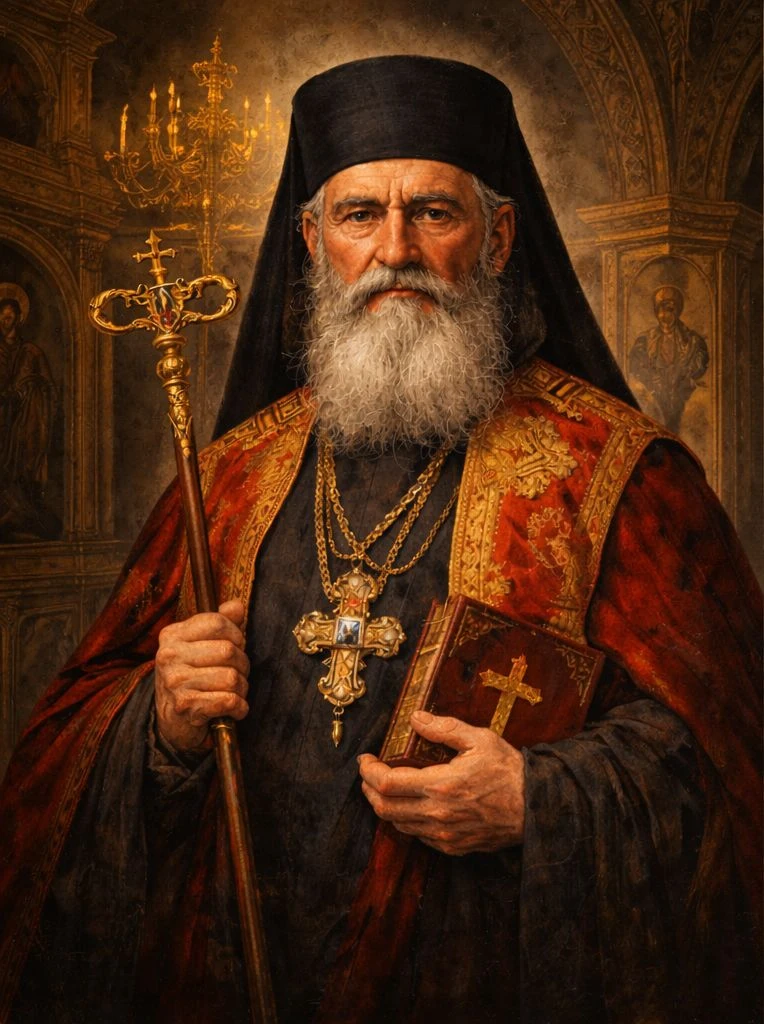
Illustration: historical portrait of Petar I Petrović Njegoš
After he died in 1830, he was succeeded by his nephew Rade Tomov Petrović, who, upon entering monastic life, took the name Petar II Petrović Njegoš. Njegoš would become the most famous member of the dynasty and one of the key figures of South Slavic history. In his character were united the ruler and the poet, the statesman and the philosopher, a man who governed through both the sword and the word.
During his reign, Montenegro gradually transformed into a more organised state. The first schools were opened, the central authority strengthened, the courts established, and a ruler’s residence was built in Cetinje. At the same time, Njegoš created literary works that transcended time and borders. The Mountain Wreath, The Ray of the Microcosm, and The False Tsar Šćepan the Small are not merely literary achievements but profound reflections on freedom, sacrifice, faith, and the fate of a small nation surrounded by empires.
In his lifetime, he expressed a wish to be buried on the summit of Mount Lovćen, a mountain with almost mythical significance in Montenegrin consciousness. After he died in 1851, this wish was fulfilled. A small chapel was first built on the site, followed later by the monumental mausoleum that today dominates the mountain peak. From Lovćen, the view opens toward the sea, the mountains, and the heart of the country, as if the poet still watches over the land to which he devoted both his rule and his verse.
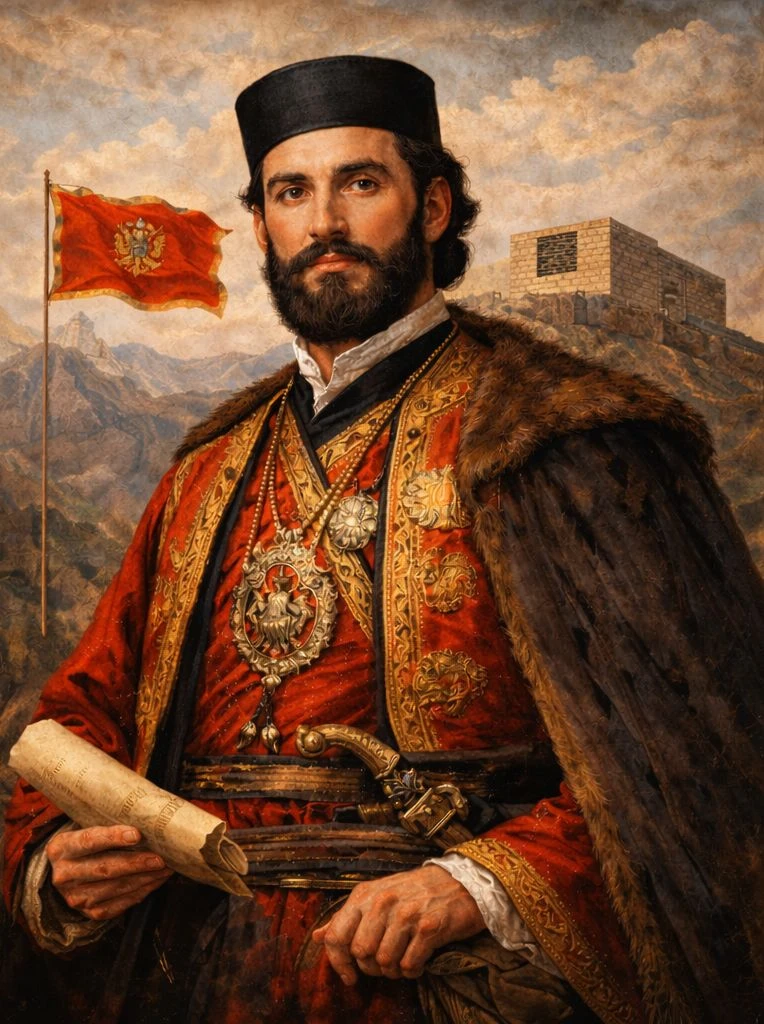
Illustration: historical portrait of Peter II Petrović Njegoš
Njegoš’s death marked the end of ecclesiastical rule in Montenegro. His successor, Danilo II Petrović Njegoš, made the historic decision to abandon the bishopric and proclaim Montenegro a secular principality. With this step, the country entered the modern era, and the Petrović Njegoš family became a European dynasty in the full sense of the word.
The dynasty reached its greatest political height during the reign of Nikola I Petrović Njegoš, the last king of Montenegro. Under his rule, the country gained international recognition at the Congress of Berlin, expanded its territory, strengthened its institutions, and in 1910 was proclaimed a kingdom. Cetinje became a small European capital with embassies, vibrant cultural life, and strong diplomatic connections.
-
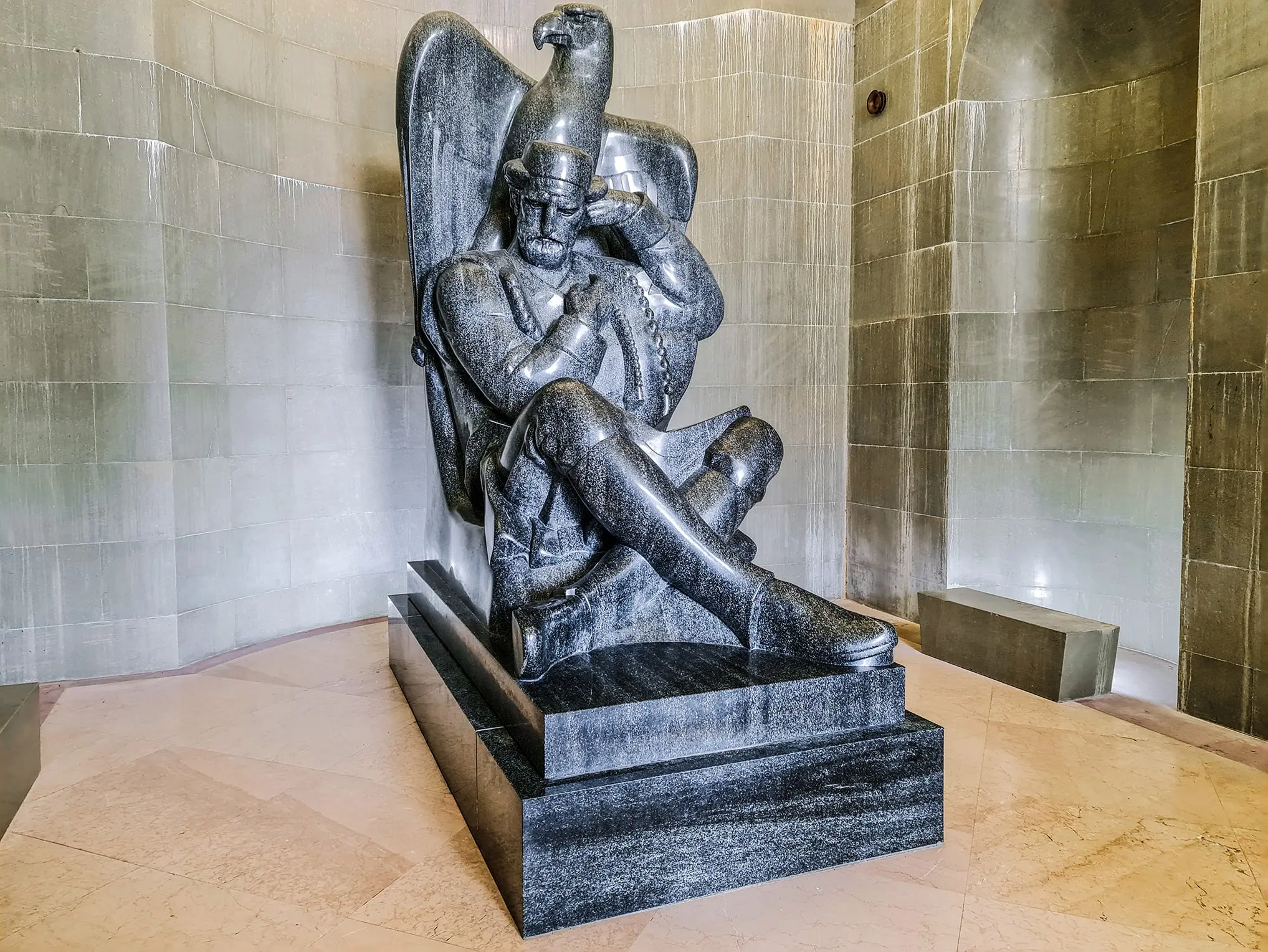
- Njegos Mausoleum, Photo: Adria.fun
-

- Njegos Mausoleum, Photo: Adria.fun
The fall of the dynasty came after the First World War and the abolition of Montenegrin statehood in 1918. Although the Petrović family lost the throne, their historical role did not end there. What remained was a legacy that had shaped Montenegro through more than two centuries of uninterrupted rule.
From a historical perspective, the Petrović Njegoš family was far more than a ruling house. It represented the state at a time when the state barely existed, law in a society without institutions, and continuity in a land of constant threat. Their legacy lives on in literature, legislation, faith, political culture, and symbols that continue to define Montenegro today.

Zoran Kovačić
I do miracles right away, but the impossible still takes me a little time!
Leave a Reply