
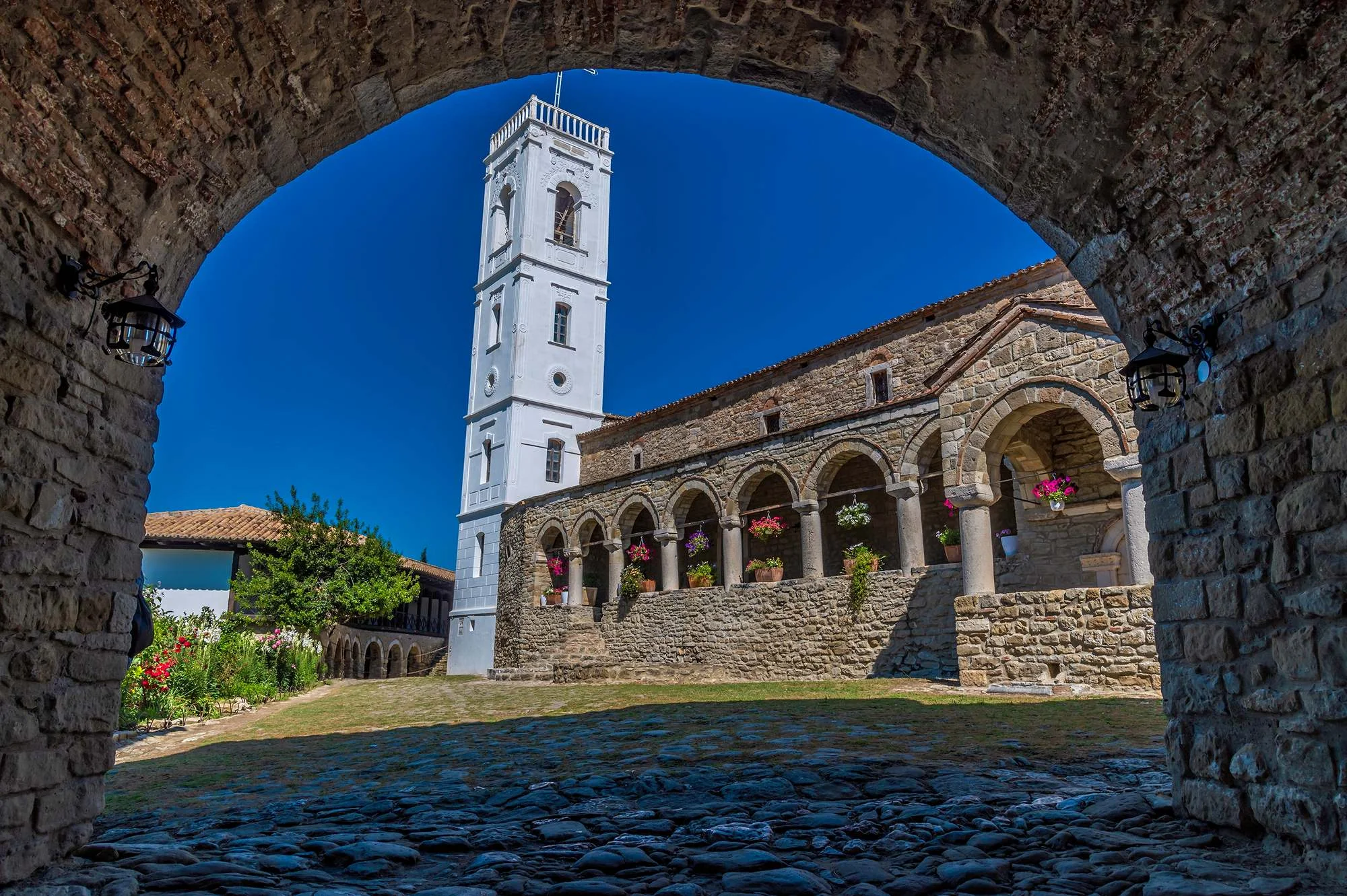
Albanian national hero was married in the Ardenica Monastery
On a hill that gently rises above the Myzeqe plain, far from major roads and busy cities, stands the Ardenica Monastery, an Orthodox complex that for centuries has preserved layers of history, spirituality, and identity. Surrounded by cypresses and olive trees, almost invisible in the landscape of central Albania, it hides a history well worth exploring.
The monastery, officially named the Monastery of the Nativity of the Most Holy Theotokos, is one of the most important Orthodox centers in Albania and at the same time one of the few that is still inhabited today. It is believed that the sacred tradition at this site dates back to the early Middle Ages, while the present monastery complex was built in 1282 on the order of the Byzantine emperor Andronikos II Palaiologos, following his victory over the Angevins at the siege of Berat. This directly connects Ardenica with Byzantine politics and military successes in the western Balkans at the end of the thirteenth century.
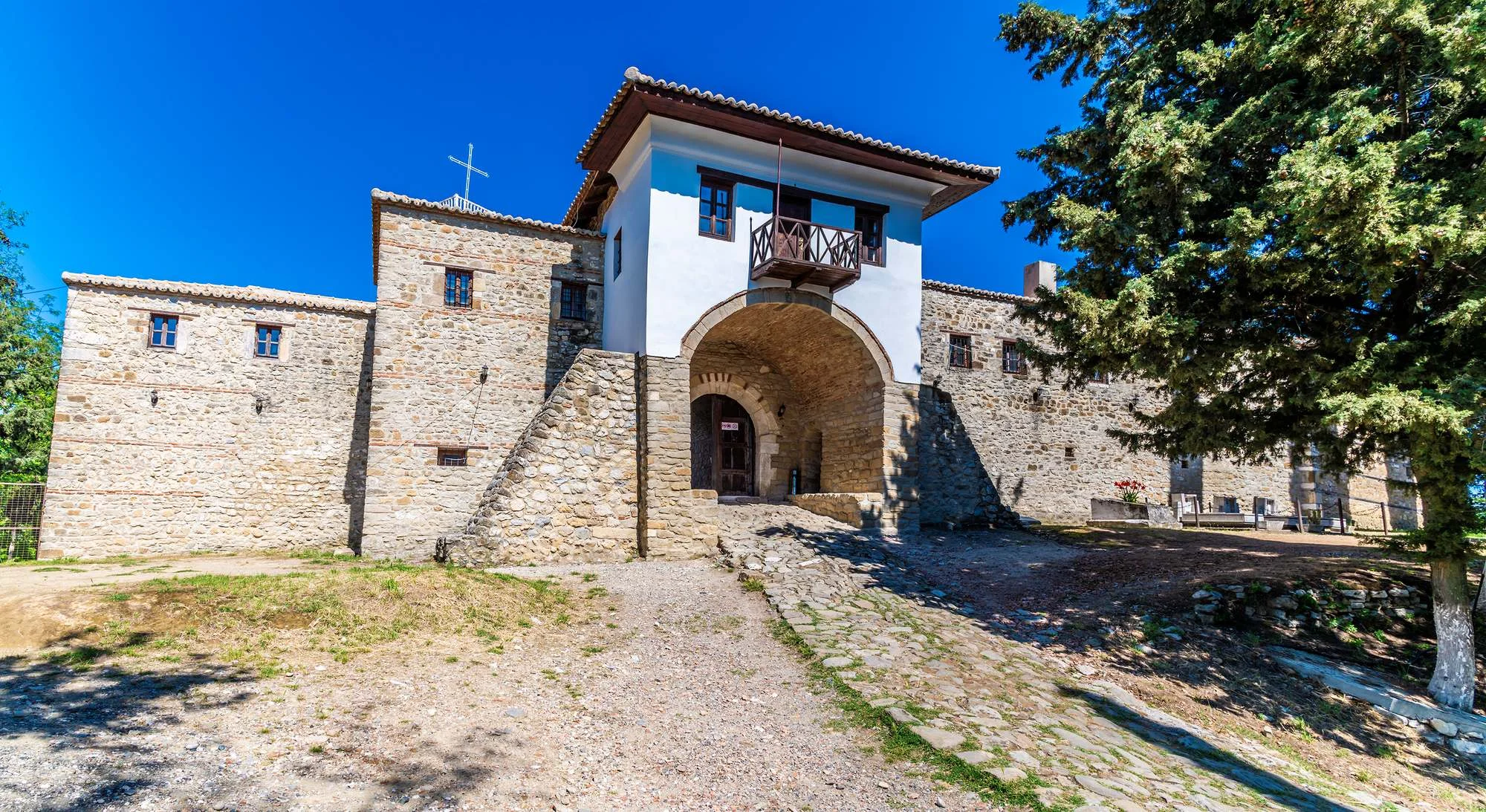
Ardenica Monastery Photo: nikkiapul Depositphotos
The location of the monastery had sacred significance even before the arrival of Christianity. Before the construction of the Chapel of the Holy Trinity, which is considered older than the main church, a pagan temple dedicated to the goddess Artemis stood here. The name Ardenica is derived from this ancient cult, while the proximity of the Roman road Via Egnatia further confirms the importance of the site.
The monastery is particularly known for an event in 1451, when Skanderbeg married Andronika Arianiti in its church. The wedding took place in the presence of Albanian nobles, members of the League of Lezhë, and representatives of the Kingdom of Naples, the Republic of Venice, and the Republic of Ragusa, while the liturgy was conducted by the Archbishop of Kanina. According to numerous sources, the tradition connected to this wedding saved the monastery from demolition during the communist atheisation campaign of the 1960s.
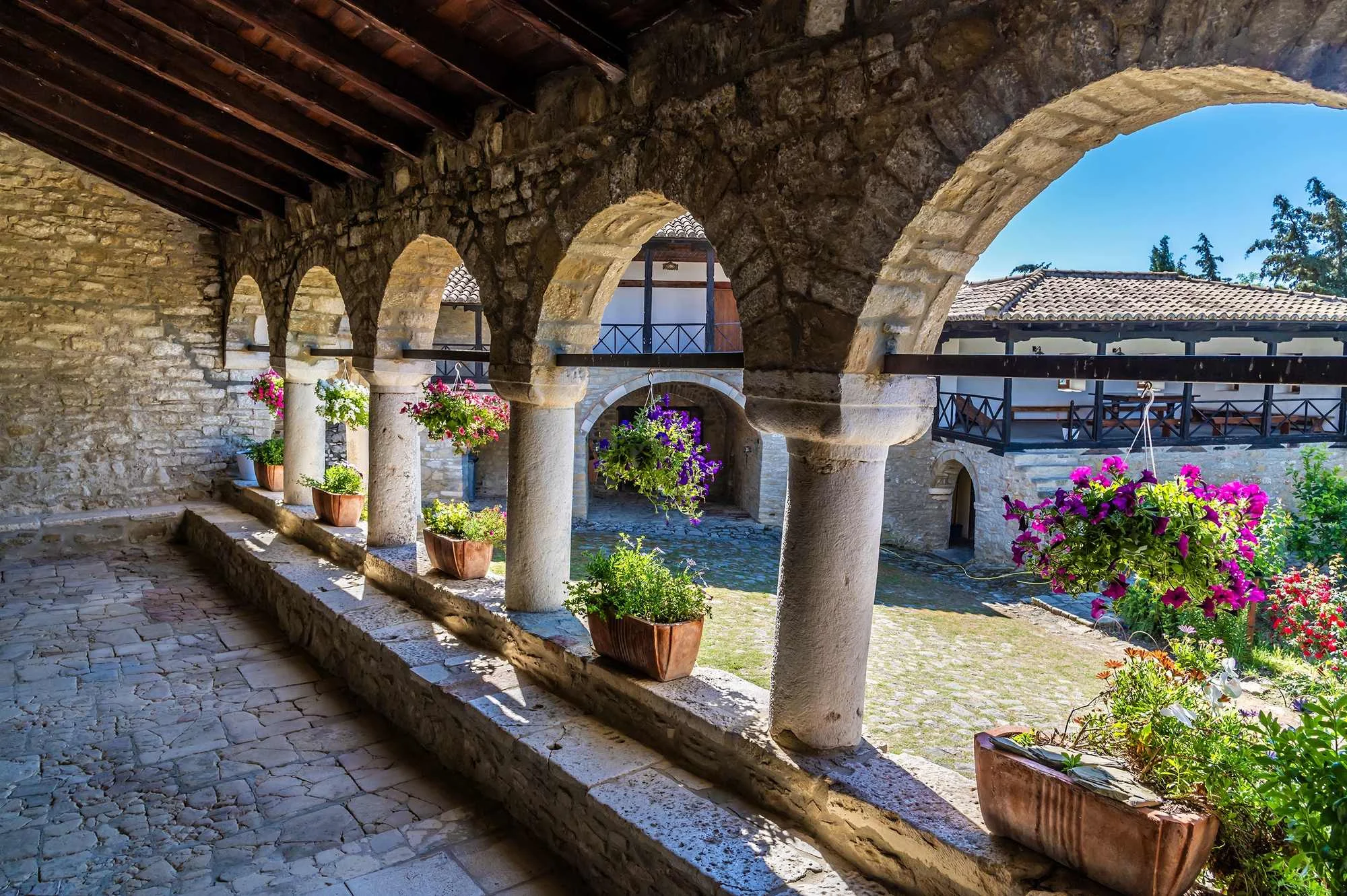
Ardenica Monastery Photo: nikkiapul Depositphotos
The central part of the complex is the Church of the Holy Theotokos, built in the Byzantine style with pronounced Romanesque elements. The interior of the church represents one of the most valuable ensembles of Orthodox painting in Albania. The frescoes that cover the walls today were created in 1744 and are the work of brothers Konstantin and Athanas Zografi, painters from Korçë who also worked in Voskopojë and on Mount Athos. Their iconographic program includes scenes from the Old and New Testaments, liturgical cycles, the lives of saints, and eschatological themes, with a monumental depiction of the Last Judgment standing out in the narthex. Among the frescoes is a rare depiction of Saint John Kukuzelis, born in Durrës, which further emphasizes the local character of the iconography.
The iconostasis of the church is made of wood, polychromed and gilded, and is considered one of the best preserved in Albania. It was created in 1744 with the participation of woodcarving masters from Voskopojë, while the icons on it are the work of the renowned Albanian painter Konstantin Shpataraku. Among the icons, the one depicting Saint Jovan Vladimir is particularly notable, as it also shows the Albanian prince Karl Topia with a crown and scepter, accompanied by an inscription identifying him as the King of Albania, making this icon an exceptionally valuable historical document.
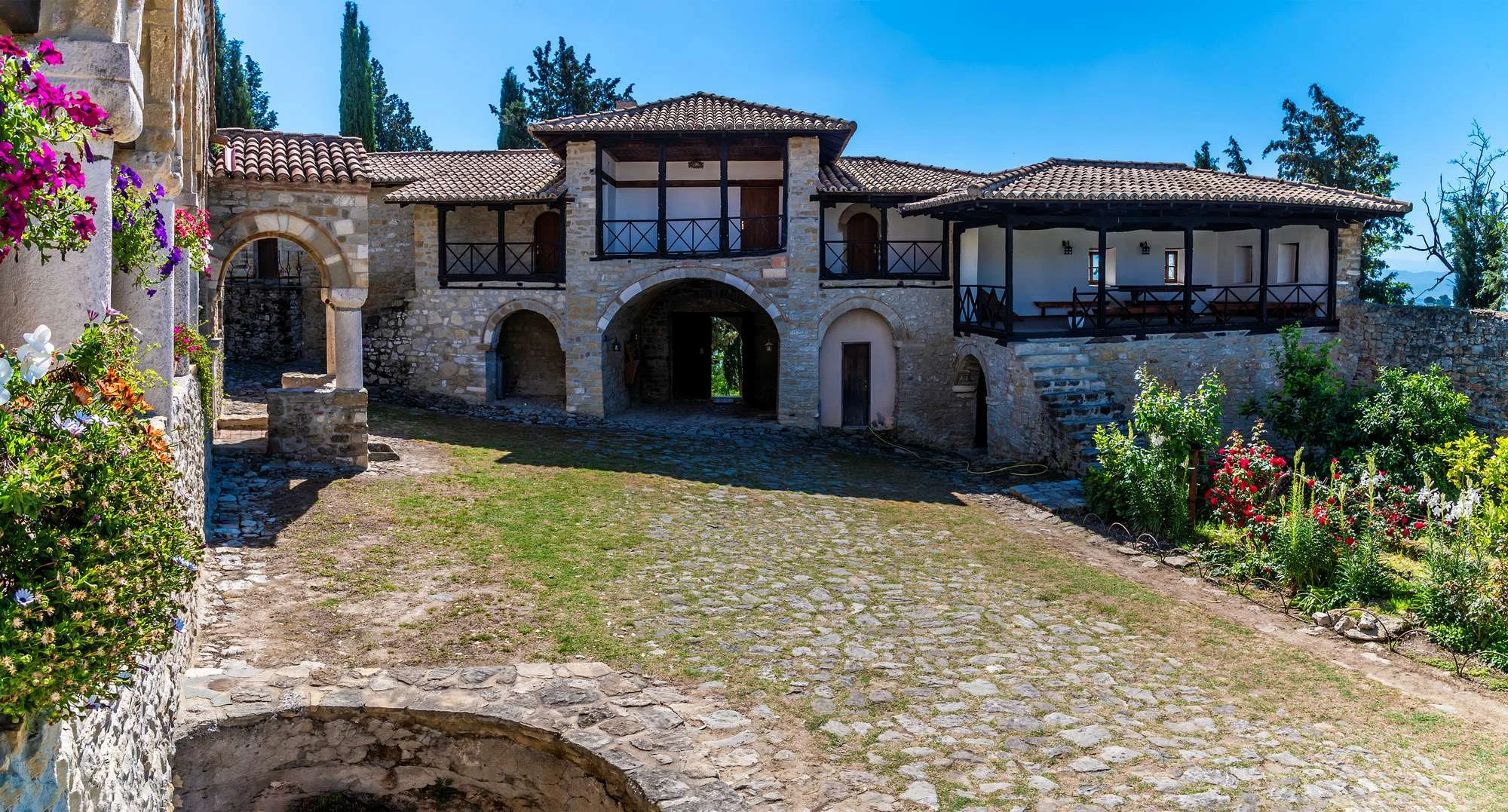
Ardenica Monastery Photo: nikkiapul Depositphotos
A special place in the history of the monastery belongs to the hieromonk Nektarios Terpos, who in 1731 inscribed a short prayer in the church in the form of a fresco in four languages: Greek, Latin, Aromania,n and Albanian. The Albanian text is considered the oldest known record of the Albanian language inside a Byzantine-era church, while the Aromanian text represents the oldest known written trace of that language.
From the late eighteenth century, a theological school operated in the monastery, with a rich library of about 32,000 volumes, which played an important role in the education of Orthodox clergy. The library was destroyed in a fire in 1932, which is considered one of the greatest cultural losses in the history of Ardenica. During the period of the Albanian National Awakening, the Albanian language was also taught at the school, giving the monastery an additional cultural and educational dimension.
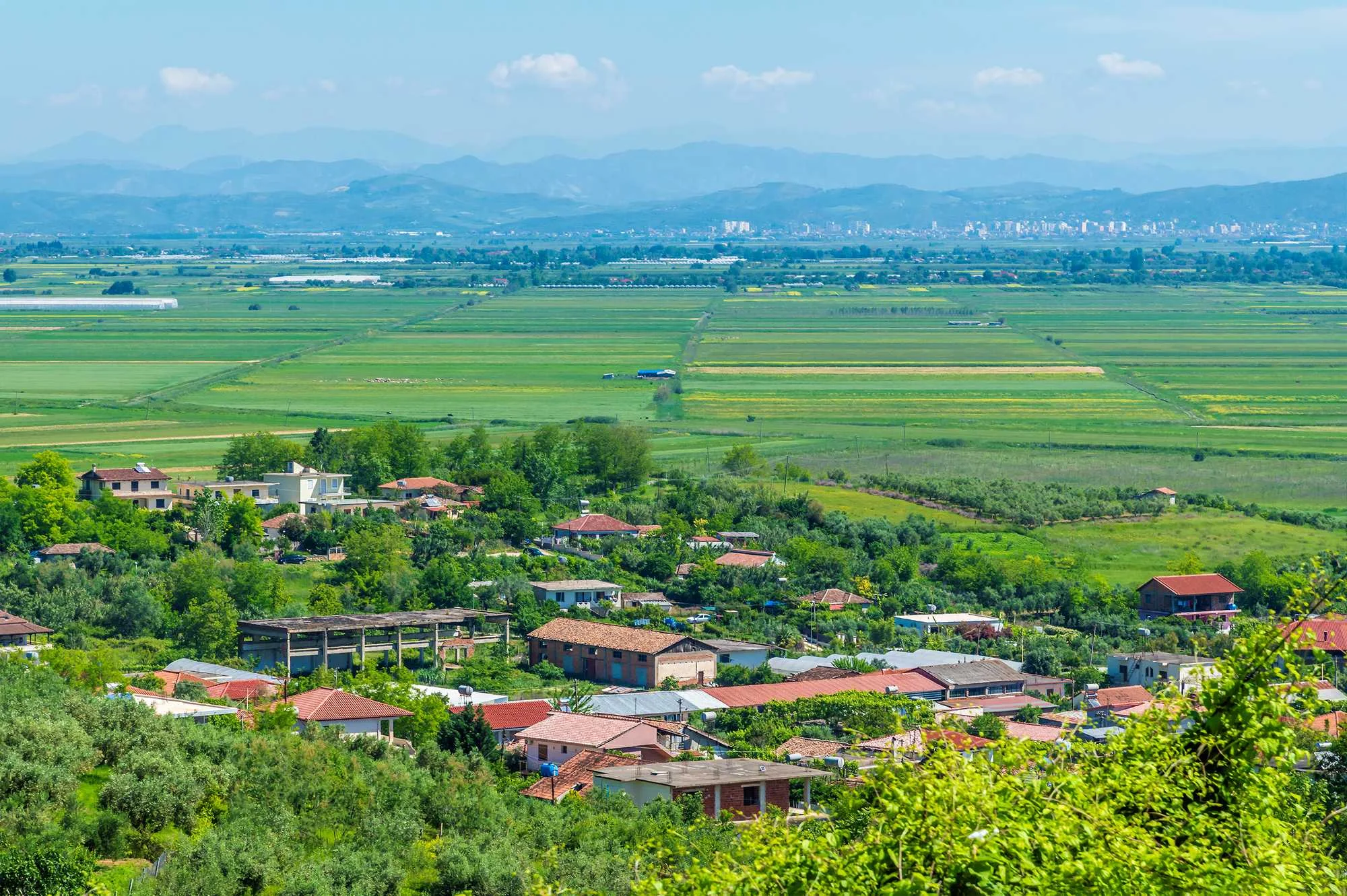
View from Ardenica Monastery Photo: nikkiapul Depositphotos
In the second half of the twentieth century, the complex suffered severe damage. After Albania was declared an atheist state, the monastery was closed, used as army barracks, and later turned into a tourist facility with an improvised motel and restaurant inside the monastery courtyard. Only after the fall of the communist regime, in 1992, did the Orthodox Autocephalous Church of Albania regain possession of the monastery, and the first monks returned at Easter in 1996.
Today, Ardenica is the only active Orthodox monastery in Albania with a small monastic community. In addition to the main church, the complex includes the Chapel of the Holy Trinity from the fourteenth or fifteenth century, a former oil press, auxiliary buildings, and a bell tower 24 meters high, built from stone taken from the nearby ancient city of Apollonia. Situated on a dominant elevation, Ardenica offers views toward the Adriatic Sea, the Karavasta lagoon, and the Tomorr and Labëria mountains, further confirming the strategic and symbolic importance of the site on which it stands.

Zoran Kovačić
I do miracles right away, but the impossible still takes me a little time!
Leave a Reply