
The most beautiful Roman amphitheatres in Italy worth visiting at least once in your life
When you think of Roman spectacles today, it is almost impossible not to picture a massive stone oval filled with tens of thousands of people, the roar of the crowd, and gladiators stepping onto the sand of the arena. Yet amphitheatres were not just places of bloody combat. They represented the peak of Roman engineering, a symbol of the Empire’s power and a kind of social centre for every important city. Italy still preserves more of them than any other country in the world, from the monumental Colosseum in Rome to hidden arenas that lie buried beneath modern cities for centuries.
The Romans built amphitheatres with astonishing precision. Unlike Greek theatres, which relied on natural hillsides, Roman amphitheatres were completely freestanding structures. Their elliptical shape allowed good visibility from every section of the seating area, while complex systems of corridors, staircases, and entrances enabled thousands of people to enter and leave within just a few minutes. Many of them featured underground tunnels, rooms for animals, mechanisms for lifting scenery, and even systems for partially covering the audience.
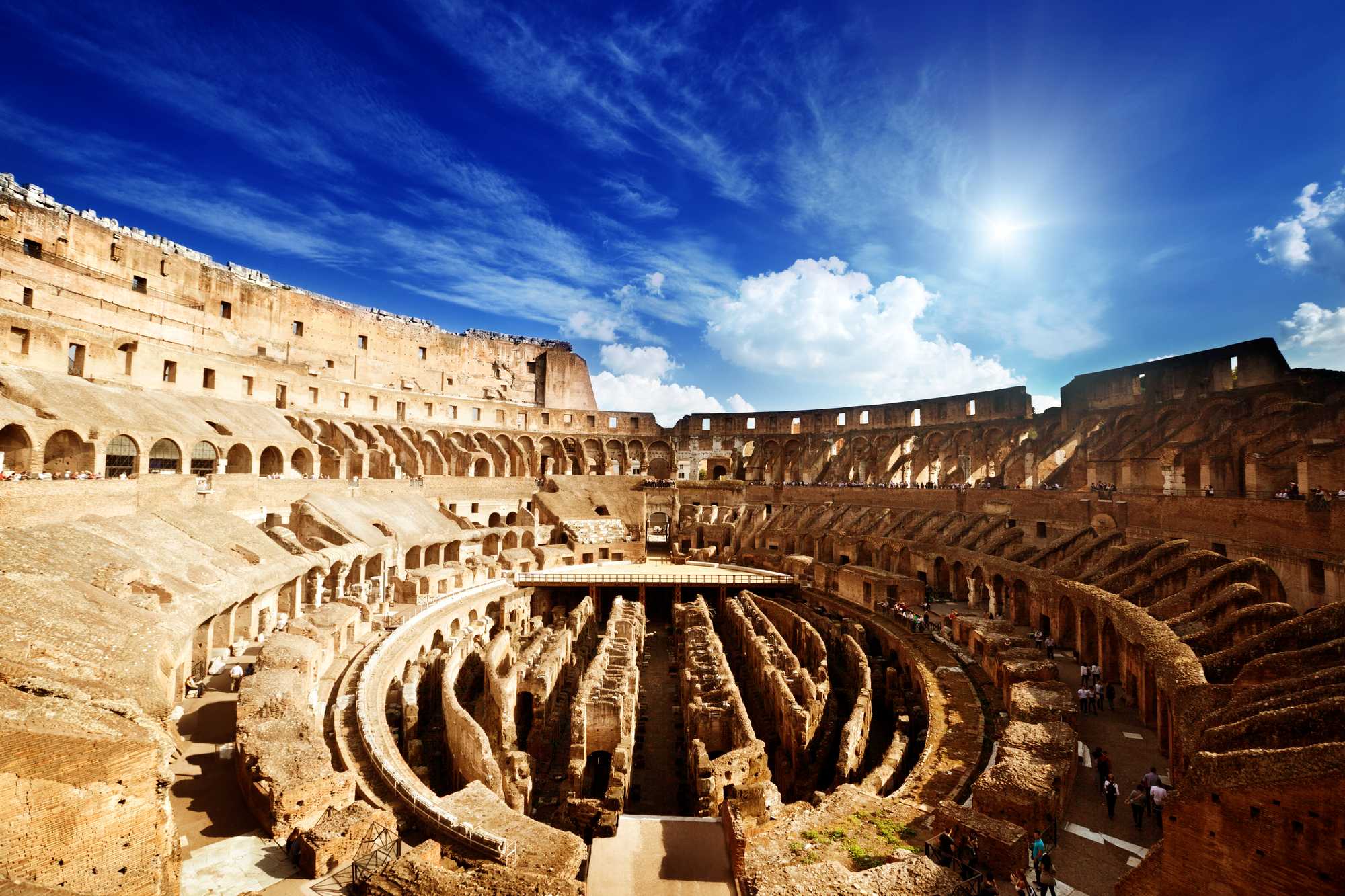
Colosseum in Rome Photo: Iakov Depositphotos
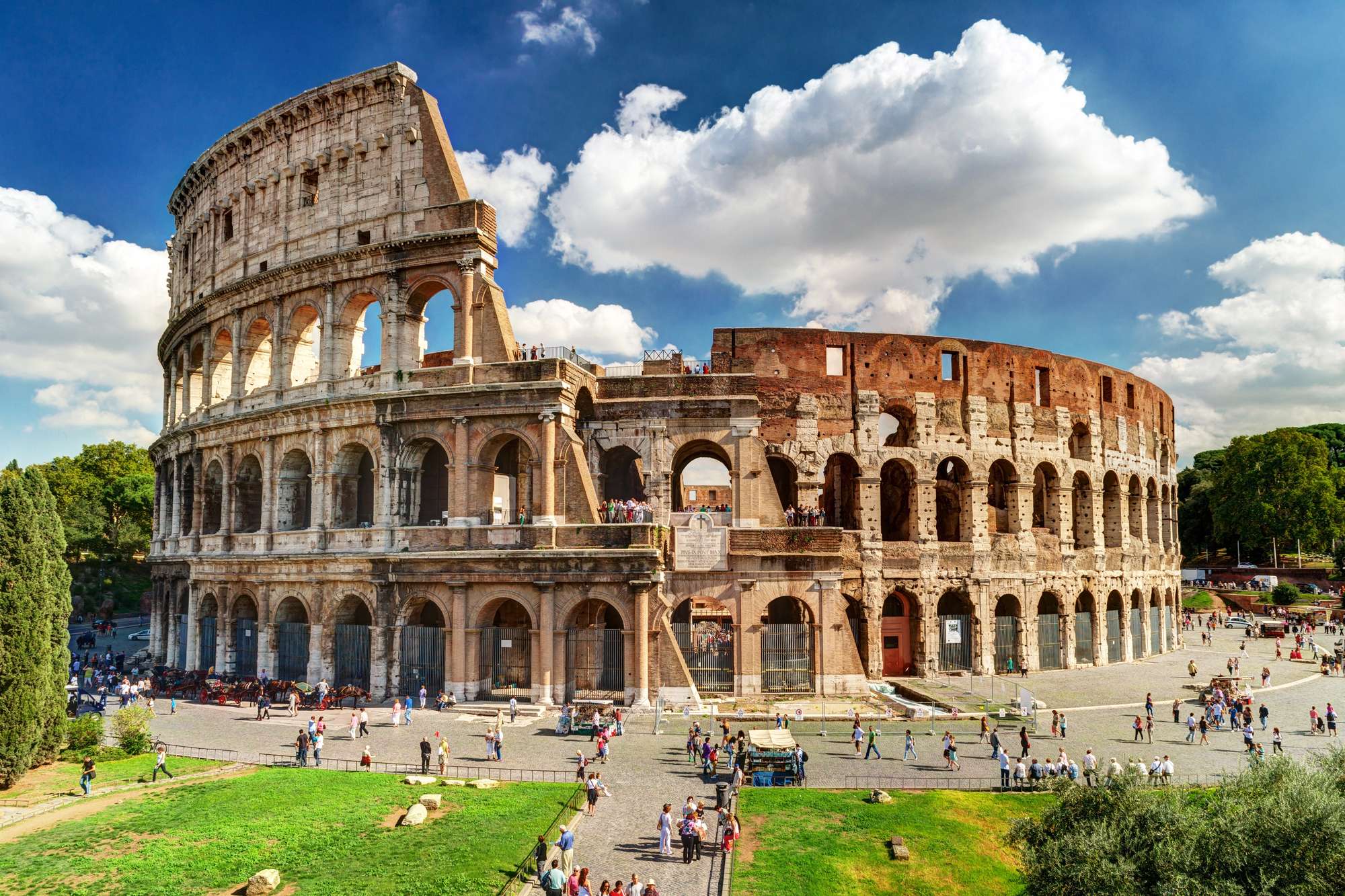
The largest, most famous, and unquestionably the most iconic among them is, of course, the Colosseum. This enormous Roman amphitheatre is not only a symbol of Rome but of the entire ancient world. It was built in the 1st century during the Flavian dynasty and is believed to have accommodated between 50 and 80 thousand spectators. What fascinates people is not only its size, but also the fact that this nearly two-thousand-year-old structure survived earthquakes, fires, stone looting, and centuries of decay.
The Colosseum was a technological marvel of its time. It had a complex underground system of chambers known as the hypogeum, where gladiators, exotic animals, and stage scenery were kept before being lifted to the arena floor by mechanical elevators. The audience was strictly arranged according to social status, with the best seats reserved for the elite, while the upper rows belonged to ordinary citizens. Even the enormous fabric canopy known as the velarium could cover much of the seating area to protect spectators from the sun.
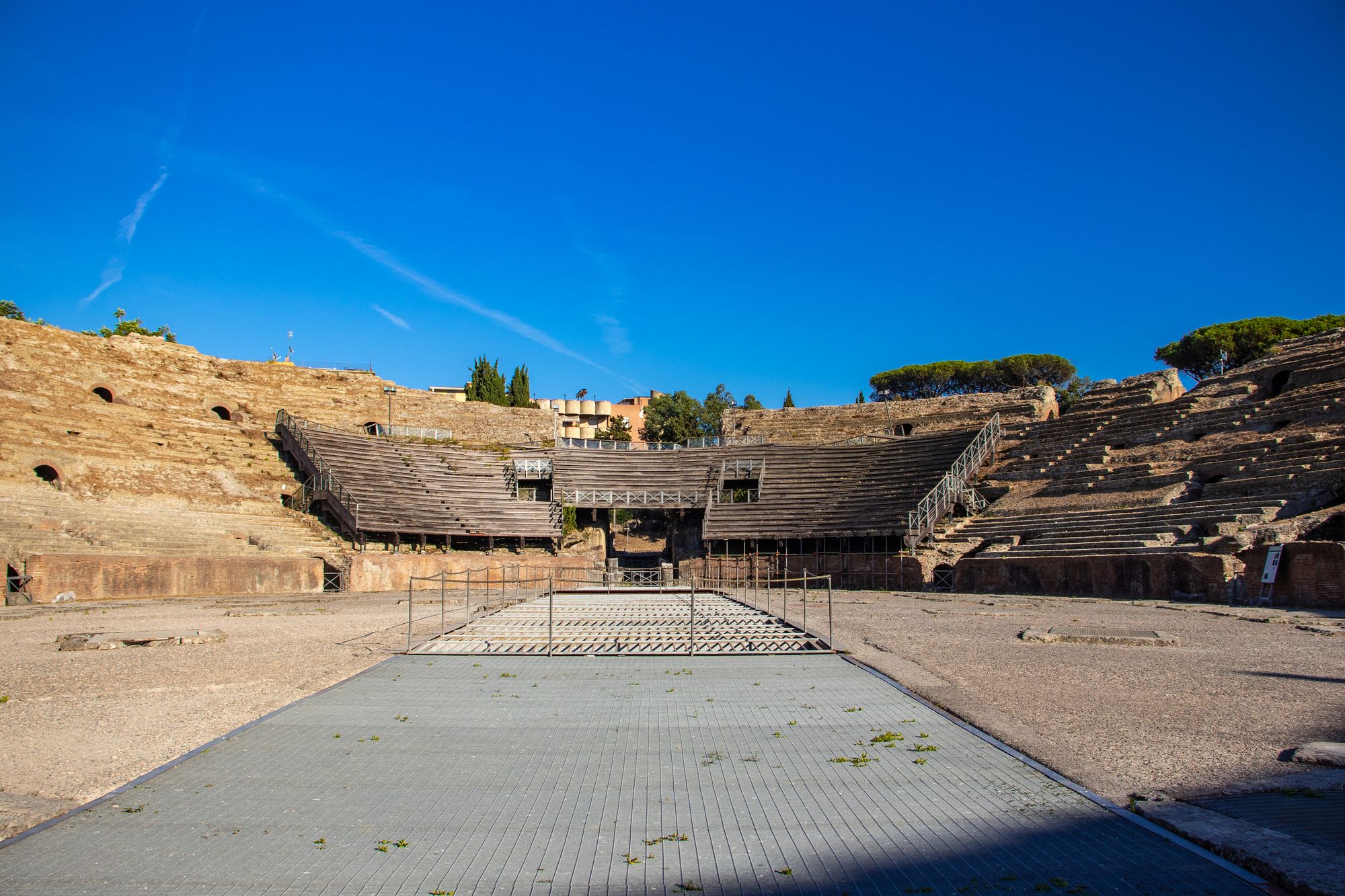
Amphitheatre in Pozzuoli Photo: ImmaG
Although the Roman Colosseum overshadowed almost all the others, Italy is filled with amphitheatres that each have fascinating stories of their own. Arena di Verona is one of the best preserved Roman amphitheatres in the world and is still used today for operas and concerts. Few places allow you to sit on ancient stone that is two thousand years old while watching a modern spectacle under the open sky.
In southern Italy, the Amphitheatre of Capua stands out in particular, as it was once one of the largest amphitheatres in the entire Empire. It is often associated with the story of Spartacus and the gladiator uprising. Not far from it lies the Amphitheatre of Pozzuoli, famous for its exceptionally preserved underground corridors that provide a rare glimpse into the “hidden” side of Roman arenas.
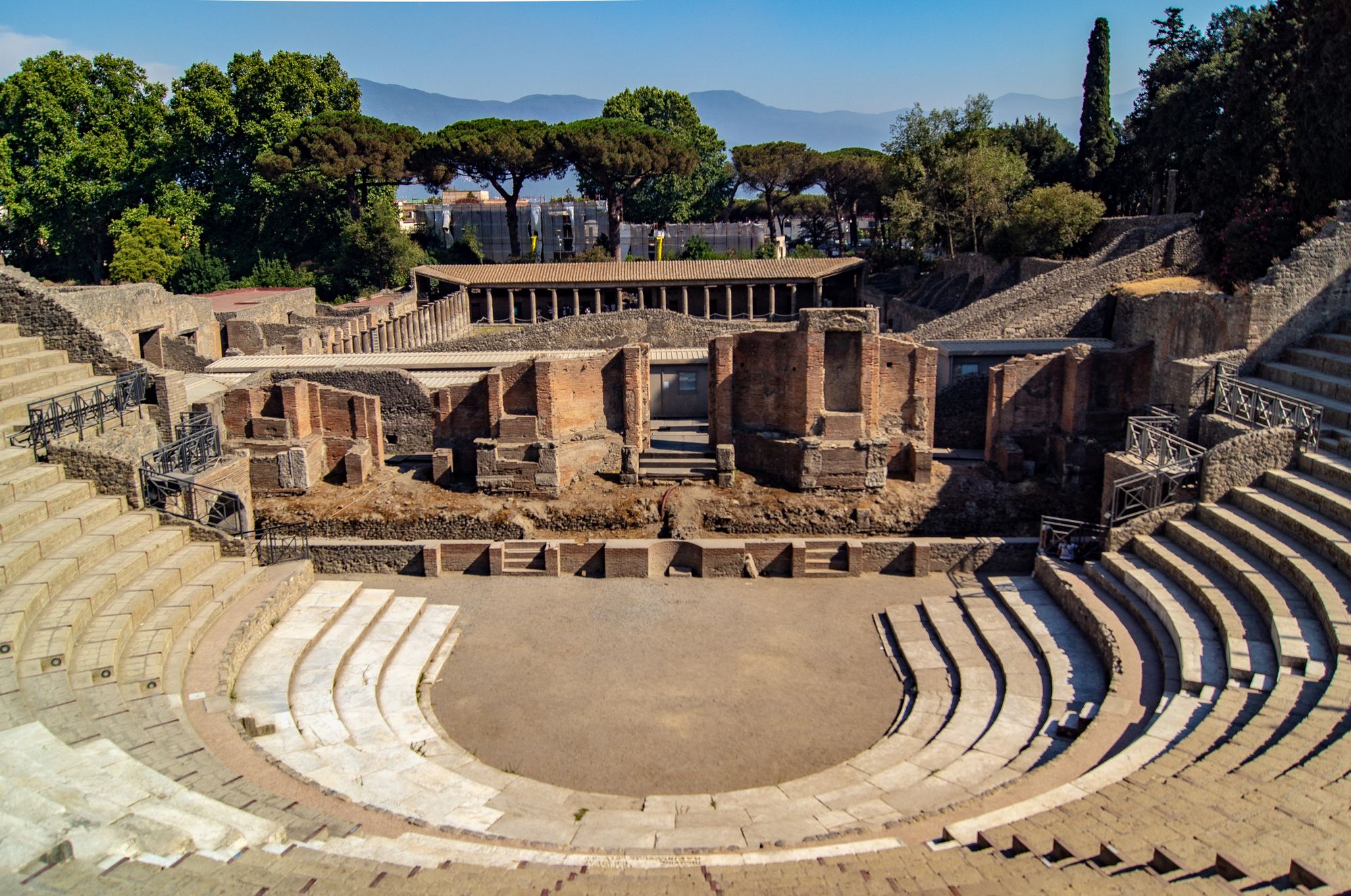
Amphitheater in Pompeii Photo: Cicestudifotografic Depositphotos
A special atmosphere surrounds Amphitheatre of Pompeii, one of the oldest surviving Roman amphitheatres. As you walk through its stone passageways, you can almost feel the moment when the eruption of Mount Vesuvius brought life in the city to a sudden halt. Unlike the Colosseum, everything here feels more intimate, quieter, and almost hauntingly authentic.
In Sicily, the Amphitheatre of Catania and the Amphitheatre of Syracuse stand out, both built from volcanic stone beneath Mount Etna. In Tuscany, attention is drawn to Piazza dell’Anfiteatro, where the shape of the ancient amphitheatre literally became part of the modern city. Today, the site of the former arena is occupied by a square surrounded by houses that follow the original oval shape of the Roman structure.
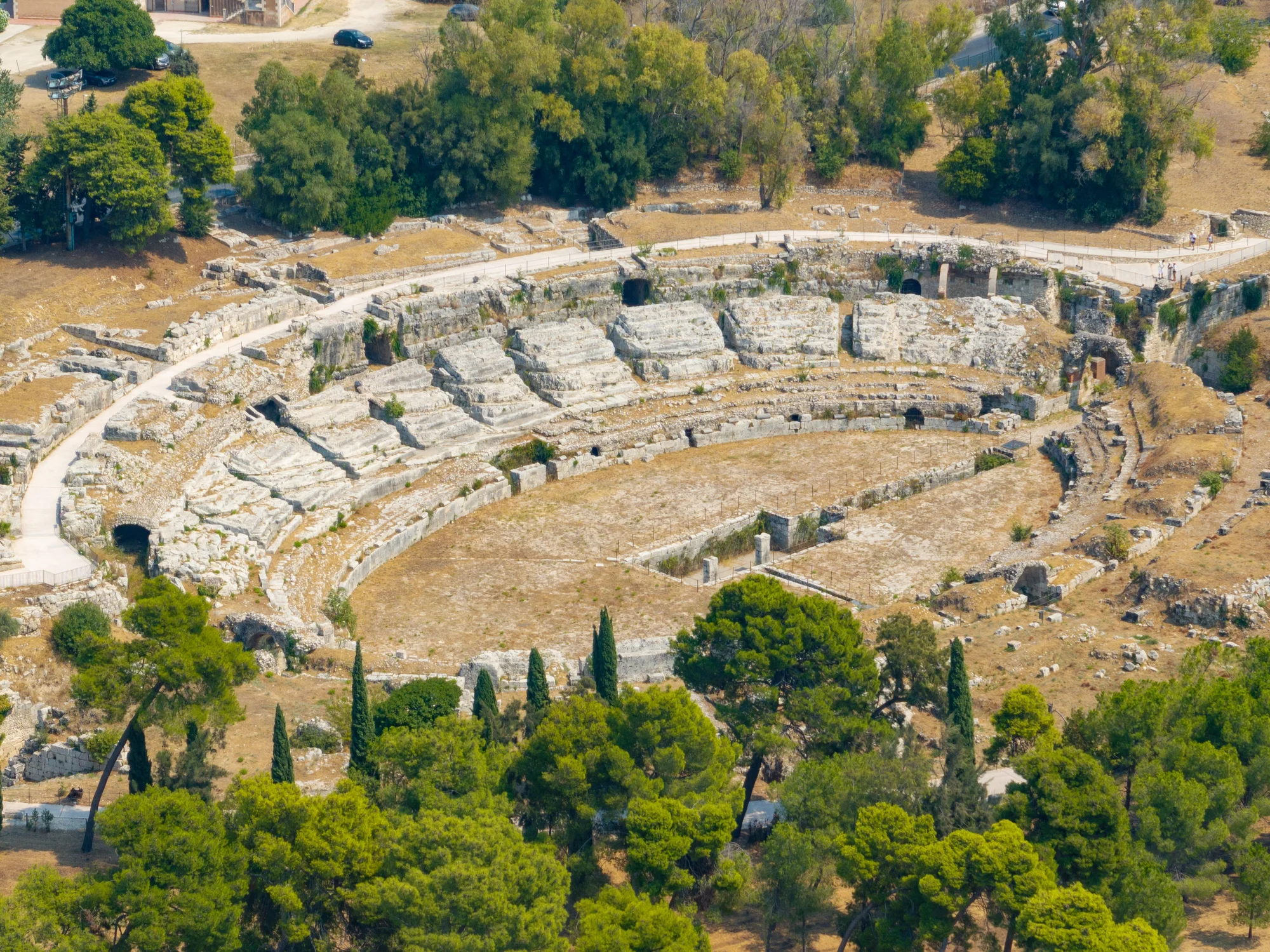
Amphitheater in Syracuse Photo: demerzel21 Depositphotos
If five amphitheatres had to be singled out as essential visits for almost every history enthusiast, then alongside the Roman Colosseum, there would certainly be Arena di Verona for its preservation and modern use, Pompeii for its extraordinary connection to ancient daily life, Capua for its gladiatorial history, and Pozzuoli for its impressive underground world. Each of them reveals a different face of the Roman world.
Beyond the most famous Roman arenas, Italy hides many more ancient amphitheatres scattered from the Alps to Sicily. Some survive only as archaeological remains, while others are still clearly visible within the fabric of modern cities.
| Amphitheatre | Special feature |
|---|---|
| Amphitheatre of Cagliari | Partially carved into rock |
| Amphitheatre of Catania | Built from Etna’s volcanic stone |
| Amphitheatre of Syracuse | One of the largest in Sicily |
| Amphitheatre of Rimini | Located beside the former Roman city walls |
| Amphitheatre of Lecce | Partially hidden beneath the city centre |
| Amphitheatre of Terracina | Important arena along the Via Appia |
| Amphitheatre of Sutri | Carved directly into tuff stone |
| Amphitheatre of Spoleto | Today, part of an archaeological complex |
| Amphitheatre of Arezzo | Known for its elegant Roman layout |
| Amphitheatre of Benevento | One of the larger arenas in southern Italy |
| Amphitheatre of Venosa | Remains of the ancient colony of Venusia |
| Amphitheatre of Alba Fucens | Located among the mountains of Abruzzo |
| Amphitheatre of Fiesole | Known for panoramic views above Florence |
| Amphitheatre of Ancona | Ruins along the Adriatic coast |
| Amphitheatre of Taranto | Blend of Greek and Roman heritage |
| Amphitheatre of Grumentum | Small but well-preserved remains |
| Amphitheatre of Aquileia | Part of a once major Roman centre |
| Amphitheatre of Volterra | Relatively recently uncovered archaeologically |
| Amphitheatre of Terni | Once an important Roman settlement |
| Amphitheatre of Parma | Preserved archaeological traces |
| Amphitheatre of Trieste | Remains of ancient Roman Tergeste |
| Piazza dell’Anfiteatro in Lucca | Oval square following the original arena shape |
| Arena of Milan | Remains of Roman Mediolanum |
Interestingly, the tradition of building monumental arenas did not stop within the borders of present-day Italy. One only has to mention Pula Arena, one of the best known and best preserved Roman amphitheatres outside Italy, which still dominates the Adriatic coast today.
What makes Roman amphitheatres so fascinating is not just their age, but the feeling that they are still alive. Some have become concert venues, some remain hidden beneath modern cities, while others still stand almost untouched after two millennia. Travelling through Italy is therefore not only a tour of ancient ruins, but an encounter with structures that shaped the very idea of public spectacle, urbanism, and architecture as we know it today. Once you step into one of these arenas, it becomes easy to understand why the Romans never stopped building ever larger and more impressive amphitheatres.

Ahmed Taha
Peace, love and music! ☮️

Leave a Reply