
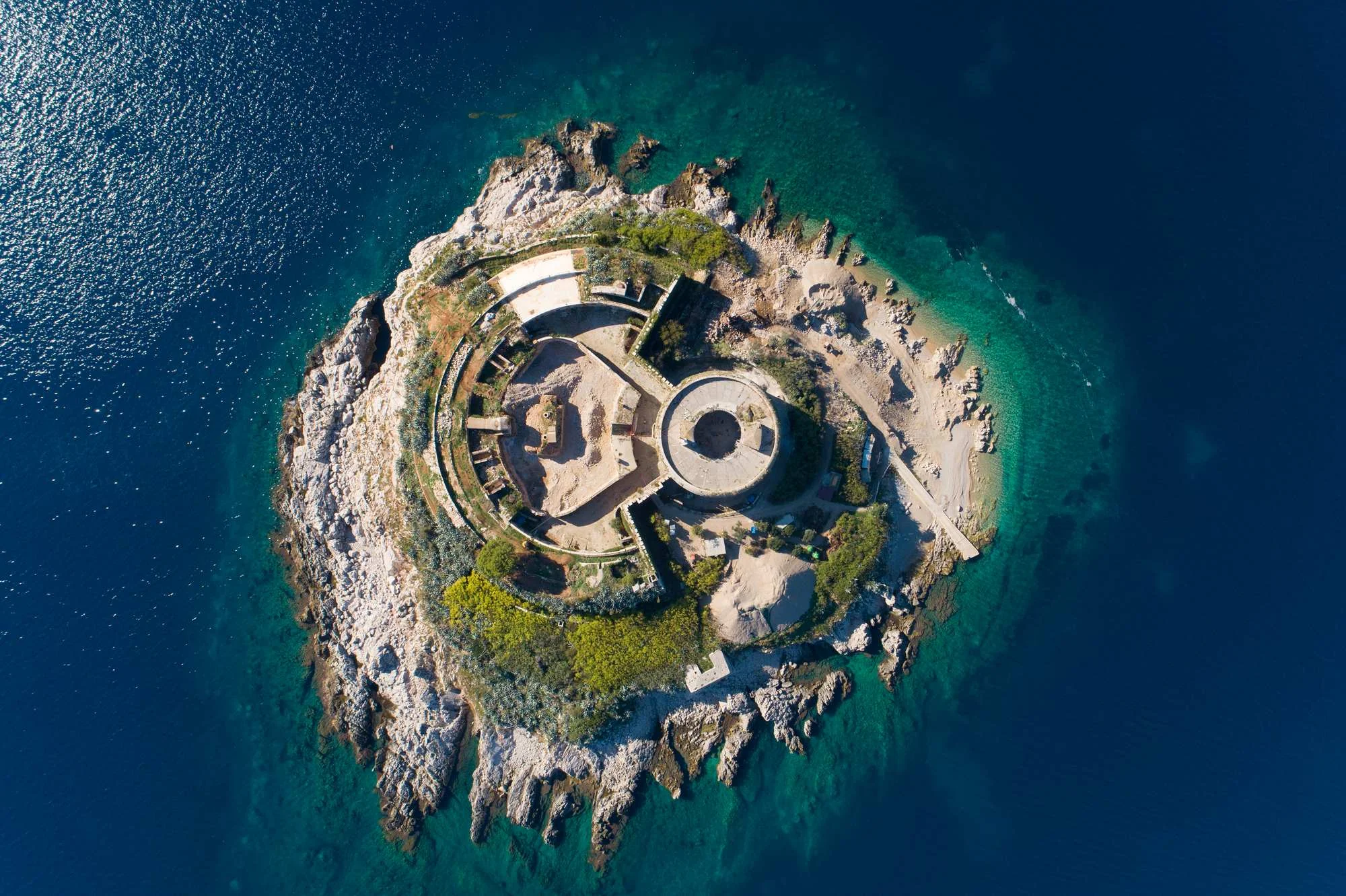
The mysterious island prison at the entrance to the Bay of Kotor is now a luxury resort
At the very entrance to the Bay of Kotor, between the Luštica Peninsula and Cape Oštro on Prevlaka, lies the small island of Mamula, also known by its older name Lastavica. Although small in size, this rocky island held an exceptionally important strategic role for centuries. Whoever controlled the passage between the Adriatic Sea and the Bay of Kotor had oversight of one of the safest natural harbors on the eastern Adriatic coast.
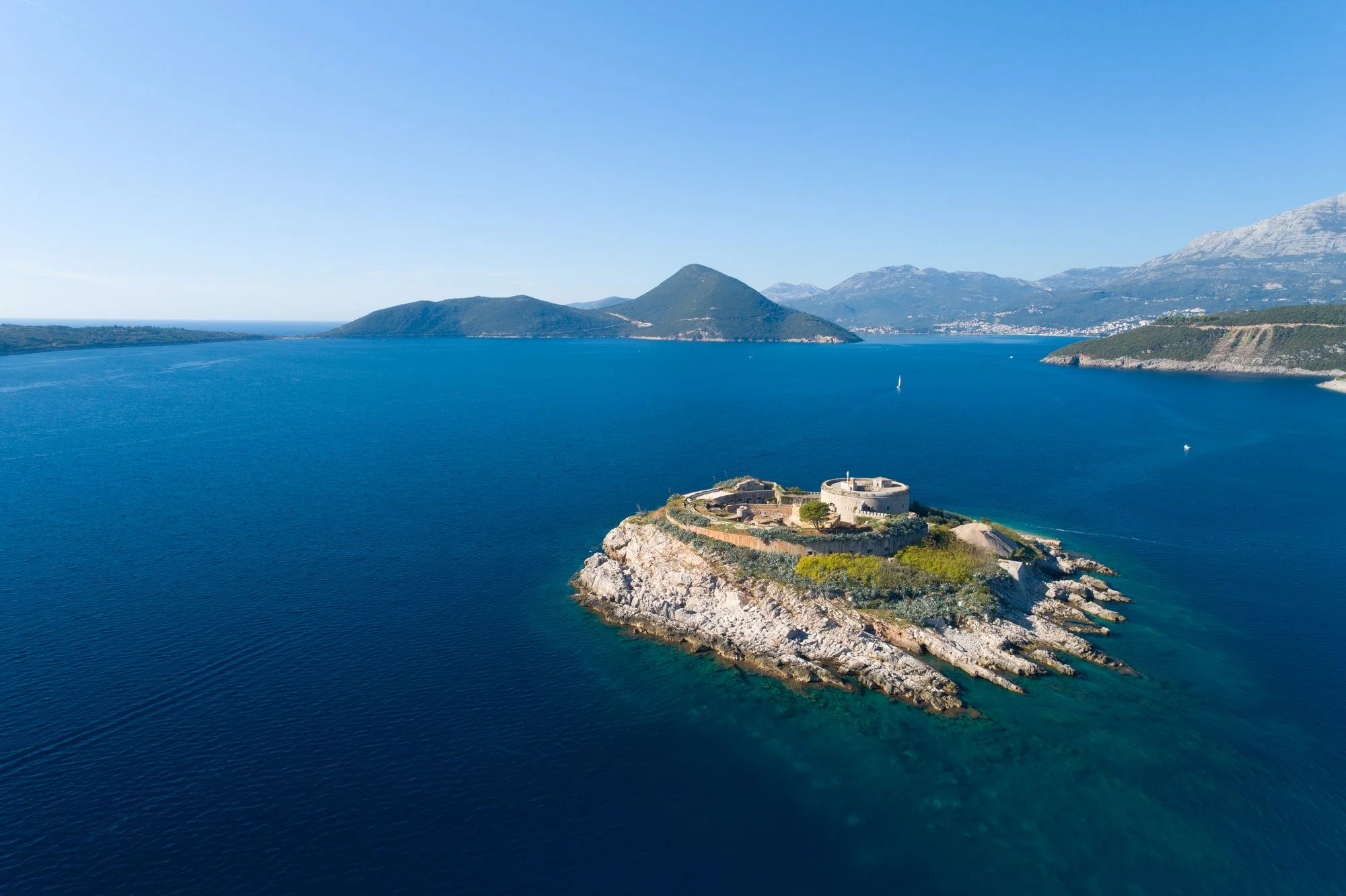
Mamula Photo: bigguns Depositphotos
Back during the time of the Venetian Republic and the Ottoman Empire, the entrance to the Bay of Kotor was a place of constant conflict and rivalry. Pirate attacks, naval battles, and attempts at conquest marked centuries of life in this part of the Adriatic. Because of this, the Austro-Hungarian Monarchy decided in the mid-19th century to further fortify the entrance to the bay. After taking control of the bay, construction began on a defensive system that included a series of fortresses on Luštica, Prevlaka, and the surrounding hills.
The fortress on Lastavica was built between 1853 and 1856 by order of Austro-Hungarian general Lazar Mamula, after whom it was later named. It was designed as a circular fortress of impressive symmetry, with thick stone walls, artillery positions, and an inner courtyard capable of housing soldiers and supplies needed for defending the bay. Together with the Arza and Prevlaka fortresses, it formed a defensive triangle that almost completely closed off access to the Bay of Kotor.
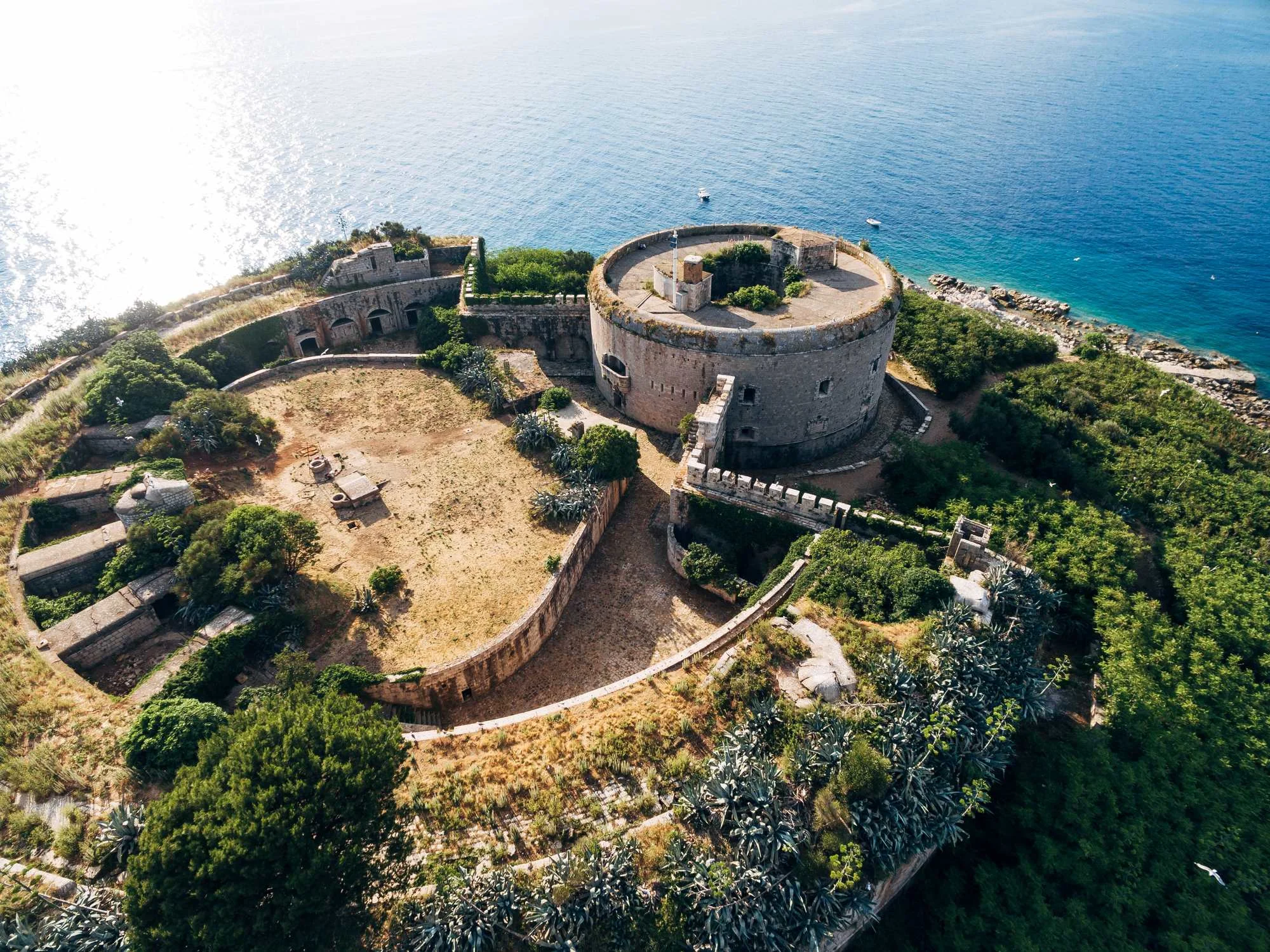
Mamula Photo: nadtochiy Depositphotos
Although the fortress never took part in the major wartime battles its builders had expected, during the 20th century, it assumed a much darker role. During the Second World War, the Italian occupation authorities turned Mamula into a concentration camp. Anti fascists, civilians, and political prisoners from Montenegro, Dalmatia, and Herzegovina were imprisoned on the island. In harsh conditions, without enough food or water, many lost their lives there. Because of this, Mamula still evokes strong emotions among many people in the region and is regarded as a place of suffering rather than merely a tourist attraction.
After the war, the fortress decayed for decades. The sea, wind, and salt slowly eroded the stone walls, while the island remained abandoned and inaccessible to most visitors. This abandonment only added to its mysterious atmosphere. For many years, Mamula was one of those places surrounded by stories, legends, and urban myths.
At the beginning of the 21st century, the idea emerged to restore the fortress and transform it into a luxury resort. The project sparked numerous debates in Montenegro. While some believed the restoration would save the fortress from complete ruin, others warned that a place with such a difficult history should not become a luxury destination. Despite divided opinions, the project was completed with an effort to preserve the original architecture and historical elements of the fortress.
Today, Mamula looks completely different from how it did a few decades ago. Within its stone walls are luxury rooms, restaurants, bars, a spa center, and swimming pools, while much of the original fortress structure has been preserved and incorporated into the island’s new appearance.
Today, the island can be reached by boat from Herceg Novi, Tivat, or Kotor, and many excursions include a panoramic cruise around the fortress as well as visits to the nearby Blue Cave and the coves of Luštica.
Mamula also attracted attention in the world of film. The 2014 horror movie Nymph was filmed on the island, an American Serbian production that uses the fortress’s isolation and dark past as the main setting of the story. The film follows two students arriving in Montenegro who visit the abandoned island, unaware of the secrets awaiting them there. It is precisely this combination of fascinating architecture, wartime history, and isolated location that has made Mamula one of the Adriatic’s most mysterious places.
The Luštica peninsula hides a historical pearl – the Arza fortress!

Paula Kovačić Taha
Once I saw that there was a bigger world out there, so I made myself be a part of it.


Leave a Reply