
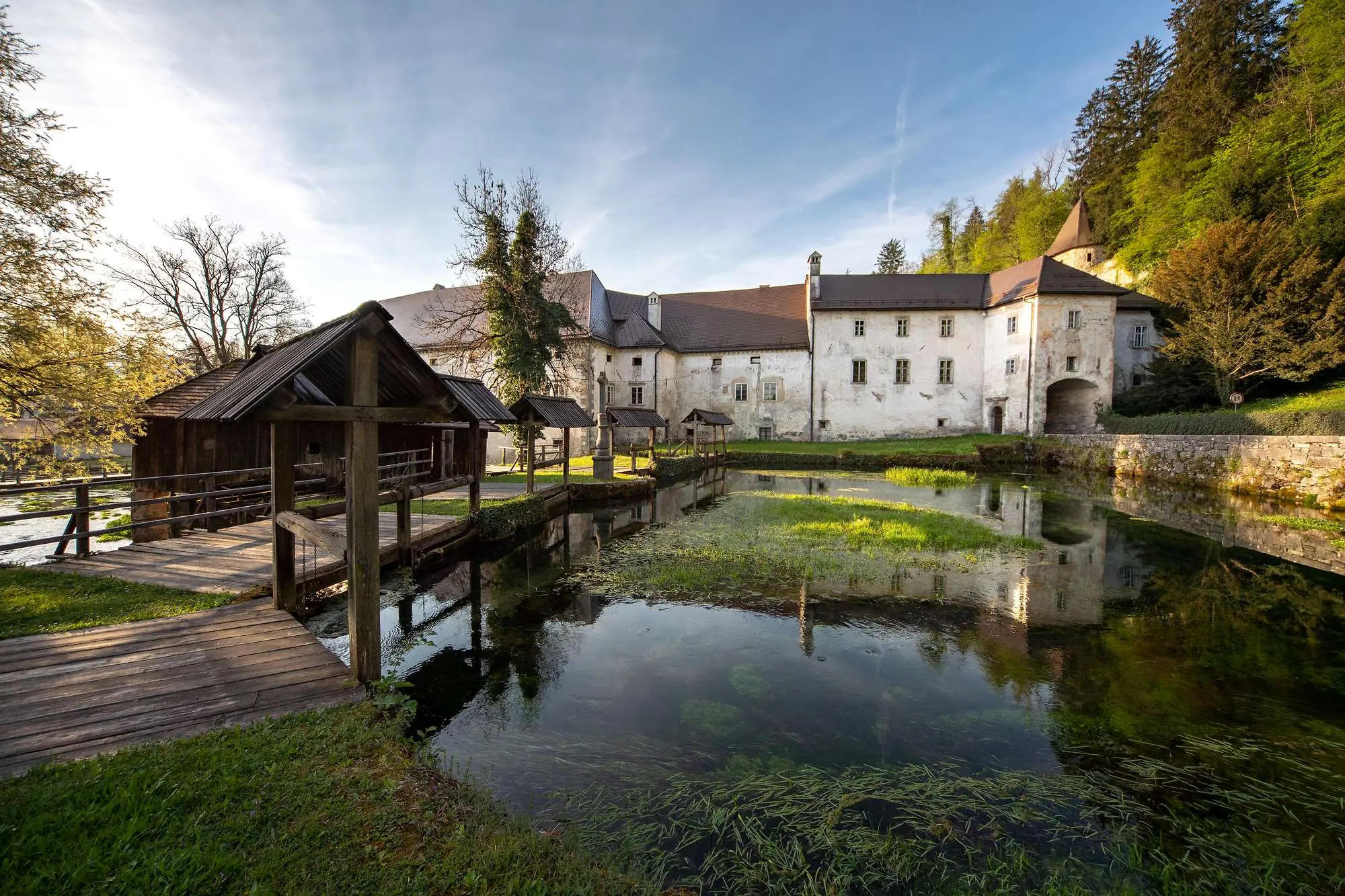
From the Roman settlement, through the Carthusian monastery and the Bistra castle, all the way to the Technical Museum! Bistra river experienced them all!
The small settlement of Bistra, named after the river Bistra and located only 25 kilometers from Ljubljana, has a large, interesting complex with gardens, mills, a church, and a museum that will amaze you. This place has undergone many changes throughout history, thanks to the favorable location created by the river and its source.
Believe it or not, everything started during the Roman Empire when the Romans had a small settlement here. This is proven by the finds of tombstones and an inscription carved into a stone dedicated to Neptune, the Roman god of fresh water and the sea.
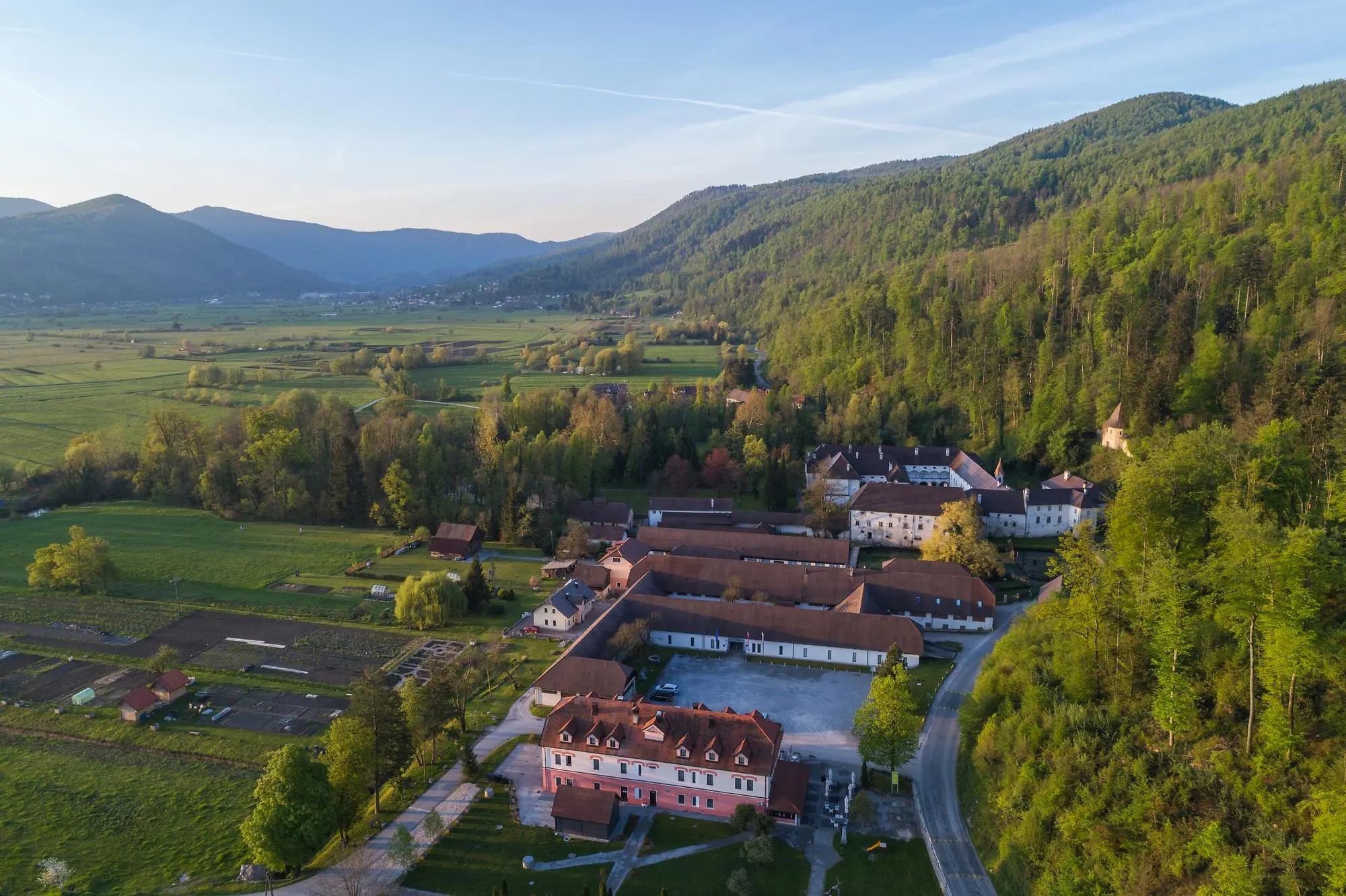
Bistra castle, Photo: Jošt Gantar, www.slovenia.info
What exactly happened in the meantime is not certain, but it flourished in the Middle Ages, more precisely in the 13th and 14th centuries, when the first members of the Carthusian order arrived in Bistra. In this place, Ulrich Spanheim, the son of the founder of the Carthusians, founded the Carthusia Vallis Iocosa order, and its members then started building a monastery.
The monastery changed over time, due to earthquakes and fires, and consisted of a church, chapels, monks’ dormitories, a cemetery, and a large and small cloister, of which only a small part has survived to this day.
In it, the monks mainly prayed and wrote books and various writings, some of which can be found today in the National and University Libraries of Ljubljana.
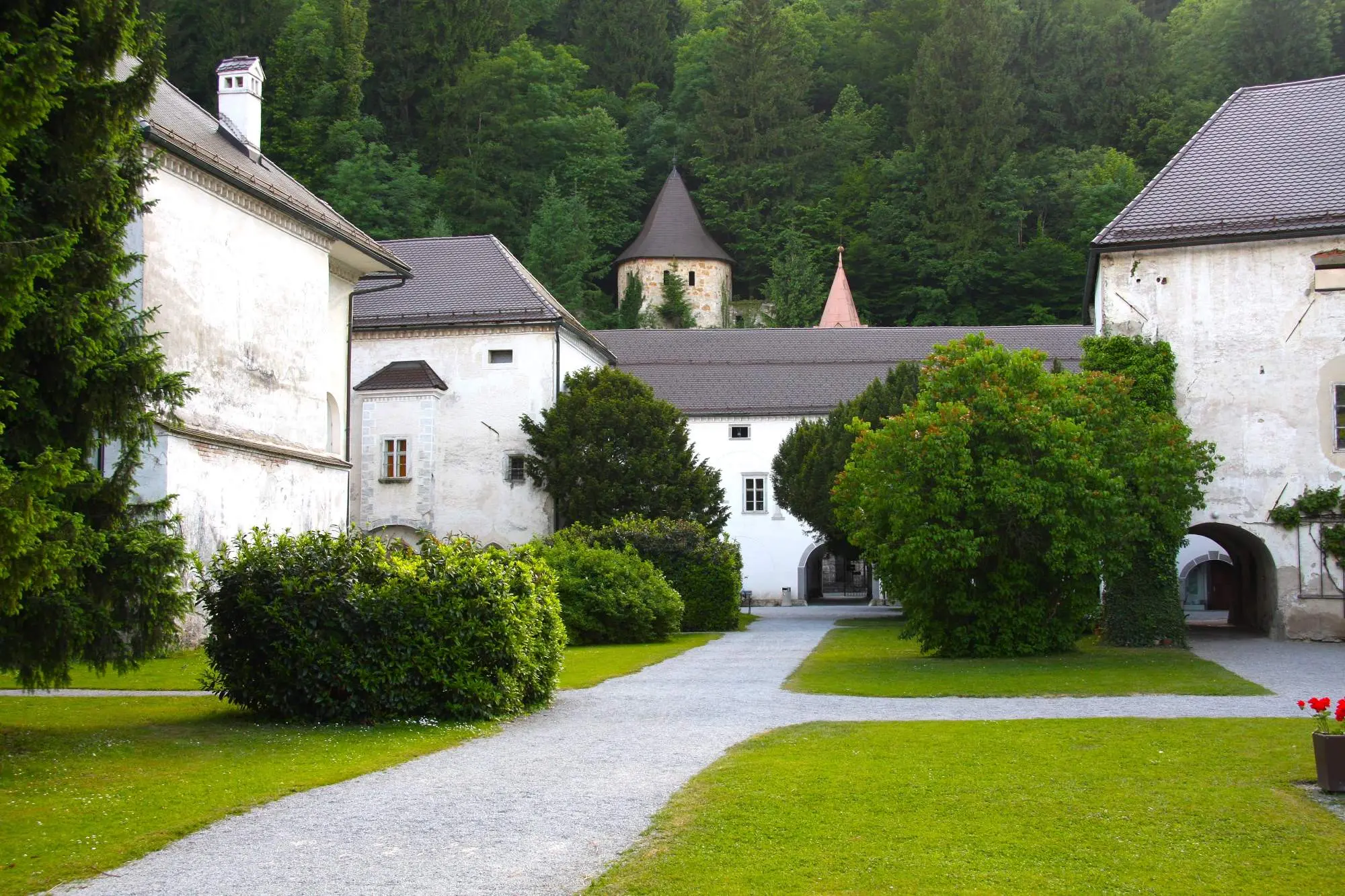
Bistra castle, Photo: Yerpo, CC BY-SA 3.0
A little later, in the 16th century, several buildings were added to the monastery, including the baroque chapel of St. Joseph, whose frescoes were drawn by Anton Cebej.
At the end of the 18th century, more precisely in 1782, Emperor Josip II dissolved various monasteries in the Habsburg Monarchy, so the Carthusians had to leave their monastery.
After the monastery ended up in the hands of the religious community, merchant Franc Galle decided to take it over and turn it into a castle called the Bistra castle (slo. Grad Bistra). At that time, gardens were created around the castle, where balls and various gatherings were held.
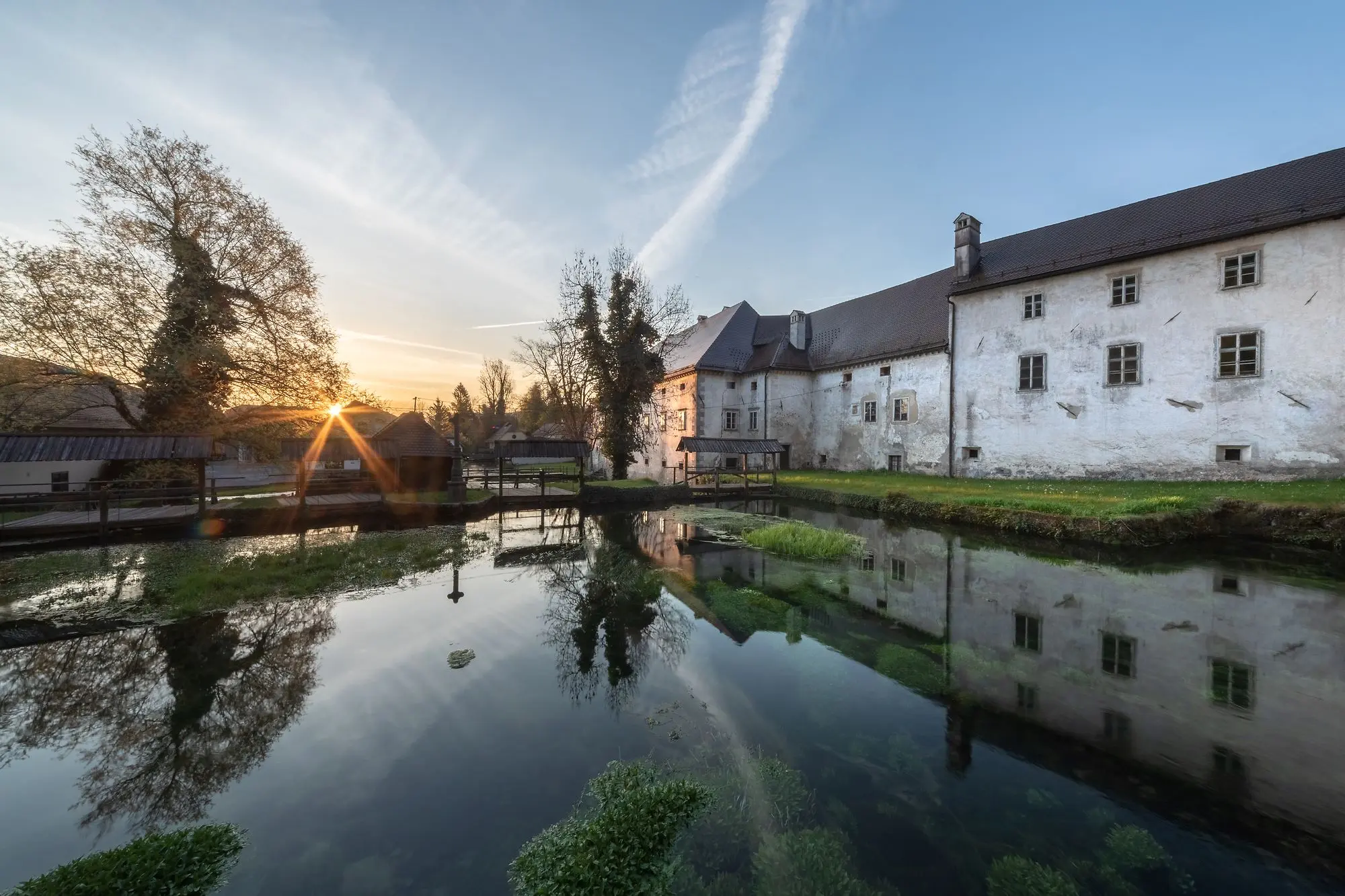
Bistra castle, Photo: Jošt Gantar, www.slovenia.info
Having survived until the end of the Second World War, the castle was nationalized, and then in 1951, it was declared the home of the Technical Museum of Slovenia, which manages it to this day.
In the museum today, on as much as 6,000 square meters, you can experience displays from the fields of agriculture, transport, forestry, woodworking, hunting, fishing, textiles, electrical engineering, and metalworking machines, and Tito’s car is hidden among all the displays.
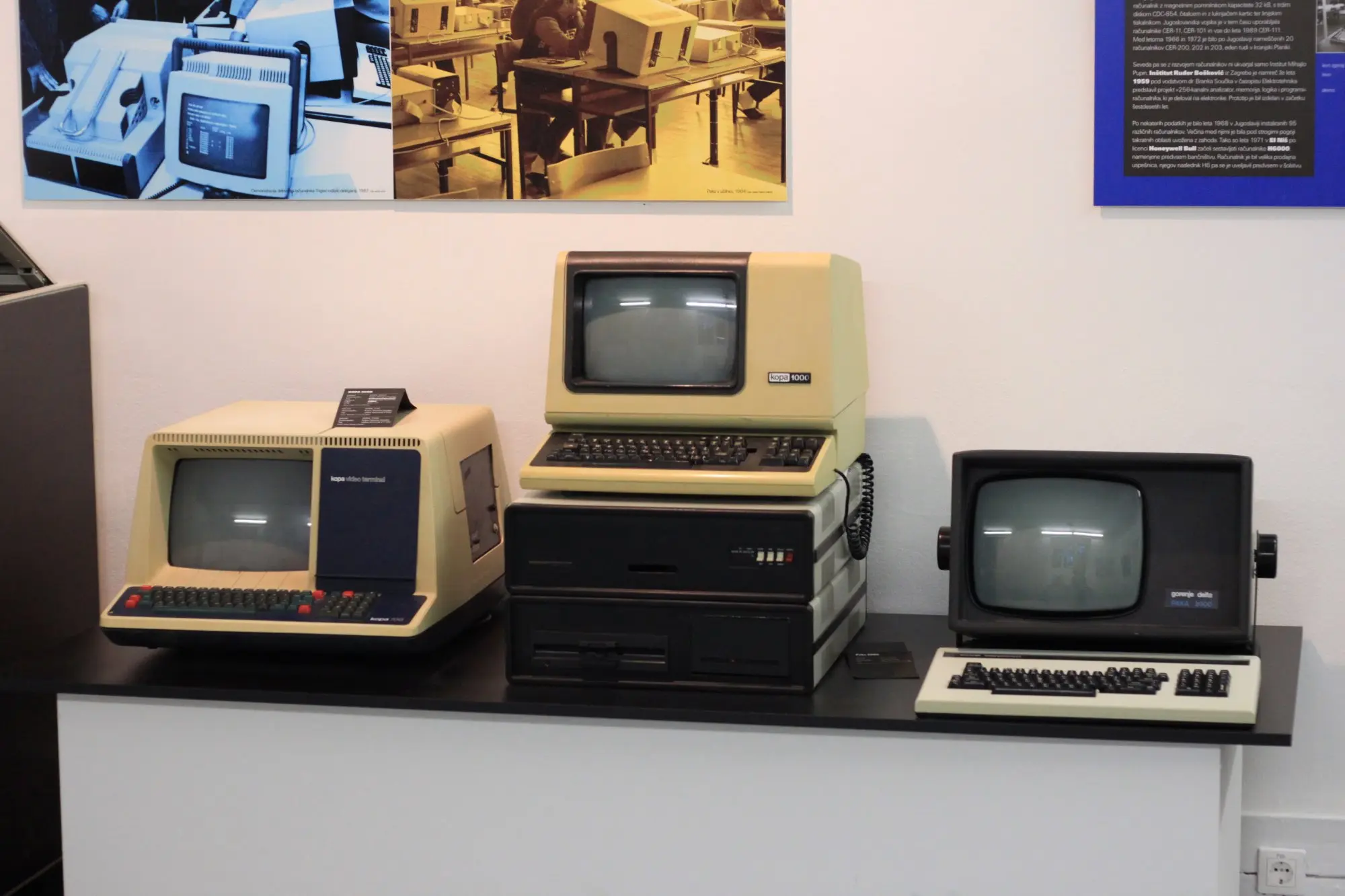
Technical Museum of Slovenia, Photo: Computer Museum, CC BY-SA 2.5 SI
In addition to the fascinating museum through which you can get to know the history of Slovenia and Yugoslavia even better, this complex is also a favorite among newlyweds. In addition to weddings, various events are held there, so before your visit, take a look at their schedule.

Sara Sedić
I plan to live in the moment :)

Leave a Reply