
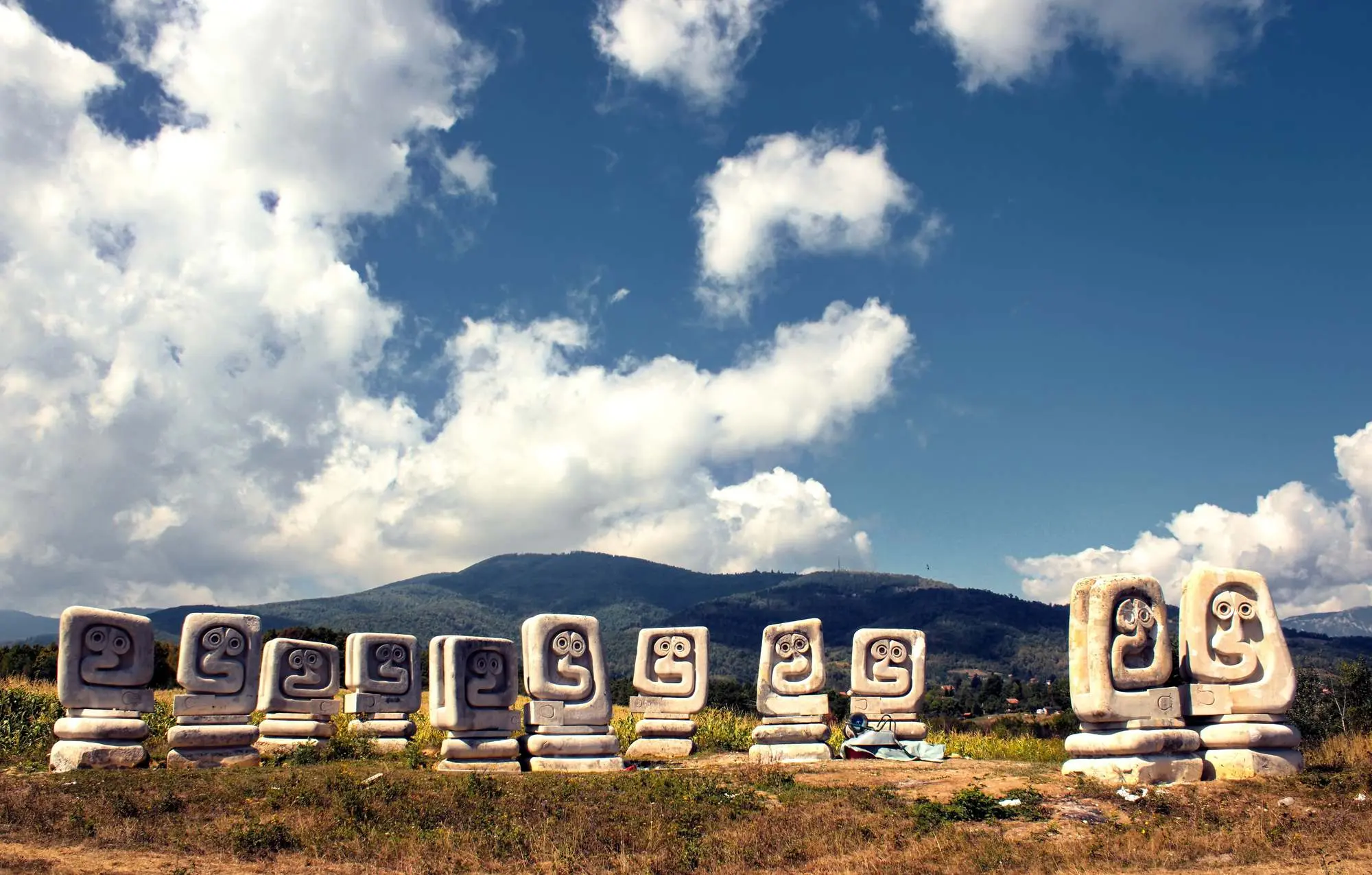
Stone dragons over the Lašva Valley!
On a hill above Novi Travnik, in the silence that spreads across the Lašva Valley, stands the Necropolis for the Victims of Fascism Smrike, one of the most remarkable memorial sites in Bosnia and Herzegovina. Carved in stone, its guardians stand as eternal witnesses of the past, yet also as part of the landscape that today invites exploration.

Necropolis for victims of fascism, Travnik, Photo: Wirestock Depositphotos
In August 1941, a mass execution of civilians took place at this site. Prisoners were brought here, forced to dig a trench, and then executed in groups. It is estimated that around seven hundred people lost their lives here, among them prisoners from the Kruščica camp near Vitez. In their memory, three decades later, a monument was erected that still leaves a strong impression today.
The monument’s author, the renowned architect Bogdan Bogdanović, built it in 1975 and conceived it as a space where art, memory, and nature converge. Twelve stone monoliths, each up to four meters high, were made of bright bihacite stone and arranged in two rows on a grassy plateau. Each has carved eyes, wide open and facing the valley. These eyes represent vigilance, eternal remembrance, and a deep connection with the surrounding landscape.
Because of their appearance, the locals often call them the stone dragons. In their shapes, one can recognize archaic motives of medieval tombstones known as stećci, but also a modern abstract vision that made Bogdanović’s monuments so distinctive across the former Yugoslavia. At the entrance to the complex stands a plaque inscribed in both scripts, a reminder of the rich cultural layers of this region.
Over the years, the monument was left to decay, but through recent restoration, it has been returned to its original form. The cleaned monoliths now shine again in the sun, and the restored paths allow visitors to easily walk through the site and enjoy the views opening toward the mountains and the valley below.
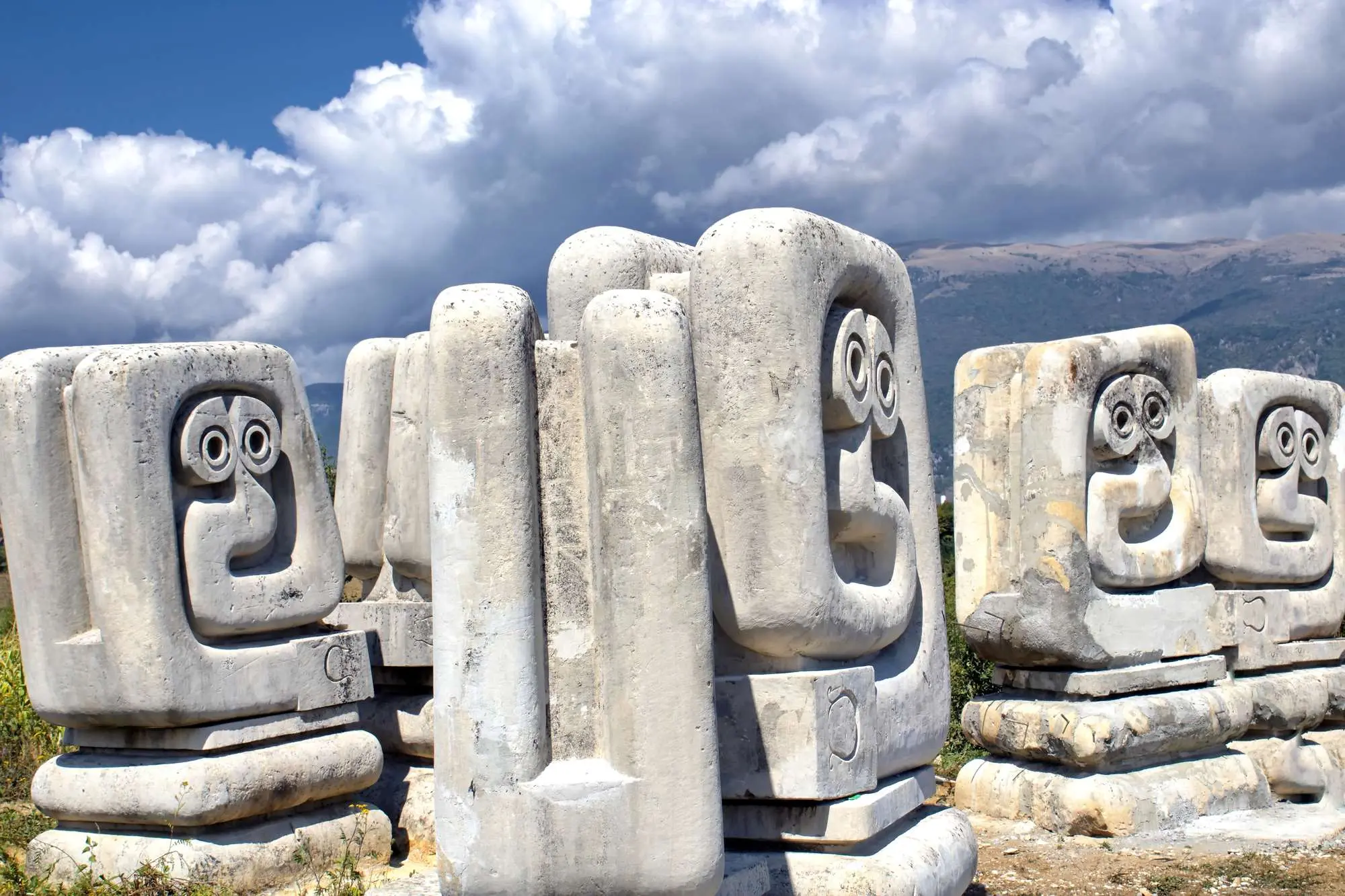
Necropolis for victims of fascism, Travnik, Photo: Wirestock Depositphotos
If you travel towards Travnik, stop by and take a look. Smrike is not just a monument, but an experience.

Zoran Kovačić
I do miracles right away, but the impossible still takes me a little time!
Leave a Reply