
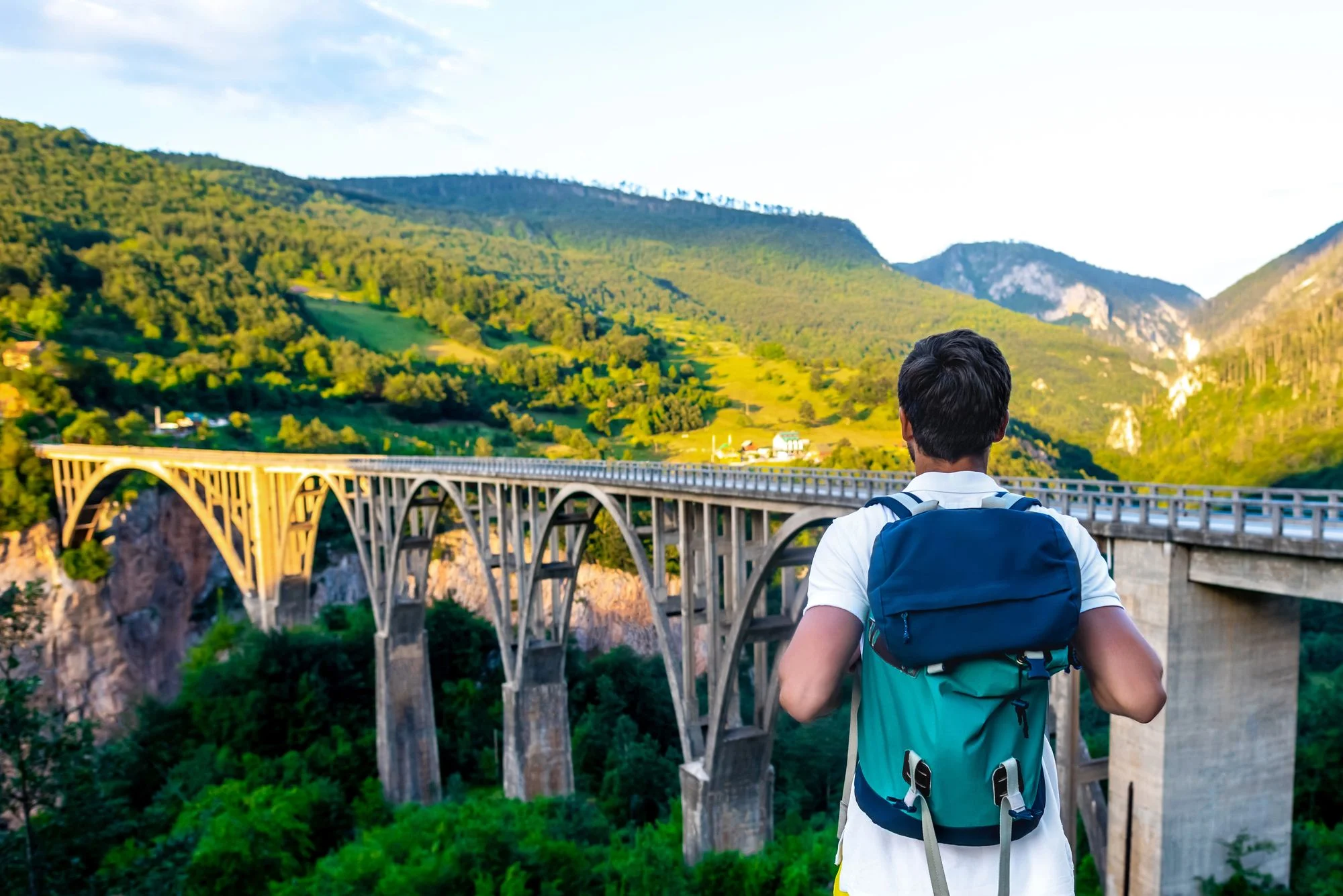
Đurđevića Tara, a bridge floating above the deepest canyon in Europe
When you first stand at the edge of the Tara Canyon and look toward the bridge stretching like a thin line above the vast abyss, it is easy to understand why this is one of the most famous places in Montenegro. The Đurđevića Tara Bridge does not seem like a structure forced to exist in the harsh landscape around it, but rather like a powerful link floating between two cliffs, high above the emerald river that has been carving its way through the mountains for centuries.
Today it is one of the greatest tourist attractions in northern Montenegro, a place where travellers stop, photograph the panoramic views, and head off for a zip line ride or rafting. Yet the story of the bridge is far greater than its appearance. This is the story of one of the most ambitious construction projects in the former Yugoslavia, of wartime years, film scenes, and a bridge that became the symbol of an entire region.
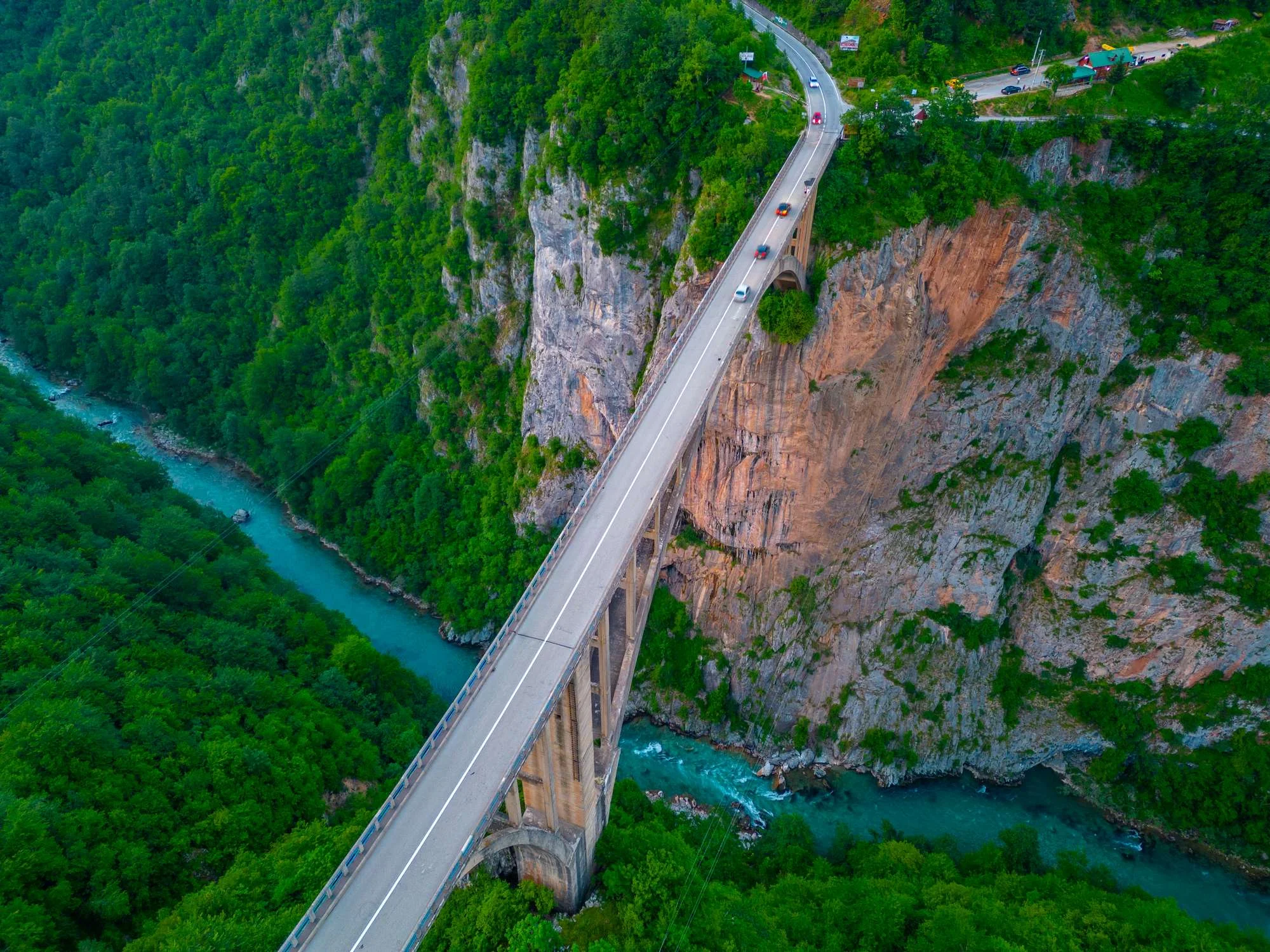
Đurđevića Tara Bridge Photo: Dudlajzov Depositphotos
HOW THE ĐURĐEVIĆA TARA BRIDGE WAS BUILT
The bridge stands above the Tara River, between Mojkovac and Žabljak, on the edge of a canyon that is among the deepest in Europe. It was not named after its builder or a historical hero, but after the nearby hamlet and the Đurđević family, who once lived there. In the early 1930s, it became clear that this part of Montenegro needed a crossing over the deep canyon. The road connecting the north of the country with Žabljak and Durmitor was difficult and slow, while crossing the Tara often depended on weather conditions and improvised crossings.
The bridge was designed by engineer Mijat Trojanović, while the construction was supervised by civil engineer Isaak Russo. Building began in 1937 and lasted three years. In the autumn of 1940, the bridge was completed and immediately attracted admiration from both experts and the public.
At the moment of its completion, it was the largest concrete arch road bridge in Europe. It has five arches in total, is 365 metres long, and its largest arch spans 116 metres between the canyon cliffs. Particularly impressive was the fact that the roadway stands around 170 metres above the river. Building it required a solution that had rarely existed before. In order to construct the main arch, an enormous wooden scaffold was erected, at the time the tallest structure of its kind in the world. Workers laboured high above the canyon, often in difficult weather conditions, and the entire undertaking was so complex that many doubted the bridge would ever be completed.
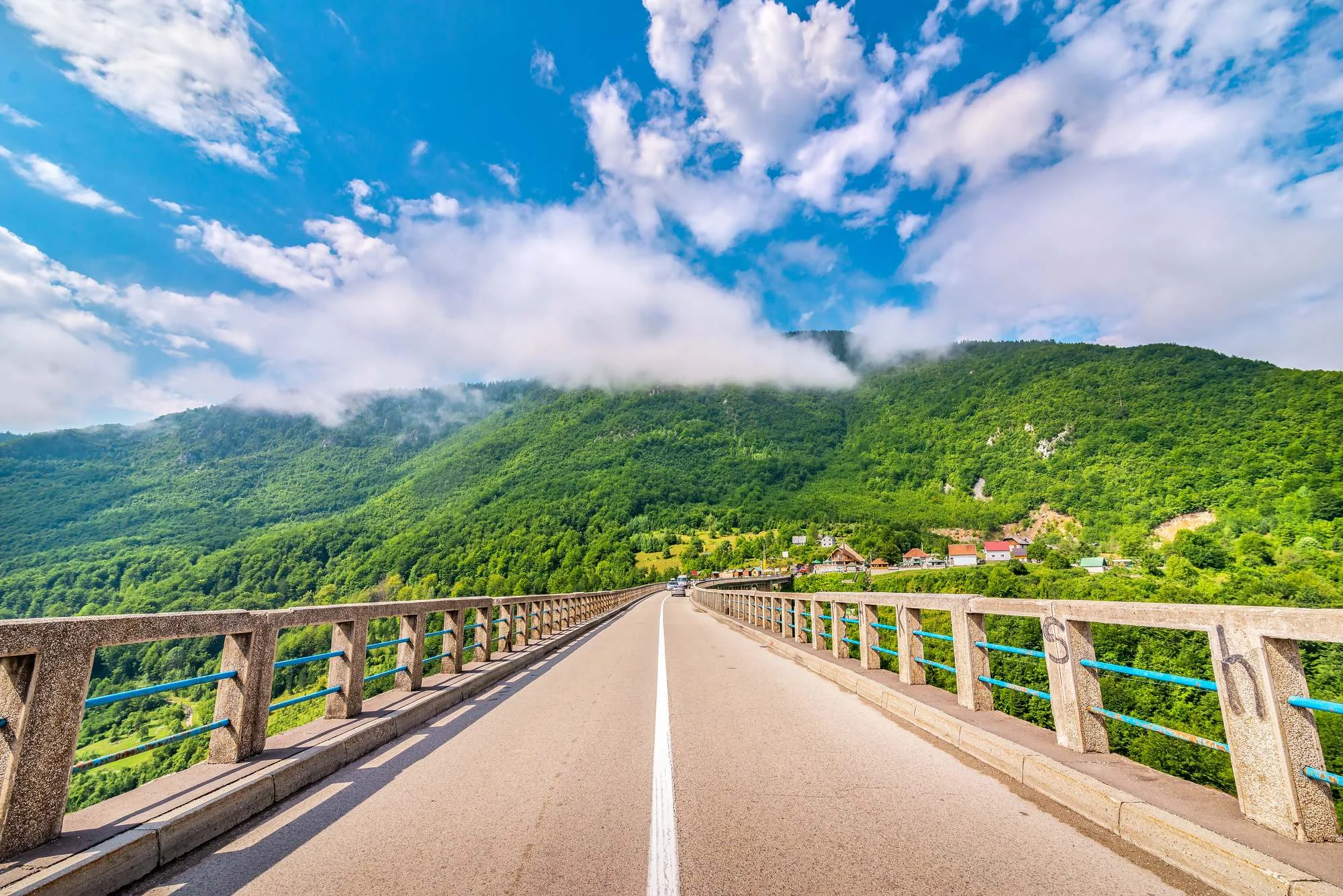
Đurđevića Tara Bridge Photo: zevana Depositphotos
THE BRIDGE THAT WAR TURNED INTO A TARGET
Only a few months after it opened, the Second World War began, and the bridge soon became an important strategic point. Whoever controlled the crossing over the Tara could control the movement of troops through much of northern Montenegro.
In 1942, the partisans decided that the bridge had to be disabled to stop the advance of the Italian army. The task was entrusted to one of the engineers who had taken part in its construction, Lazar Jauković. He knew the structure better than anyone and knew exactly which part had to be mined to bring down the bridge without destroying it.
Jauković placed explosives beneath the largest arch. After the detonation, only one section of the bridge collapsed, large enough to prevent the army from crossing, but small enough to allow the bridge to be rebuilt later. It was an exceptionally precise operation that preserved most of the structure.
The Italian occupation forces soon discovered who was behind the destruction. Lazar Jauković was captured and executed not far from the bridge. After the end of the war, the bridge was rebuilt as early as 1946 and reopened to traffic. Because only one part of the structure had been destroyed, the reconstruction was much faster than it would have been if the entire bridge had collapsed.
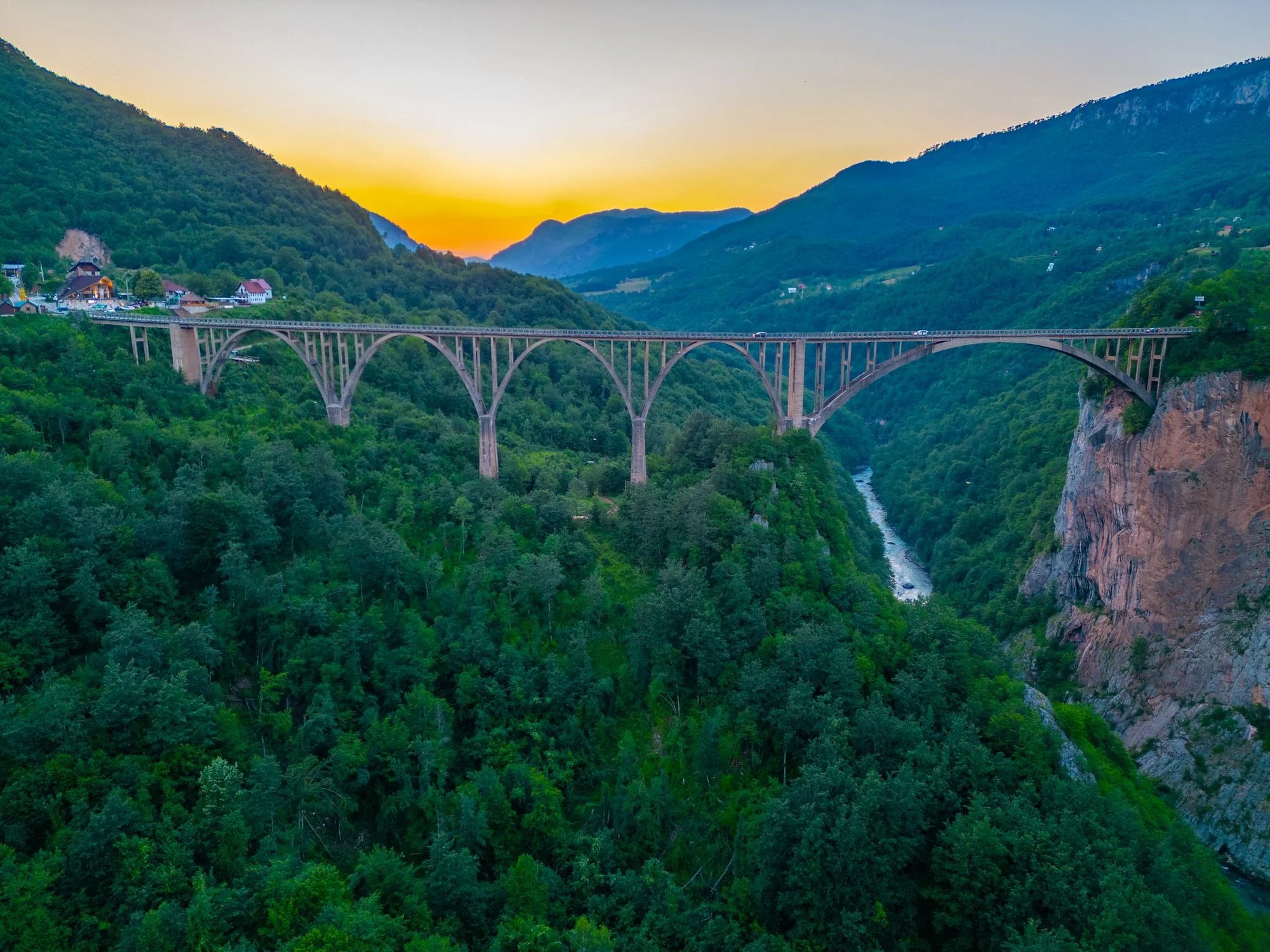
Đurđevića Tara Bridge Photo: Dudlajzov Depositphotos
THE FILM STORY THAT MADE THE BRIDGE FAMOUS
Although the bridge was already well known because of its architecture and wartime story, it gained true international fame thanks to the film.
In 1969, the Yugoslav war film “The Bridge”, directed by Hajrudin Krvavac, was released. In the film, a group of partisans is given the task of destroying a strategically important bridge in order to stop the German army. Although the story speaks of a bridge somewhere in Bosnia and Herzegovina, the filming location was in fact the Đurđevića Tara Bridge. The film became a major success throughout the former Yugoslavia and abroad, especially in China, where it achieved almost cult status. Many visitors from Asia still come today precisely because they watched that film as children.
One scene in particular remained unforgettable, showing the partisans going into action to the song Bella Ciao. Although the song became world famous again many decades later, thanks to the series La Casa de Papel, for many people in this region, its connection with the bridge on the Tara remains just as strong. The bridge also appeared in the British film “Force 10 from Navarone” from 1978, a sequel to the famous war film “The Guns of Navarone”. In that film, the bridge once again plays the role of a strategically important crossing, while its dramatic location proved ideal for large war scenes.
HOW THE BRIDGE LOOKS TODAY
Today, the bridge is no longer just a road crossing, but one of the most recognisable postcards of Montenegro. From it, there is a view over the Tara Canyon, dense forests, and the mountains of Durmitor. It is especially impressive early in the morning, when mist lingers above the river, or in the evening when the sun colours the cliffs and bridge in warm shades. Near the bridge, there are several viewpoints, restaurants, and souvenir shops. The greatest attraction in recent years has become the zip line running parallel to the bridge. The ride lasts only a few seconds, but gives you the feeling of flying above the canyon.
Nature lovers usually continue their journey toward Durmitor National Park near Žabljak or descend to the river for rafting. The Tara River is known for its exceptionally clean water and is one of the most attractive rafting experiences in Europe.
Right beside the bridge, there is also a monument to Božidar Žugić, a young lieutenant of the Yugoslav army who died in 1940 during the Italian attack. According to legend, he refused to abandon his position and retreat, which soon made him a symbol of courage in this region. The monument was erected by his mother Marija, and the inscription dedicated to her son, who died heroically, can still be seen on it today.
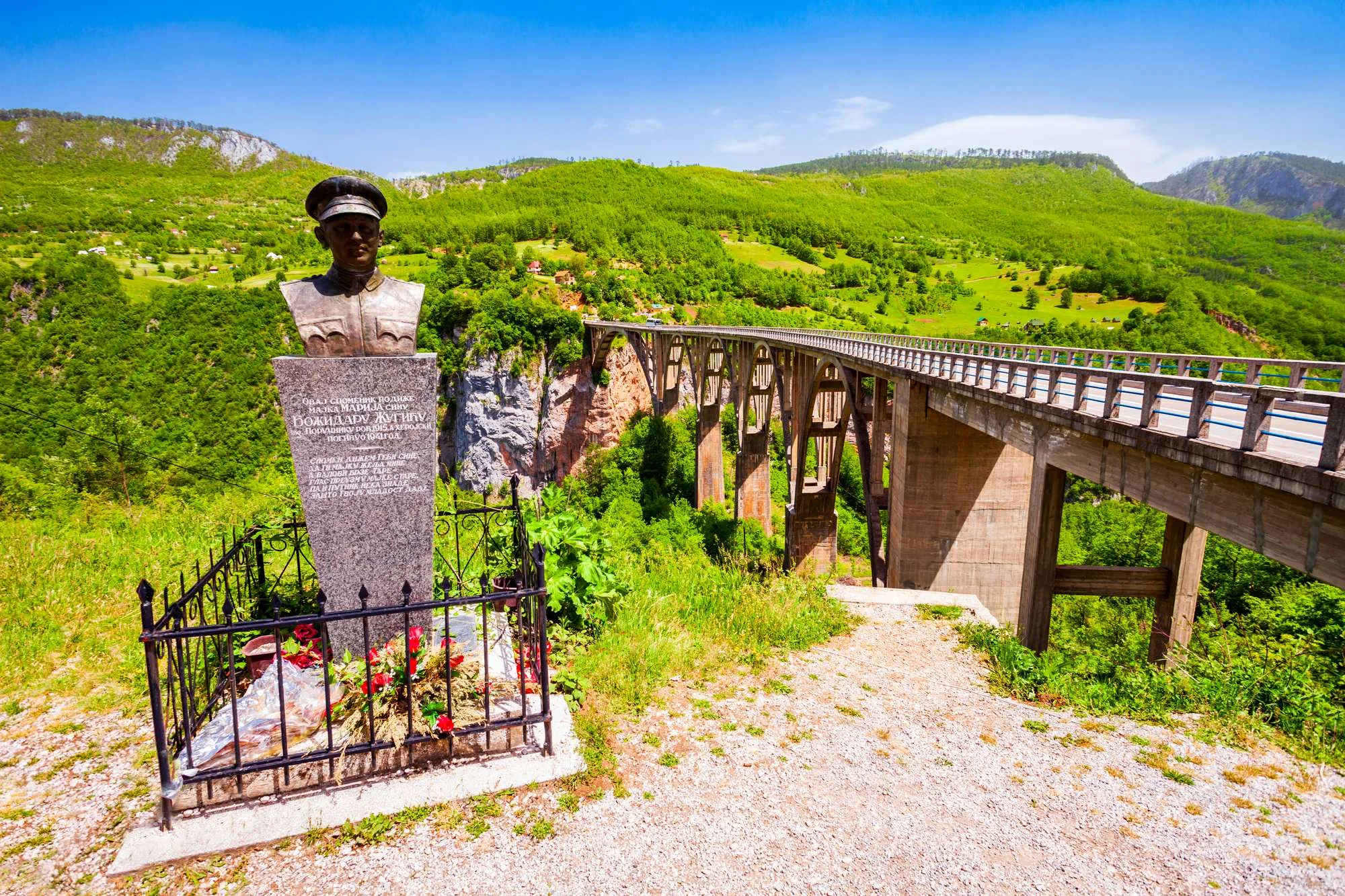
Monument to Božidar Žugić Photo: saiko3p Depositphotos
WHY THE ĐURĐEVIĆA TARA BRIDGE IS SPECIAL
Many bridges connect two sides, but very few connect so many different stories at the same time. The Đurđevića Tara Bridge united mountains and canyon, but also architecture, wartime history, film, and tourism. It is a place where you can stand on the very same rock from which workers once built the greatest bridge of their time, where partisans destroyed an arch to stop the occupiers, and where film cameras captured one of the most famous scenes of Yugoslav cinema.
Because of all this, the Đurđevića Tara Bridge is not simply a stop along the road, but a place people come to for the view and remember because of the story.

Ahmed Taha
Peace, love and music! ☮️
Leave a Reply