
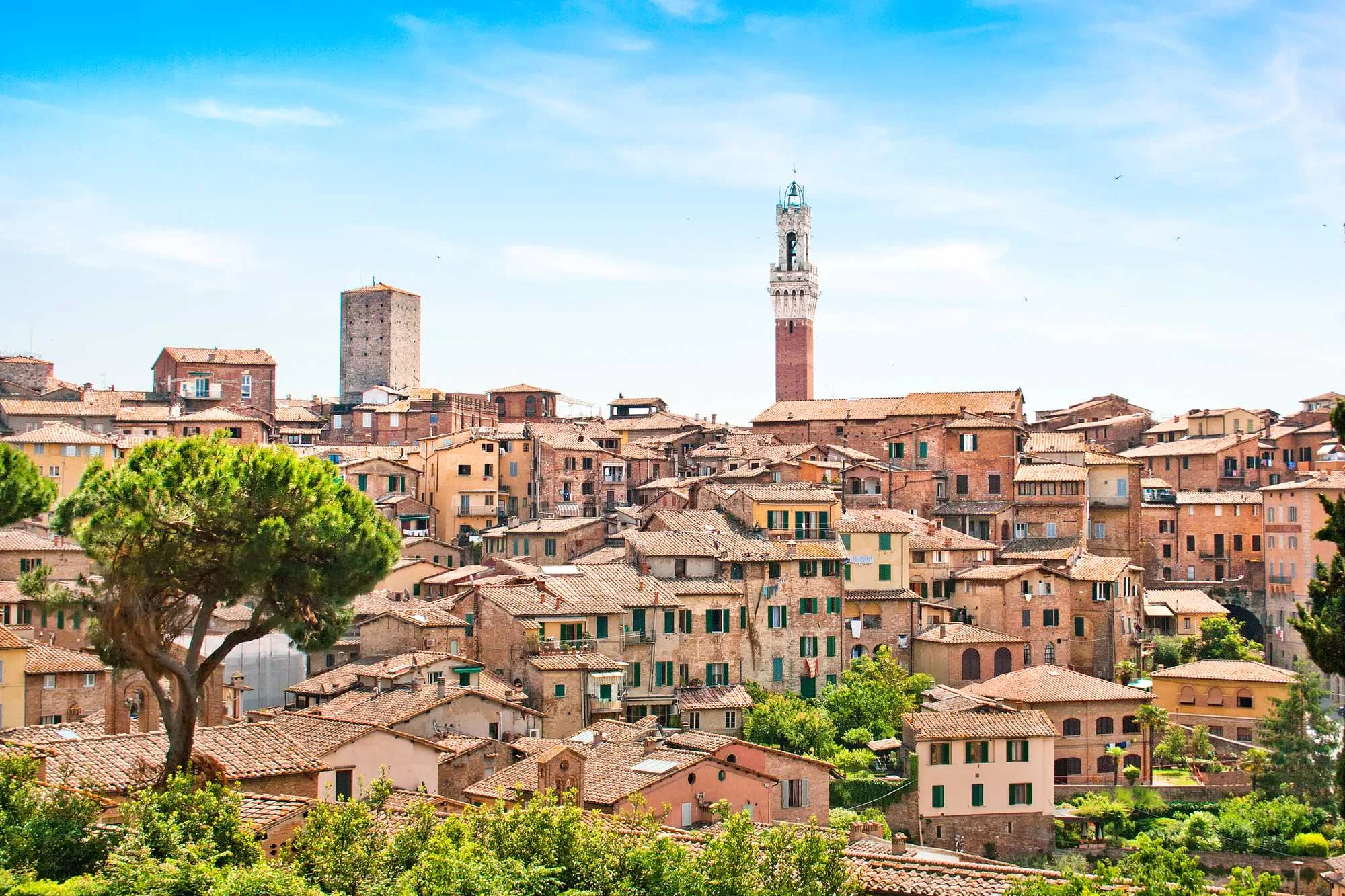
Siena is the most beautiful medieval city in Italy that most tourists skip.
There is something about Siena that does not try to impress at first glance. It does not present itself as Florence, nor does it rely on grandeur as Rome does. Siena is quieter, more reserved, and that is exactly why it leaves a stronger impression once you give it a bit of time.
Once you step inside its walls, you quickly realise that this is a city that has not changed much. Although its roots go back to Roman times, it truly took shape in the Middle Ages, when it grew into a powerful city republic. In the 13th and 14th centuries, it was a serious rival to Florence, with its own banking system, art, and political strength.
That rise did not last long. The plague and internal divisions gradually weakened the city, and by the mid-16th century, Siena lost its independence and came under the rule of the Medici. This is exactly why it looks the way it does today. It did not continue to develop like the major centres, but instead remained frozen in time when it was at its peak.
Siena Photo: magone Depositphotos
PIAZZA DEL CAMPO AND THE PALIO RACE
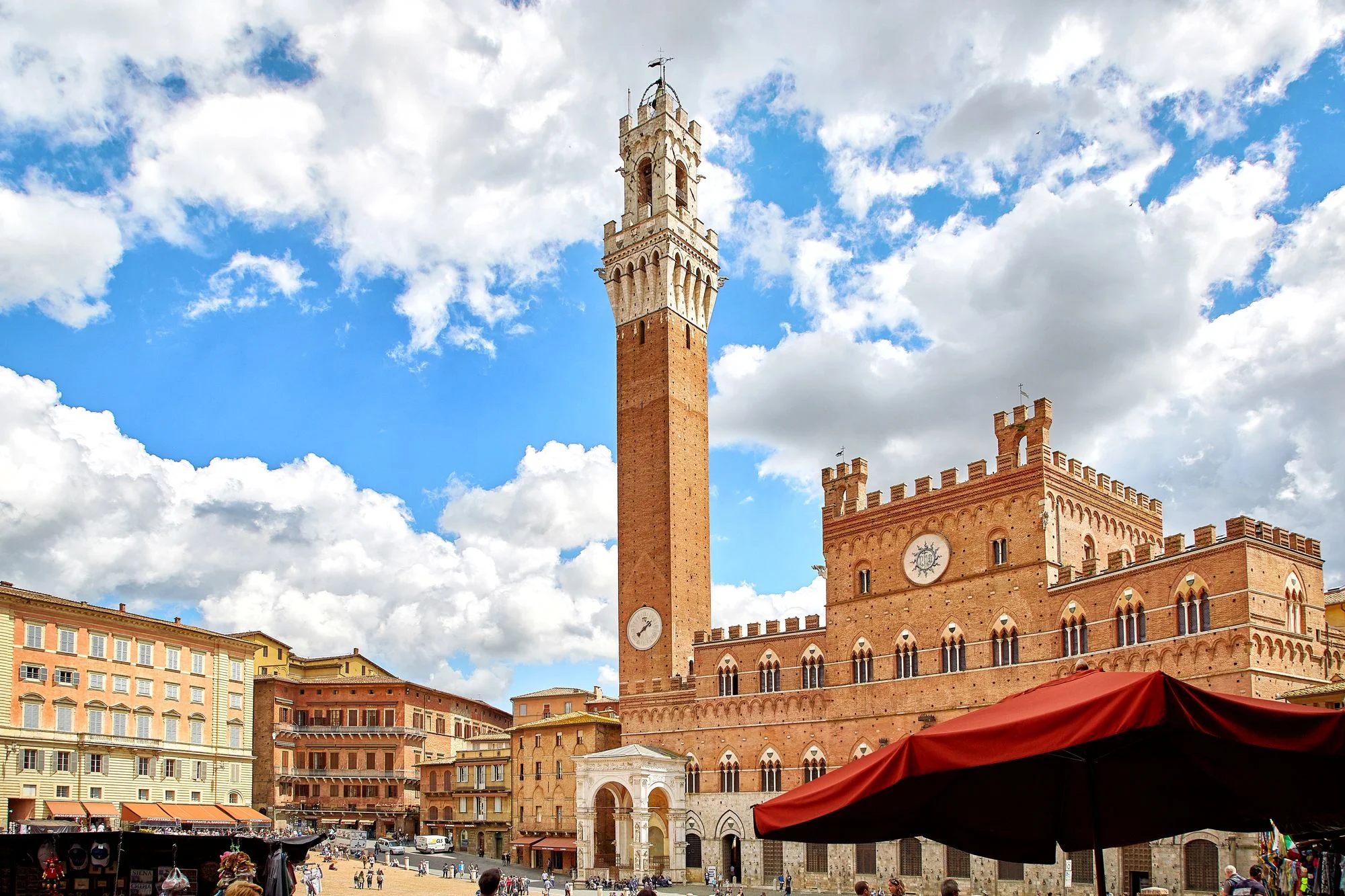
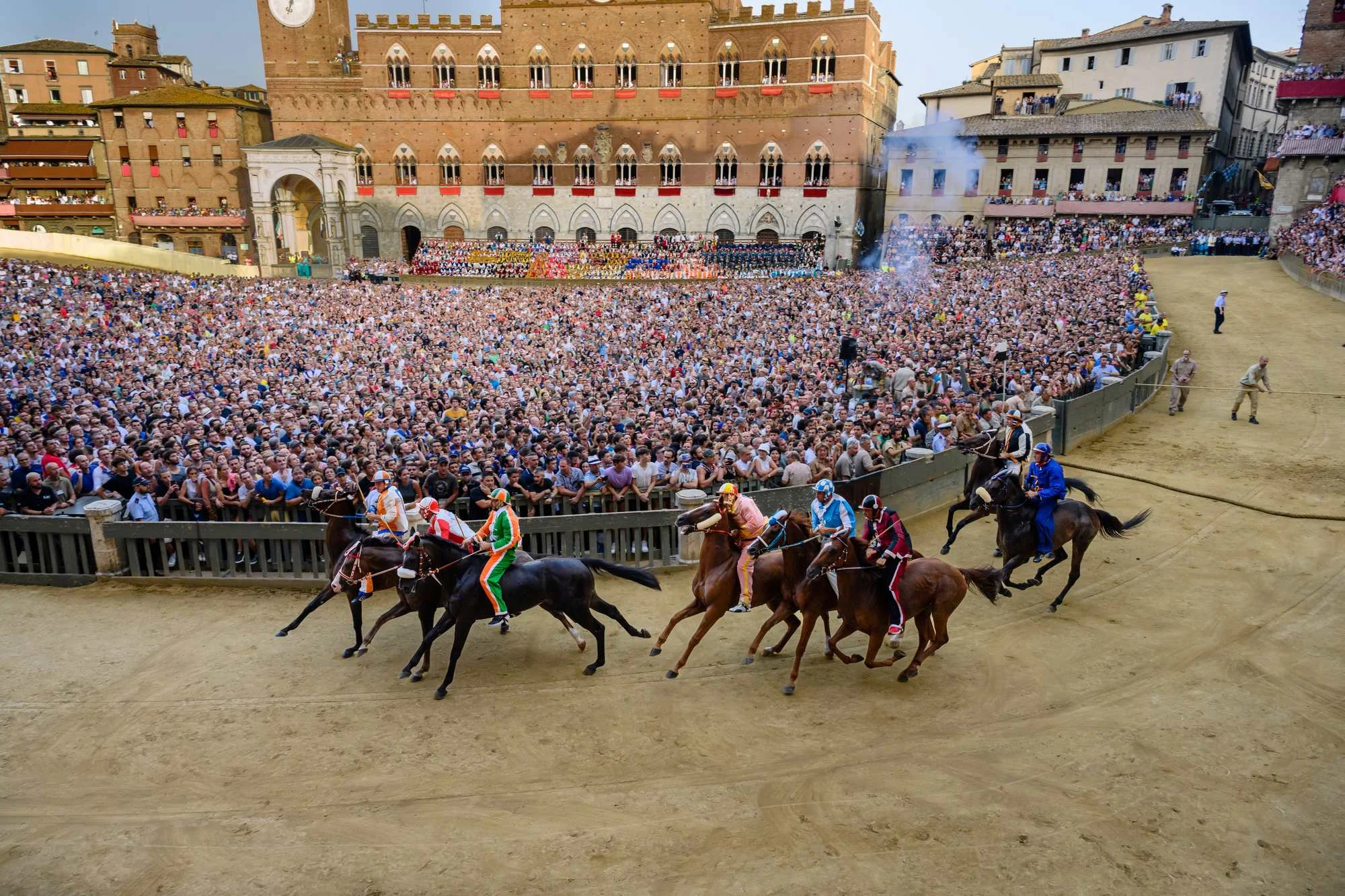
The centre of life in Siena is Campo Square (Piazza del Campo). It looks unusual in photos, but even more so in person. It is not flat or strictly symmetrical, but gently slopes towards the centre, creating the feeling of a large stone shell. This is where the Palio takes place twice a year, a horse race that has little to do with tourism and much more with the identity of the city. Each district has its own colours and rivalries, and during those moments, the entire city lives for the event.
Right next to the square stands the town hall (Palazzo Pubblico), once the seat of government, and the Mangia Tower (Torre del Mangia). Climbing the tower is not the easiest task, but the view from the top gives you a perspective that explains the layout of the city better than any map.
Palio Siena Photo: DietmarRauscher Depositphotos
SIENA CATHEDRAL: LANDMARKS AND ARCHITECTURE
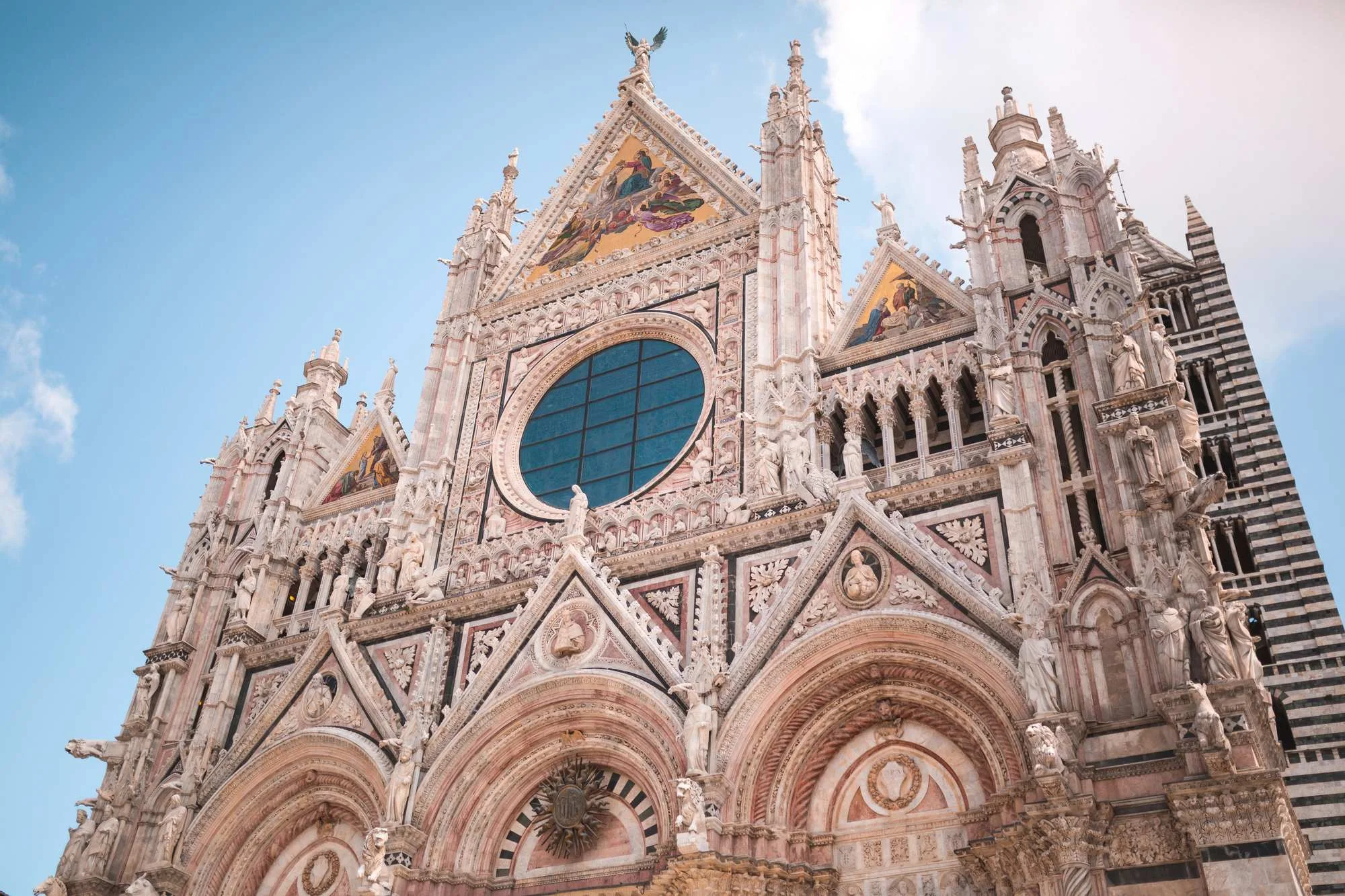
Another place that should not be missed is the cathedral in Siena (Duomo di Siena). From the outside, it already feels unusual, with its combination of black and white marble, but the interior is what stays with you. The floor is covered in detailed mosaics, the walls are filled with art, and the entire space reflects the ambition of the city. At one point, there were plans to expand the cathedral to make it larger than the one in Florence, but the project was never completed.
Siena Cathedral Photo: AlexGukBO Depositphotos
WHAT TO SEE IN SIENA: STREETS, CONTRADE AND THE CITY’S ATMOSPHERE
Still, the strongest impression of Siena comes from beyond its main landmarks. From streets that never run straight, from small squares you stumble upon without a plan, and from the flags hanging from windows that show which district you are in. The city is divided into contrade, and that sense of belonging is still real today, not just a story for visitors.
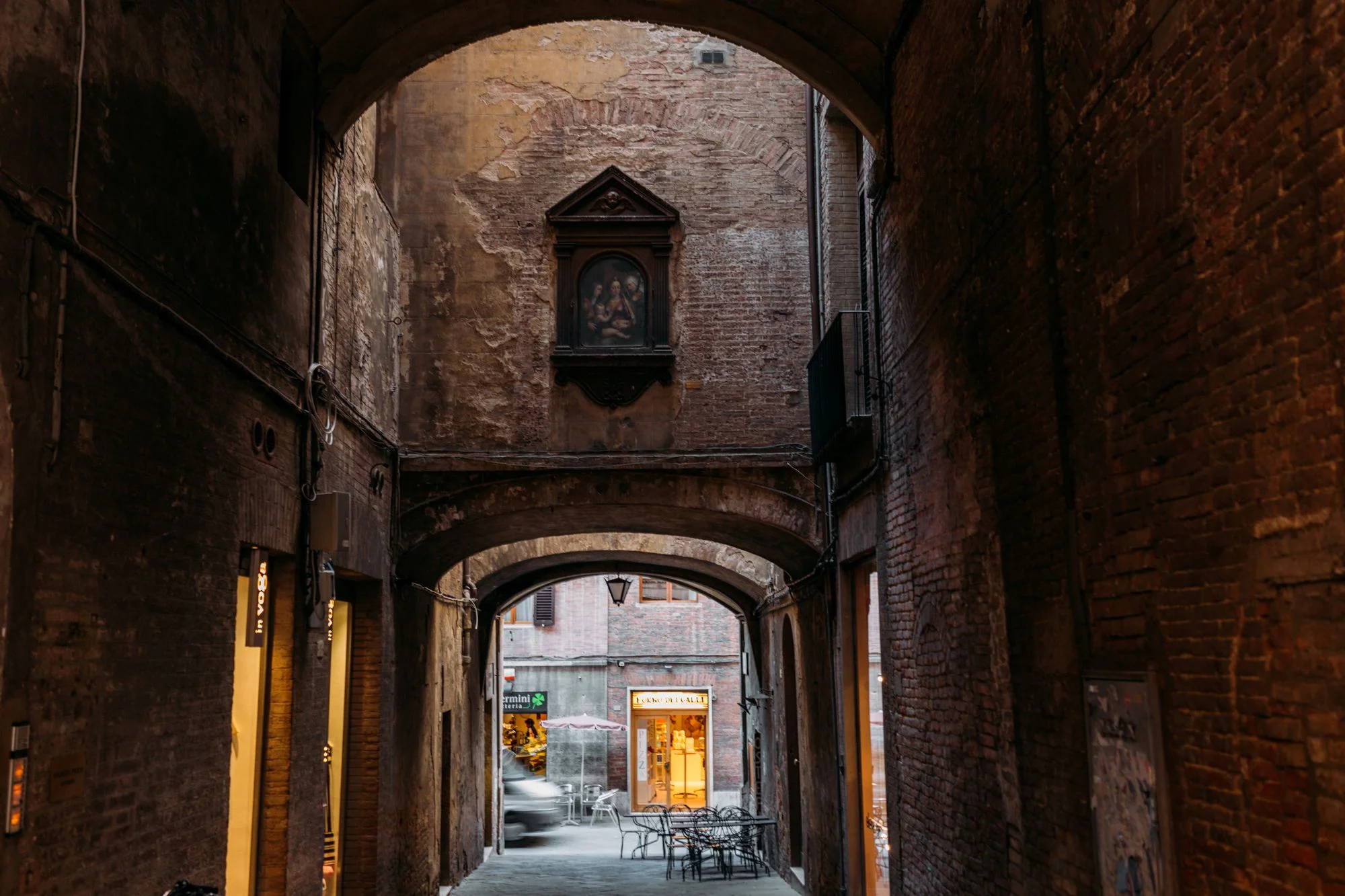
Siena Photo: pandionhiatus3 Depositphotos
WHY VISIT SIENA: AN EXPERIENCE THAT DOES NOT FEEL TOURISTIC
That is why Siena is not a destination you simply tick off. It does not need to constantly offer something new. It is enough to slow down and let it guide you. One moment you are sitting on the edge of the square watching the city fill and empty, the next you are lost in streets where tourists rarely go.
And that is where its value lies. It is not a spectacle, but an experience of a city that has remained true to itself. In Italy, where much has been adapted to visitors, Siena still feels like a place that exists first for its own people, and only then for everyone else.
The mystical Medici family fortress in the heart of Tuscany has served as a prison for 500 years

Sara Sedić
I plan to live in the moment :)
Leave a Reply