
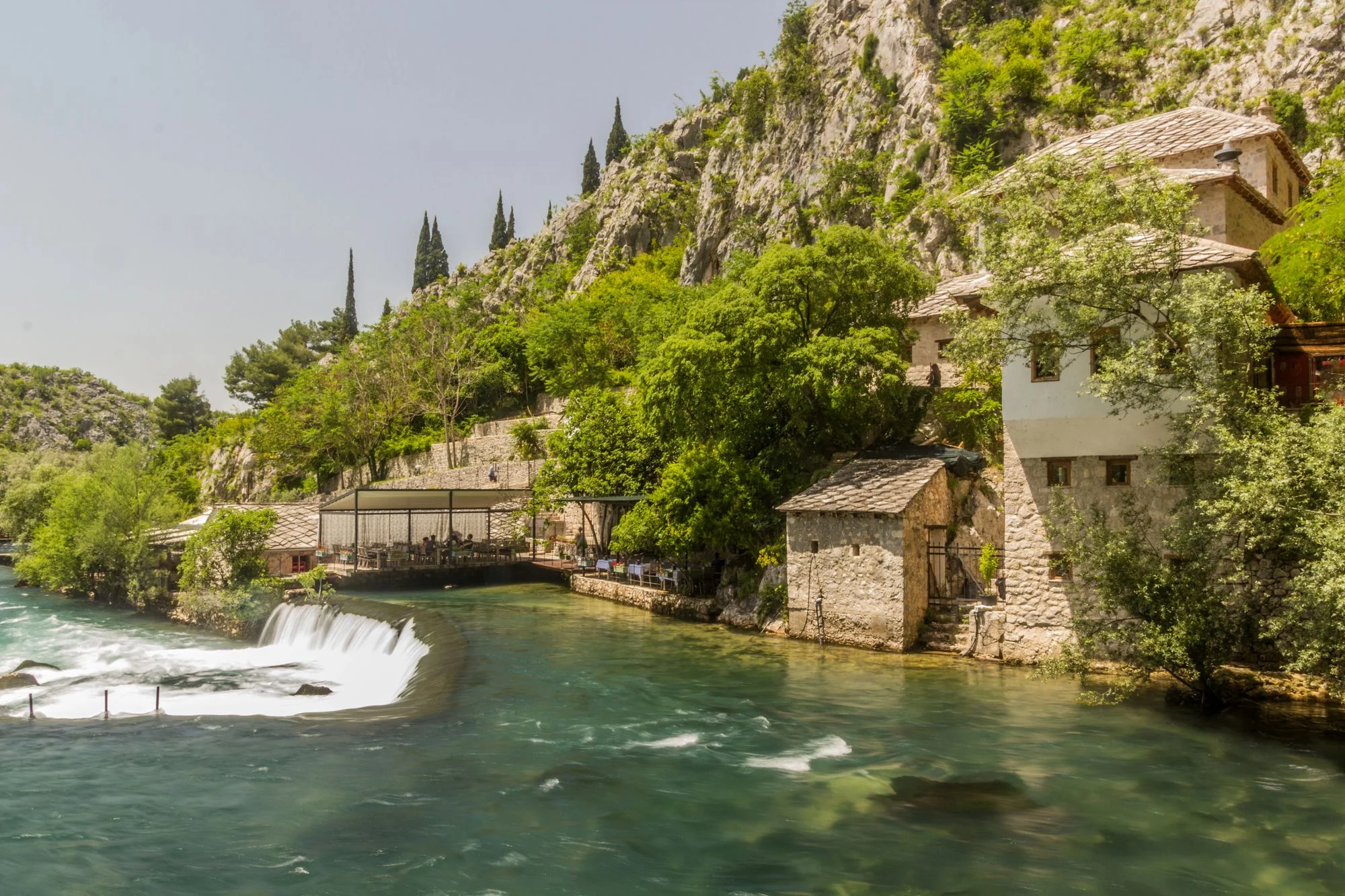
Blagaj is more than a village! Its a place where history, a river, and the heritage of Herzegovina meet
About fifteen kilometres south of Mostar, where the rugged karst landscape of Herzegovina suddenly gives way to greenery and water, lies a place that many visit for a single photograph, a famous spring, or a well-known monument. Yet Blagaj is far more than that. This historic village, today protected as a national heritage site of Bosnia and Herzegovina, has for centuries been a meeting point of different cultures, religions, states, and civilisations. Its cliffs, rivers, and monuments tell a story that cannot be reduced to a single attraction.
Blagaj is a place where nature and history coexist. Few locations in Bosnia and Herzegovina bring together a medieval fortress, an Ottoman tekija, one of Europe’s strongest karst springs, and a river that has shaped the life of an entire region within such a small area.
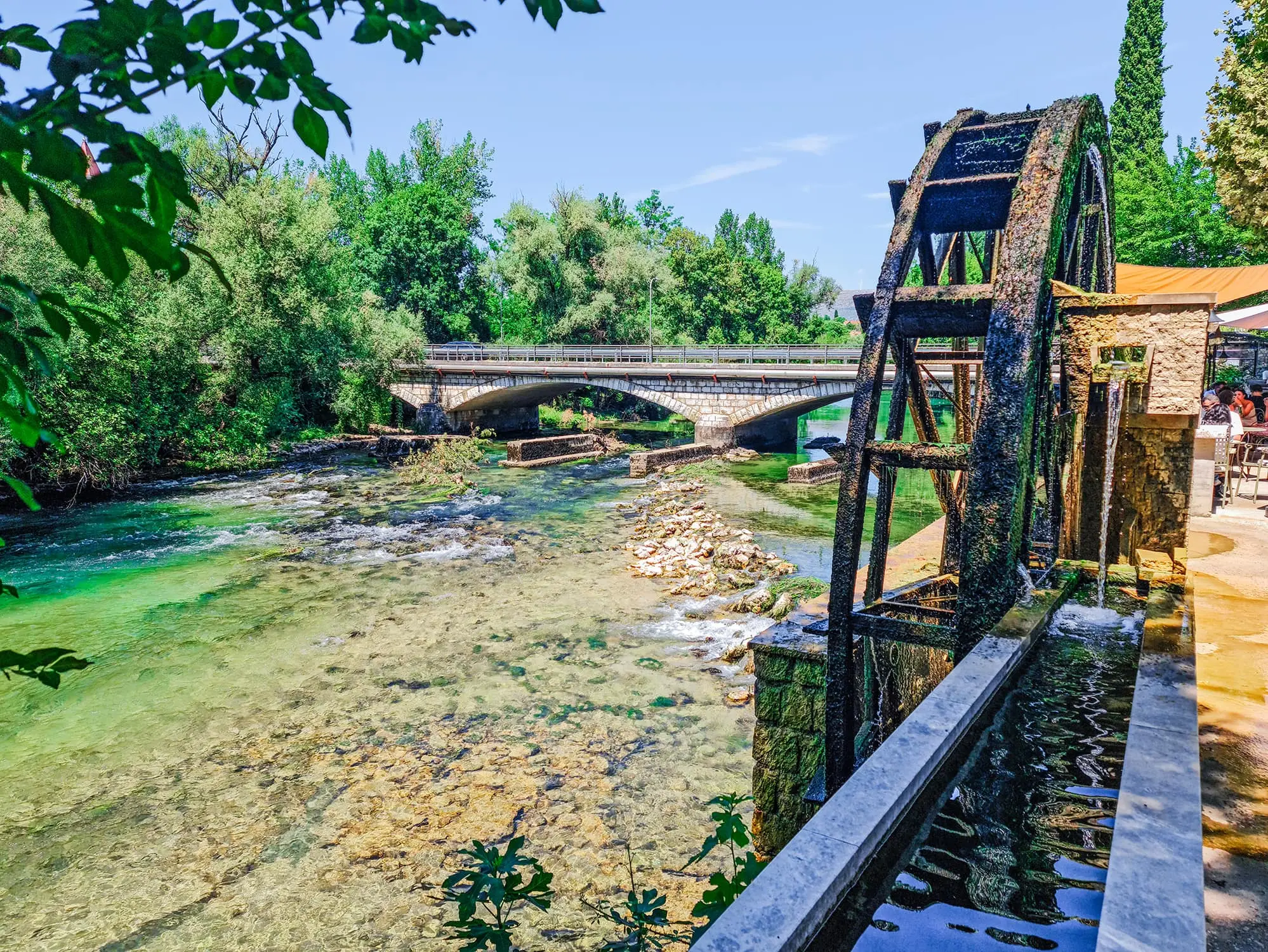
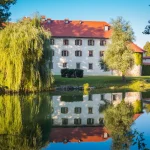
Hotel Buna, Photo: Adria.fun
The most recognisable symbol of Blagaj is undoubtedly the Tekija, situated beside the very source of the Buna River. Tucked beneath an almost vertical cliff rising more than two hundred metres above it, the white building appears as if it emerged directly from the rock itself. For decades, the sight of the Tekija beside the emerald waters has attracted travellers, photographers, pilgrims, and nature lovers from all over the world.
Historians believe that the Tekija was built before 1520 on the site of an older Bogomil sanctuary. During the Ottoman period, it became an important dervish centre, serving as a place of worship, gathering, and spiritual life. Throughout the centuries, it suffered damage from rockfalls and natural disasters, yet it was repeatedly restored while preserving its original character.
Like many ancient places in Herzegovina, the Blagaj Tekija is surrounded by legends. One of them tells the story of Sarı Saltuk, a mystical dervish and folk hero who is believed to be connected to this site. Another tale reaches even further into local folklore and speaks of a dragon that once lived within the cliffs above the Buna spring and of the brave dervish who defeated it and saved a young woman chosen as a sacrifice.

Blagaj Tekke, Photo: Mujo Hasanović, Unsplash
Just as impressive as the Tekija itself is the source of the Buna River. Vast quantities of water emerge every second from a deep cave beneath the cliff, creating one of the most powerful karst springs in Europe. The water is so clear that in some places nearly every stone on the riverbed can be seen. Thanks to this exceptional purity, the Buna has become a habitat for numerous plant and animal species, including the soft-mouthed trout, one of the best-known fish species of the region.
Yet the story of the Buna does not end at its source. The river continues its short but remarkably important journey through Herzegovina. Although only nine kilometres long, the Buna has nourished surrounding fields for centuries, supported local development, and shaped the landscape around it. Its next great natural attraction lies downstream, where it meets the Neretva River.
The Buna canal is one of the most distinctive locations in the Neretva Valley. Over centuries, the Buna created travertine barriers and cascades before flowing into the mighty Neretva, forming a series of small waterfalls and rapids. The site becomes particularly impressive during autumn and winter when increased rainfall strengthens the flow and highlights the power of this natural phenomenon. Although many travellers pass by on their way to Čapljina or the Adriatic coast, only a few stop to discover its beauty.
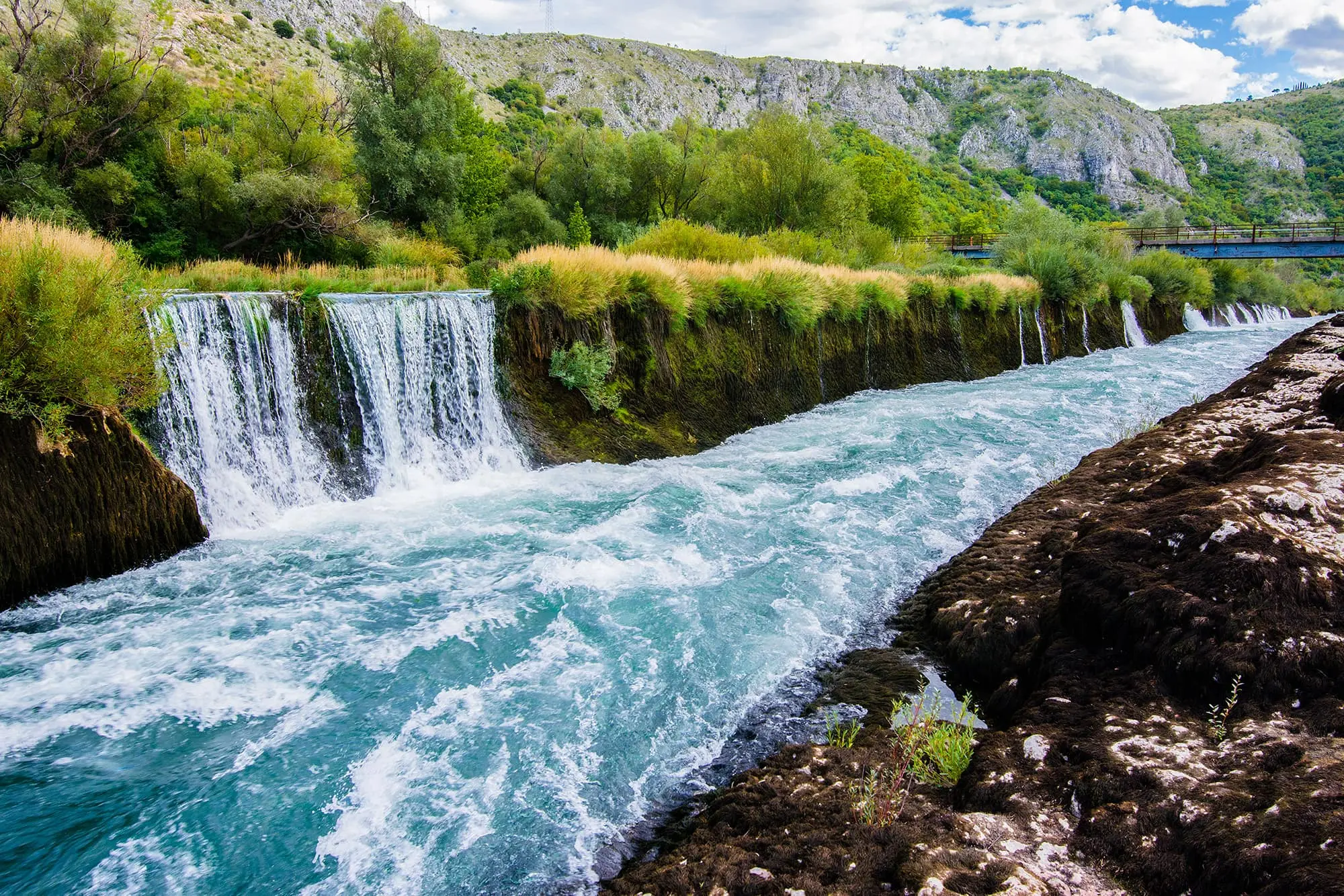
Buna canal, Photo: LuckyTD, Depositphotos
High above it all, perched on a rocky hill, stands another symbol of Blagaj. The Old Town of Blagaj, better known as Stjepangrad, watched over the Buna Valley and the routes crossing Herzegovina for centuries.
The fortress stands at more than three hundred metres above sea level, approximately 266 metres above the Buna spring itself. Its present appearance dates to the medieval period, although traces of fortifications on this site go much further back in time. Over the centuries, Illyrians, Romans, medieval Bosnian nobles, and Ottomans all left their mark here.
The fortress is most closely associated with Duke Stjepan Vukčić Kosača, the ruler after whom Herzegovina was named. Stjepangrad was one of the key centres of his power. Following the Ottoman conquest, the fortress gradually lost its military role and became an administrative centre before eventually being abandoned after a major earthquake in the nineteenth century.
Today, it offers one of the finest panoramic views in Herzegovina. From its walls, visitors can admire the Buna spring, the Blagaj Tekija, the green river valley, and the surrounding Herzegovinian landscape stretching towards Mostar.

Blagaj Fortress, Photo: Amrobih, Dreamstime
Blagaj is not only a place of historic monuments. Life here is still closely connected to the river. Along its banks are restaurants, walking paths, and peaceful corners where visitors can experience a sense of tranquillity rarely found in more crowded tourist destinations. One of the most popular places to relax and enjoy a meal is Hotel Buna, located directly beside the river. The sound of flowing water, the shade of trees, and the view of the emerald current create an atmosphere that encourages many visitors to stay longer than they originally planned.
Perhaps this is Blagaj’s greatest charm. While most visitors come to see the Tekija or the famous spring, those who stay a little longer discover much more. They uncover the medieval history of Herzegovina, stories of dervishes and legendary heroes, natural wonders shaped over thousands of years, and a river that became the lifeblood of an entire region.
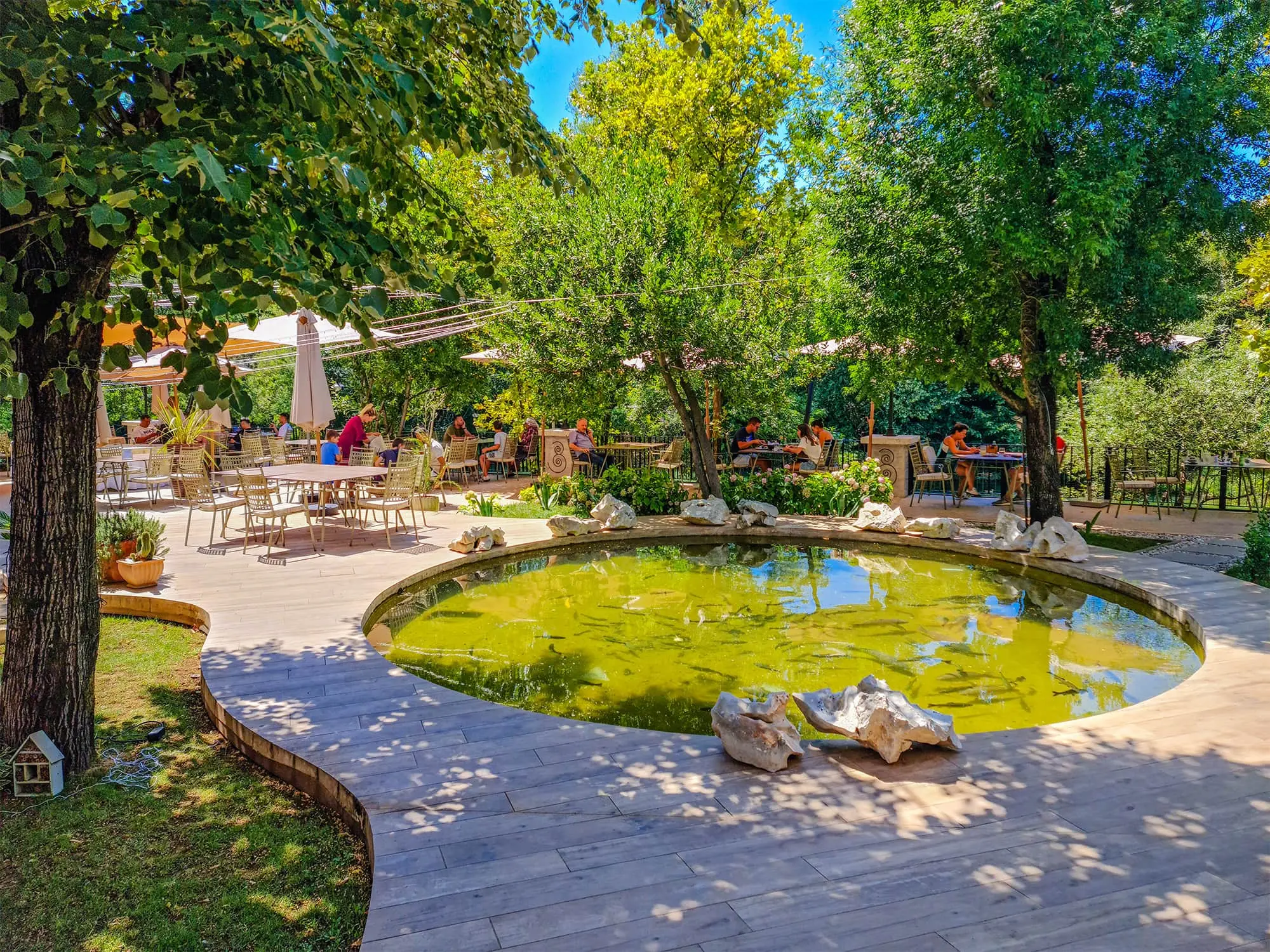
Hotel Buna, Photo: Adria.fun
Blagaj is not simply a village near Mostar. It is a place where nature, culture, history, and heritage come together within just a few kilometres. That is precisely why it remains one of the most remarkable destinations in Bosnia and Herzegovina, whether you are visiting for the first time or returning once again.

Paula Kovačić Taha
Once I saw that there was a bigger world out there, so I made myself be a part of it.
Leave a Reply