
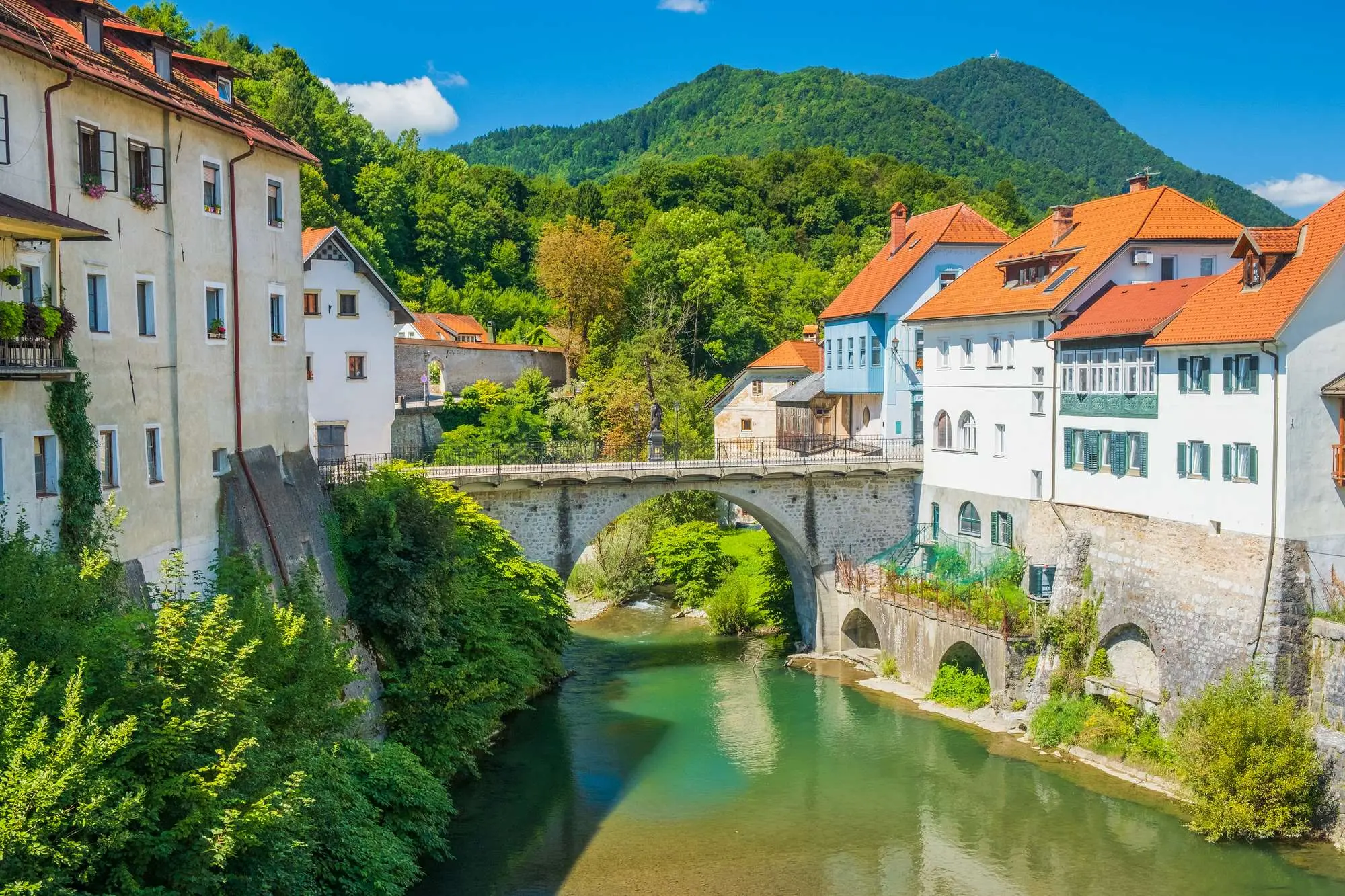
The Capuchin Bridge in Škofja Loka is one of the most beautiful medieval bridges
In the heart of Škofja Loka, where the northern edge of the old town leans over the Selška Sora River, there is a stone arch that has carried people, stories, and the rhythm of the town for centuries. The bridge, known today as the Capuchin Bridge and in the past as the Stone Bridge or the Franz Joseph Bridge, is one of the best-preserved medieval stone bridges in Slovenia and beyond. Its monumentality does not lie in its size but in the continuity of life that has crossed it since the fourteenth century, when this place was surrounded by walls and guarded by city gates.
The exact time of construction cannot be determined precisely, but there are confirmed traces in written records. In a preserved document dated July 12, 1357, a mill on the Sora is mentioned as being located above the Stone Bridge outside the city gates, which means that the crossing already stood at the site of today’s bridge. This record dismisses the popular tradition that the bridge was built by the Bishop of Freising, Leopold, whose death in 1381 is indeed connected to a fall from what was then a narrow and unguarded bridge, but according to museum analysis, the construction clearly predates his time. The bridge should therefore be dated to the mid-fourteenth century, with a possible earlier origin during the formation of the town’s fortifications.
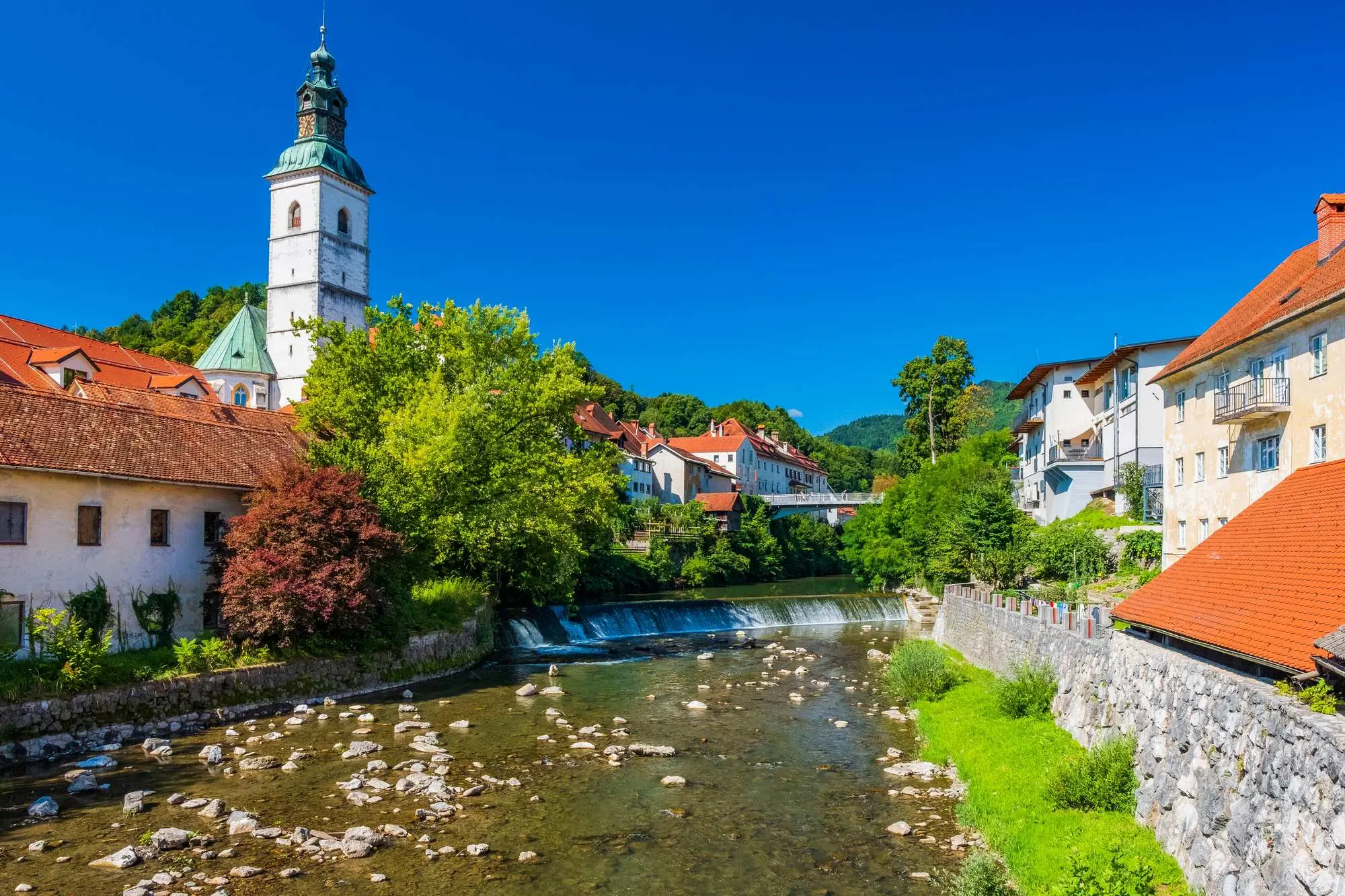
Škofja Loka and the Sora River Photo: iascic Depositphotos
The name Capuchin Bridge became established only after 1706, when the Capuchin friars came to Loka and built a monastery right next to the former northern city gates. From then on, the bridge was in everyday speech linked to their monastery and square, although older sources and city postcards long referred to it as the stone bridge, after the material and method of construction. In the Middle Ages, the Selška Gate with its guard tower stood by the bridge, making the crossing an integral part of the northern defensive system of the town.
Structurally, it is a single semicircular arch built of finely dressed stone blocks. Originally, the bridge had a massive stone parapet, but due to the growth of traffic in the nineteenth century, it became too narrow. The usable width, because of that parapet, was only about 2.8 meters. The municipality therefore commissioned engineer Anton Žužek, whose plans in 1888 widened the bridge and fitted it with wrought iron railings mounted on metal brackets. In honor of the fortieth anniversary of Emperor Franz Joseph’s reign, the bridge was renamed Franz Joseph Bridge, and on May 15, 1892, a statue of Saint John of Nepomuk, the patron saint of bridges and travelers, was placed in the center on a pedestal with the coat of arms of Loka.
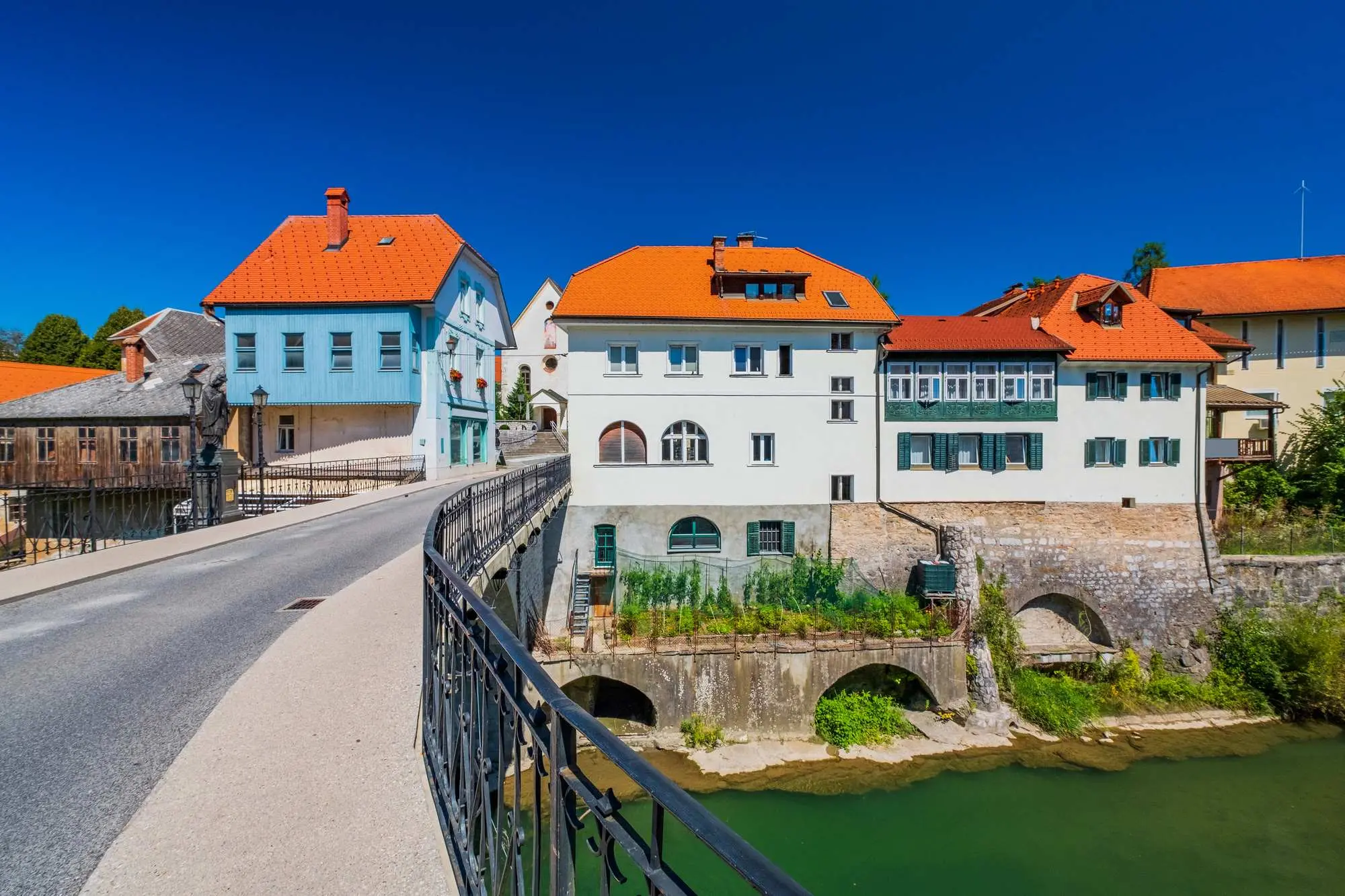
Capuchin Bridge, Photo: iascic Depositphotos
Two hundred years later, in 1992, the original statue was removed due to deterioration, restored, and placed in the Loka Museum, while a faithful replica was installed on the bridge. The upper roadway had already been renewed in 1974, when it was given a reinforced concrete deck and new sidewalks, which extended its lifespan in traffic without spoiling the recognizable silhouette of the stone arch over the Sora.
Despite turbulent times, the bridge also survived an attempt at destruction. On April 10, 1941, when the Yugoslav army was retreating from Škofja Loka, other bridges were blown up, and the Capuchin Bridge was badly damaged. It did not collapse thanks to the ingenuity of local residents, who, according to museum records, bribed a soldier to place the explosives more shallowly and to throw a good portion into the river. This detail may sound like an anecdote, but fine cracks and later repairs to the upper structure are reminders that the bridge remained wounded for days afterwards, yet still stood.
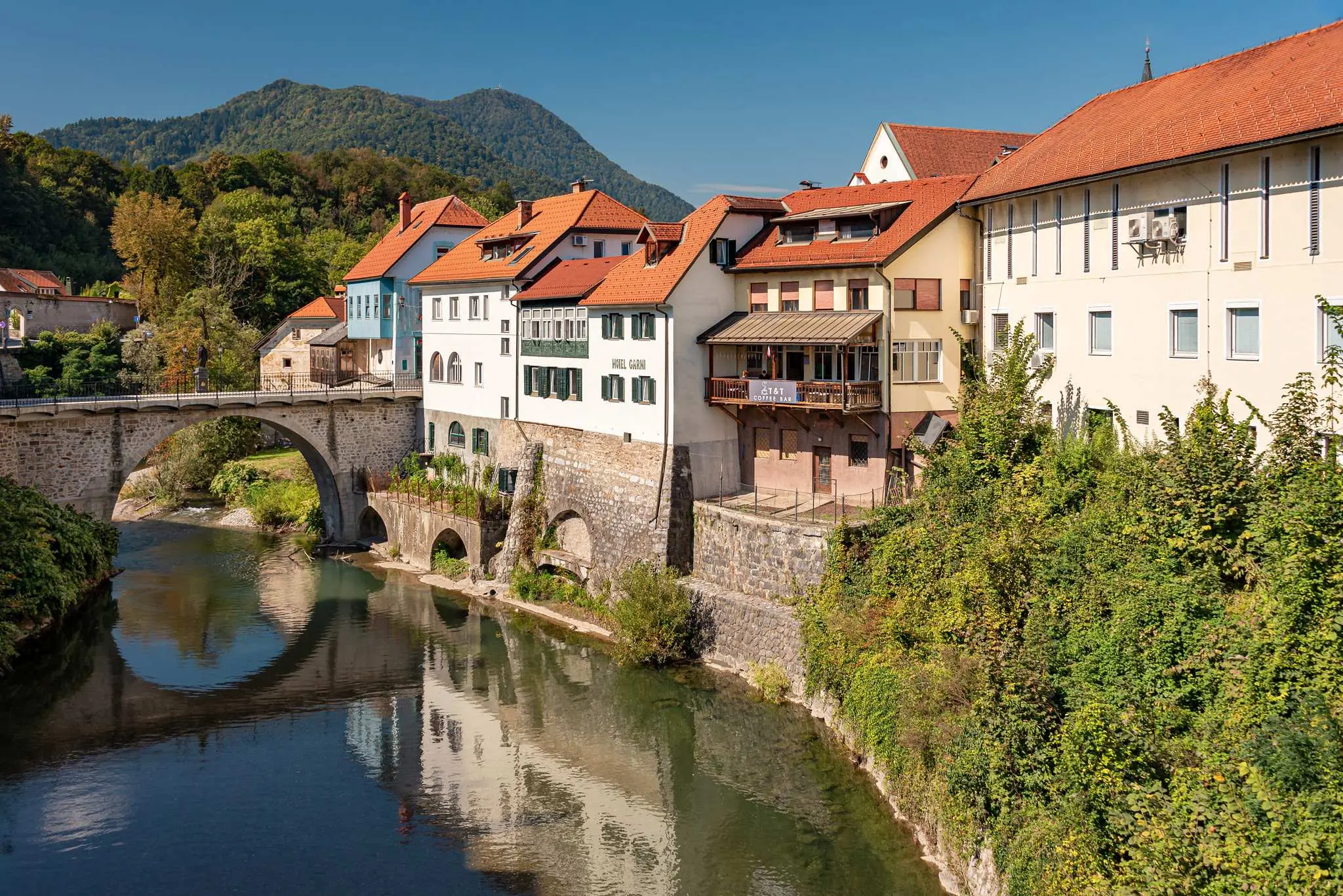
Capuchin Bridge, Škofja Loka, Photo: Jorge Franganillo, CC BY 2.0
For the local people, the Capuchin Bridge is not only a structure but also a stage. The route of the great Škofja Loka Passion Play, the oldest fully preserved staged folk procession in Slovenia, regularly crosses the bridge and continues toward the city gates and the square. When at Easter time the town becomes a living theatrical scene, the bridge takes on the role of a passage from the profane to the sacred, from everyday life into a tableau of biblical history.
Today, this very bridge is one of the symbols of the town and an unmissable sightseeing spot. From its crest opens a view of the old town, the castle, and the riverbed, and it still serves as a functional crossing that links the Capuchin monastery and the center. The Škofja Loka Tourist Organization presents it as a unique example of its kind in Central Europe: stone-built, semicircular, dating from the mid-fourteenth century, with the central figure of Saint John of Nepomuk and the shield of Loka’s coat of arms. This description is not a marketing exaggeration but recognition of the fact that the bridge, despite all the modifications of the nineteenth and twentieth centuries, has retained its fundamental medieval form to this day.
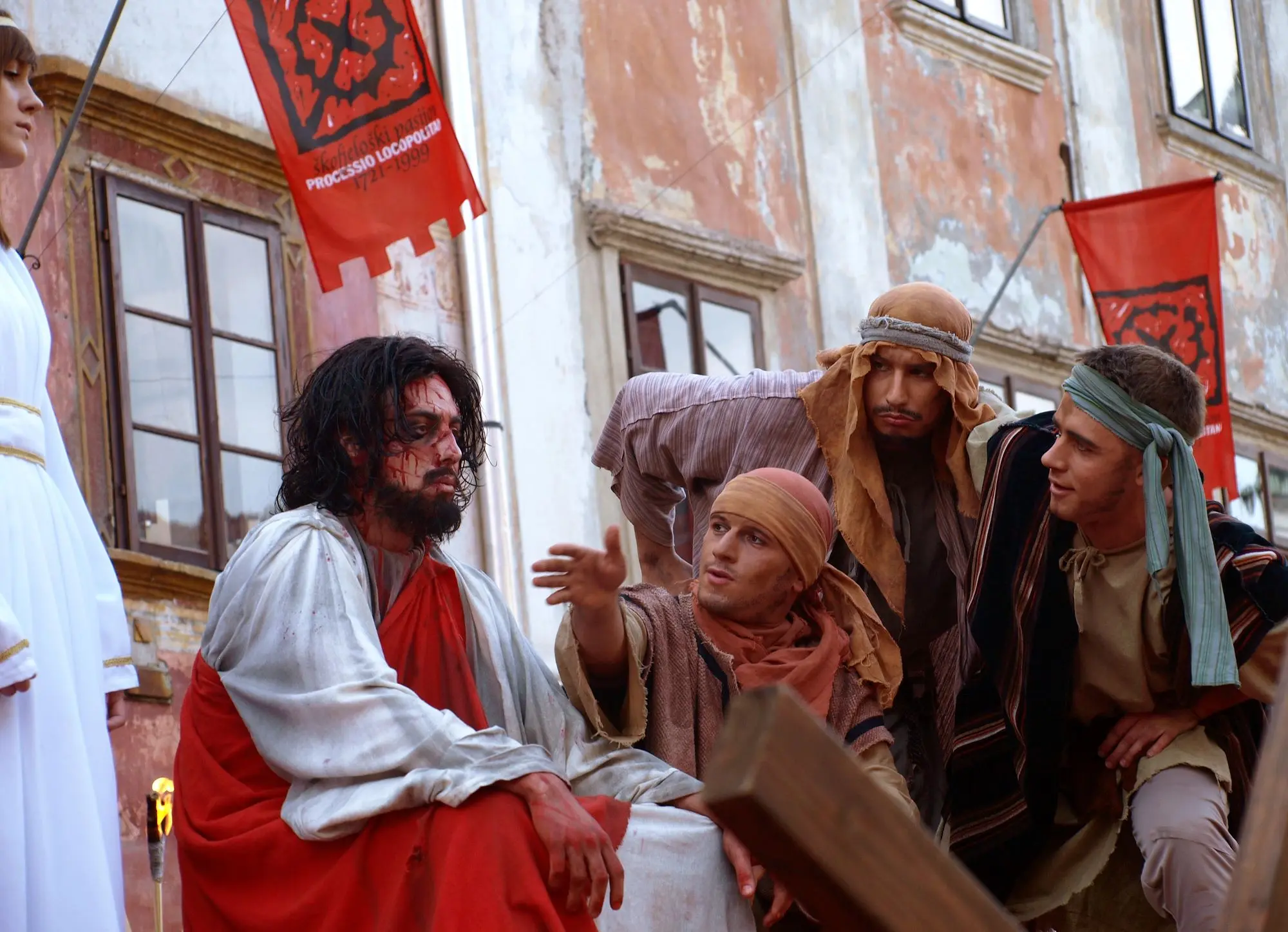
Škofja Loka Passion Play Photo: MaticStojs Depositphotos
The note on the origin of its name and builder often confuses visitors. Official municipal pages and some older literature still state that Bishop Leopold commissioned its construction, which is a charming legend connected to his tragic death. However, museum research, including the 1357 record mentioned above, indicates that the bridge is older and that it was already part of the town’s northern defensive complex alongside the Selška Gate.
If you wish to see the bridge through the eyes of its builder, its single arch says the most. The semicircle connecting the banks has not changed since it was laid in dressed stone in the fourteenth century. Everything that has been added over time, from wrought iron railings to the replica statue to the concrete deck, has been an adaptation to life rather than a loss of identity. That is why the Capuchin Bridge still remains a place where the history of the town is not read in a textbook but crossed on foot over stone.
Why visit Škofja Loka? These are the attractions you should not miss…

Sara Sedić
I plan to live in the moment :)
Leave a Reply