
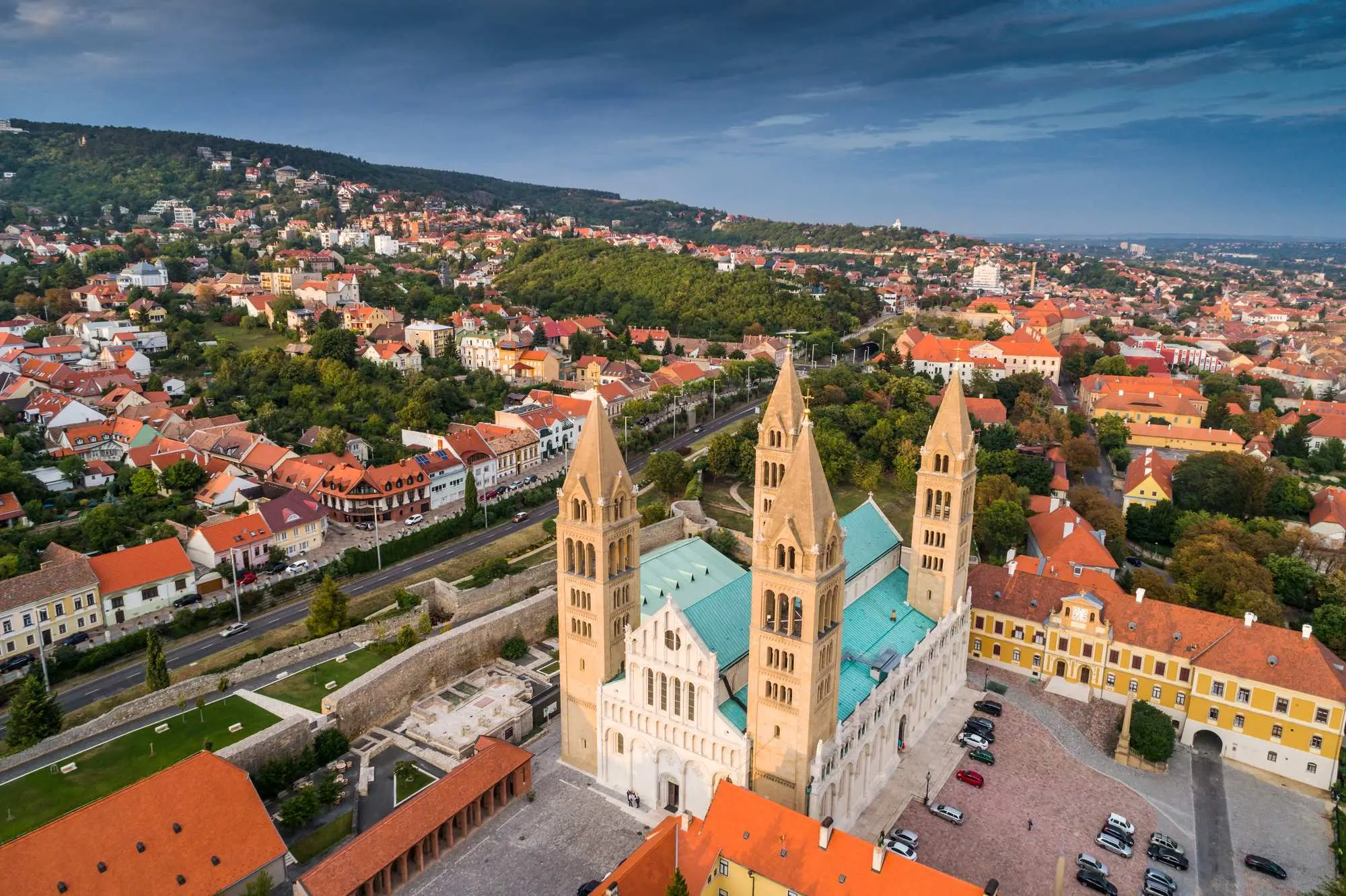
Is Pécs worth visiting and what to see?
In southern Hungary, in the shadow of the Mecsek Mountains and close to the Croatian border, lies a city that rarely makes it to the top of tourist lists, yet almost always leaves a lasting impression. Although not large or widely popular, it offers more than enough content for a two-day stay. Historical heritage, a rich cultural scene, and the surrounding wine region make Pécs an appealing choice for those seeking a calmer yet content-rich destination.
This city was the European Capital of Culture in 2010, and its history reaches far back into the past. Over the centuries, it has left behind a mosaic of layers, including Roman foundations, Ottoman influences, and the Austro-Hungarian period. Each of them can still be felt in the city’s urban fabric.
Some of those layers are not immediately visible, as they lie hidden beneath the surface. Among them, the legacy of the late Roman Empire stands out in particular, preserved right beneath the city centre.
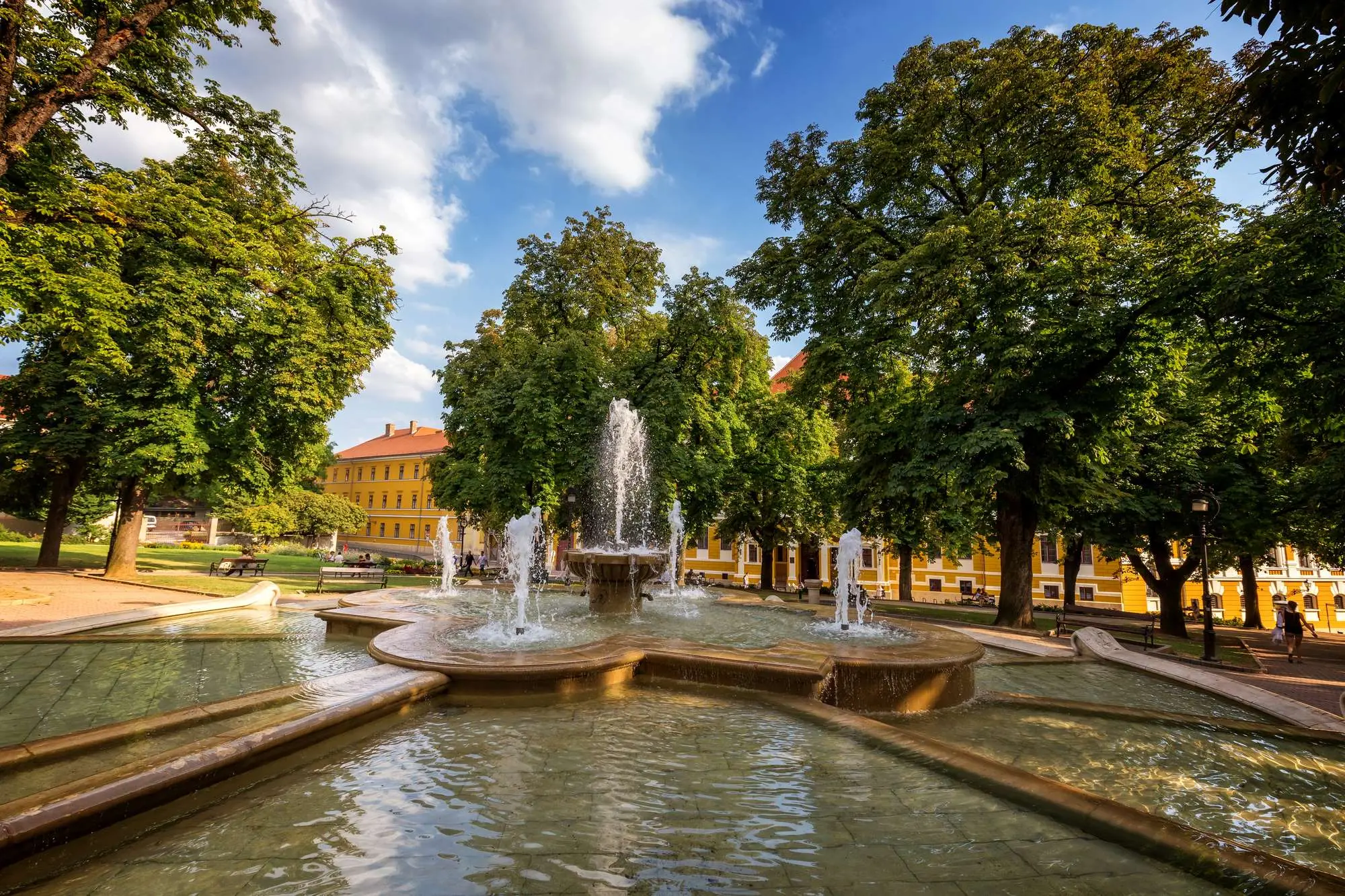
St. Stephen’s Square, Pécs, Photo: digoarpi Depositphotos
EARLY CHRISTIANS BENEATH THE CITY
The former Roman city of Sopianae, as Pécs was known in antiquity, was an important administrative and trade centre of Pannonia. From that period comes one of the most significant historical sites in all of Hungary, the early Christian burial complex from the fourth century. Located directly beneath today’s main square, this archaeological site contains a remarkably well-preserved group of underground tombs, above-ground chapels, and painted chambers that tell the story of the early Christian community.
You can descend beneath the city and walk among tombs adorned with biblical frescoes, resurrection symbols, and scenes from everyday life. In addition to illustrating the religious customs of the time, the site offers insight into the social structure of the Roman province. It is not an isolated archaeological museum. It is a space that vividly conveys the atmosphere of a long-gone but not forgotten world.
Due to its historical and cultural value, the complex is listed as a UNESCO World Heritage Site and is rightly considered one of the city’s most important attractions.
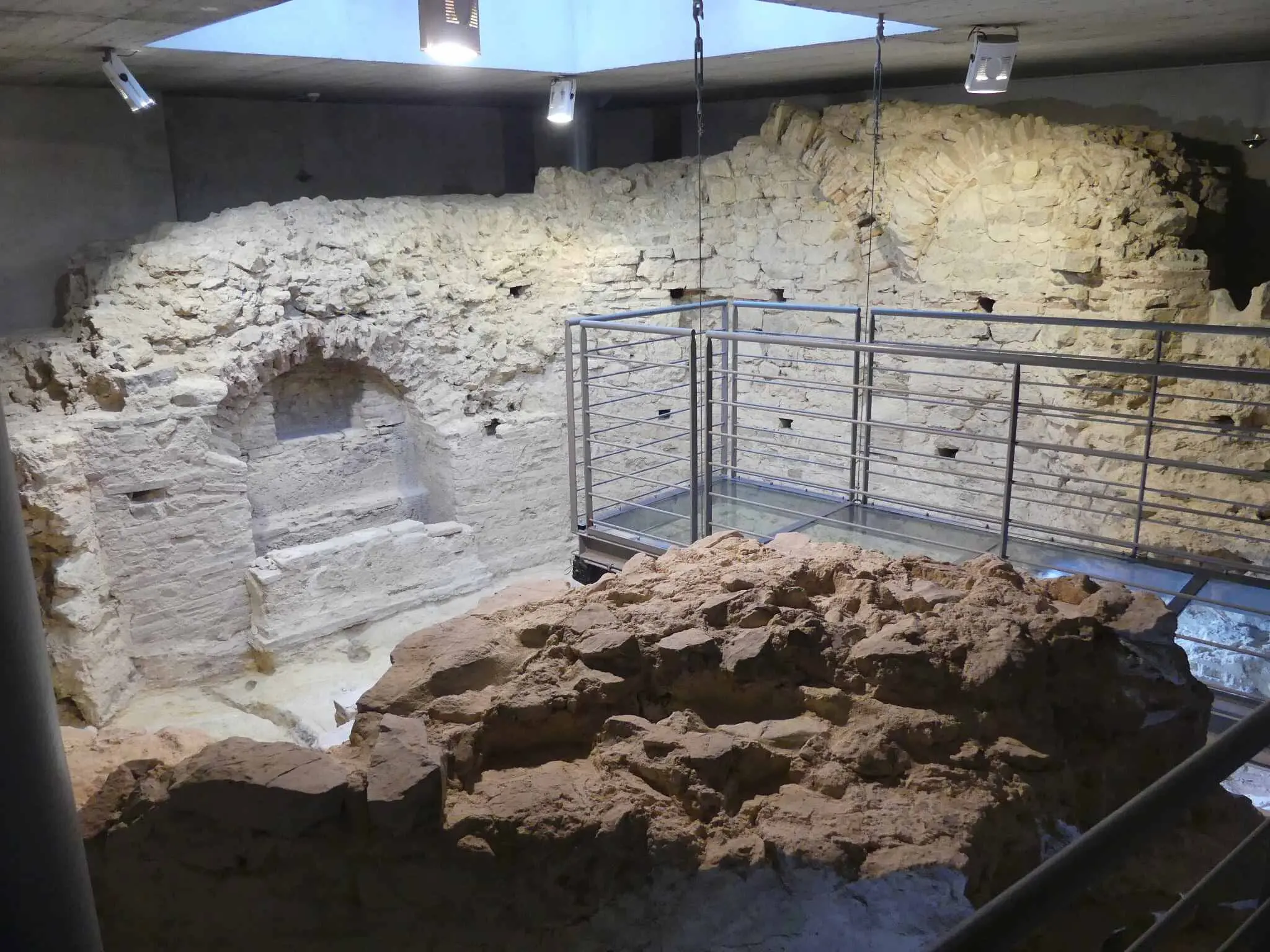
Necropolis in Pécs, Photo: Elekes Andor, CC BY 4.0
SACRED ARCHITECTURE AT EVERY STEP
What makes Pécs particularly interesting is the layering of its religious heritage. In the main square stands the former mosque of Pasha Qasim, built in the sixteenth century during Ottoman rule. Today, it functions as a Catholic church, but clearly preserved elements of Islamic architecture remain. The mihrab, dome, and oriental spatial layout speak to the city’s changing eras and cultural transformations.
Nearby rises the Cathedral of Saint Peter and Paul, with four tall towers dominating the city skyline. Its foundations date back to the Roman period, and the current appearance is the result of multiple renovations. The interior is rich but not overdone, with striking frescoes and sculptures that create a peaceful and solemn atmosphere.
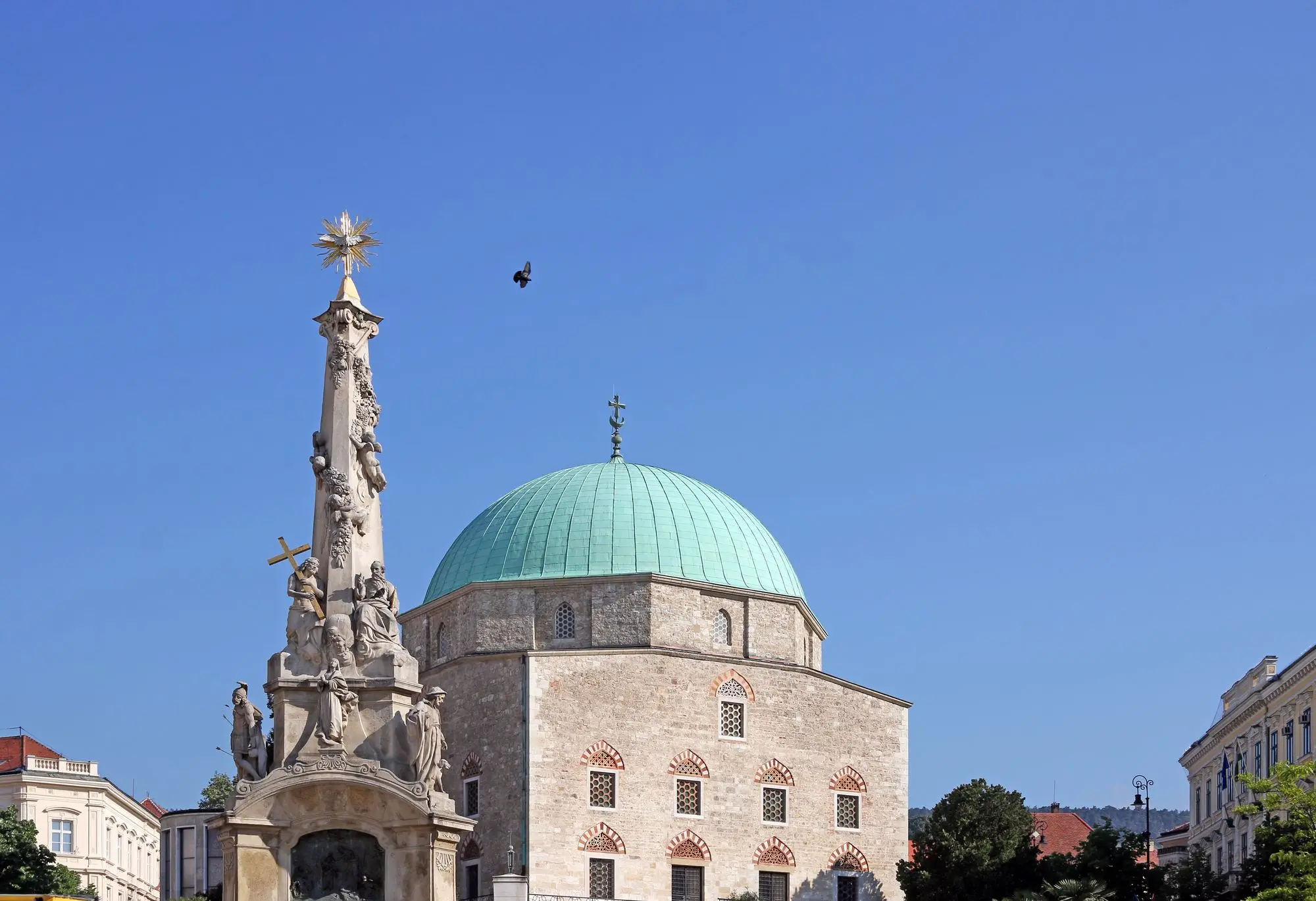
Pasha Qasim Mosque Photo: goce risteski Depositphotos
THE ZSOLNAY CULTURAL QUARTER
One of the most fascinating places in the city is the Zsolnay Cultural Quarter. Located in the former ceramics factory, it now functions as a complex of museums, galleries, workshops, educational facilities, and hospitality venues. Zsolnay ceramics are known for their unique technology and distinctive style. The motifs and colours that made them famous can still be seen on many building façades throughout Pécs.
The entire quarter is designed to invite walking and exploration. It is easy to spend several hours here, whether you are interested in art, design, industrial heritage, or simply a relaxed atmosphere.
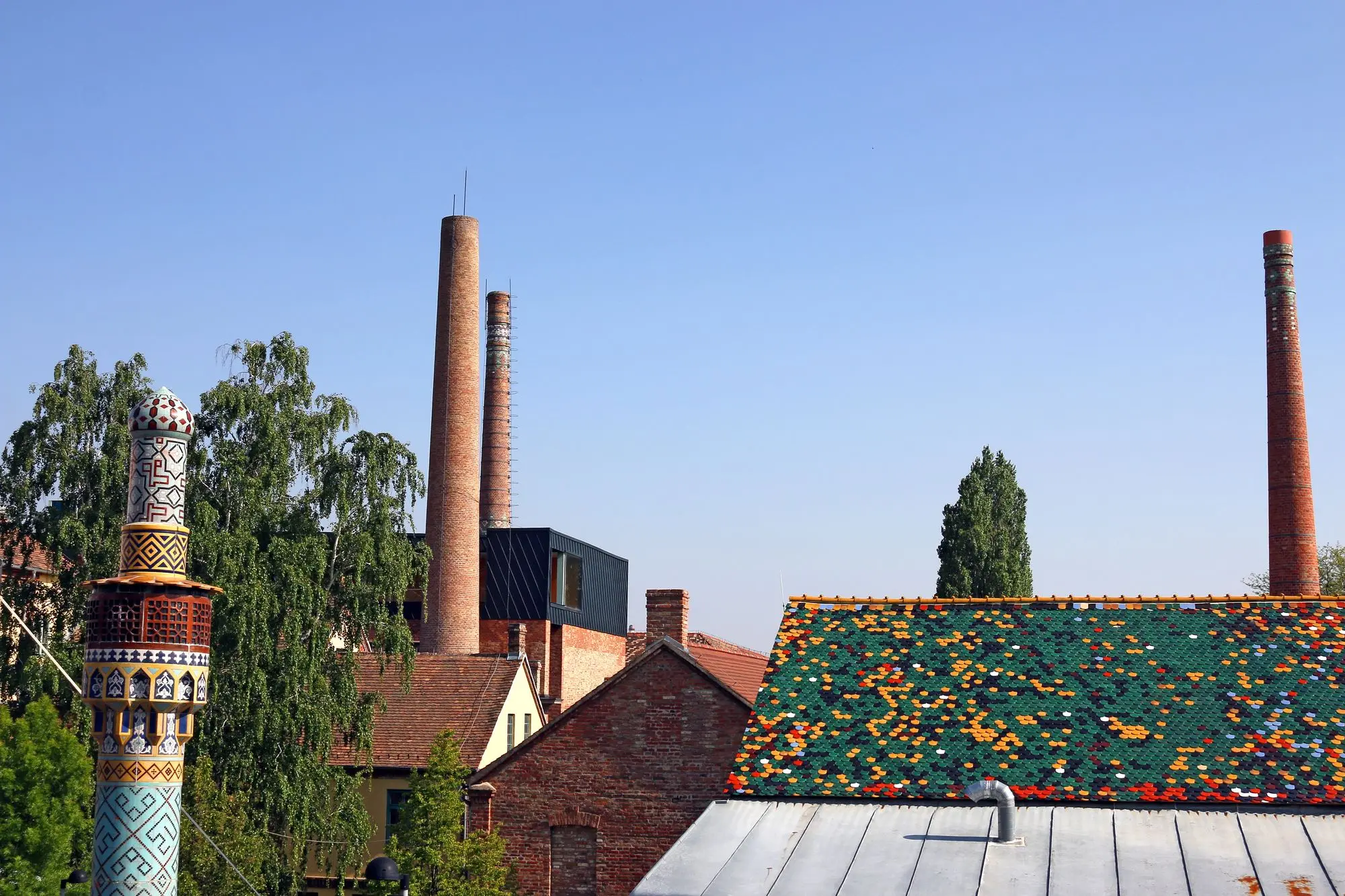
Zsolnay center, Photo: goceristeski Depositphotos
ART AND MUSEUMS
For a city of relatively small size, Pécs offers a rich and varied museum scene. Among the best known is the Csontváry Museum, dedicated to the distinctive painter Tivadar Csontváry, whose works provoke strong reactions and are often unforgettable. There is also the Janus Pannonius Museum, with a valuable collection of archaeological finds and artworks, as well as the Museum of Modern Hungarian Art, featuring pieces from the twentieth and twenty-first centuries.
Although not large in size, the museums provide plenty of content for lovers of history, visual art, and contemporary culture.
WINE FROM VILLÁNY
One of the reasons to extend your stay in Pécs is the nearby Villány wine region. Located just about a minute’s drive away, this area is famous for producing excellent red wines. The most common varieties are kadarka, portugieser, and cabernet franc. Most of the wineries are small and family-run.
A visit to Villány is not just wine tasting. It is a complete experience. Vineyards, cellars, and welcoming hosts create an atmosphere that is both relaxed and authentic. It is the perfect addition to a cultural weekend, especially for those who appreciate a good glass and a local story.
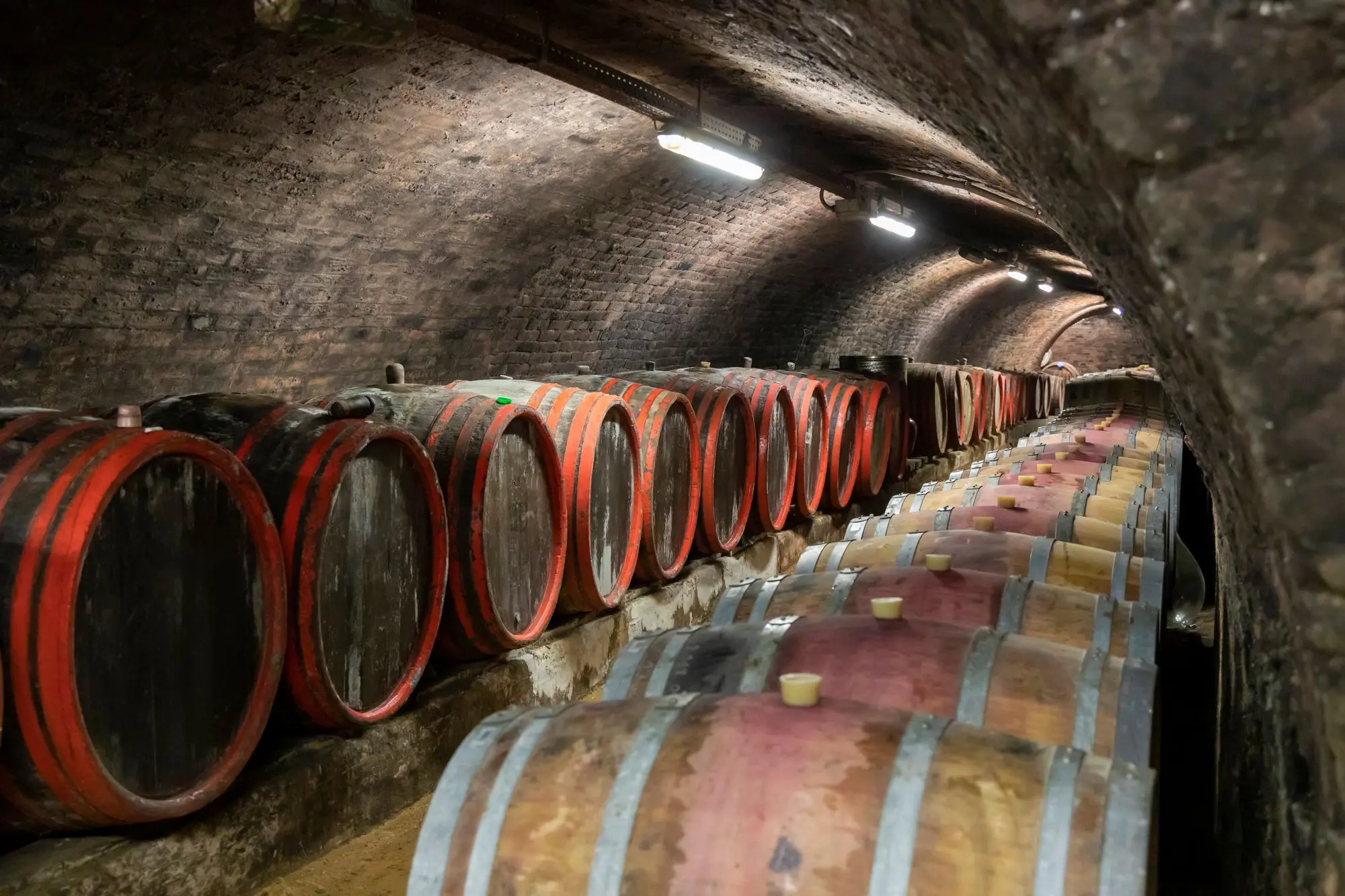
Wine cellar in Pécs, Photo: phb.cz Depositphotos
Pécs may not be a city built for tourists seeking spectacle. Its strengths lie in the details, the atmosphere, and the type of content that does not push itself forward but quietly stays with you. Underground tombs, layered sacred architecture, ceramic heritage, and wine culture together create the image of a city that does not demand attention but fully deserves it.
If you are looking for a destination with authentic character, cultural depth, and local charm, Pécs might easily become one of those places you will want to return to.
Hungary outside the capital: 5 incredible destinations worth exploring

Zoran Kovačić
I do miracles right away, but the impossible still takes me a little time!
Leave a Reply