
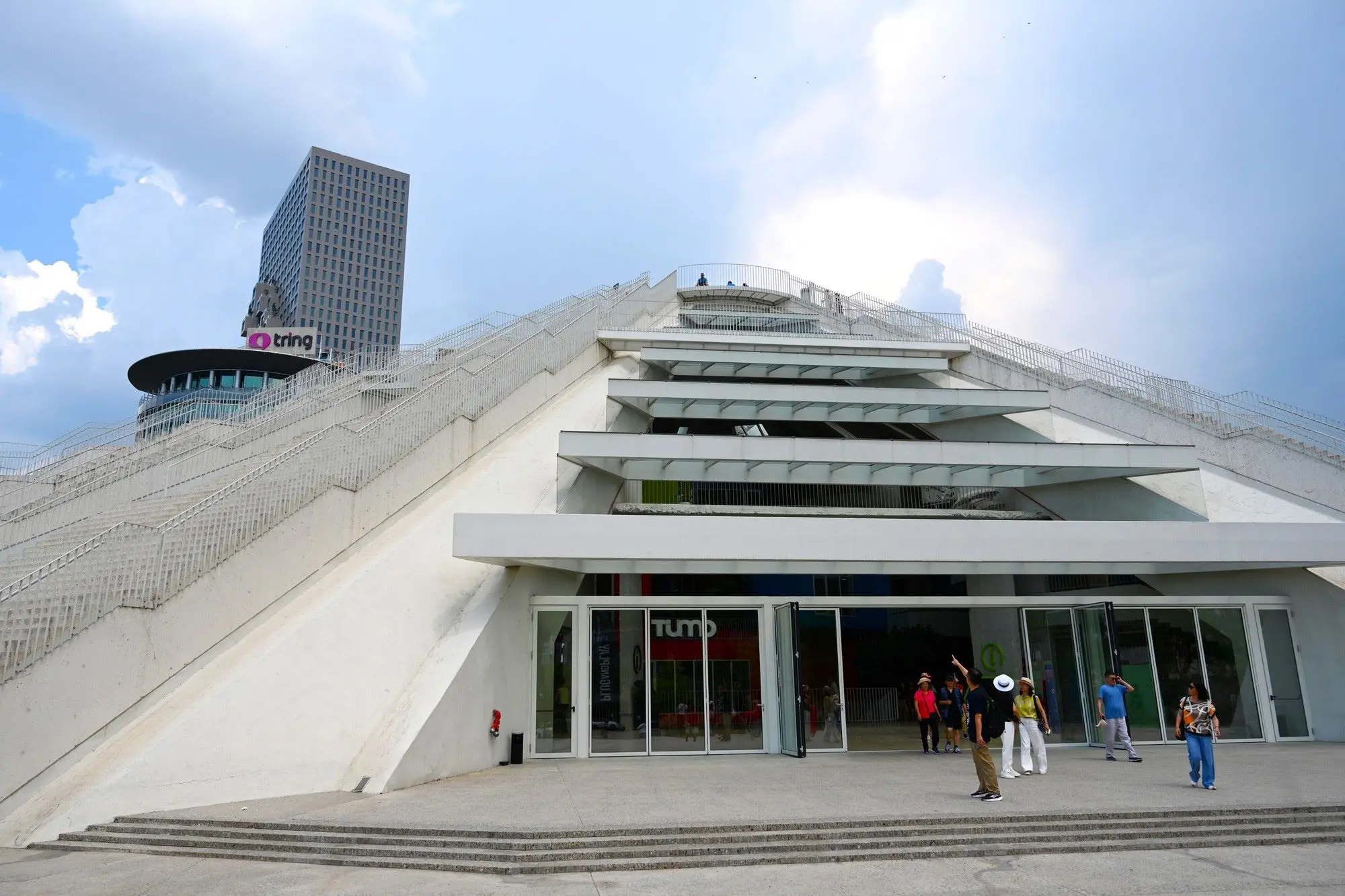
How did the pyramid in Tirana stop being a symbol of dictatorship and become a platform for the future?
In the very heart of Tirana, among busy avenues and the canopies of city trees, stands a structure that is not just an architectural curiosity, but a witness to an era, a transformation, and a courageous reckoning with the past. This is the Pyramid of Tirana. Built as a symbol of power, it was later neglected and contested, but today it proudly stands as a space of freedom, knowledge, and the future.

Pyramid of Tirana, Photo: PBphotos, Depositphotos
The pyramid was constructed in the late 1980s, more precisely in 1988, to serve as a museum dedicated to Enver Hoxha, the longtime leader of communist Albania. The project was led by members of his family and their collaborators, and the goal was to create a monumental architectural shrine that would extend his influence even beyond death. Built in the brutalist style, with slanted concrete surfaces and vast glass panels, it looked like a concrete ode to a regime. But history moved faster. When communism in Albania collapsed, the building was left without a purpose.
Throughout the nineties, the pyramid was everything and nothing. It hosted fairs, concerts, and television productions. It even served as a base for international forces during the conflict in Kosovo. But more than anything, it was an empty shell. Citizens continued to use it spontaneously. They climbed its sides, painted graffiti, slid down its slopes, and gave it new meanings. Some suggested it should be demolished, but Tirana chose to pause. And to look again, this time with different eyes.
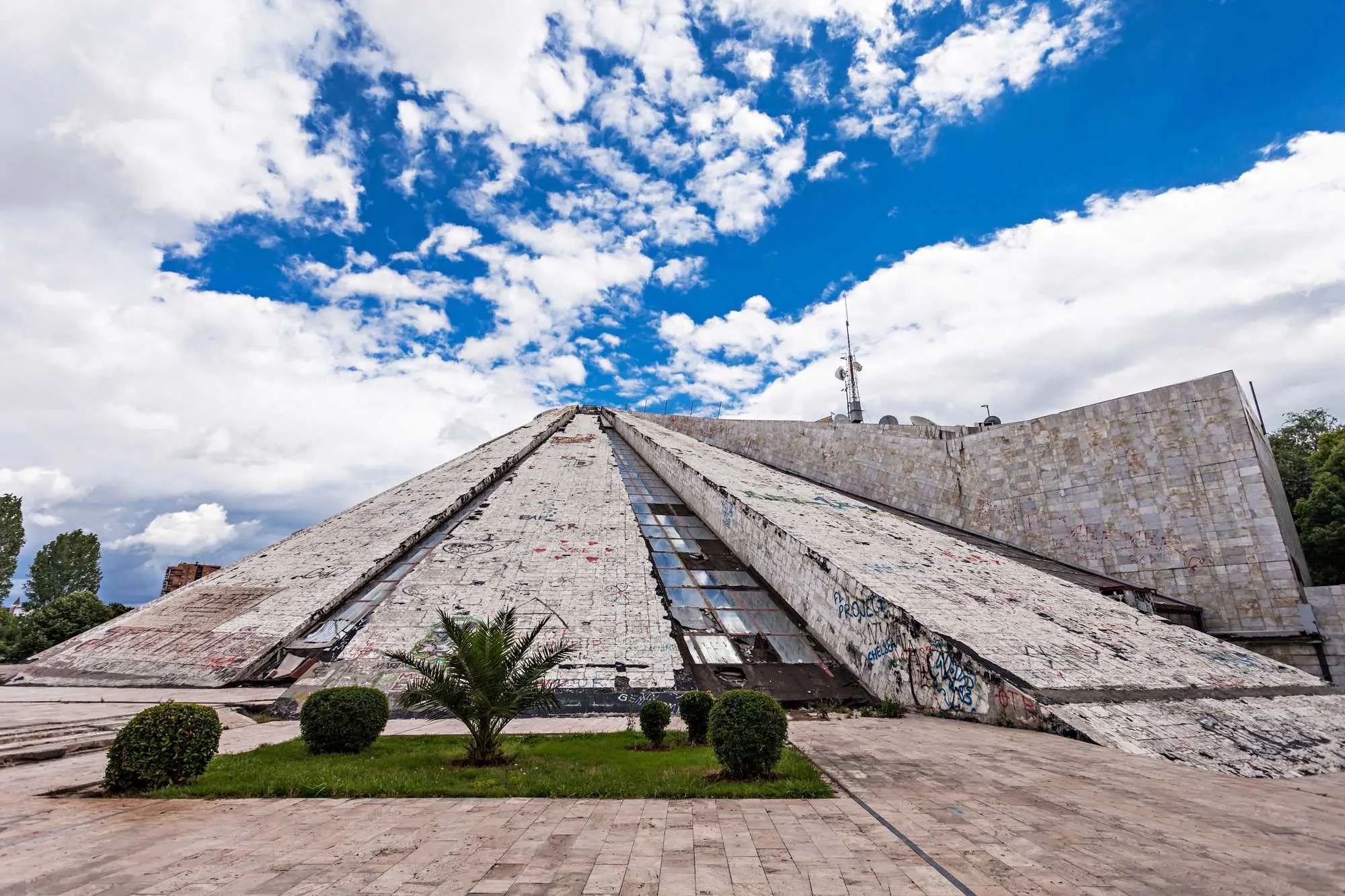
Pyramid of Tirana, Photo: saiko3p Depositphotos
The years went by, and the debate over the pyramid’s fate didn’t fade. When, in 2017, it was decided not to demolish it, but to breathe new life into it, everything changed. The renovation project was entrusted to the renowned Dutch studio MVRDV, and the initiative came in collaboration with the Albanian American Development Foundation. The idea was not to erase the past, but to transform it into a platform for learning and dialogue. And so the transformation began.
The concrete structure remained untouched. Colorful modular units were added, now housing classrooms, music studios, programming spaces, workshops, and small cafés. The interior is filled with life, with children, young people, and visitors eager to learn more. The outer sides of the pyramid have become an open public space. Some come to climb to the top and view the city from a new perspective, while others simply stay on one of the terraces and soak in the atmosphere. One side of the building has been left smooth, just as it was when young people used to slide down it years ago. This surface is not just an architectural feature, but a monument to collective memory.
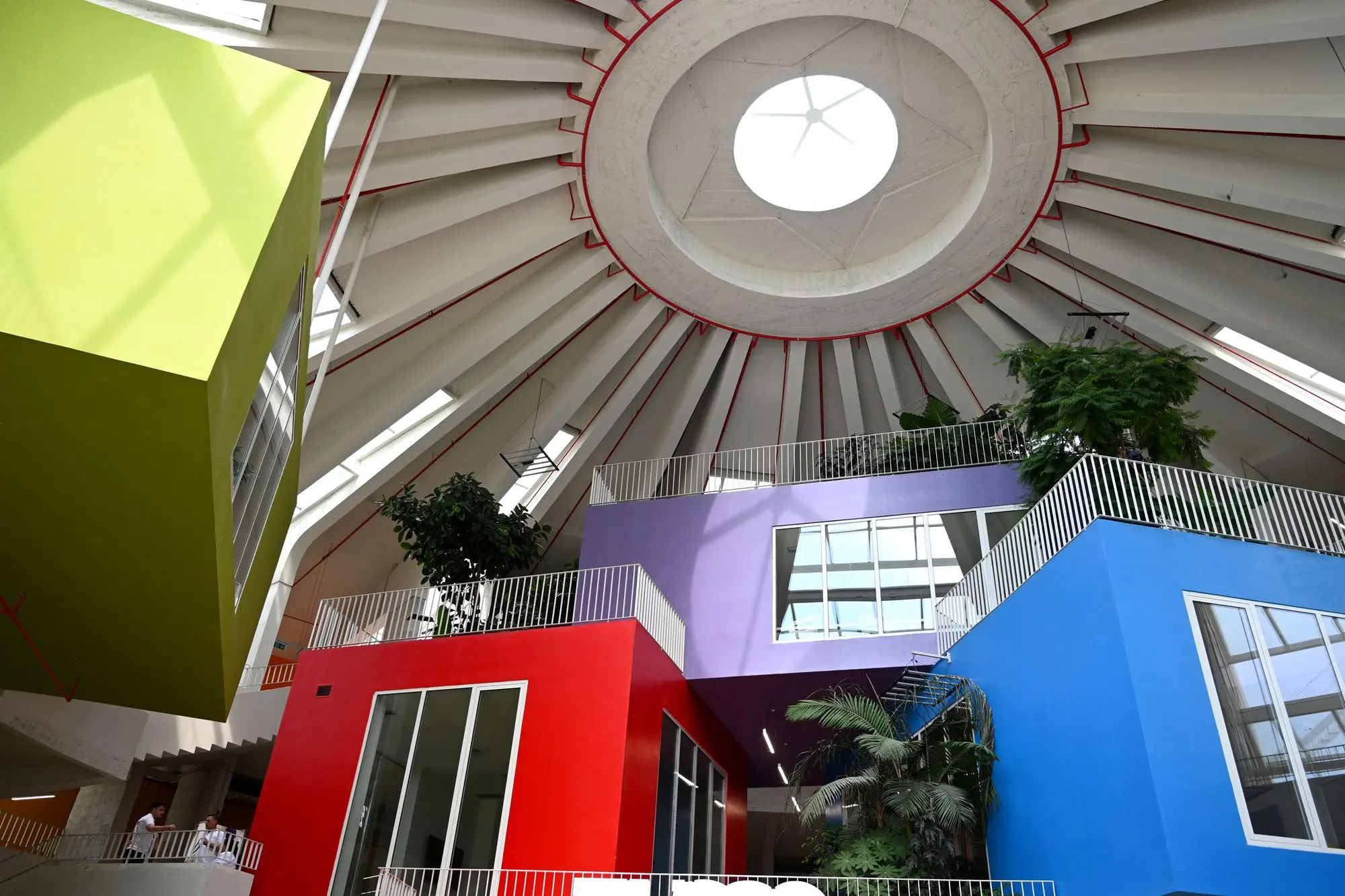
Pyramid of Tirana, Photo: Bumble-Dee Depositphotos
Today, the pyramid carries a completely new role. It is home to the TUMO Center, an educational platform that offers free programs in technology and creative skills for young people. Here, students learn programming, film production, animation, and robotics. All of it in a space that once symbolized authoritarian power, and now belongs to generations shaping an open, tech-savvy, and creative Albania.
International media write with excitement about this transformation. The Guardian described the building as one of the strongest examples of how architecture can help a society reconcile with its own past. Contemporary architecture organizations have highlighted it as a model for regenerating public space, one that does not run from its roots, but boldly transforms them into something new.
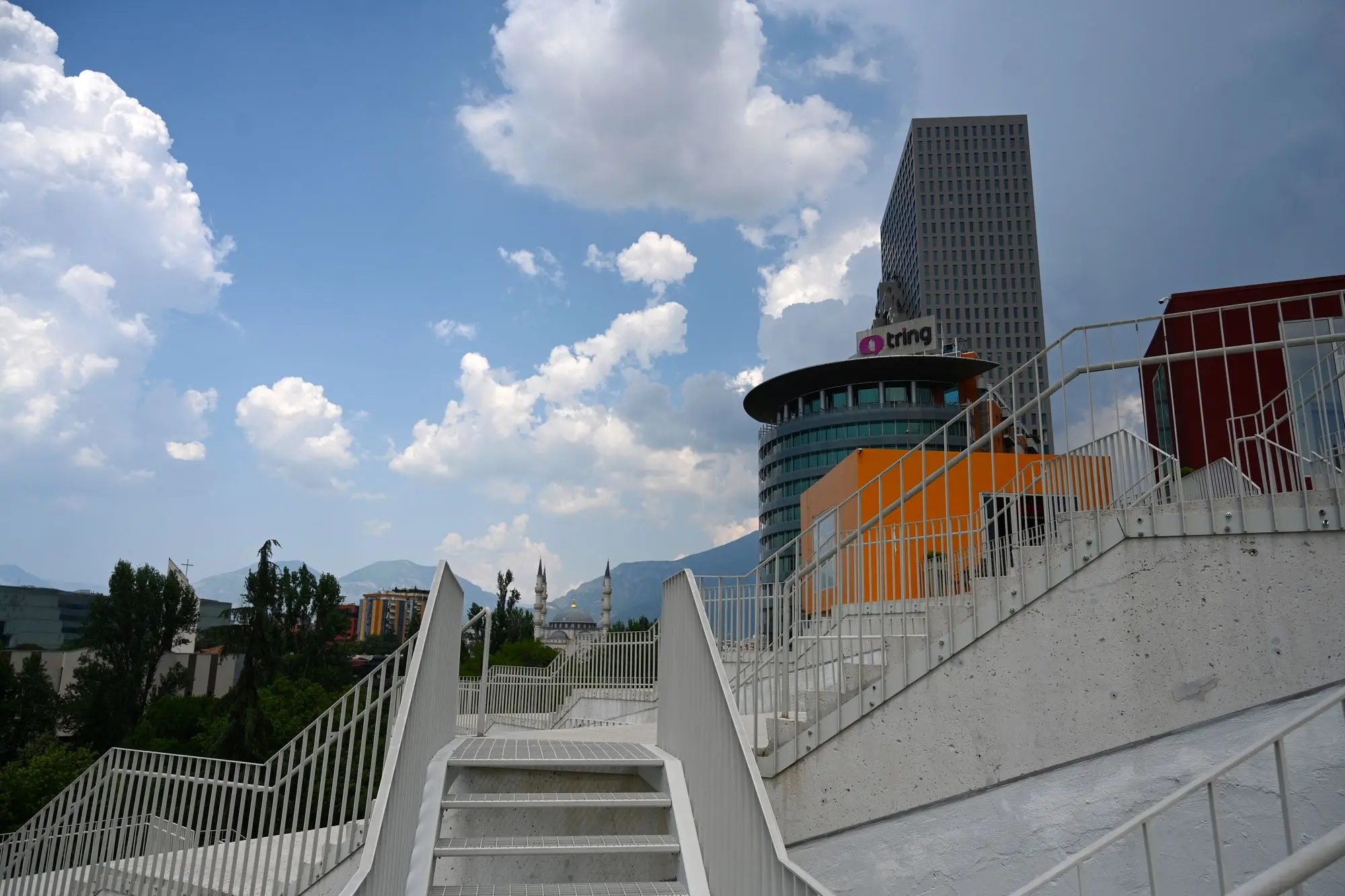
Pyramid of Tirana, Photo: Bumble-Dee Depositphotos
The Pyramid of Tirana today is not just an attraction. It is a story. A story about time that has passed, about the challenges that came, and about the decision to turn darkness into light. If you visit Tirana, you must check it out.
Tirana guide: where to go and what to see in the Albanian capital?

Zoran Kovačić
I do miracles right away, but the impossible still takes me a little time!

Leave a Reply