
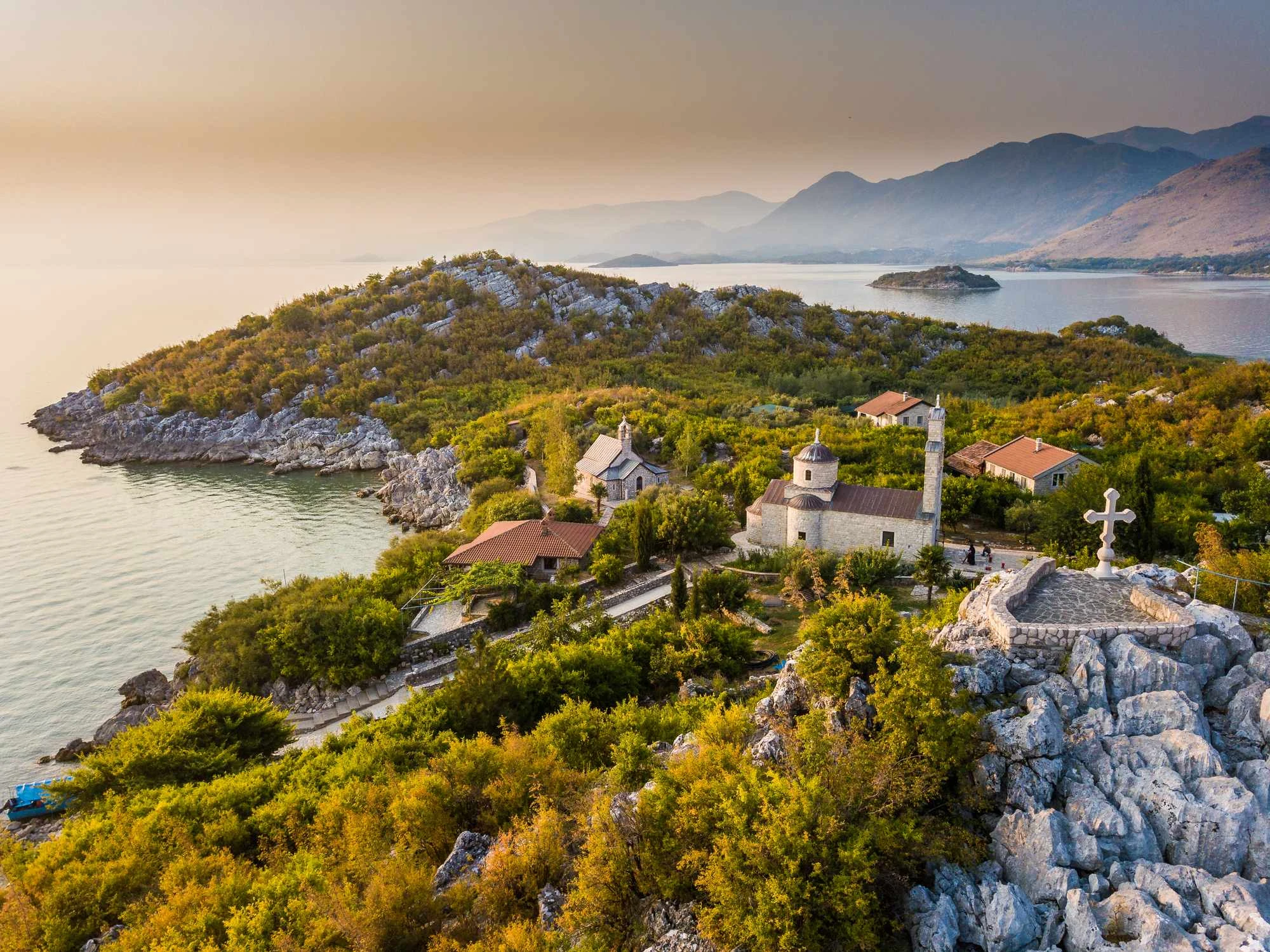
The island of Beška hides one of the most important stories of Lake Skadar!
On the calm surface of Lake Skadar, where the water almost imperceptibly merges with the sky, a small island emerges that has for centuries preserved one of the quietest yet deepest stories of this region. Beška Island does not attract attention with its size or dramatic landscape, but with the power that lies in its symbolism and history.
Lake Skadar, the largest lake in the Balkans and one of the most important natural areas of southeastern Europe, stretches between Montenegro and Albania. It is known for its fluctuating water levels, underwater springs locally called eyes, marsh landscapes, and exceptional birdlife. This very combination of water, silence, and natural isolation has for centuries attracted monks, rulers, and travelers. If you want to understand why Beška emerged precisely here, it is enough to sail across the lake once and feel the calm that almost physically presses on your shoulders.
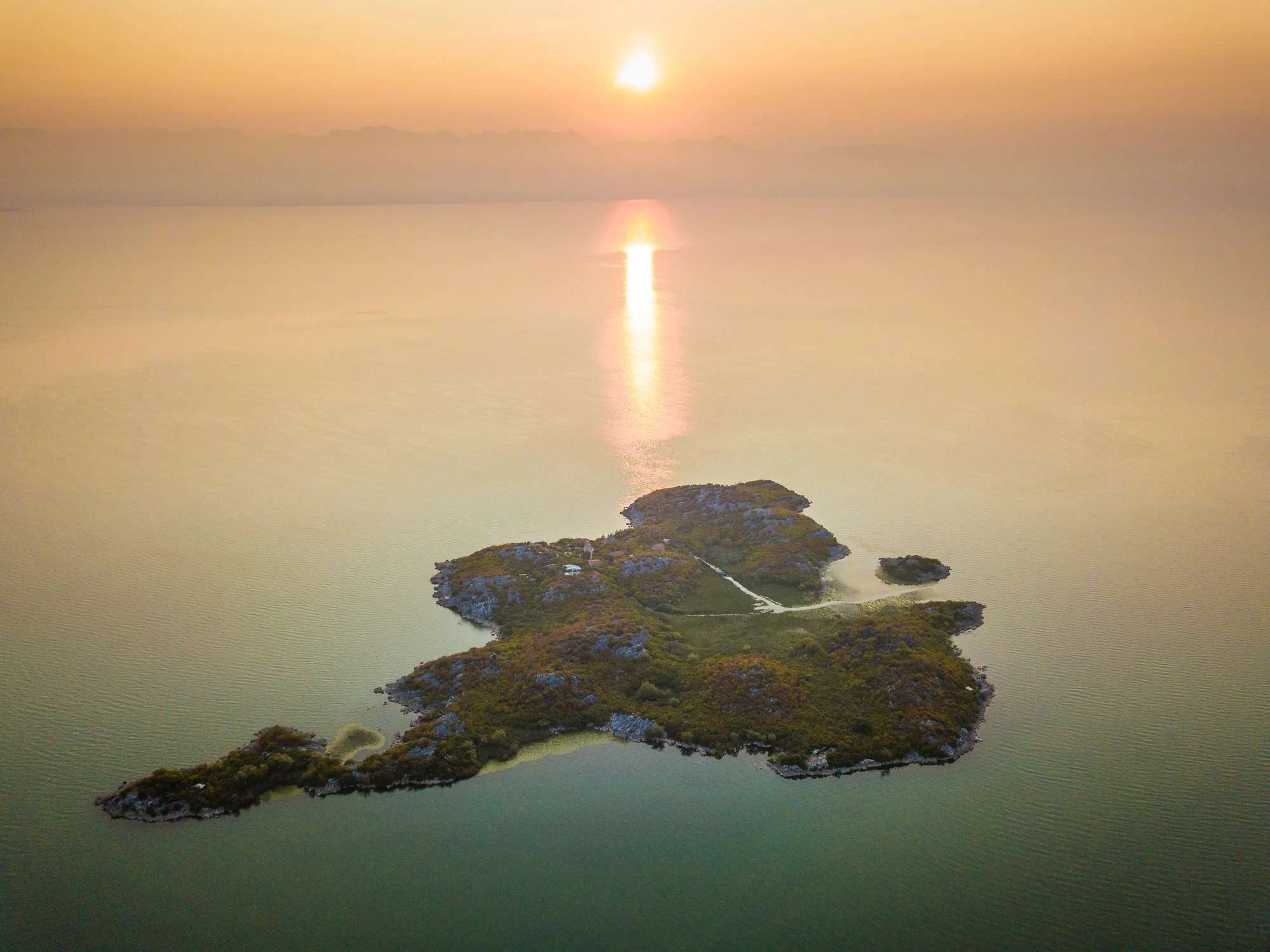
Island of Beška Photo: VejrikLukas Depositphotos
Beška Island is located in the southwestern part of the lake, not far from the shore toward Virpazar and Donji Murići. It is a small islet mentioned in older sources under the names Gorica, Beška Gorica, or Brezovica. Although uninhabited today, during the Middle Ages it held an exceptionally important place in the political and spiritual life of Zeta.
On the island itself stands the Beška Monastery, one of the most significant sacral complexes on Lake Skadar. The monastery consists of two churches that testify to a period when this area lay at the crossroads of major historical powers as well as strong local nobility.
The older church is dedicated to Saint George and was built at the end of the fourteenth century. Its founder was Đurađ II Balšić, lord of Zeta from the powerful Balšić dynasty, which at that time ruled a large part of present-day Montenegro and northern Albania. The Balšić family governed during a complex era when the medieval Balkan world stood between Byzantium, the Venetian Republic, and the advancing Ottoman Empire. For this reason, monasteries such as Beška were not only religious centers but also symbols of political identity.
The second church on the island, dedicated to the Mother of God, was built several decades later and is connected to one of the most fascinating women of medieval history in this region. Her name was Jelena Balšić.
Jelena Balšić was the daughter of Prince Lazar Hrebeljanović, the ruler remembered for the Battle of Kosovo and one of the defining moments of Serbian medieval history. Born into a ruling family, Jelena grew up surrounded by politics, faith, and an education accessible to very few at the time. Through her marriage to Đurađ II Balšić, she became the lady of Zeta and one of the most influential women of her era.
After her husband’s death, she did not retreat into the background. On the contrary, Jelena Balšić actively participated in governing the state, maintained diplomatic relations, and was a strong protector of Orthodox spirituality. She is especially known for her intellectual work and spiritual correspondence with the monk Nikon of Jerusalem, from which the Gorički Miscellany emerged, one of the most important literary works of the late Middle Ages in this region.
It was Jelena who commissioned the construction of the Church of the Mother of God on Beška during the 1440s. She was later buried there. Today, she is regarded as one of the rare medieval female rulers whose historical legacy is equally strong in politics, culture, and spirituality.
The architecture of the Beška Monastery is simple and harmonious, adapted to the island setting and the surrounding nature. Its stone walls were shaped by local building traditions with clear Byzantine influence. The interior was once adorned with frescoes, of which only fragments survive today, yet even these speak clearly of the artistic value of the complex.
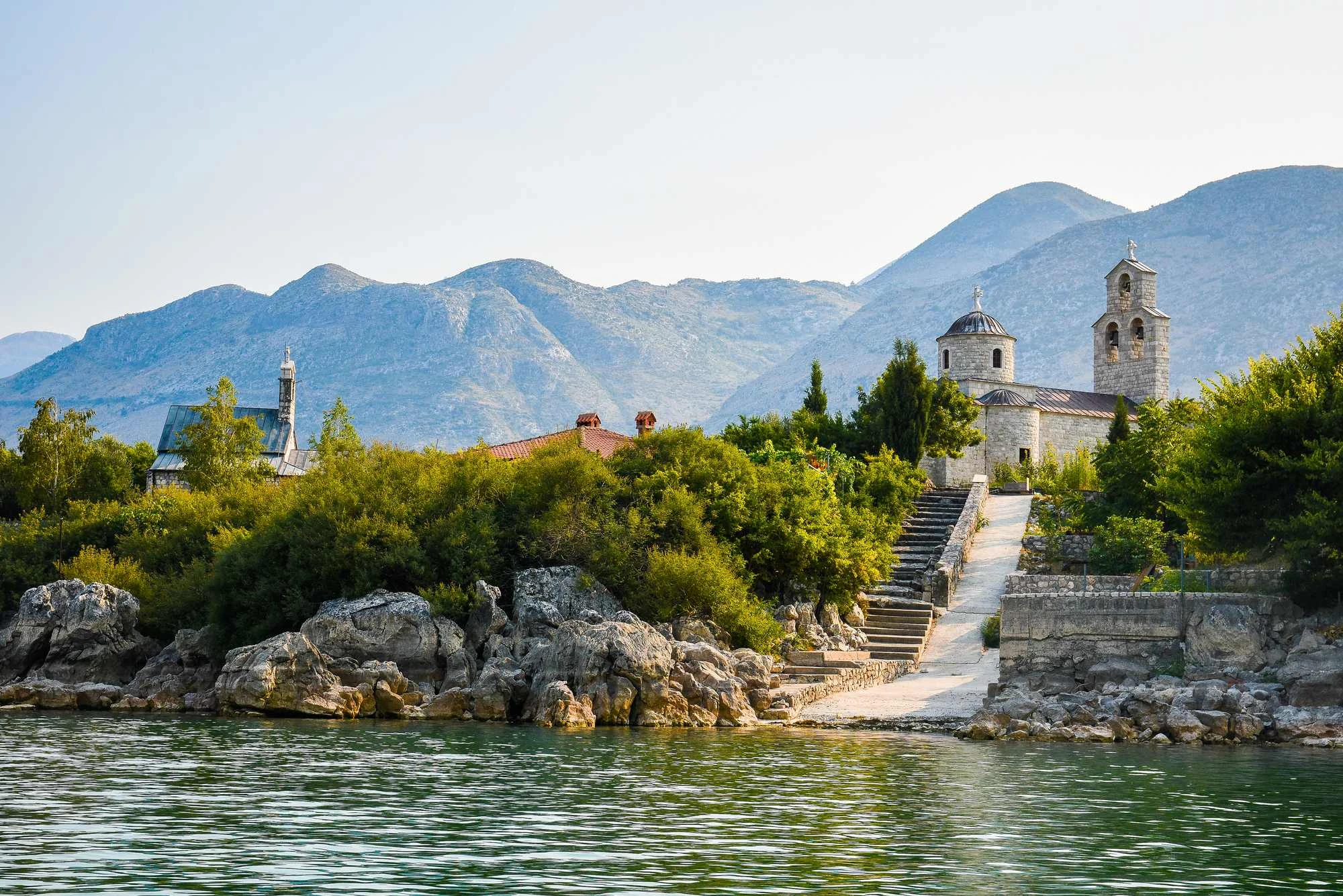
Island of Beška Photo: VejrikLukas Depositphotos
Through the centuries, the monastery passed through periods of neglect, especially after the Ottoman incursions, when life on the lake gradually declined. Despite this, Beška never completely disappeared from collective memory. It was restored several times and today lives again as an active monastery within the Metropolitanate of Montenegro and the Littoral. Access to the island is possible only by boat, which gives the entire experience a special character. Sailing across Lake Skadar leads through fields of water lilies, narrow channels, and open water surfaces reflecting the surrounding mountains. As the island draws nearer, the silhouette of the monastery appears quietly, without spectacle, almost as if it does not wish to be discovered.
Beška today is not a place of mass tourism. There are no souvenir shops and no crowds. There is only water, stone, the sound of birds, and a story passed down for more than six centuries. In this simplicity lies its true strength. If you are already exploring Lake Skadar and its natural beauty, Beška fits perfectly into that journey. While the lake itself is a symbol of wild nature, shifting water,s and bird reserves, Beška Island represents its spiritual side. Explore it.

Zoran Kovačić
I do miracles right away, but the impossible still takes me a little time!

Leave a Reply