

Did you know that Kotor has more churches than any other city on the Adriatic?
Nestled in the stony embrace of the Bay of Kotor, beneath the steep slopes of Mount Lovćen and the San Giovanni fortress, lies Kotor, an ancient town where both Catholics and Orthodox Christians have, over the centuries, left their mark, carved into both stone and spirit. This connection to faith reaches even the most hidden corners of the bay, but nowhere is it as concentrated as within the walls of this old town.
But did you know that within this small, walled core, there are more than ten churches, some older than the very sound of church bells as we know them today? Here they are:
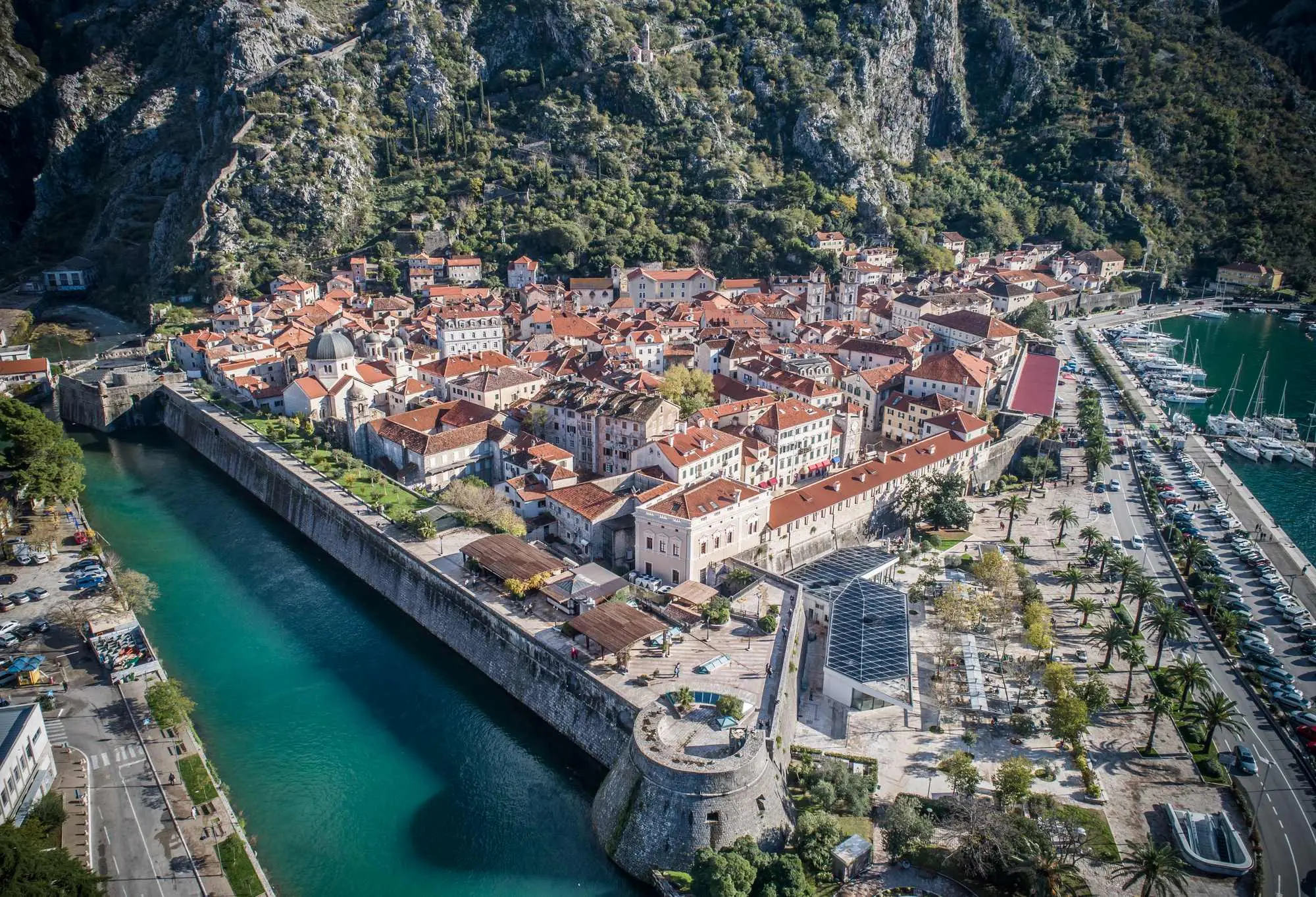
Kotor, Photo: radzonimo, Depositphotos
CATHEDRAL OF SAINT TRYTHON
The most important church in Kotor was built in 1166 on the site of an earlier 9th-century church. It is dedicated to Saint Tryphon, the patron saint of the city, whose relics are still kept inside the cathedral. This is a remarkable example of Romanesque architecture, enriched with later Baroque additions and asymmetrical towers built in different centuries. The cathedral holds an impressive treasury of goldsmith objects, manuscripts, and icons, and its layered interior tells the story of Kotor through each of its saints and earthquakes.
CHURCH OF SAINT LUKE
Built in 1195, this small stone church is unique because it served both Catholic and Orthodox communities. It was divided for centuries, but never in conflict. It has two altars, one Catholic and one Orthodox, which is a rarity in this part of Europe. The church was built in a transitional style between Romanesque and Byzantine, and inside it holds an iconostasis and frescoes that testify to a rare kind of religious coexistence.
CHURCH OF SAINT NICHOLAS
The largest Orthodox church in Kotor, built at the beginning of the 20th century (1909), is on the foundations of an older church. It has two massive bell towers and a large iconostasis, and its architecture blends Byzantine and Baroque elements. Orthodox liturgies are regularly held inside, and the space radiates calm and solemnity.
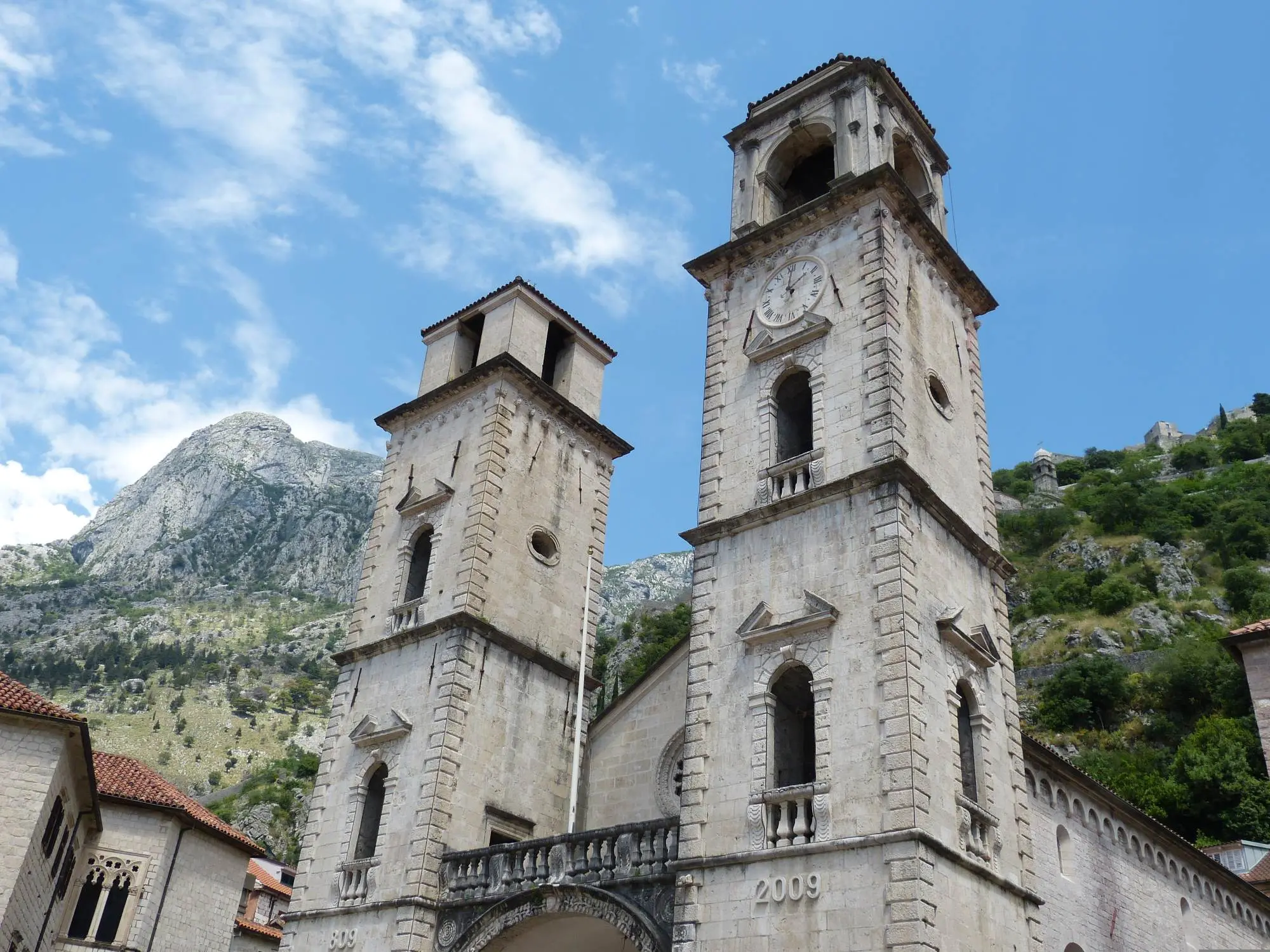
Cathedral of St. Tryphon Photo: falco, Pixabay
CHURCH OF SAINT MARY COLLEGIATE
One of the oldest Romanesque churches in Kotor, built in 1221 on the foundations of an even older basilica from the 6th century. Its most notable feature is the relics of Blessed Osanna of Kotor, kept in a silver sarcophagus. Osanna was a recluse who lived walled in next to the church and became an important religious figure for the city. The bronze relief doors and interior frescoes further reflect the historical significance of this church.
CHURCH OF SAINT CLARE
A Franciscan church from the 14th century, connected to the former convent of the Poor Clares. Its interior features a Baroque marble altar crafted by Francesco Cabianca, a Venetian sculptor. Modest on the outside, the church hides a true artistic gem within, blending silence and refined Baroque elegance.
CHURCH OF SAINT PAUL
A Dominican church built in the 13th century was later expanded several times throughout the centuries. It is no longer in liturgical use and now serves as an exhibition space, but its interior structure still reflects the sacred architecture of the medieval period. It also holds the tombs of several prominent Kotor families.
CHURCH OF SAINT ANNE
Probably built in the late 12th or early 13th century, this church is often closed to the public but deserves mention for its preserved 14th-century frescoes. Hidden in a narrow alley and almost unnoticeable, it remains important for its age and authenticity.
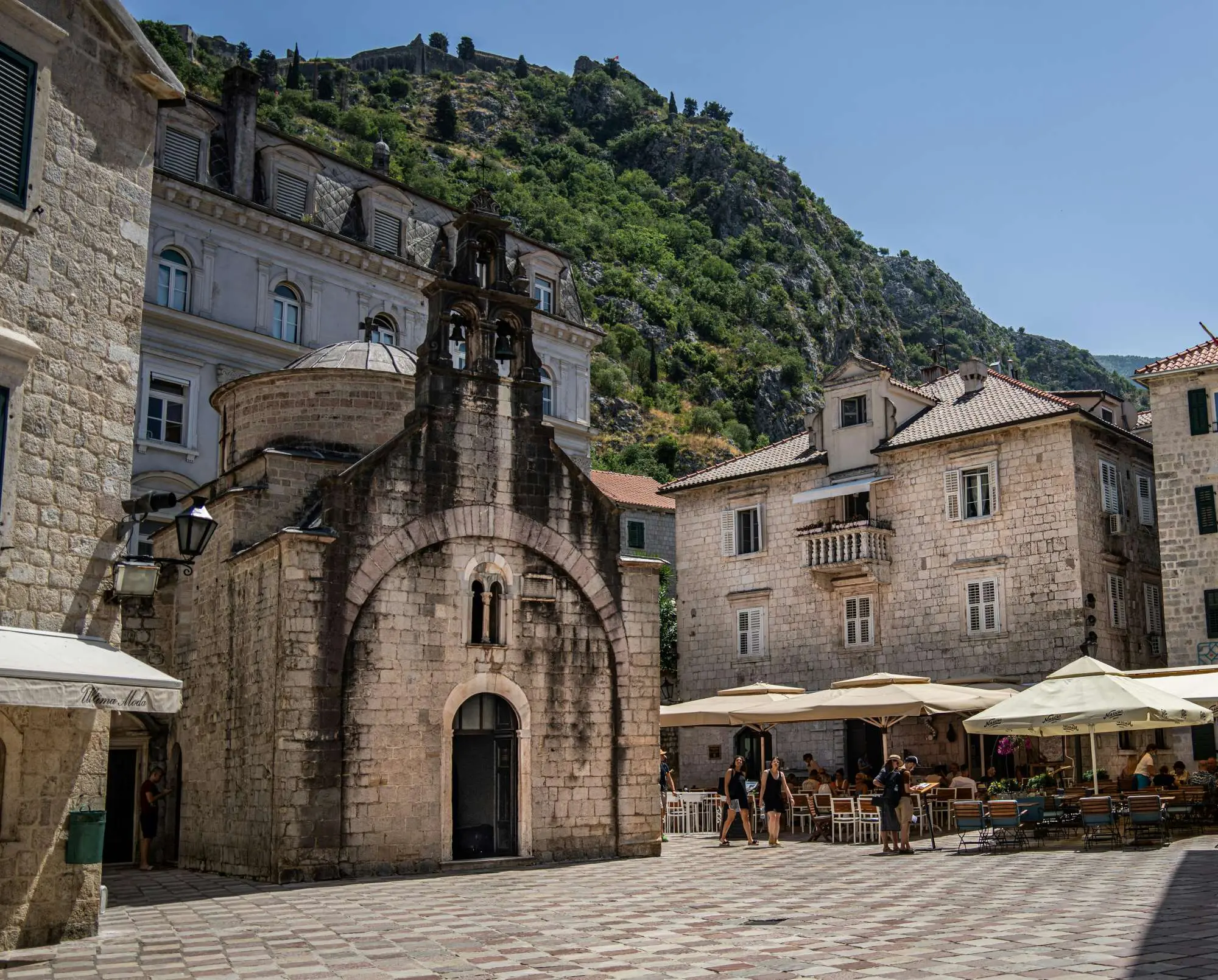
Church of Saint Luke, Photo: mana5280, Unsplash
Church of Our Lady of Remedy
Located outside the city walls, on the hill that leads toward the San Giovanni fortress. Built in the 15th century as a votive church following a major plague epidemic. More than 500 stone steps lead to it, and the view from its entrance is one of the most iconic in Kotor. Inside, it holds votive paintings and tombs of local families.
CHURCH OF SAINT JOSEPH
A Baroque church from the 17th century, situated next to the former Jesuit monastery. It is not widely known among tourists, but locals appreciate it for its peaceful interior and simple beauty. It also contains elements of a former sacred music school.
CHURCH OF THE HOLY SPIRIT
A Baroque church built in the 17th century, now often used for concerts and cultural events. It once belonged to the Oratorian community. The interior has been renovated, but the basic Baroque structure remains. Music has returned here, to a place where it was once taught and performed.

Church of Our Lady of Remedy, Photo: antonaleksenko82 Depositphotos
Interestingly, in addition to all these churches, there are also numerous smaller chapels and monasteries hidden within the city walls. But what makes Kotor truly special is not just the number of churches, but the fact that no two are the same. There are no copies, no templates. Each one carries something of its own: age, style, sanctity, story, silence, fresco, relic, or view.
So if you’re coming to Kotor, make sure to explore them.
From San Giovanni to Gurdić! Discover the impressive fortifications of Kotor

Ahmed Taha
Peace, love and music! ☮️
Leave a Reply