
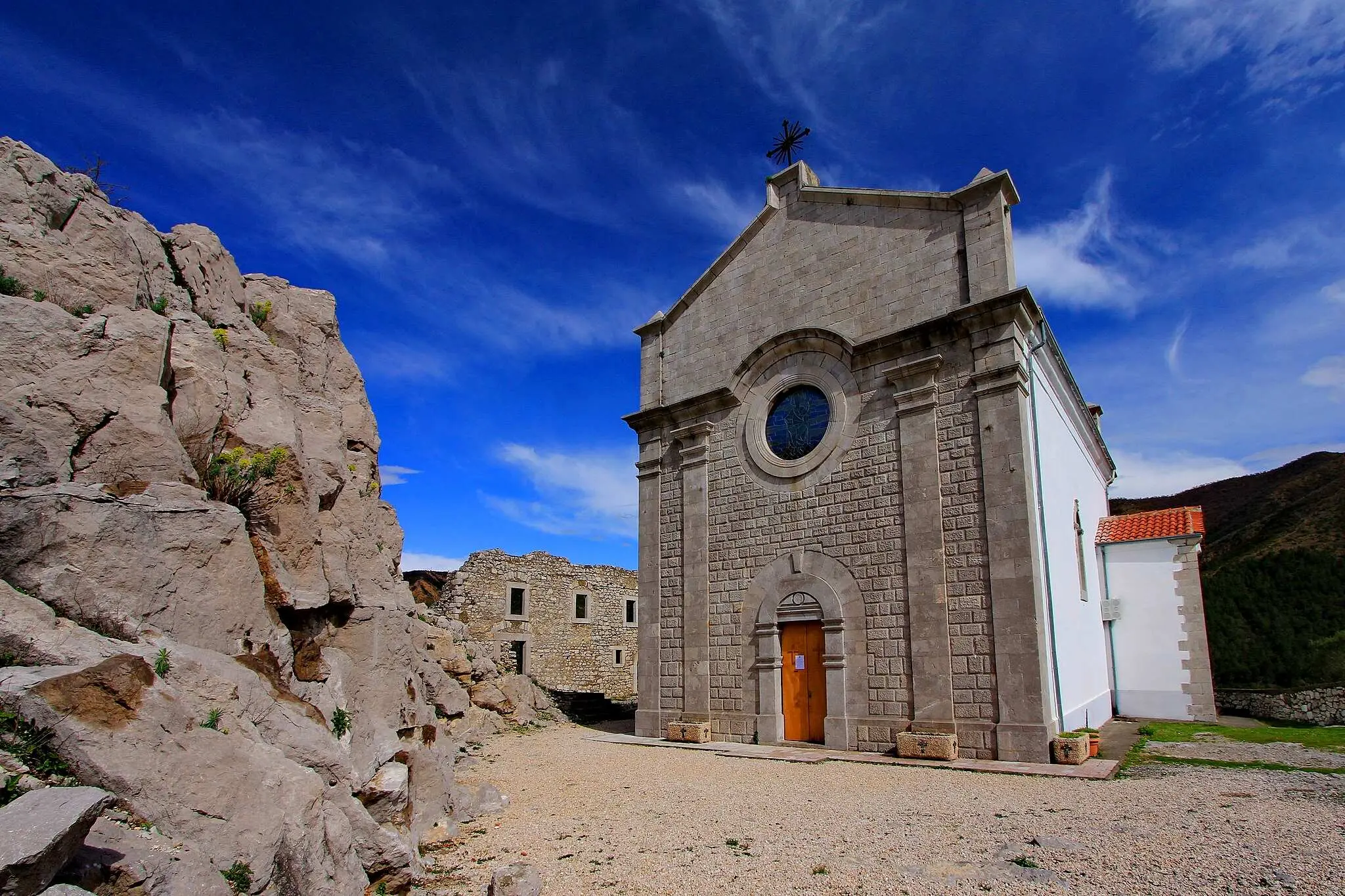
A gem that few people know about! Rubik Monastery seems to float above the Fan River
In northern Albania, where the mountains begin to lose patience before the valley of the Fan River, lies the small town of Rubik, a quiet and almost forgotten place that guards one of the most significant Christian sanctuaries in the country. Though modest in size, this place possesses a spirit far greater than its borders. Rubik is located in Lezhë County, about an hour and a half north of Tirana, on the road toward Kukës and Kosovo. Its position makes it an ideal point between natural beauty and spiritual history, as nearby lie the Ulza Regional Park, the Kune Vain Tale Nature Reserve, and the Patok Fushë wetlands, known for their lagoons and migratory birds.
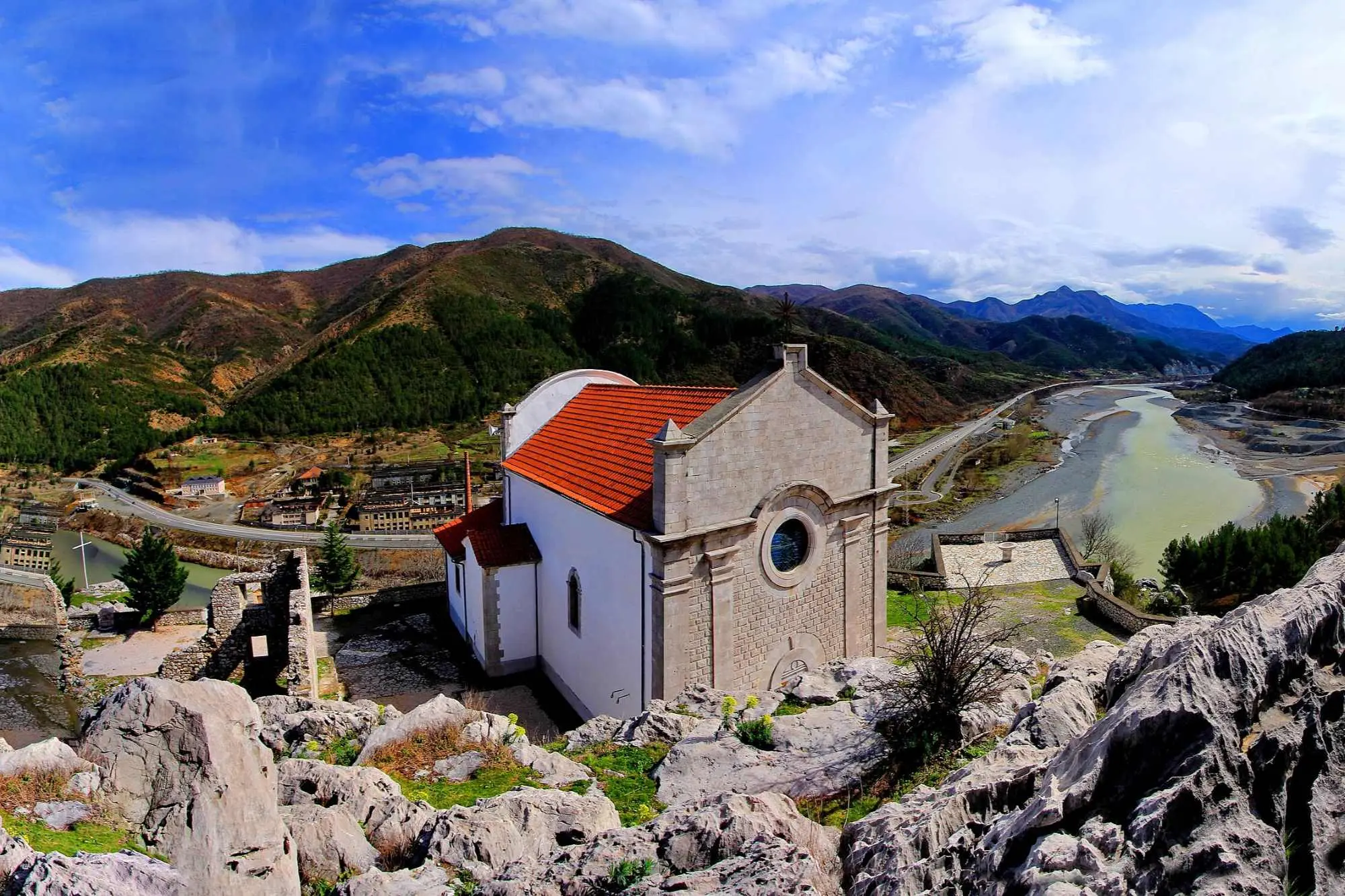
Rubik Monastery, Photo: ShkelzenRexha, CC BY-SA 4.0
At the heart of it all, perched on a steep cliff above the town, stands Rubik Monastery, also known as the Church of Saint Mary (Kisha e Shën Mërisë së Rubikut). This sacred complex dominates the landscape, with views opening to green hills and the winding Fan River on one side and to the stone houses and rooftops of Rubik cascading down the slope on the other. It is hard to imagine a more striking sight, as the church seems to float between earth and sky, bearing witness to centuries of faith, struggle, and renewal.
The monastery dates back to the twelfth century, founded by Benedictine monks. At that time, Rubik was a strategic and cultural hub of the region, and the Benedictine order brought knowledge, architecture, and art to the still undeveloped north of Albania. The church was built in the Romanesque style with elements of early Byzantine influence, a rarity in Albania. Its simple stone façade, made of warm-toned blocks, hides an interior covered with thirteenth-century frescoes depicting scenes from the New Testament and figures of saints in a distinctive Western Byzantine artistic blend.
-
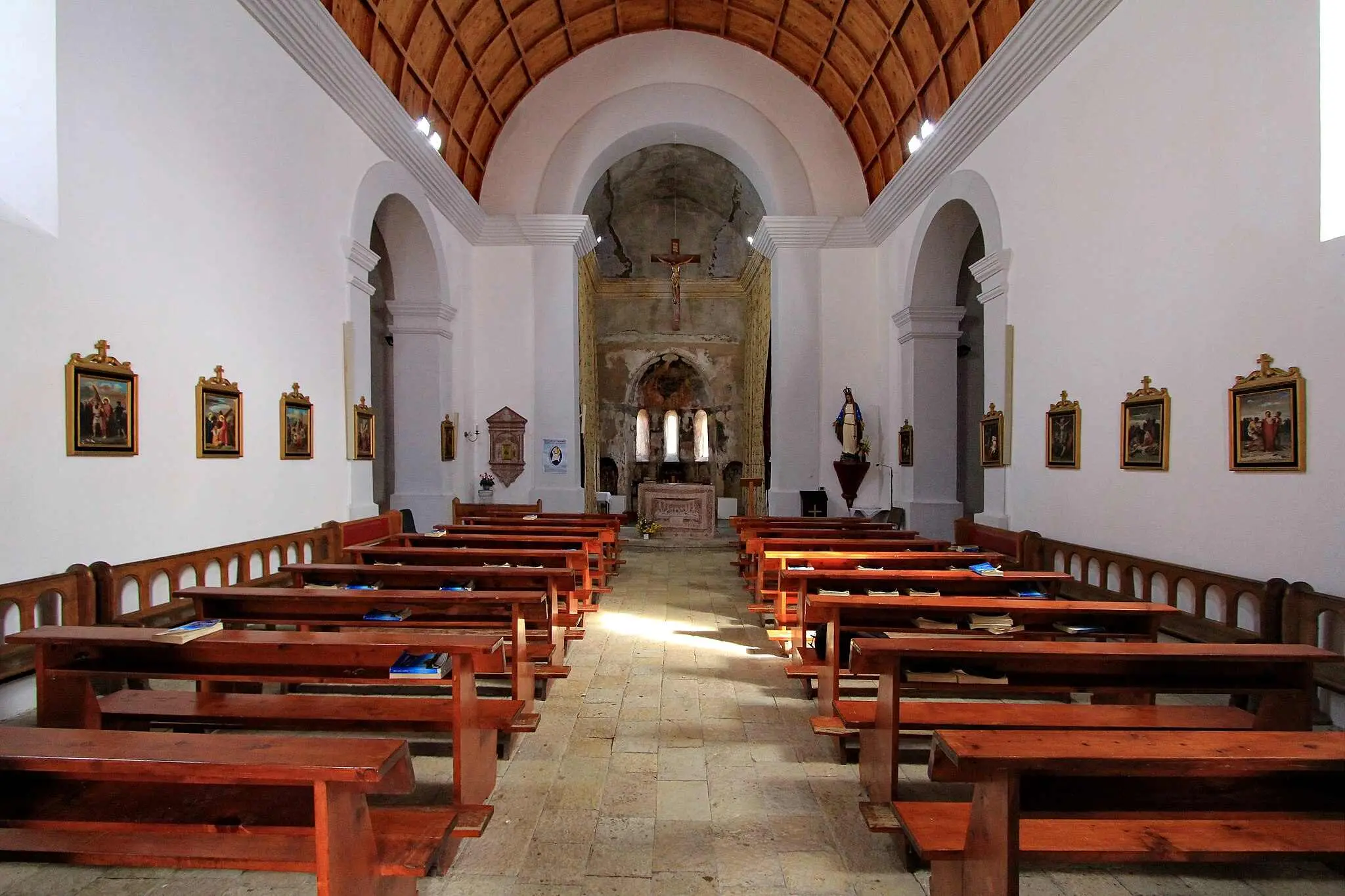
- Manastir Rubik (Rubik Monastery) Photo: ShkelzenRexha, CC BY-SA 4.0
-
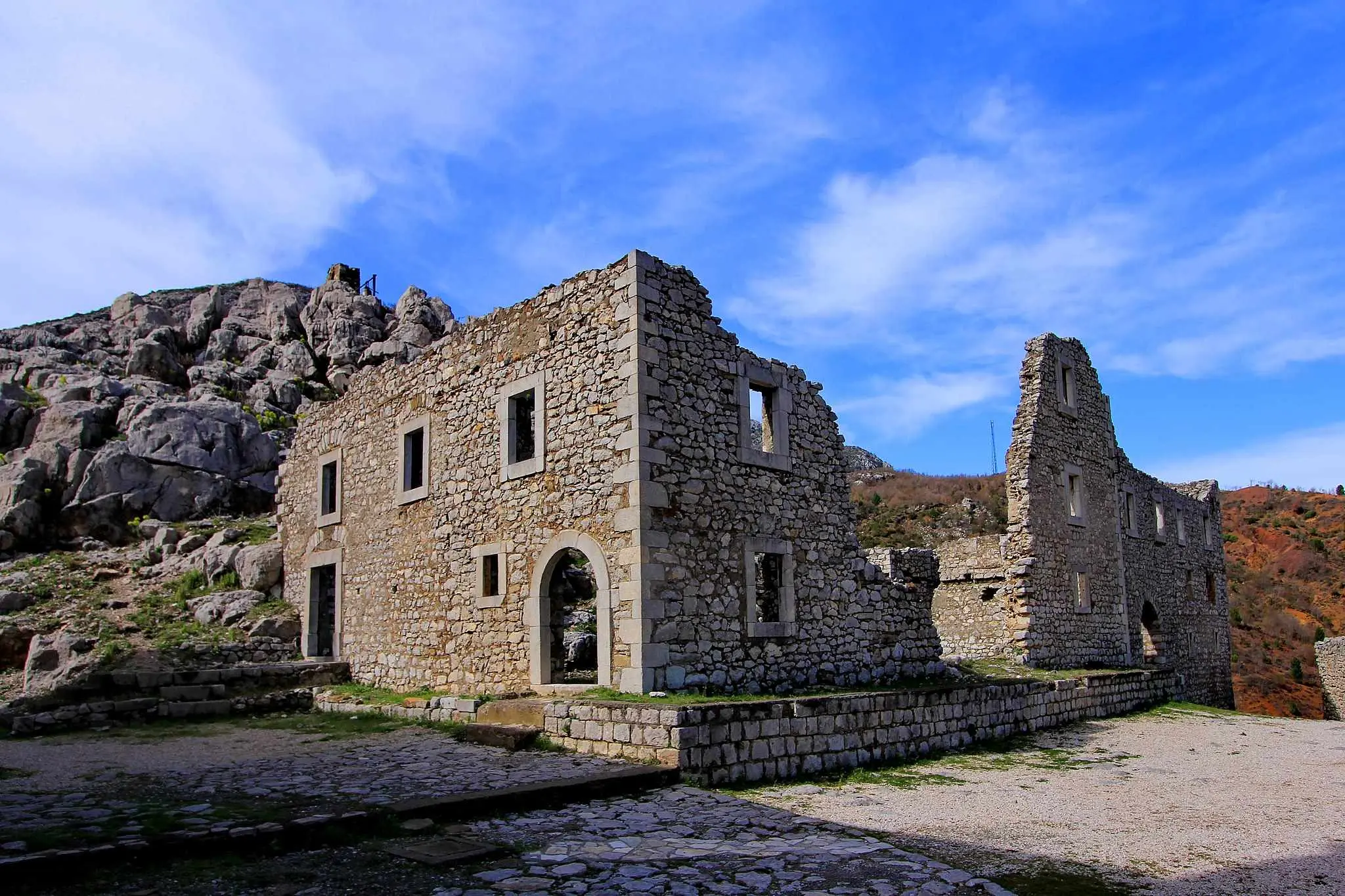
- Manastir Rubik (Rubik Monastery) Photo: ShkelzenRexha, CC BY-SA 4.0
Among the most notable frescoes are those of the Virgin Mary with Child and Saint Benedict, reflecting a fusion of Italian and Balkan iconographic traditions. Although exposed to time for centuries, many colors and contours remain surprisingly well preserved thanks to the church’s location, sheltered from wind and direct rainfall.
During the Middle Ages, the Rubik Monastery served as an important religious and educational center. The Benedictines ran a school here where manuscripts were copied and theology was taught. Over time, after the fall of the medieval Albanian principalities and the Ottoman advance, the complex fell into neglect, and the monks left. Yet the local community kept the memory of the monastery alive.
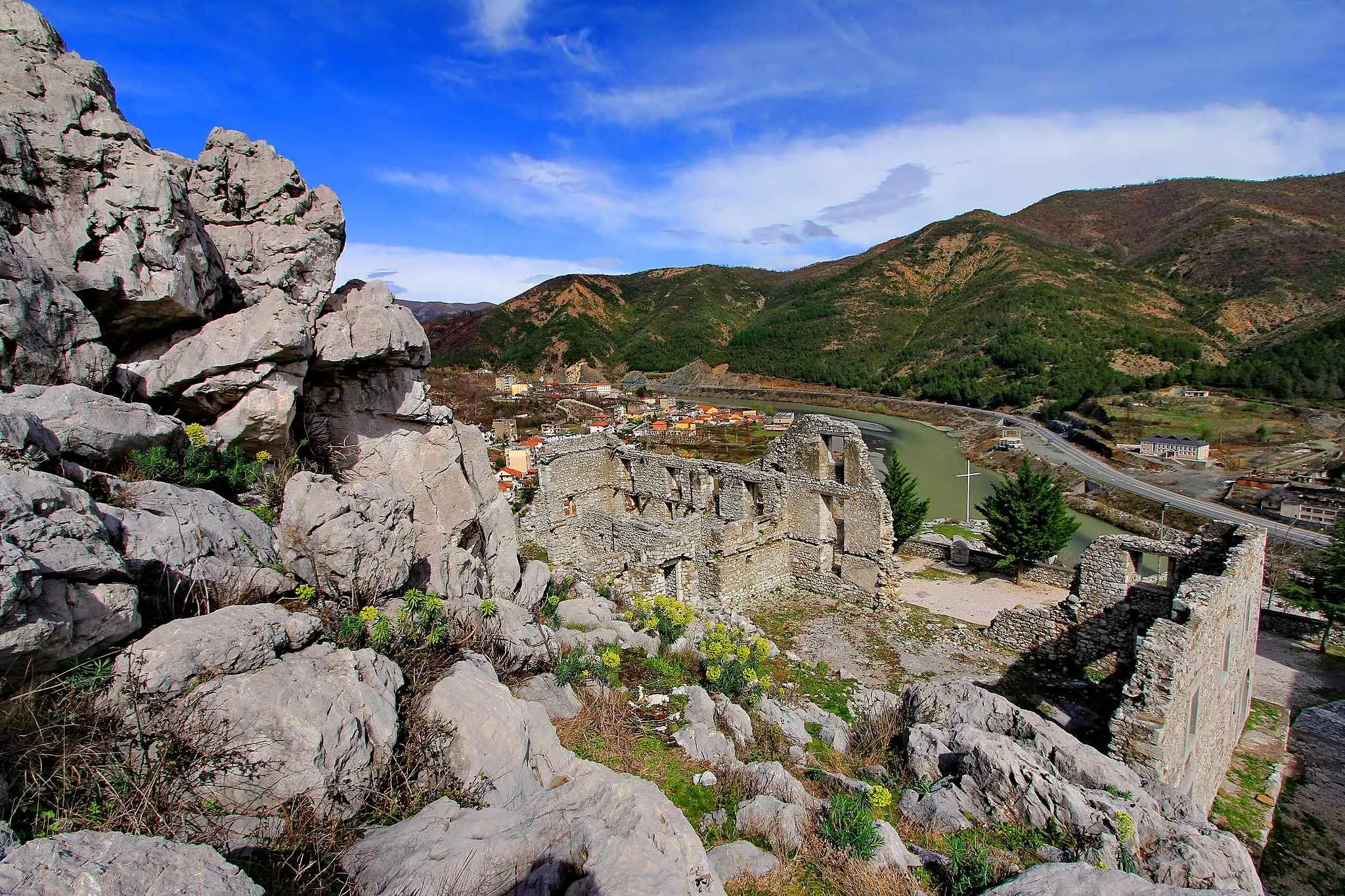
Rubik Monastery, Photo: ShkelzenRexha, CC BY-SA 4.0
In the twentieth century, during the communist era, the church suffered damage, but unlike many other religious buildings, it was never destroyed. Restoration began in the early 2000s, supported by international organizations. Today, the church is once again open to visitors and pilgrims and has become a favorite spot for photographers seeking the perfect composition of architecture, nature, and light.
What fascinates most is its view. From the church terrace, the Fan River cuts through the valley, while in the distance the mountain range fades into the northern mist. Today, the monastery stands as one of those places that remind us that even in small towns, hidden from tourist caravans, there are stories as grand as Albania itself.

Ahmed Taha
Peace, love and music! ☮️
Leave a Reply