
The Church of the Nativity of the Blessed Virgin Mary is a fairytale wedding venue by the sea
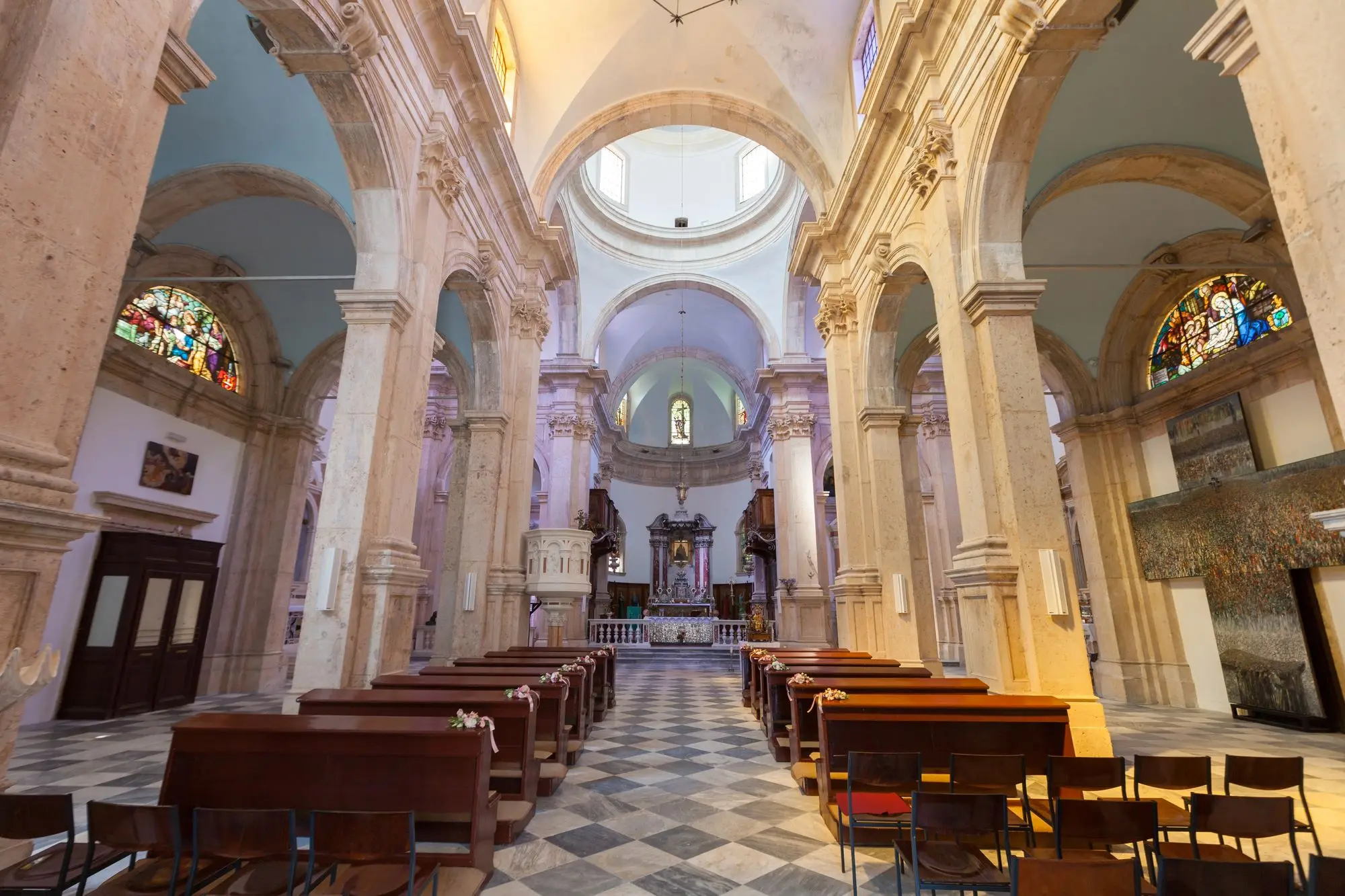
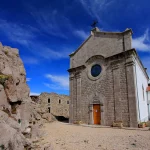
In the embrace of Boka Bay, where the calm sea shimmers beneath the slopes of Mount Vrmac, the town of Prčanj blossomed in the 18th century, carried by the pride of its seafarers. From that strength was born the idea to gift the city a temple that would speak the language of Venice and the ambition of a maritime people. In the years when the Venetian Republic was already fading, the notables of Prčanj invited the Venetian architect Bernardino Maccaruzzi. In the spirit of the late Baroque, he designed a monumental three-nave basilica with a dome and a large apse, conceived as a stone proscenium facing the sea. The foundation stone was laid in 1789, marking the beginning of the longest construction project in the town’s history.

Church of the Nativity of the Blessed Virgin Mary, Photo: nadtochiy Depositphotos
The church was built of Korčula stone, the same white limestone that had nourished Adriatic architecture for centuries. Locals will tell you that Prčanj’s sailing ships carried it for nearly a hundred years, while shipowners pledged to contribute half of their profits for the construction, and even to transport the stone blocks from Dalmatia free of charge. Thus, the economic strength and devotion of Boka Bay were transformed into a work that still defines the town’s skyline today.
Although the plan was bold, the road to completion was long. Construction stopped entirely for several decades, from the early 19th century until the 1860s, before resuming with new energy. The dome was completed around 1885, when builder Anton Menegelo added a drum to make it rise gracefully above the façade. The final phase of construction at the beginning of the 20th century was supervised by engineer Milan Karlovac. When the church was finally completed in 1913, it was solemnly consecrated by Bishop Frano Učelini Tice of Kotor, bringing to a close a century-long ambition.
Church of the Nativity of the Blessed Virgin Mary, Photo: bigguns Depositphotos
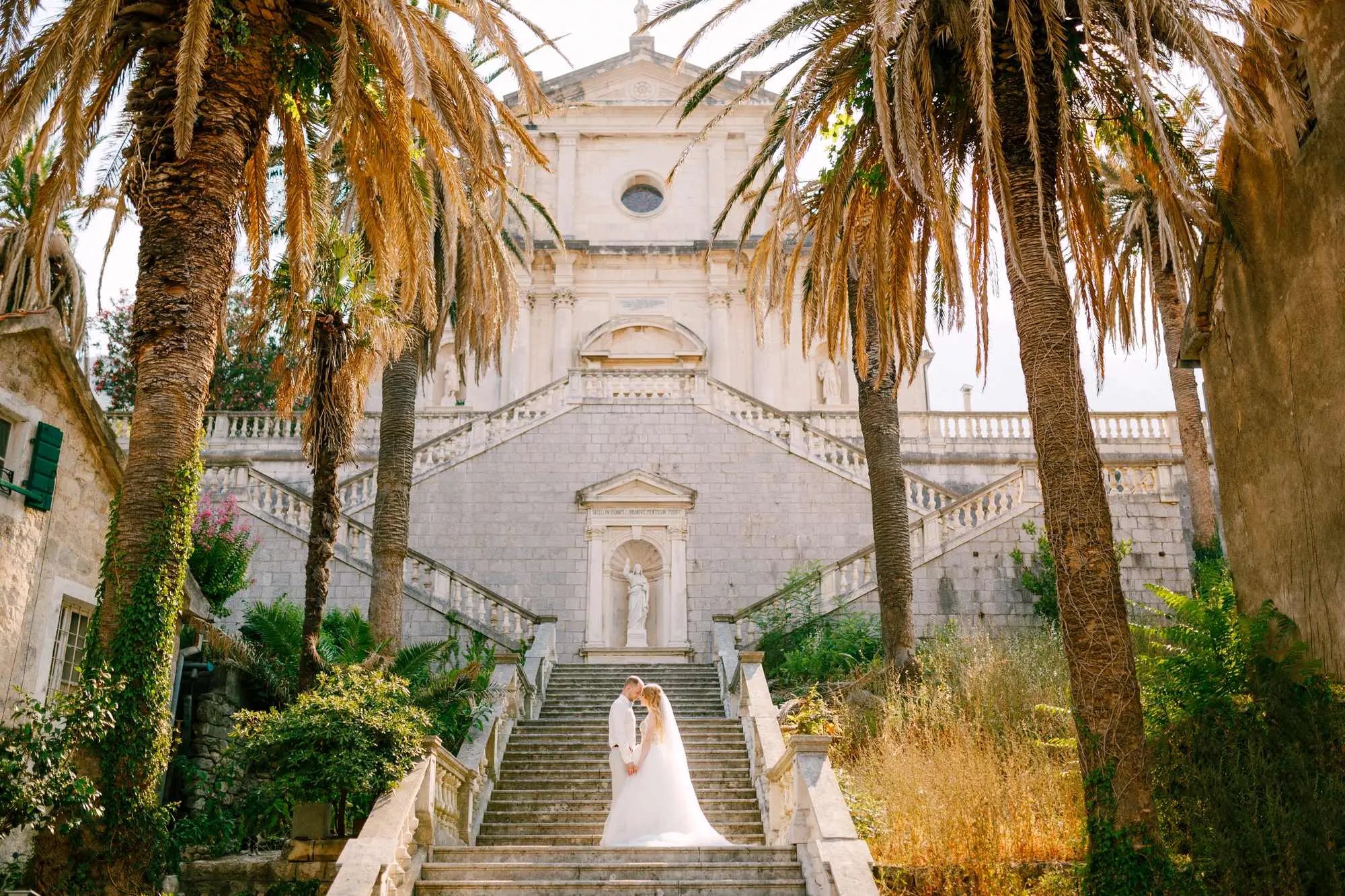
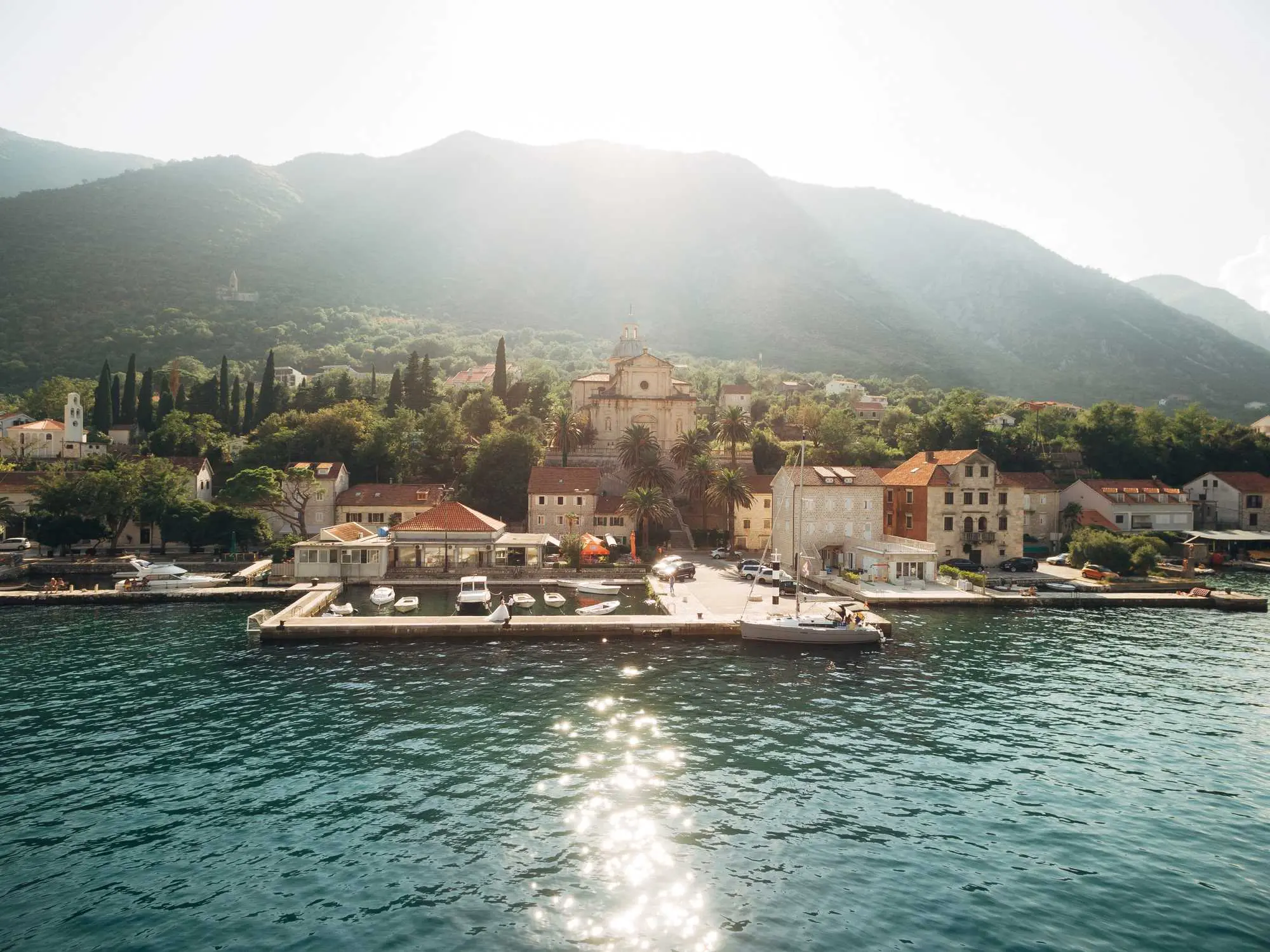
In front of the temple spreads a wide stone staircase that ascends from the waterfront in several sections, turning the approach into a ceremony. It is not merely an entrance but the largest and most impressive staircase on the eastern Adriatic coast, leading from the sea to a sacred building. In its composition, one recognizes the Adriatic sense of proportion combined with Venetian spatial discipline. Seen from the water, the staircase and façade merge into a single scenic backdrop, a tableau that makes Boka unforgettable.
The church’s proportions confirm the impression. It is 35 meters long, 23 meters wide, and with the dome it reaches a height of 31 meters. These dimensions made it the largest sacred structure in Boka Bay and one of the largest on the entire Adriatic. Its façade, arranged in the rhythm of Doric and Corinthian columns, with a pediment closing the central vertical axis, is carved from the same pure stone that, under sunlight, shimmers in shades of gray and ivory.
Church of the Nativity of the Blessed Virgin Mary, Photo: nadtochiy Depositphotos
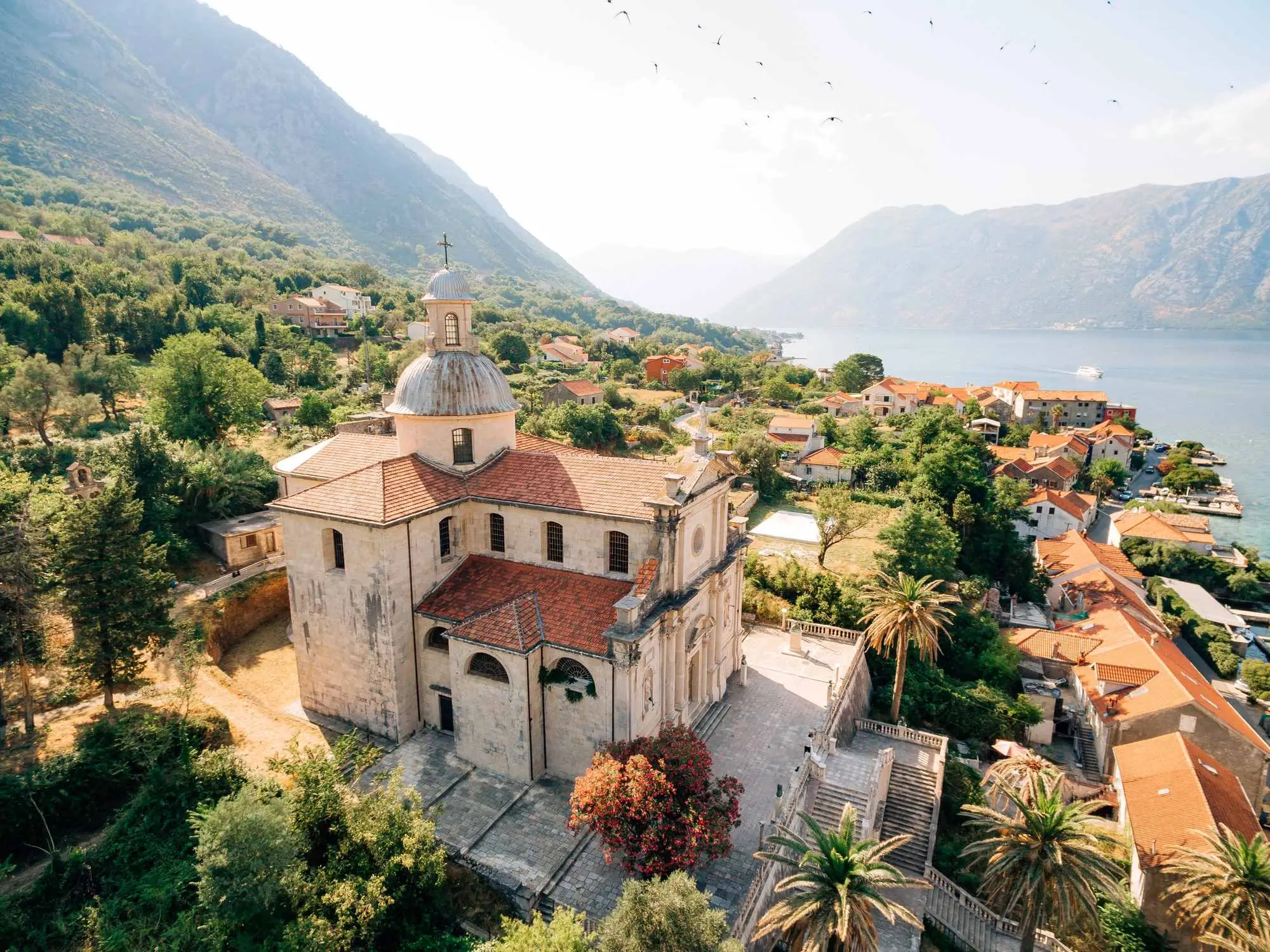
Inside, fragrant with wax and stone, the church preserves altars and a collection of paintings and sculptures by both local and foreign masters, which over centuries grew into a quiet gallery of Boka’s spiritual and artistic memory. In local tradition and literature, its valuable art collection is often emphasized, a sign that Prčanj, though small, was a meeting point of artistic currents flowing between Venice and the southern Adriatic.
To understand why this temple feels so powerful, it helps to know that Prčanj already had an older parish church high on the hillside, mentioned in documents as early as the late 14th century under the name Santa Maria de Parzana. The new church by the sea was, in fact, a public statement of a town that had descended from the hill to the shore, transforming its maritime wealth into stone and proportion.
Church of the Nativity of the Blessed Virgin Mary, Photo: nadtochiy Depositphotos
And when you sit today by the waterfront and look up the staircase toward the dome, you can see every phase of its story. The Venetian drawing conceived in 1789, the decades of interruption and perseverance, the dome completed on its new drum, and finally the consecration that filled its vaults with sacred life. You can see the hands of hundreds who hauled stone across the waves, the shipowners who sacrificed profits to fund this frozen glacier of beauty, and the craftsmen who refined every edge into quiet perfection.
Today, their devotion has turned the Church of the Nativity of the Blessed Virgin Mary into one of the most romantic wedding venues on the Adriatic coast. Its stone staircase, the view over the bay, and the light that filters beneath the dome create scenes that unite spirituality, beauty, and the sea into a perfect setting for the beginning of a shared life.

Sara Sedić
I plan to live in the moment :)
Leave a Reply