
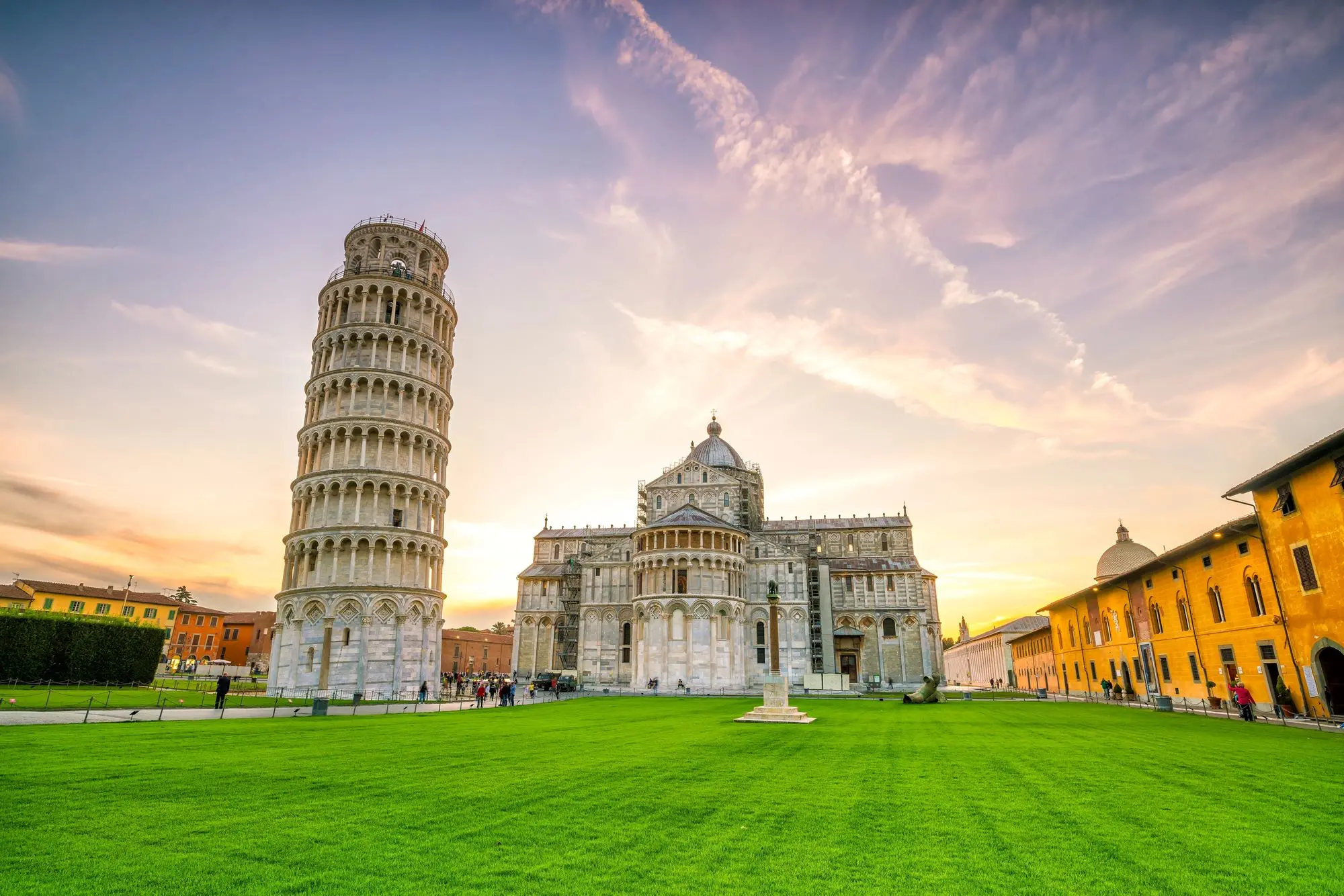
Things you probably didn’t know about the Leaning Tower of Pisa!
When you step onto the Piazza dei Miracoli, the Square of Miracles in Pisa, the first thing to catch your eye is not the magnificent cathedral or the huge baptistery but the tower that looks as if it might collapse at any moment. This crooked stone beauty has been standing there for more than eight centuries, defying time and logic, and has become a global symbol of Italy. Yet behind the tourist photos, where millions of visitors each year hold it up with their hands, lie stories you probably did not know.
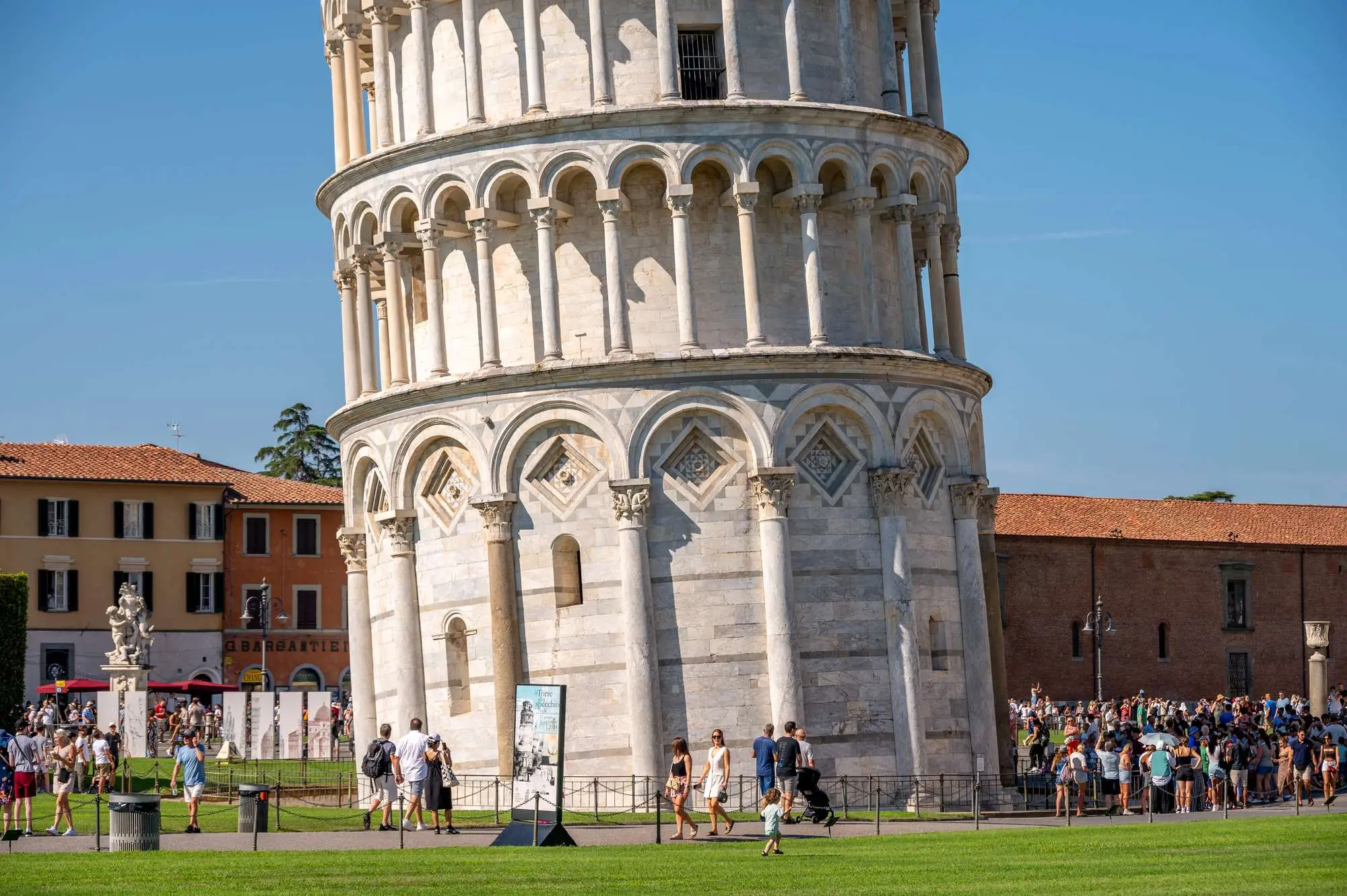
Leaning Tower of Pisa, Photo: jewhyte Depositphotos
The tower began to rise in 1173 at a time when Pisa was at the peak of its power as a maritime republic. It was meant to be nothing more than the cathedral’s bell tower, but it turned into the central figure of one of the most famous architectural dramas in the world. After only three floors were built, the ground, a mix of sand, clay, and silt, began to sink. The foundations, only three meters deep, could not withstand the weight of several thousand tons, and the tower began to tilt. Construction stopped, and a fortunate pause of nearly a hundred years saved it from collapse as the soil had time to settle.
When work resumed in the 13th century, the builders tried a clever trick. Each new floor was built slightly taller on one side to counteract the lean. That is why today the tower is not just leaning but also slightly curved like a stone saber. It was finally completed in 1372 after nearly two hundred years of construction.
One curiosity that few people know is that the tower actually has two different stair counts depending on which side you measure. On the lower side, there are 294 steps, while on the higher side, there are 296. Even more curious is that it never had an official architect. The names Bonanno Pisano and Diotisalvi are often mentioned, but history has never confirmed them. They probably didn’t want it to be known…
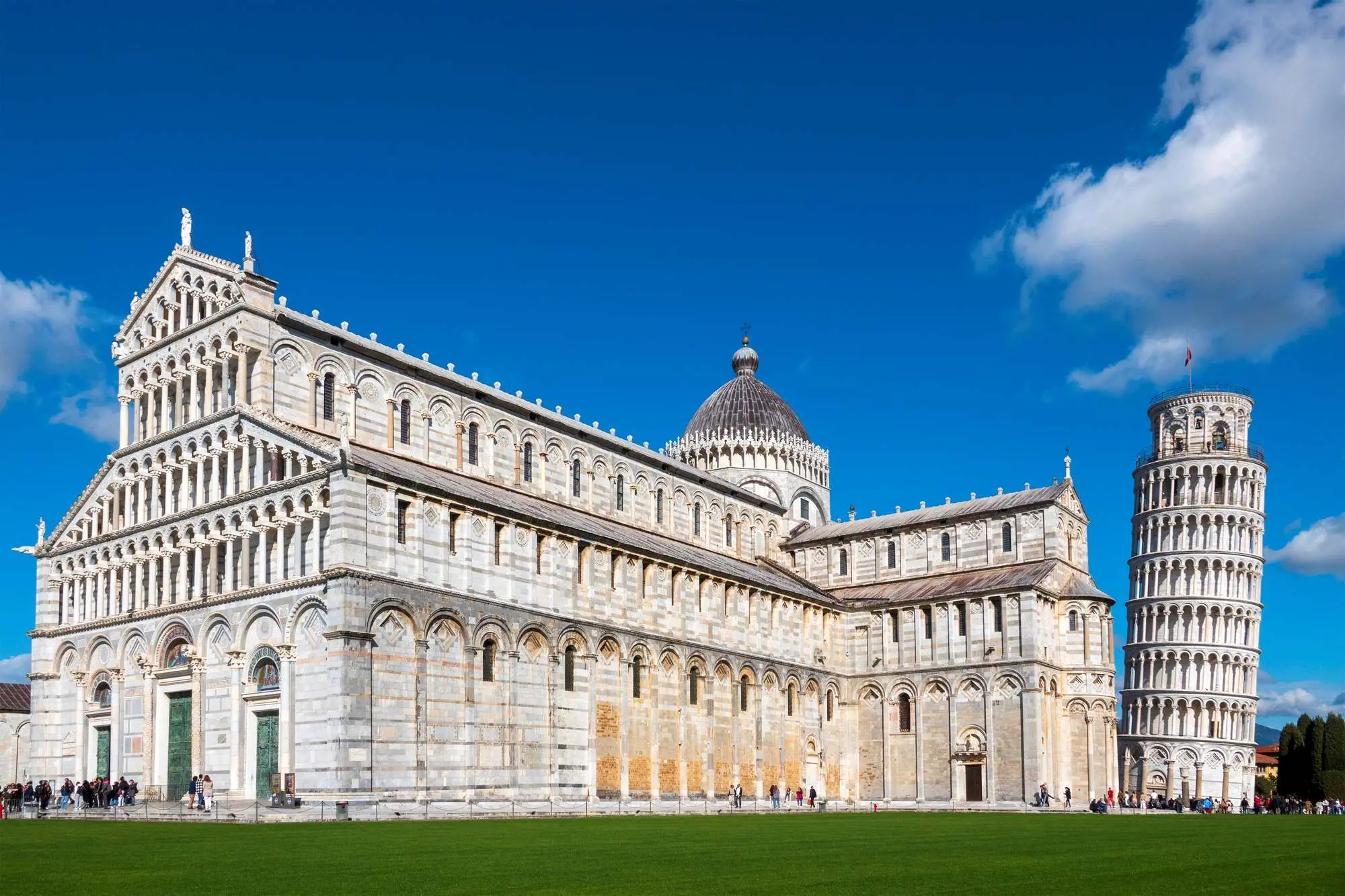
Leaning Tower of Pisa Photo: onlyfabrizio Depositphotos
For centuries, the tower carried seven bells, each tuned to a specific note of the musical scale. The largest bell, called Assunta, weighs more than three and a half tons. Today, the bells are silent as their ringing could unsettle the already delicate foundations.
The tilt increased over the centuries, and by the late twentieth century, it reached a dangerous 5.5 degrees. At that point, the tower was closed to the public, and an enormous rescue operation began. Engineers used steel cables, counterweights, and even the technique of removing soil beneath the foundations. After ten years of work, the tower was straightened by 43 centimeters and stabilized. Today, its tilt is just over four degrees, and experts say it should safely stand for at least another two hundred years.
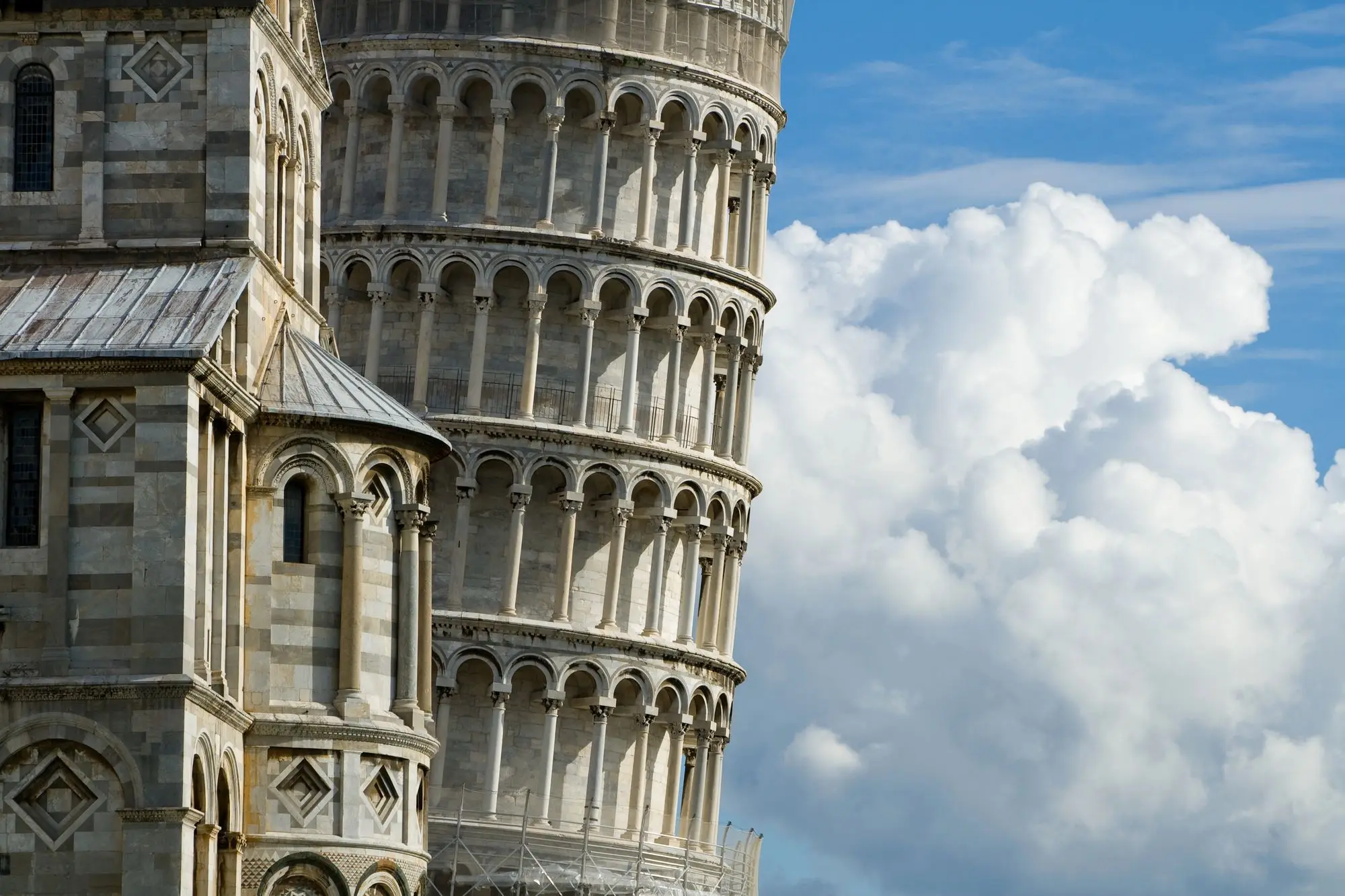
Leaning Tower of Pisa, Photo: Antartis Depositphotos
But history was kind to it in far more dramatic moments as well. During the Second World War, the Allies planned to bomb the tower because they believed the Germans were using it as an observation post. Yet when they saw it in reality, the soldiers could not bring themselves to pull the trigger. Had they made a different decision, then Pisa today would be without its most famous symbol.
The legend of Galileo Galilei is also inseparable from the tower. The story goes that he dropped balls of different weights from the top to prove that everything falls at the same speed. Historians still debate whether the experiment actually took place there but the legend is so rooted in memory that it has almost become truth.
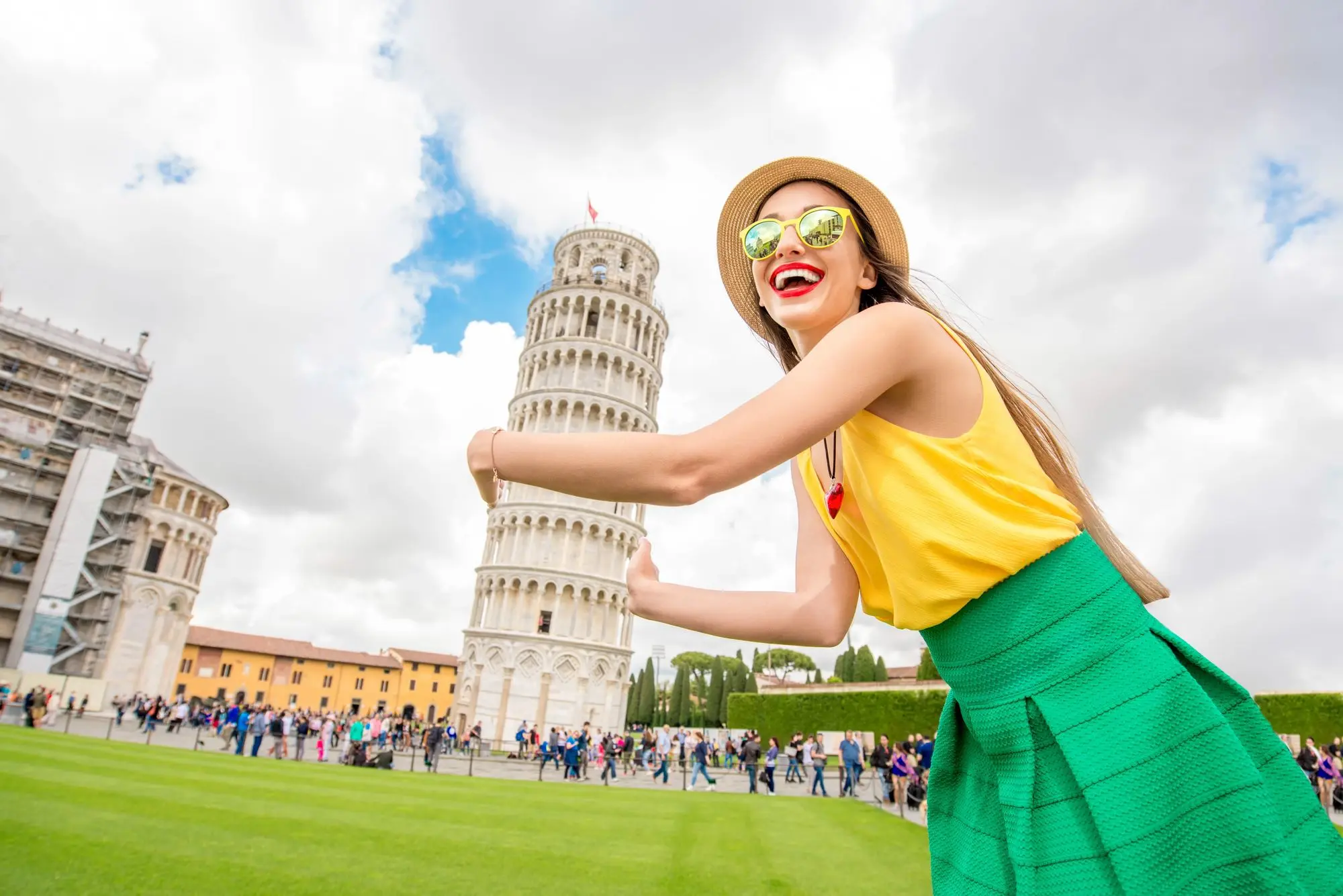
Leaning Tower of Pisa Photo: rossandhelen Depositphotos
And one more thing: the Leaning Tower of Pisa is not the world’s most tilted tower. That title belongs to some lesser known buildings in Germany such as the church tower in Suurhusen, yet none of them have the charisma and recognition of this Tuscan belfry.
Today, as you stroll through the square, it is easy to forget that the tower was not meant as an architectural joke but as a serious attempt at construction. Its imperfection, once a medieval embarrassment, has turned into the most famous symbol of Italy. And perhaps that is why millions of tourists every year raise their hands to save the tower in their photos, because deep down we know that this story of a crooked foundation and stubborn persistence also says something about us.

Zoran Kovačić
I do miracles right away, but the impossible still takes me a little time!
Leave a Reply