
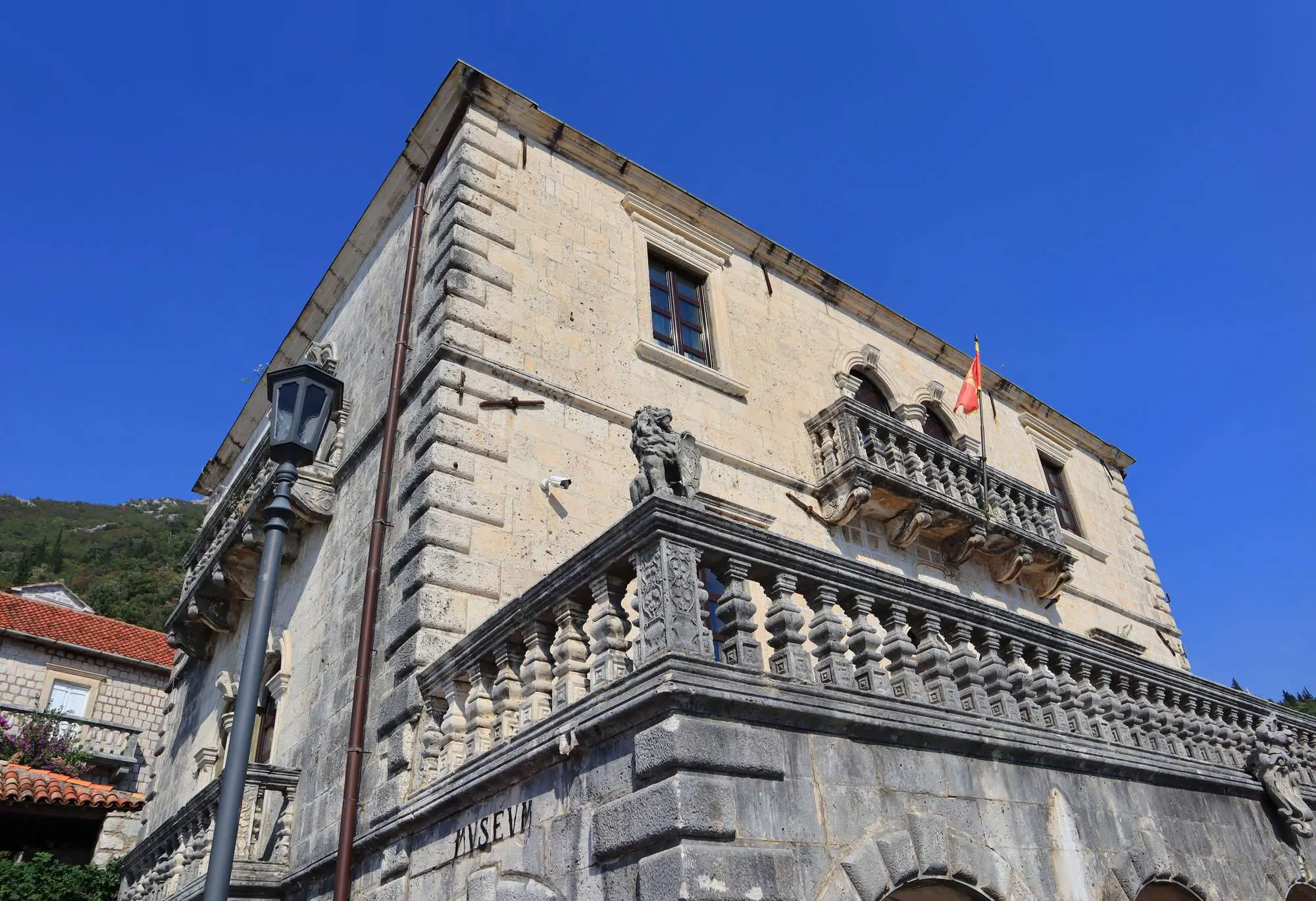
Bujović Palace preserves the memory of the glorious days of Perast
At the very entrance to Perast, where the sea shimmers beneath the gaze of the islands of Our Lady of the Rocks and Saint George, rises the magnificent Bujović Palace, a stone lady whose façade still preserves the memory of the glorious centuries of Perast’s maritime fame. This splendid baroque building, erected at the end of the seventeenth century, stands as a witness to a time when this town had no walls, but a thousand sails.
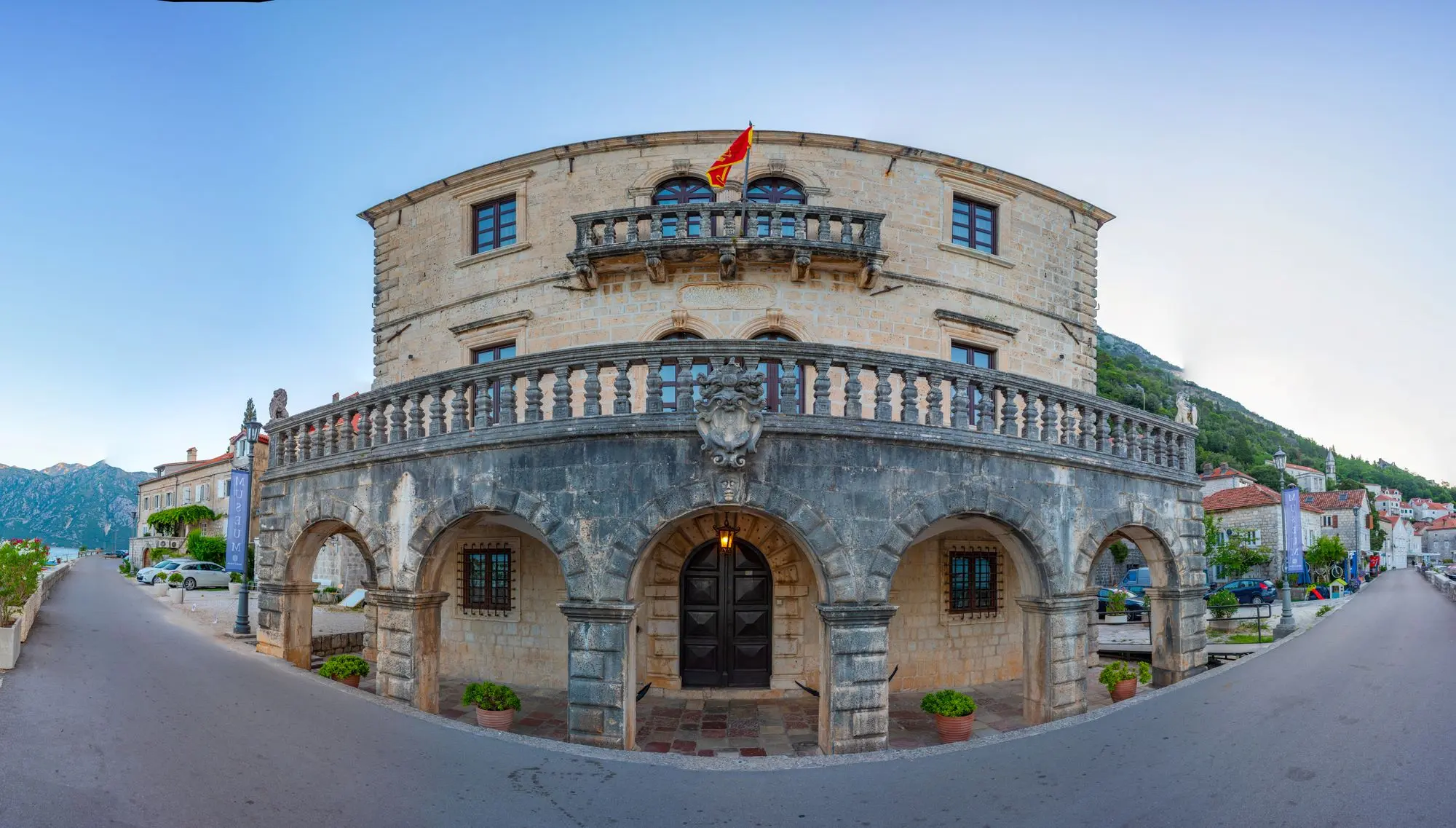
Bujović Palace, Photo: Dudlajzov Depositphotos
Under Venetian rule, from 1420 to 1797, Perast reached its golden age. It was a town of sailors, merchants, and masters of navigation, where legends were born, such as Marko Martinović, who in 1698 trained Russian princes for Tsar Peter the Great, and Matija Zmajević, who later became an admiral of the Russian fleet. In this atmosphere of power and prestige, the Bujović family built a palace that would centuries later become a symbol of the town and a home to its collective memory.
The Bujović family belonged to the most distinguished layer of Perast’s nobility. Its members were captains, sailors, and merchants, but also influential people who shaped the politics, culture, and identity of the town. The most famous among them, Vicko Bujović, became a symbol of Perast’s courage and ambition, but also a man of tragic fate. He was killed in a duel in 1709, and his palace, built as a testament to power and wealth, remains a lasting monument to the generation that turned Perast into a true gem of the Mediterranean.
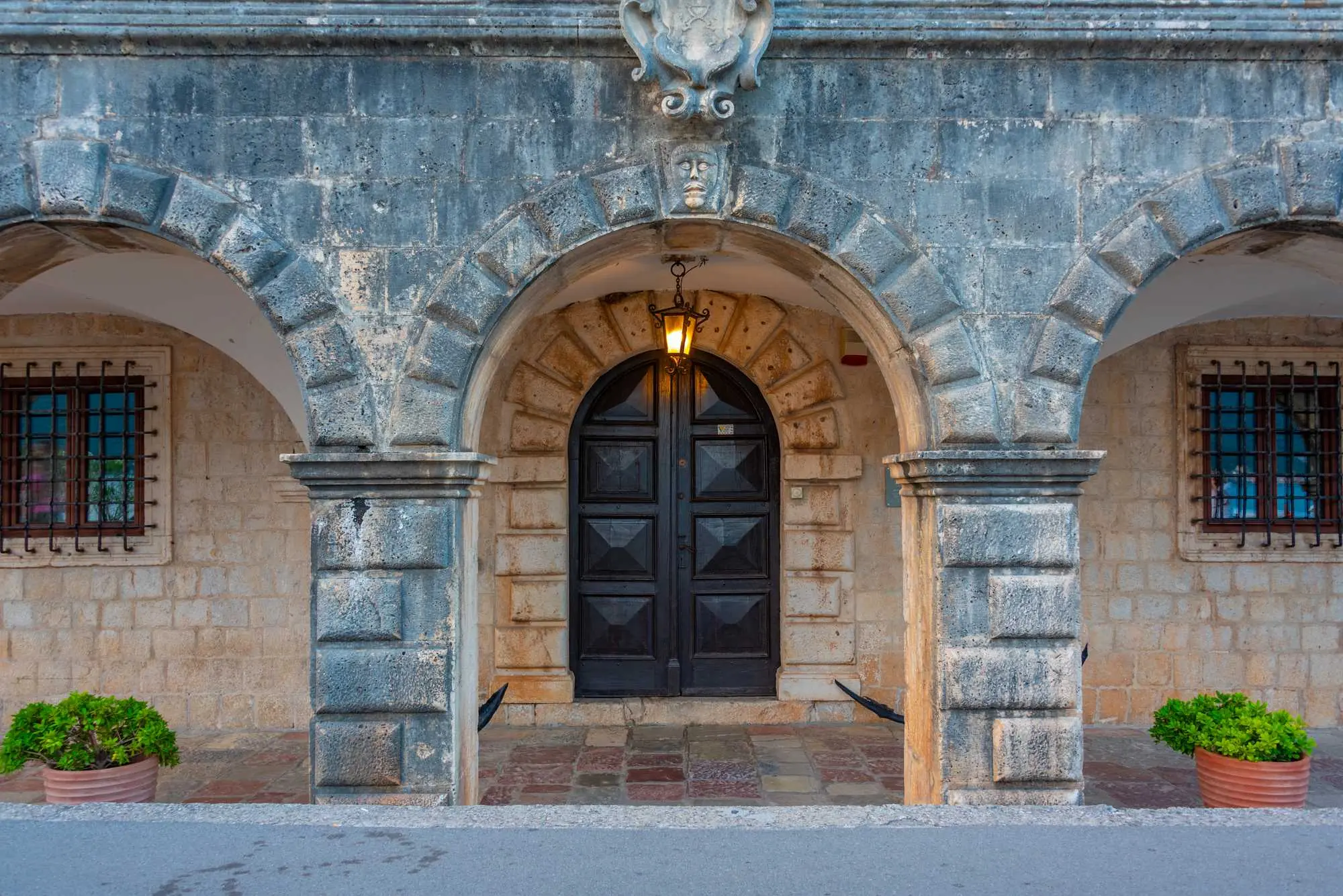
Bujović Palace, Photo: Dudlajzov Depositphotos
FROM FAMILY RESIDENCE TO THE MUSEUM OF THE TOWN OF PERAST
Built according to the design of Venetian architect Giovanni Battista Fonte, the palace is distinguished by perfect proportions, five arches on the ground floor, and elegant balconies overlooking the bay. Legend has it that Vicko Bujović, when asked if someone could build a more beautiful palace, threw the architect off the terrace in a fit of rage. Whether true or not, the story still lives on in the tales of Perast.
After the centuries of maritime glory faded, the palace took on a new role – to preserve what Perast once was. The Museum of the Town of Perast was founded in 1937 and moved into the Bujović Palace after its reconstruction in the 1950s. Since then, this house has become the guardian of history, art, and memory for the entire town.
Today, the museum is of a complex type, with a collection of more than three thousand items that bear witness to the cultural past of Perast and the Bay of Kotor from the fifteenth to the twentieth century. On the ground floor of the palace is the Women’s Room, where objects from bridal chests, handicrafts, and photographs bring to life the stories of Perast’s women. Among the most valuable exhibits are the Great Atlas by Venetian cartographer Coronelli from 1690, the Perast sword from the sixteenth century, and Mehmed-aga Rizvanagić’s jeweled rifle decorated with mother-of-pearl, a war trophy from the seventeenth century.
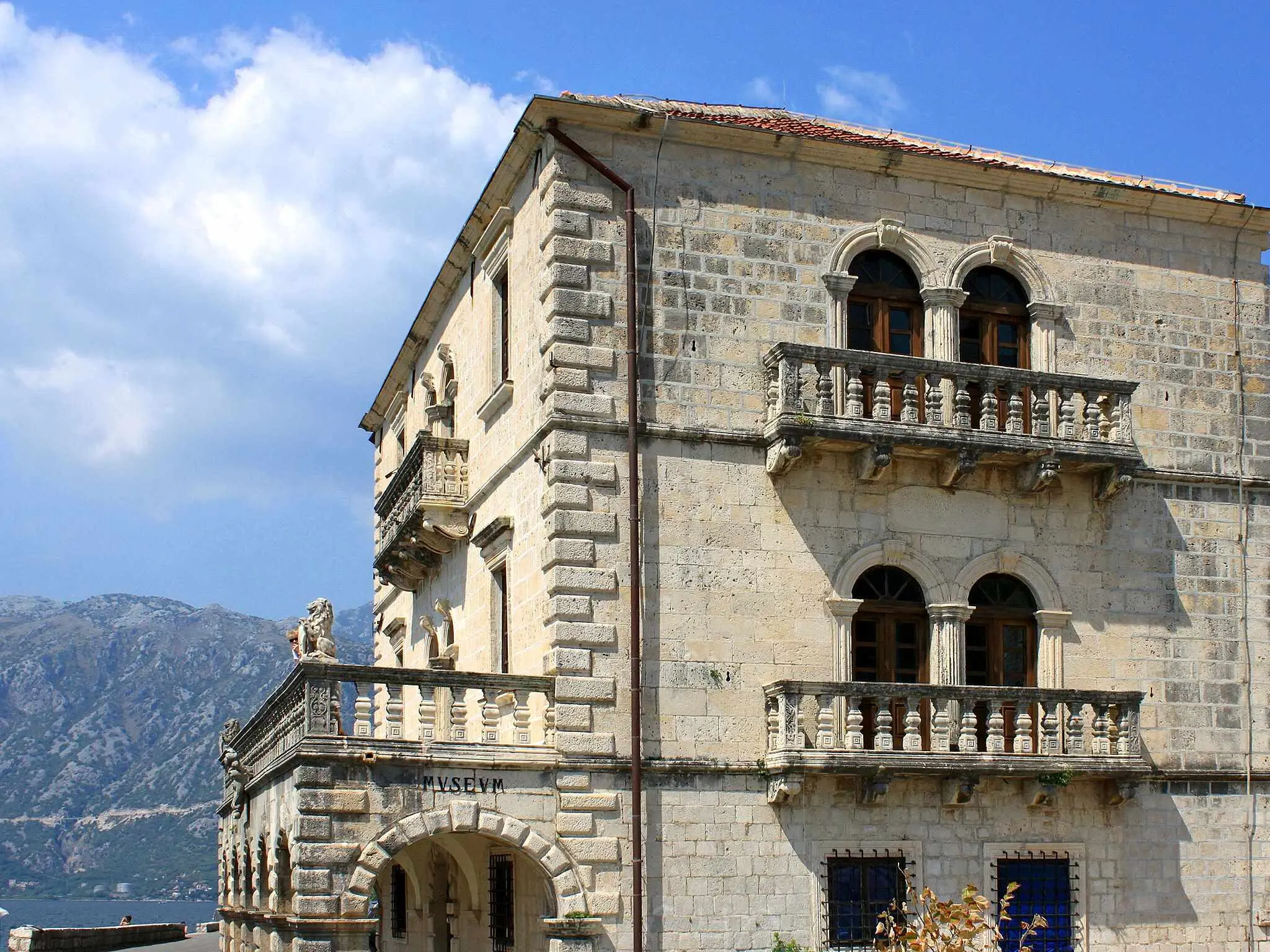
Bujović Palace, Photo: Marcin Konsek Wikimedia Commons
On the first floor lies the Captain’s Salon, a true ode to Perast’s maritime glory. Here hang portraits of captains and nobles, including that of Vicko Bujović himself, as well as works by Perast painter Tripo Kokolja. On display are navigation instruments, furniture, icons, and the gilded staff of the town captain, a symbol of authority from the eighteenth century. In the center of the salon stands a model of the sailing ship Adriana, the last vessel of the Perast fleet, which sank near Alexandria, marking the end of the city’s great era of living from the sea.
On the second floor, the Diplomatic Room preserves parchments, diplomas, medals, and decorations that testify to the international reputation of Perast’s citizens. There is also the War Room, with a rich collection of weapons and flags, and a world rarity – a Venetian bronze cannon of the falconet type from the seventeenth century. Alongside the portraits of Marko Martinović, Matija Zmajević, and other notable figures, these rooms tell the story of Perast, which once stood shoulder to shoulder with the greatest maritime powers of its time.
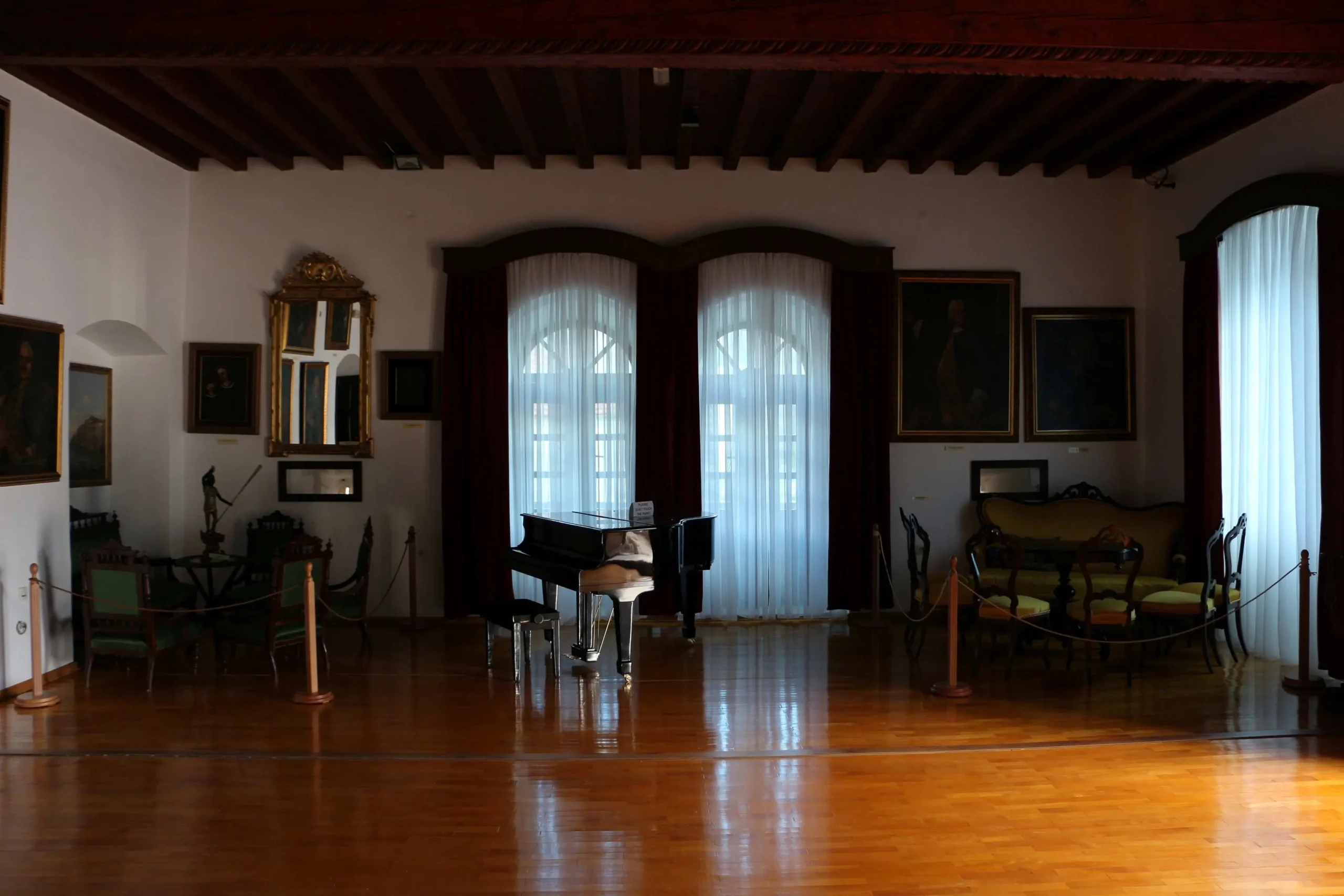
Bujović Palace, Photo: Sailko, CC BY 3.0
Today, as visitors walk through the halls of the Bujović Palace, every object, every painting, and every view from the terrace tells the story of a town that never lost the spirit of the sea. The Museum of the Town of Perast is not merely a collection of artifacts but a place where one can feel the rhythm of sails, the scent of salt, and the whisper of past centuries. Within its walls live the Bujović and Zmajević families, and all those whose hands built Perast, stone by stone, ship by ship.
19 of them?! Did you know Perast has more palaces than streets?

Sara Sedić
I plan to live in the moment :)

Leave a Reply