
Paestum is a city that survived three civilizations
On the coast of southern Campania, between Salerno and the valley of the Sele River, stretches a landscape that seems to breathe the air of ancient civilizations. Here lies Paestum, one of Italy’s most significant archaeological sites, and nearby stands Velia, the ancient city once home to the philosophers Parmenides and Zeno.
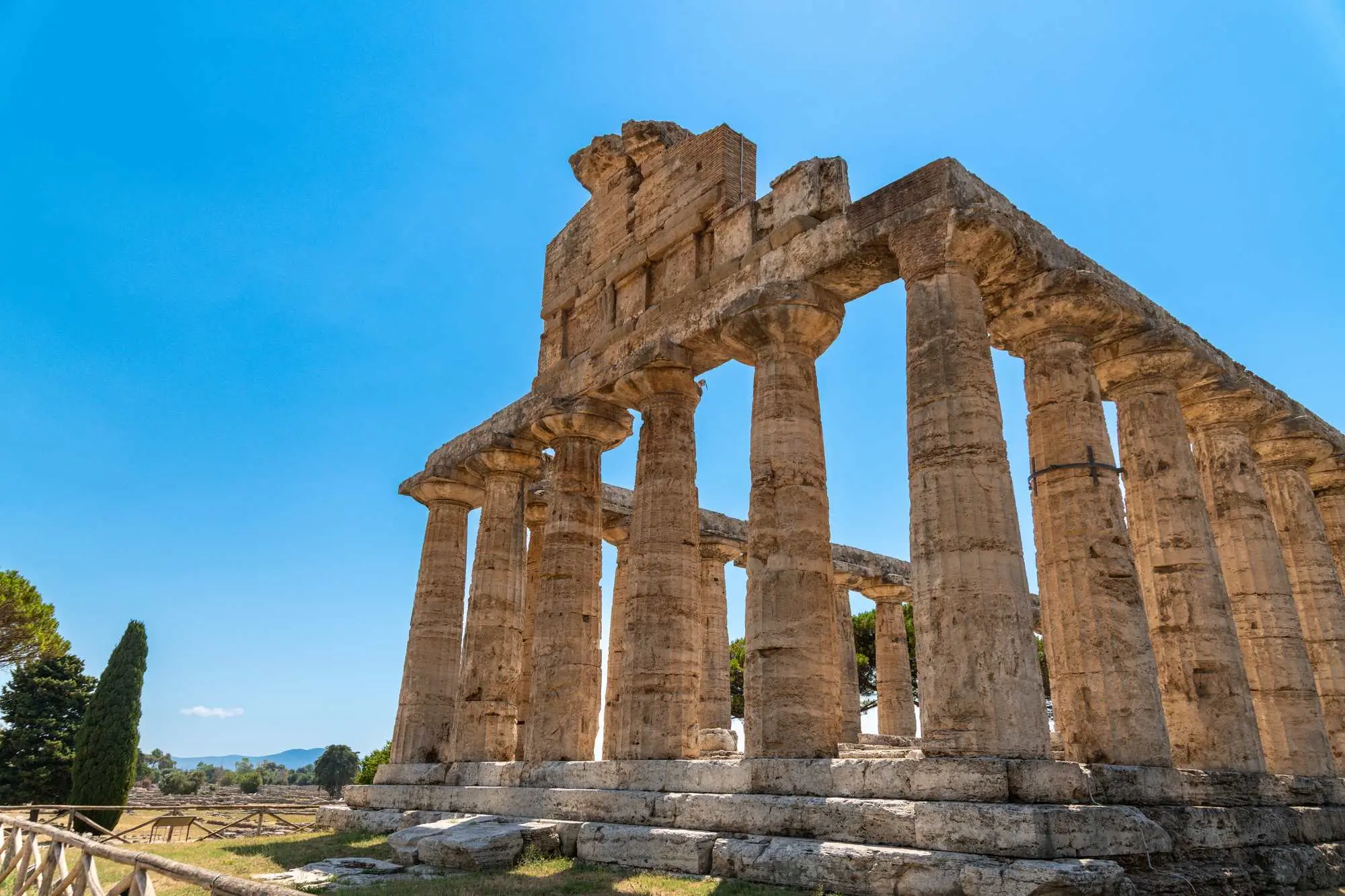
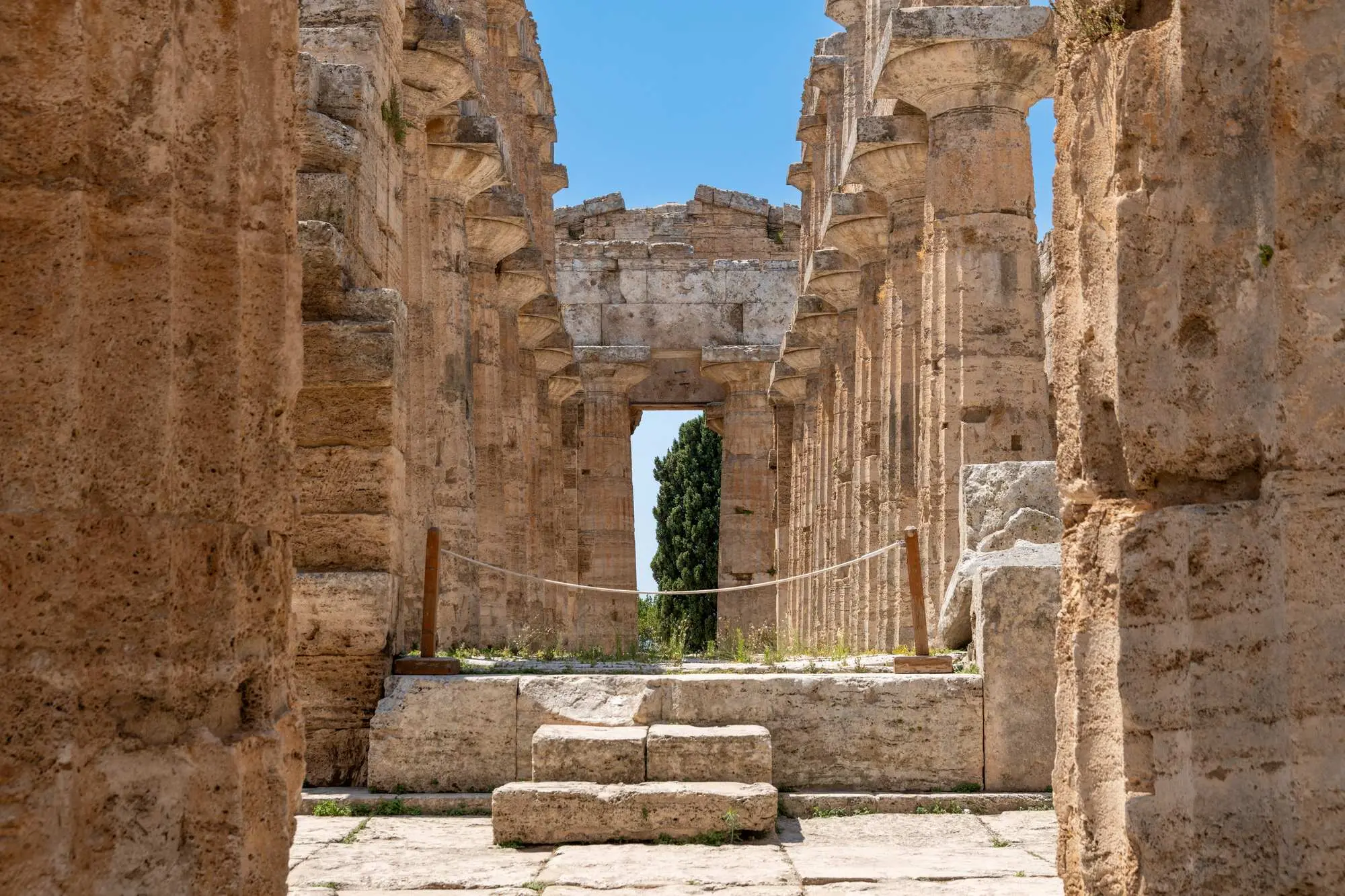
It was founded by Greek colonists from Sybaris around 600 BC under the name Poseidonia, in honor of Poseidon, god of the sea. They built it on the fertile plain near the Tyrrhenian coast, designing the city according to the geometric principles of Hellenic urban planning. Its center was marked by an agora, surrounded by temples, houses, and squares. The three monumental temples that still dominate the landscape were dedicated to the goddesses Hera and Athena, and their columns and proportions remain among the best-preserved examples of the Doric order in the entire Mediterranean.
Paestum, Photo: gph-foto.de Depositphotos
The Temple of Hera, often called the Basilica, was the center of worship for the goddess of marriage and fertility. Nearby stands another temple dedicated to Hera, slightly younger and more harmonious in form, while to the north rises the Temple of Athena, recognizable by its elegant columns and its gaze toward the sea. Archaeologists believe that all three temples were aligned with the movements of the sun and stars, emphasizing their sacred symbolism.
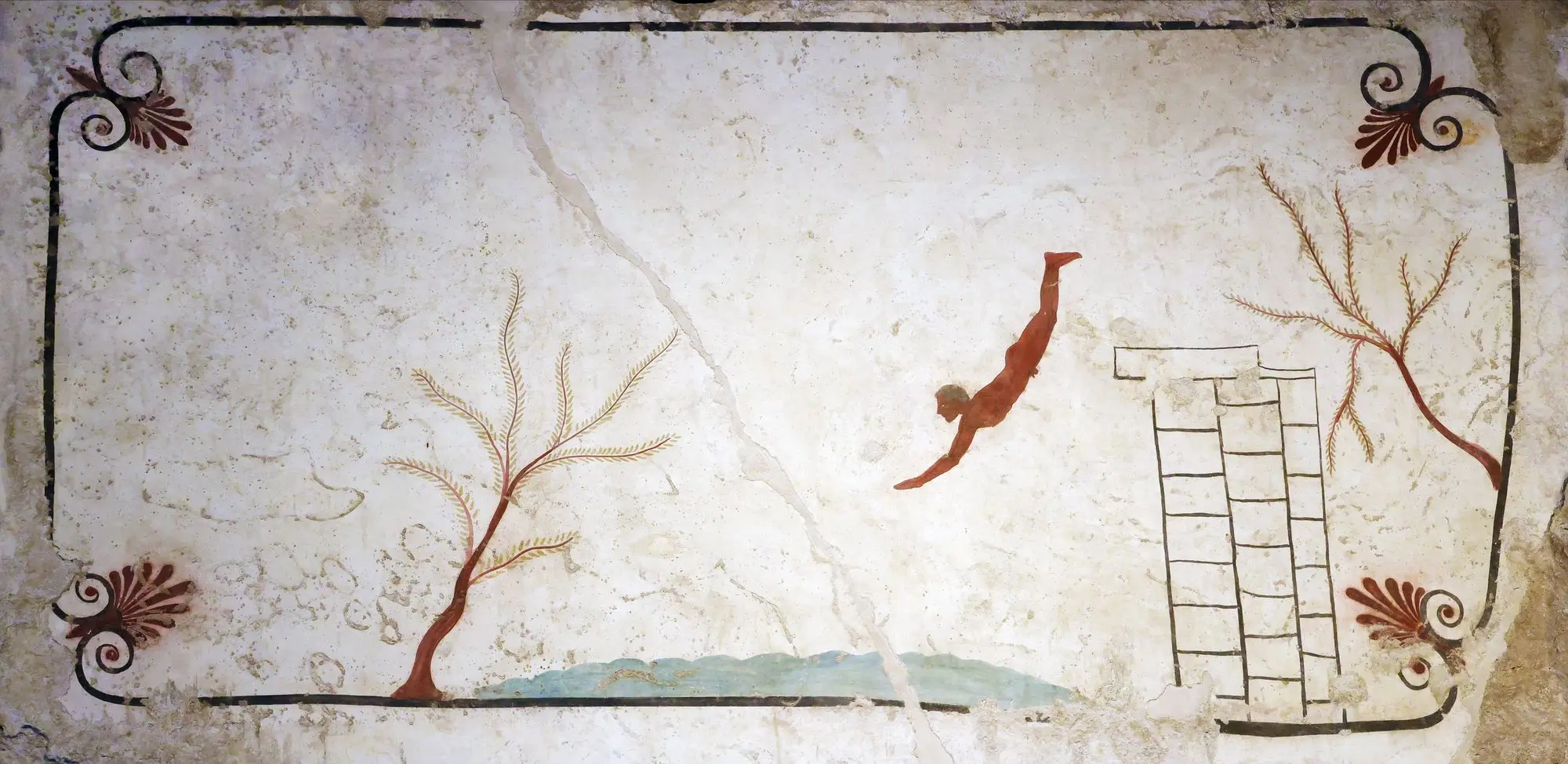
In the 5th century BC, the city was conquered by the Lucanians, an Italic tribe from the interior. Their culture left traces in painted tombs depicting scenes from daily life and mythology. The most famous discovery is the Tomb of the Diver, whose frescoes are a unique example of Greek painting in southern Italy. The image of a young man diving into water is interpreted as a metaphor for the passage from life to death, and perhaps also as a symbol of returning to the god of the sea to whom the city was dedicated.
Paestum, Photo: toucanet Depositphotos
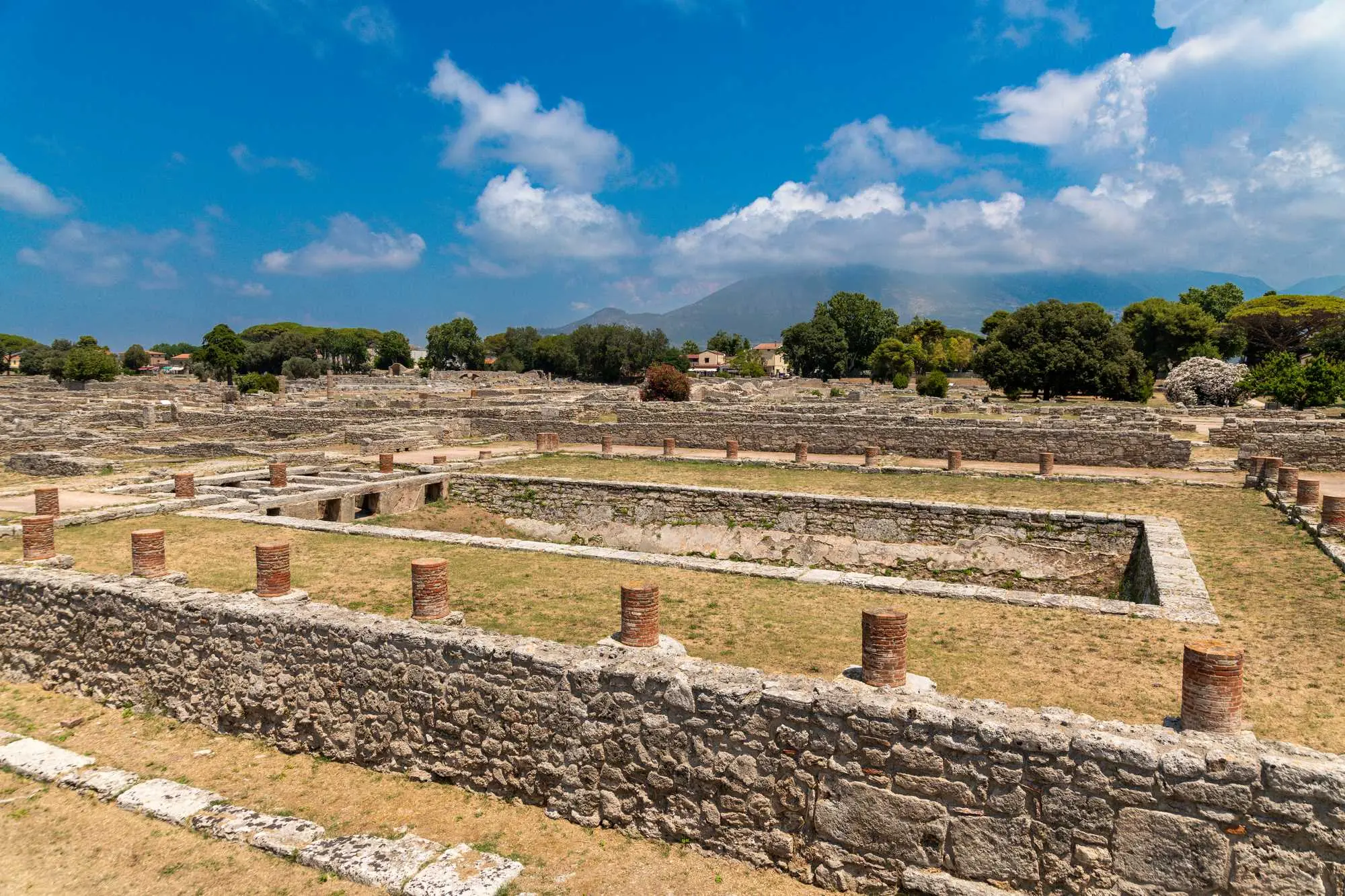
When the Romans conquered Campania in the 3rd century BC, Poseidonia became Paestum. The city flourished as an important Roman colony. The Romans built roads, baths, a forum, and an amphitheater, while the ancient temples continued to serve as sanctuaries within the new religion. Yet with the decline of the Empire came a slow decay. The Sele River changed its course, the marshes spread, and malaria drove the population away. During the Middle Ages, the city disappeared beneath layers of earth and grass, surrendered to silence and oblivion.
It was only in the 18th century that travelers and scholars rediscovered Paestum as they toured Italy in search of classical heritage. Among them were English and French aristocrats who saw in Paestum a vision of almost unreal beauty: stone temples glowing under the Mediterranean sun, surrounded by wildflowers and the scent of the sea. The ruins inspired a renewed fascination with ancient architecture, and it was thanks to Paestum that a new chapter of European Neoclassicism began.
Paestum, Photo: gph-foto.de Depositphotos
Legend has it that at night, when the sea is calm, a faint murmur can be heard from the direction of the temples, not the wind, but the footsteps of those who once worshiped the gods here. They say that Hera and Athena still walk among the columns, speaking softly about a world that has forgotten their names. And if you pause for a moment and listen, you may hear the sea whispering the city’s ancient name once again.
Velia is an ancient city that changed the way we think about existence.

Sara Sedić
I plan to live in the moment :)
Leave a Reply