
What are the most famous Albanian folk dances and where do they come from?
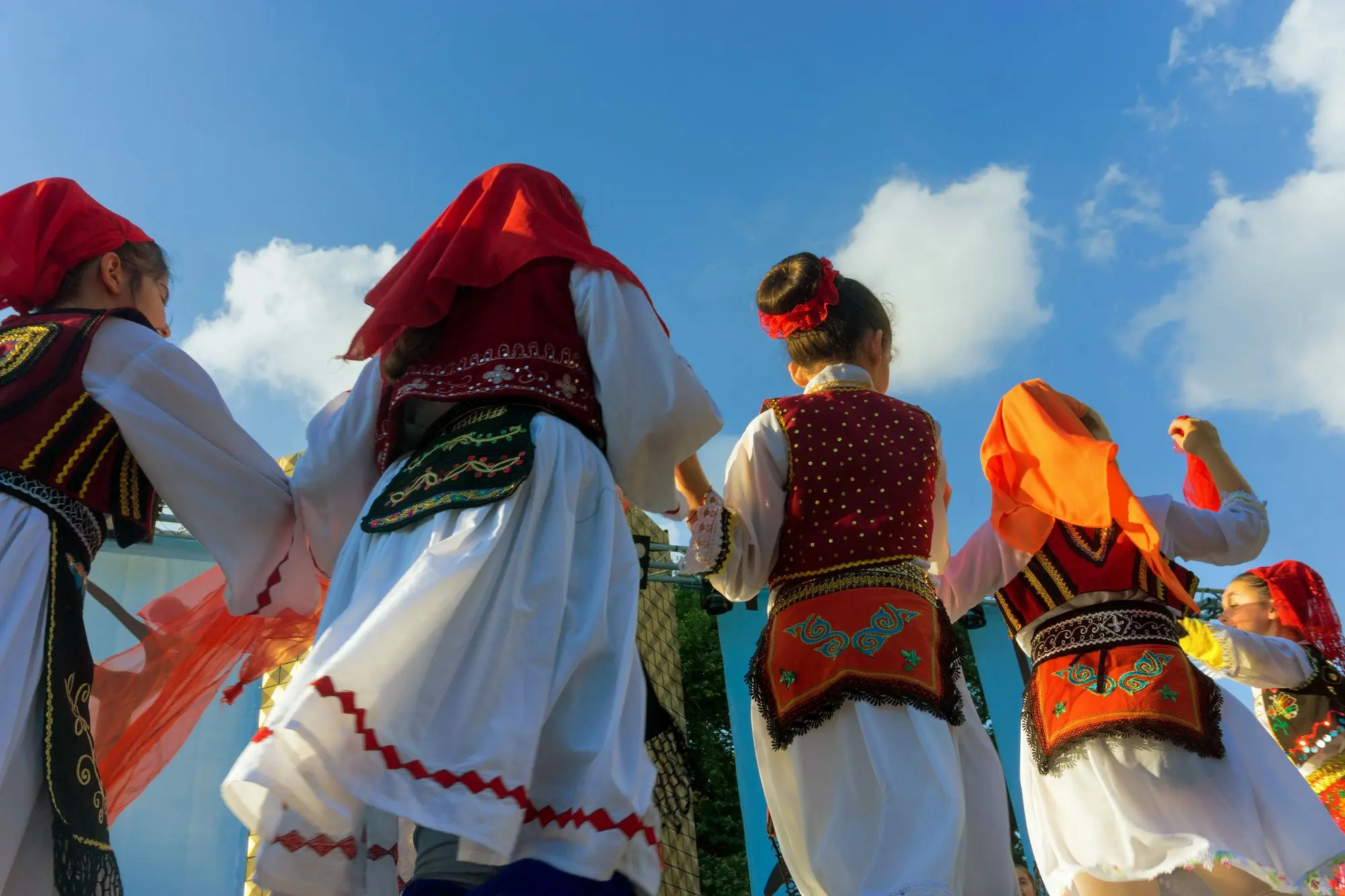
Traditional dances in Albania form an important part of the country’s intangible cultural heritage and reflect its regional, historical, and social diversity. They developed over centuries in different parts of Albania, from the mountainous north to the coastal and southern regions, shaped by local customs, ways of life, and historical circumstances. Although they are often collectively referred to by a single term, Albanian traditional dances encompass a range of different dance forms, among which there are also clearly defined dances with their own names, origins, and meanings.
Here are the most well-known traditional dances in Albania and what distinguishes them.
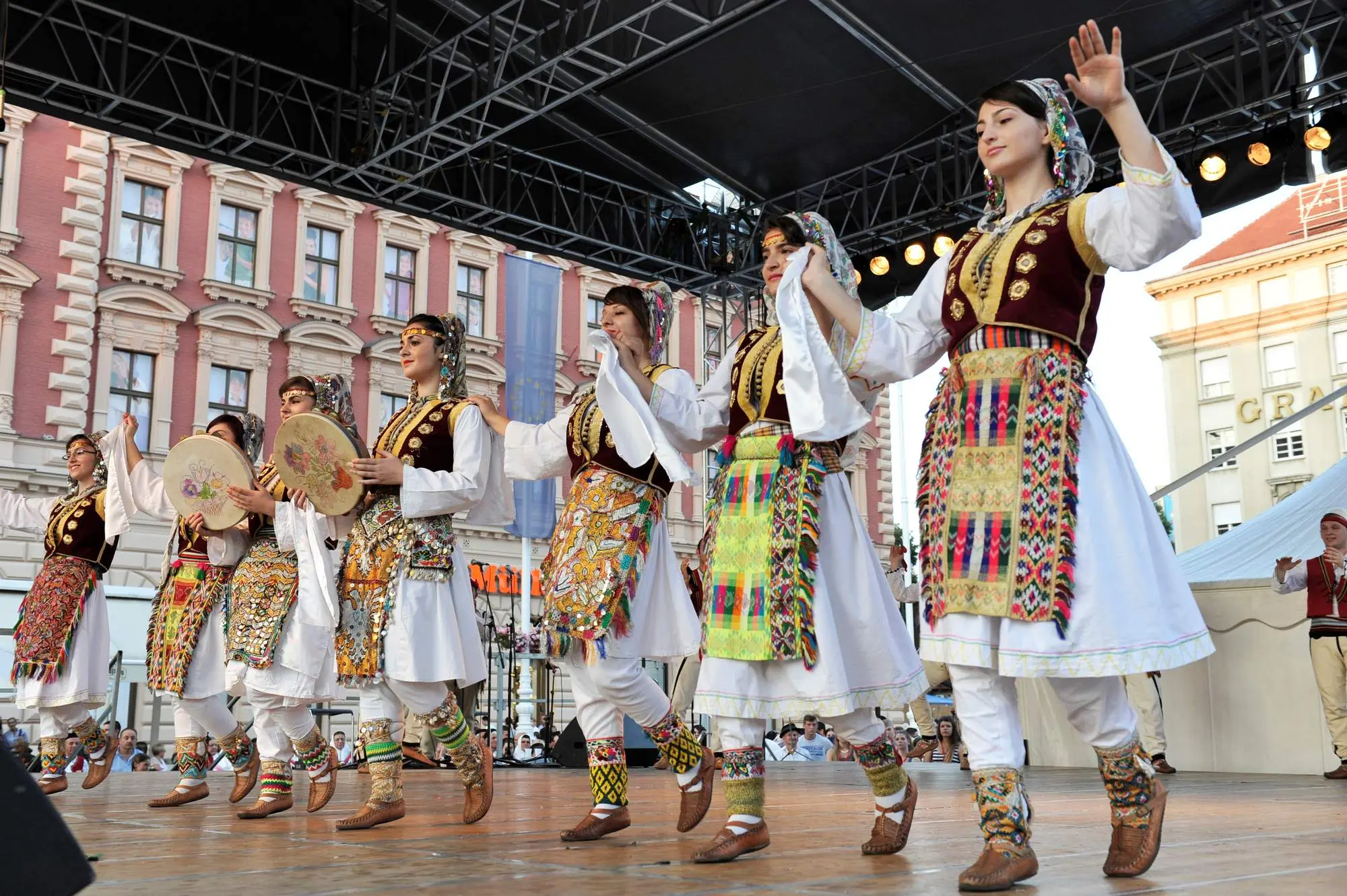
Albanian traditional dances Photo: zatletic Depositphotos
A central place in Albanian dance tradition is occupied by Valle. It is a general term for folk dances performed in a group, most often in a circle or semicircle, symbolizing community and continuity. Valle is not a single dance but an entire group of dances that vary from region to region. In northern Albania, especially in mountainous areas, Valle is fast, powerful, and strongly masculine, with high jumps and energetic movements that reflect a warrior tradition and the harsh conditions of mountain life. In the south, Valle is slower and softer, often connected with singing, with an emphasis on the harmonious movement of the entire group. Particularly well known are regional variants such as Valle e Tropojës, Valle Çame, and Valle e Devollit, which have become recognizable symbols of their respective regions and are frequently performed at folk celebrations and festivals.
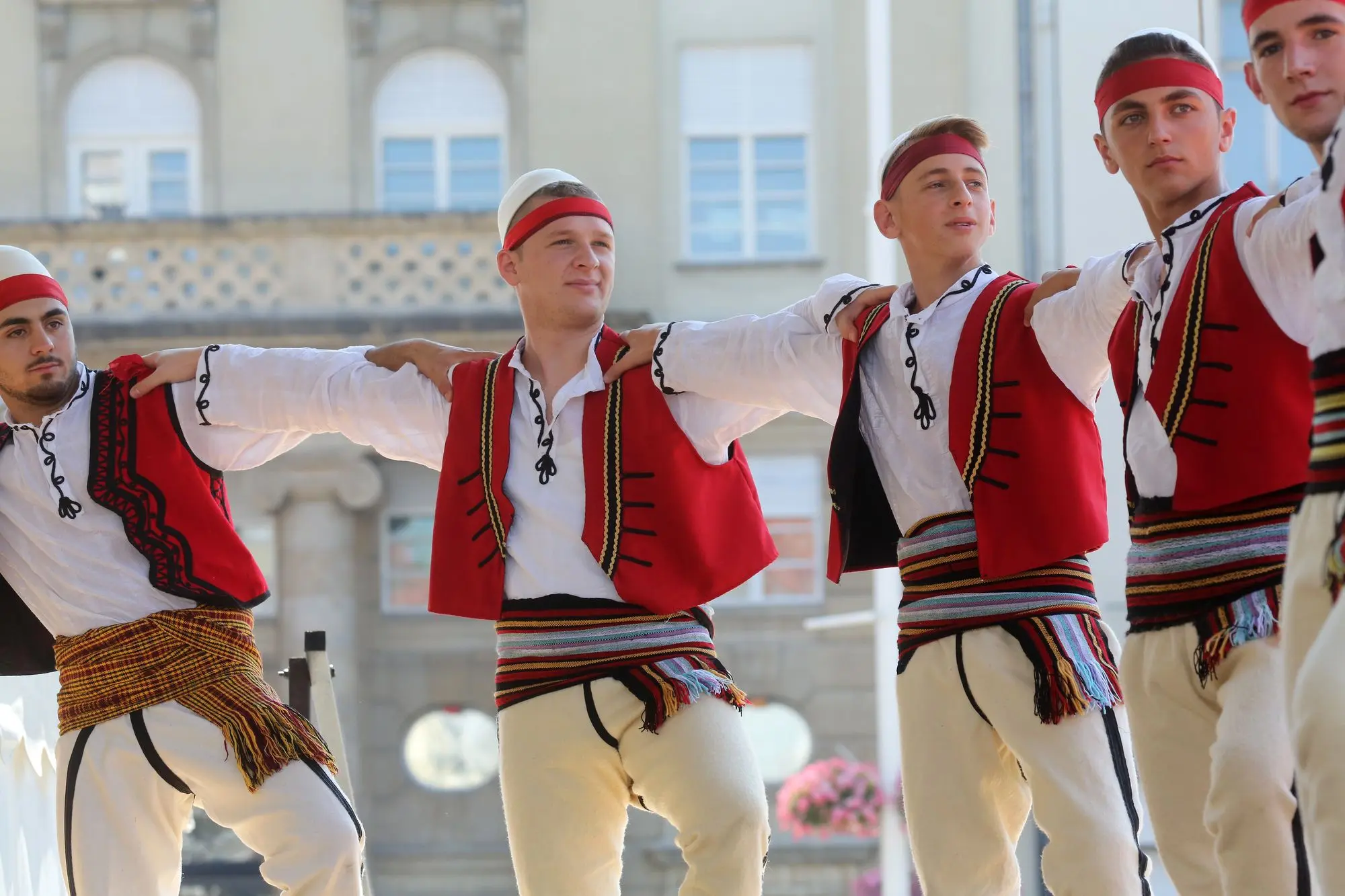
Albanian traditional dances Photo: zatletic Depositphotos
Outside this broad term is the dance Osman Taka, one of the most famous individual dances in Albanian tradition. It originates from southern Albania and is linked to a legend about Osman Taka, a hero who, according to tradition, was sentenced to death. Before his execution, he asked for permission to dance one final dance, and his performance was so powerful and dignified that it left a deep impression on all those present, allegedly leading to his life being spared. Today, Osman Taka is performed as a solo dance or in a pair, with controlled and precise movements that symbolize defiance, courage, and personal dignity.
Pogonishta belongs to the dance tradition of southern Albania and is closely connected with polyphonic singing, one of the most important cultural features of the region. It is danced in a closed circle, with repetitive steps that follow the rhythm of the song and create a sense of collective participation. Pogonishta is rarely performed as a stage dance, as its original function was social and ritual, most often as part of communal gatherings, weddings, and important local events.
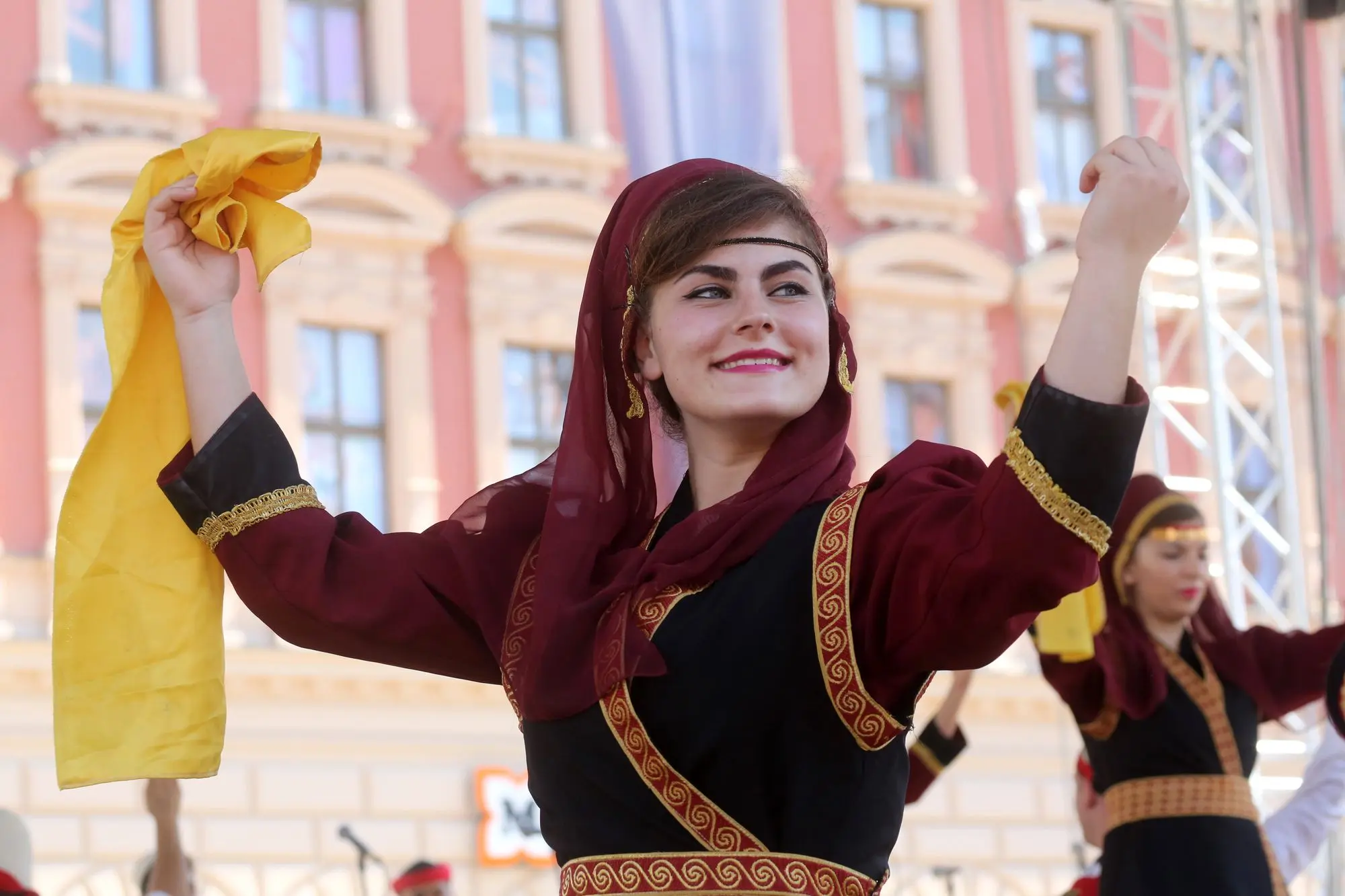
Albanian traditional dances Photo: zatletic Depositphotos
In northern Albania, dances of a strong, almost raw character developed, among which Napoloni stands out. It is considered one of the older dances and is often associated with pre-Christian customs. Its movements are simple, but through repetition, they create a powerful rhythm that emphasizes unity and collective energy. In the past, Napoloni also had a ritual role, connected with natural cycles, fertility, and the protection of the community.
Another northern dance is Kaballçe, known for its fast tempo and highly energetic movements. This dance was often performed at celebrations and gatherings where it also had a competitive character. Emphasized physical endurance and precision of movement made Kaballçe a way of demonstrating strength and skill, particularly among younger men in mountainous regions.
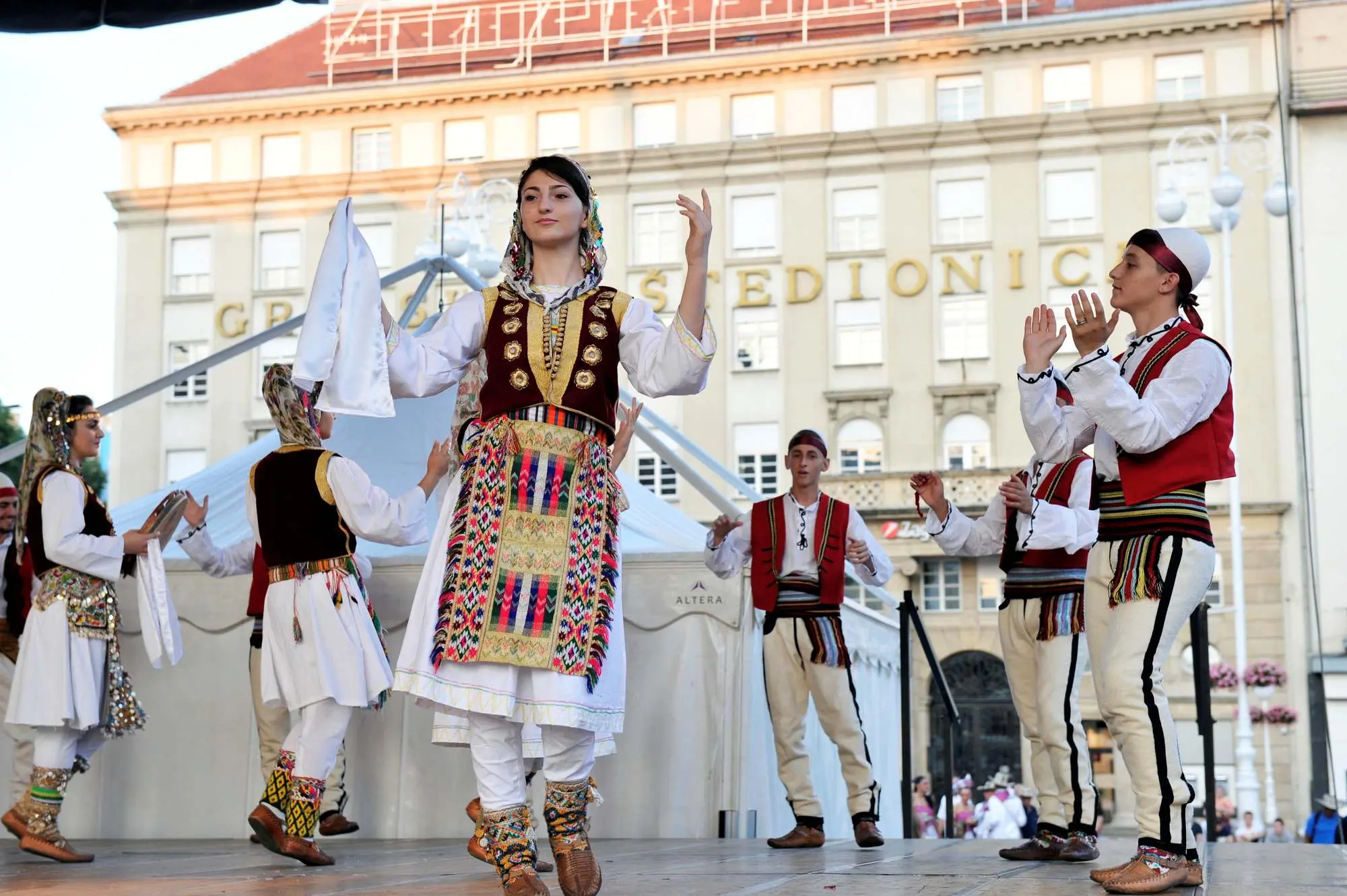
Albanian traditional dances Photo: zatletic Depositphotos
Viewed together, the traditional dances of Albania form a complex cultural mosaic in which history, myth, social relations, and regional identities are intricately intertwined. Although they are often performed on stages and at folklore festivals today, their true value still lies within the communities in which they originated, where dance is not merely a form of expression but an integral part of everyday cultural memory.

Ahmed Taha
Peace, love and music! ☮️
Leave a Reply