
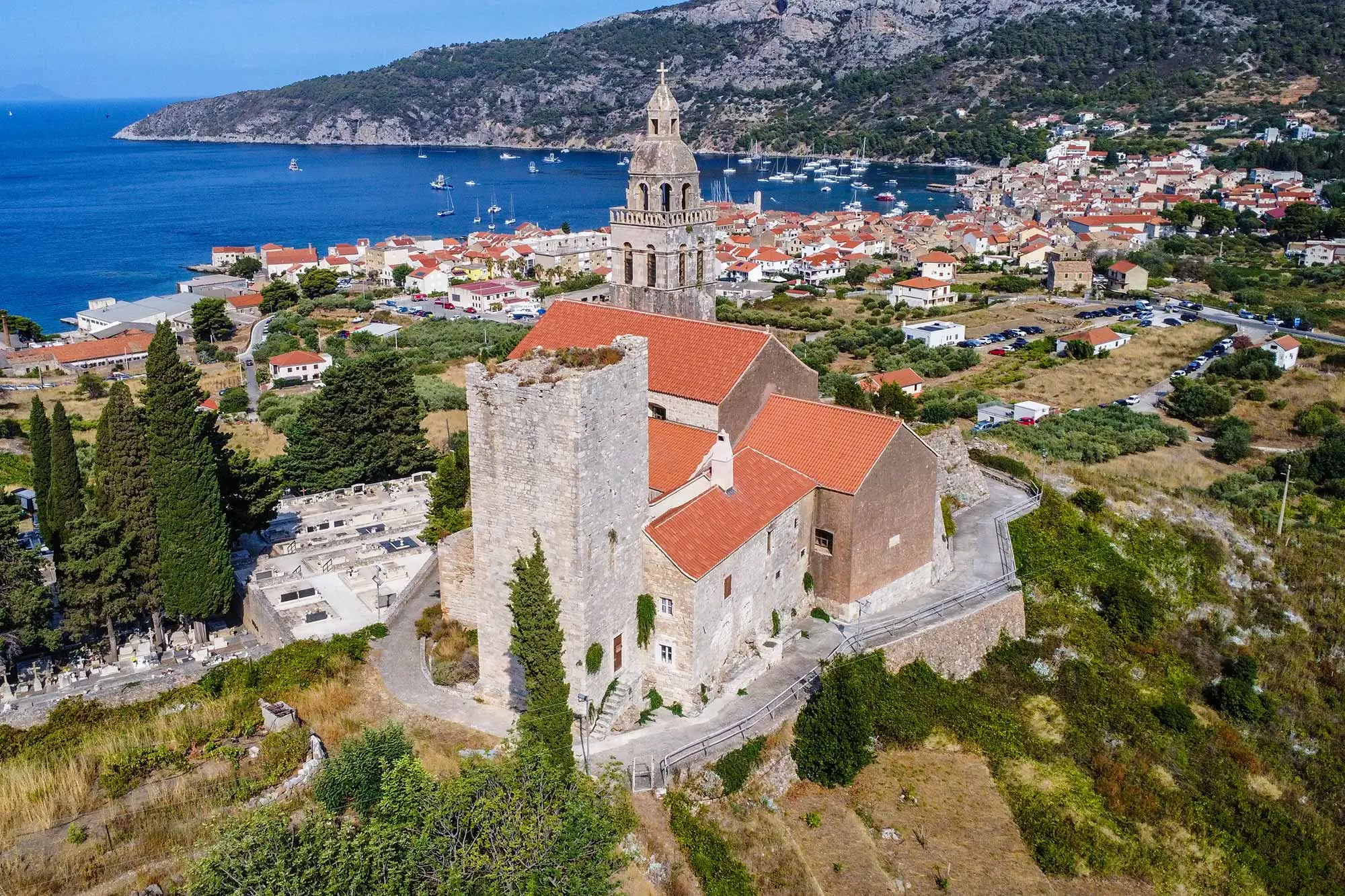
The Church of St. Nicholas above Komiža attracts attention with its story and unique tradition
I know the island of Vis quite well, perhaps even too well. Every time I return, I think there’s nothing left to discover, and yet something always surprises me. This time, it was not a hidden cove or an abandoned military tunnel, but a hill rising quietly above Komiža, where the church known as Muster stands. Or, officially, the Church of Saint Nicholas.
I did not drive up to it. Not because it is impossible, but because it felt like the kind of place you should approach slowly. I walked at an easy pace from the town center, and the path first led me through the cemetery. Old, stony, unpretentious, yet full of meaning. My eyes paused on family names that have belonged to Komiža for generations, such as Vitaljić, Marinković, Mardešić, and Ivčević. Some of them still live here, others survive only as letters carved into stone. And as I walked between the graves, it struck me that this was the quietest list of names that had shaped everything this place is today.
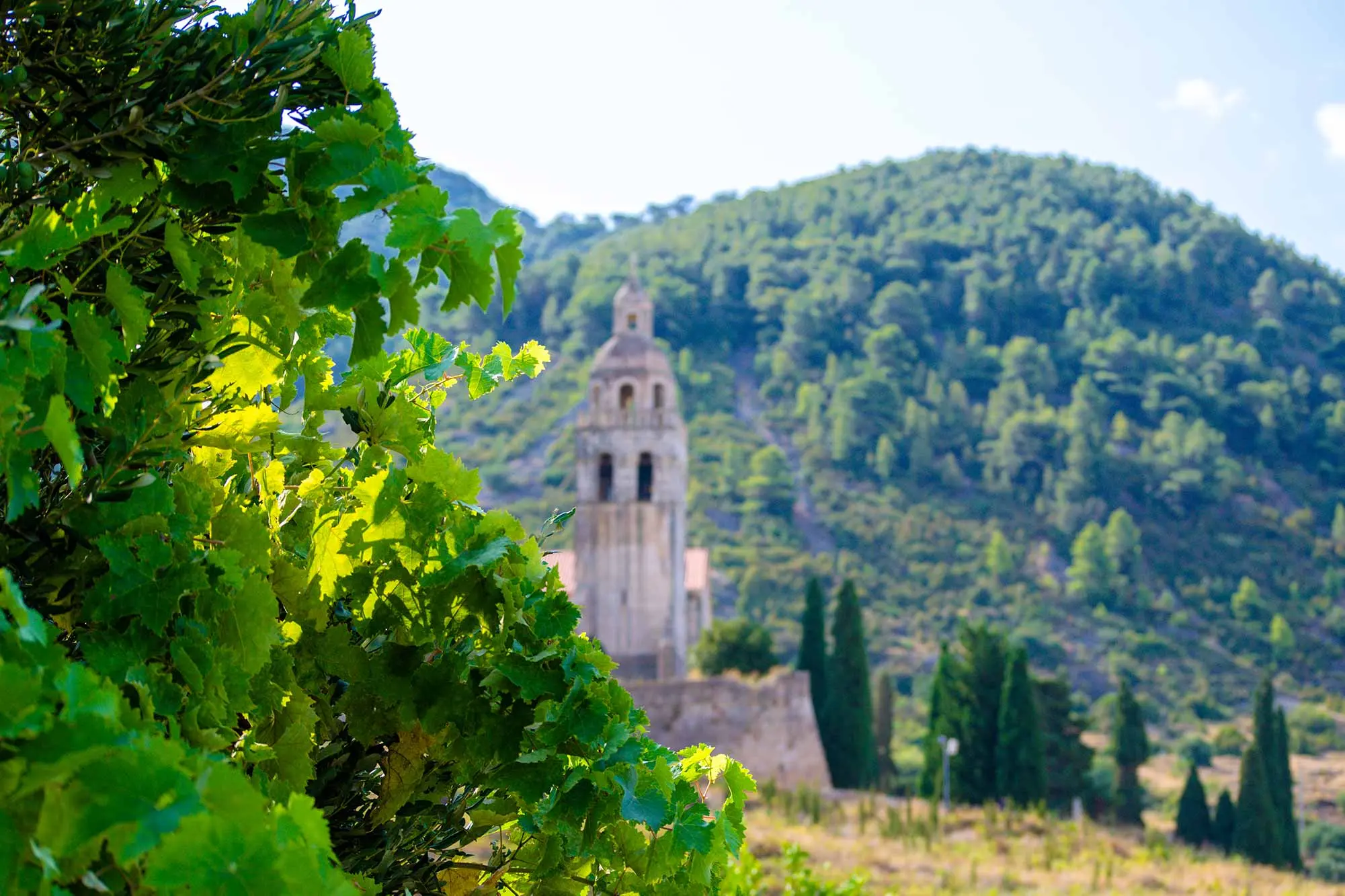
St. Nicholas Church – Muster Photo: Adria.fun
When I reached the church, the first thing I noticed was its solidity. All stone, nothing excessive. Not too tall, not too low, just exactly as it should be. As if it had always been there. And maybe it had.
They say the church and monastery were built by Benedictine monks from Biševo as early as the twelfth century, although the first mention in documents appears only in the thirteenth. And even then, not as something grand, but as something simply assumed.
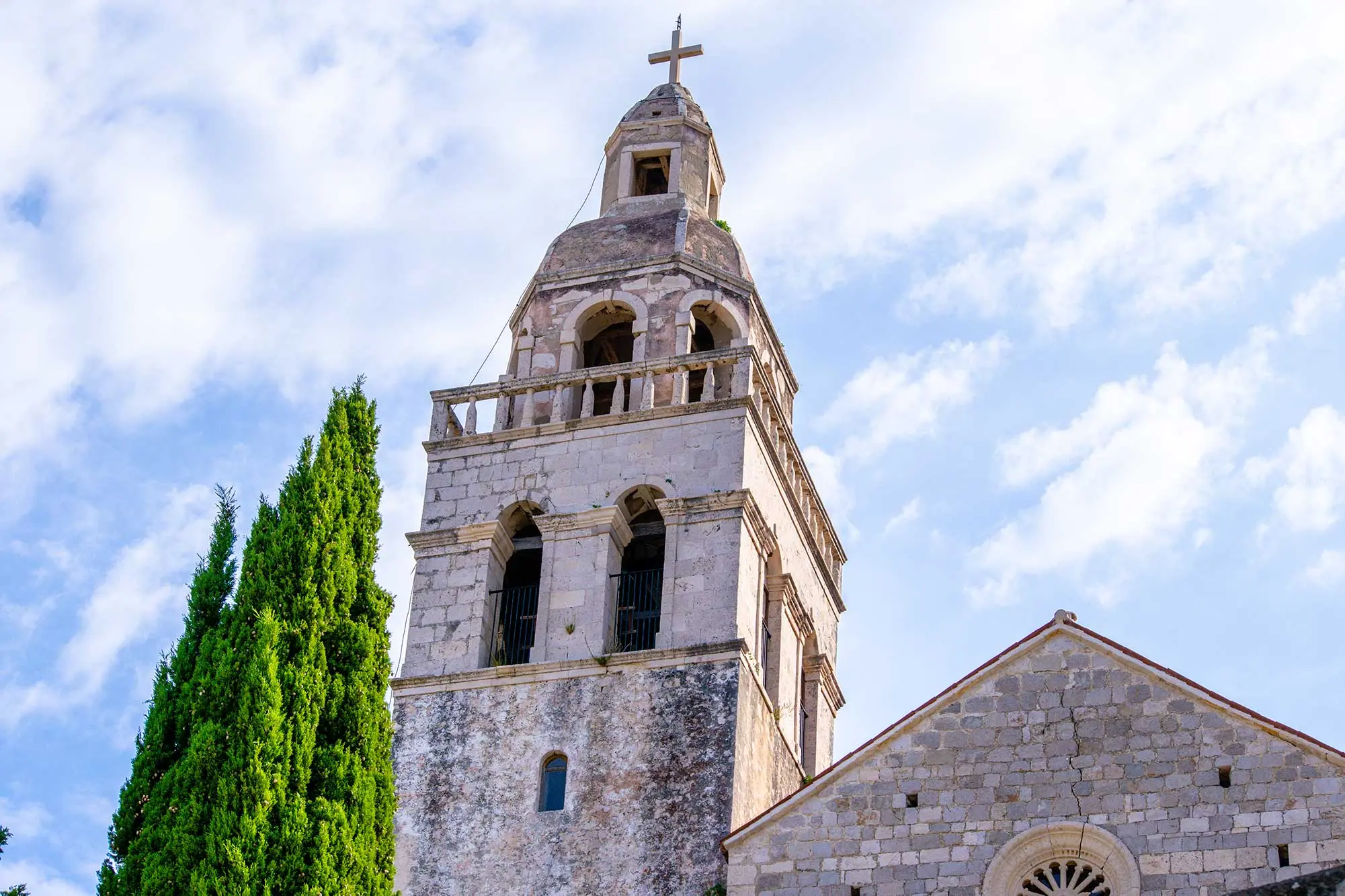
St. Nicholas Church – Muster Photo: Adria.fun
Inside, I was met by dim light, the kind that lets you settle into the space. As soon as you step in, you realize this is not an ordinary church. Beneath your feet are tombstones. You are literally walking across history, across the names of people who once prayed, served, and lived here. Among them is the grave of Abbot Radovan. And then, when you look up, you start to notice a series of details that are easy to miss if you do not stop.
The church has five naves. They say the side chapels were eventually joined together, which is why the space feels so open today. What especially caught my eye was a wooden altar with a depiction of the Nativity, made in the year 1692, one of the oldest of its kind in Croatia. Above everything rises a large crucifix, and around me were statues of Saint Catherine, Saint Dominic, and the Virgin Mary with child. The pulpit was simple, yet elegant.
-
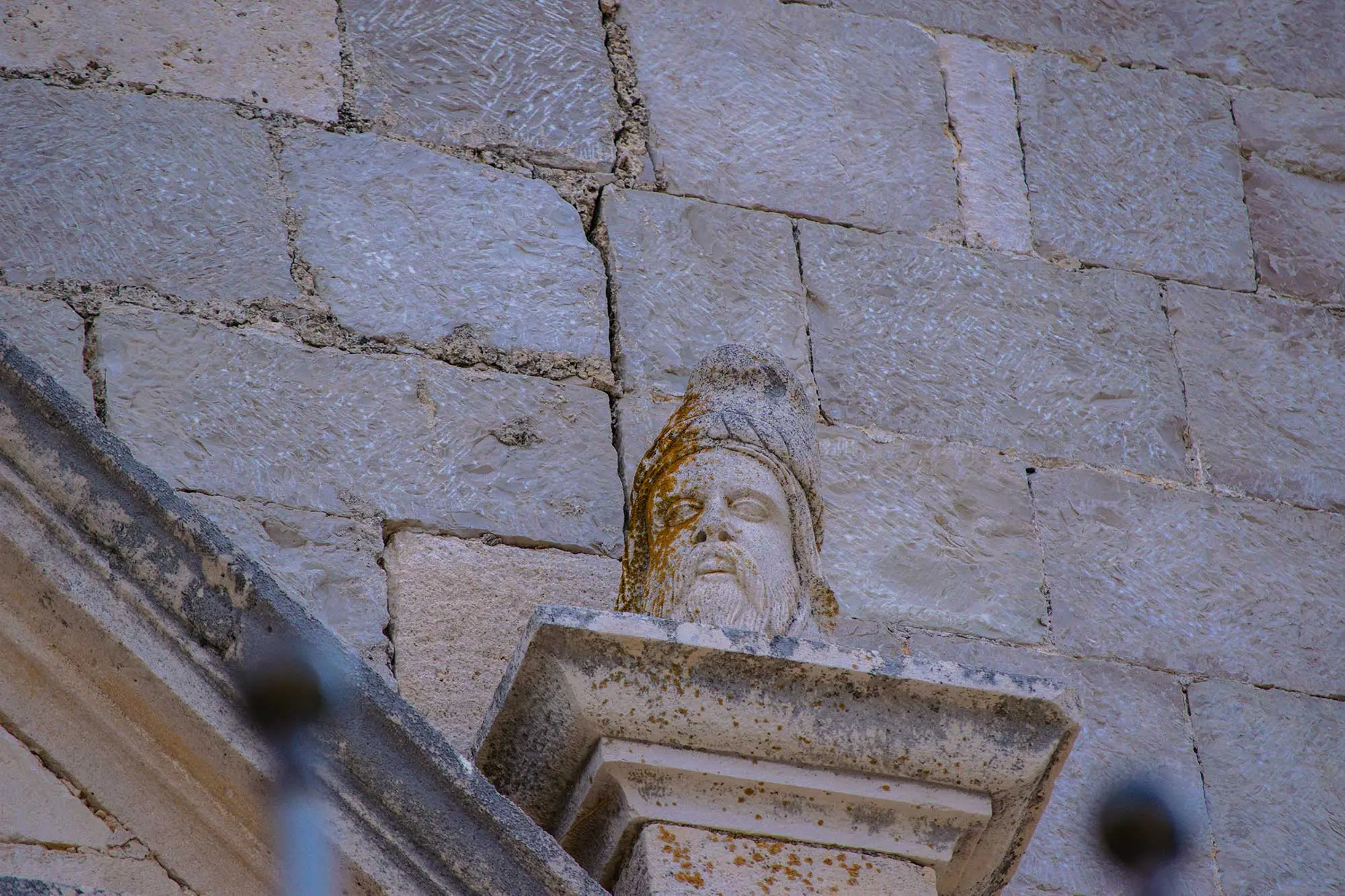
- Crkva sv. Nikole (St. Nicholas Church) – Muster Photo: Adria.fun
-
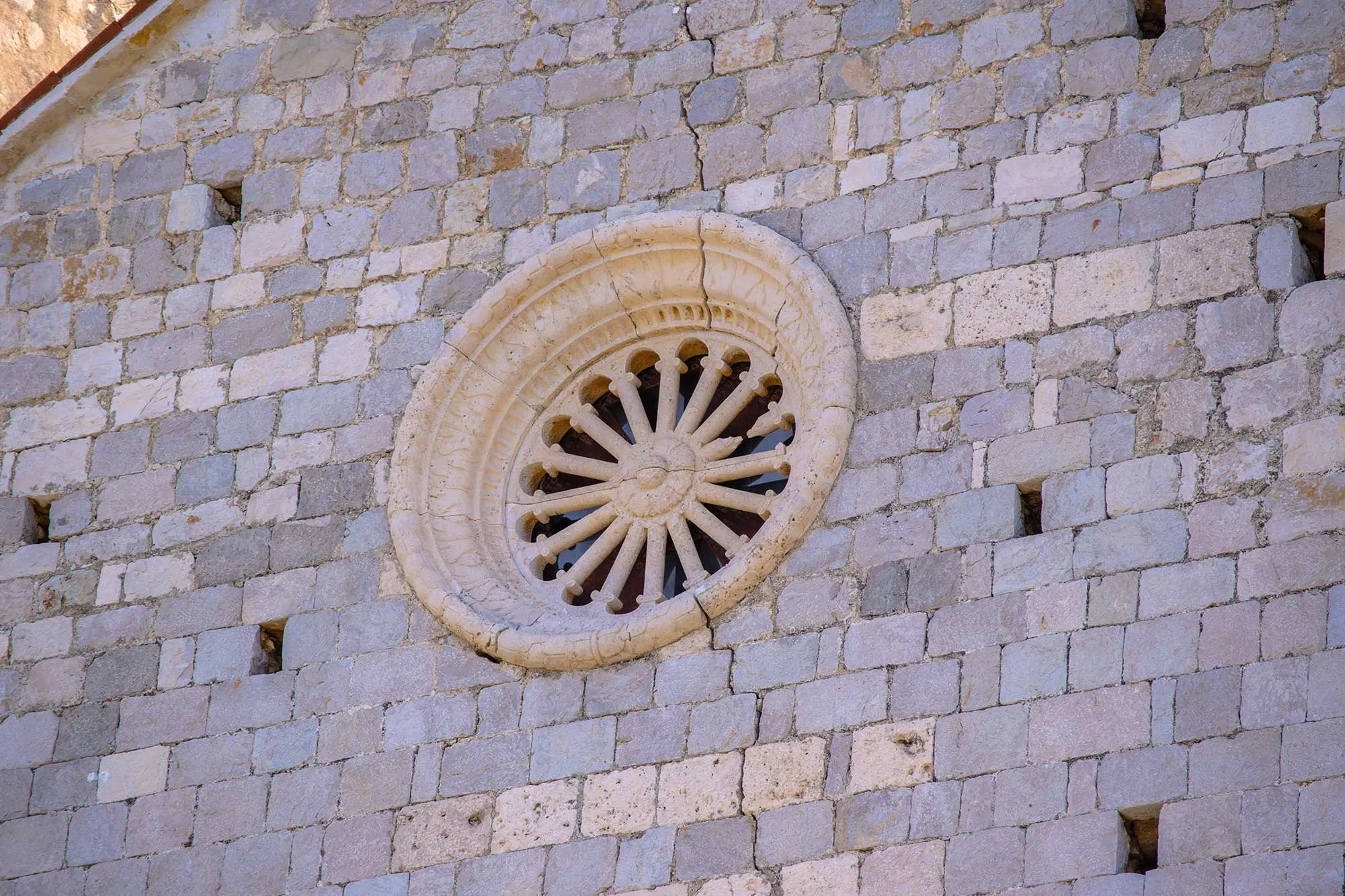
- Crkva sv. Nikole (St. Nicholas Church) – Muster Photo: Adria.fun
Up on the choir loft are the organ pipes from the year 1895, crafted by the Czech master Vanicko, replacing an earlier instrument from 1794. Everything in this space feels understated, yet rich and filled with the traces of past centuries.
When I stepped outside again, my eyes followed the slope back down to Komiža, as if the town had just winked at me. And then I remembered. Every year, on the feast of Saint Nicholas, the 6th of December, an old wooden boat is burned right here. Not just any boat, but one that has served its time. The townspeople carry it up from the harbor, by hand, and place it in front of the church. Then it is set aflame. A ritual for the protection of all boats still sailing, and a thank you to those that once did. It is not a tourist performance but a quiet agreement between the place and the sea.
-
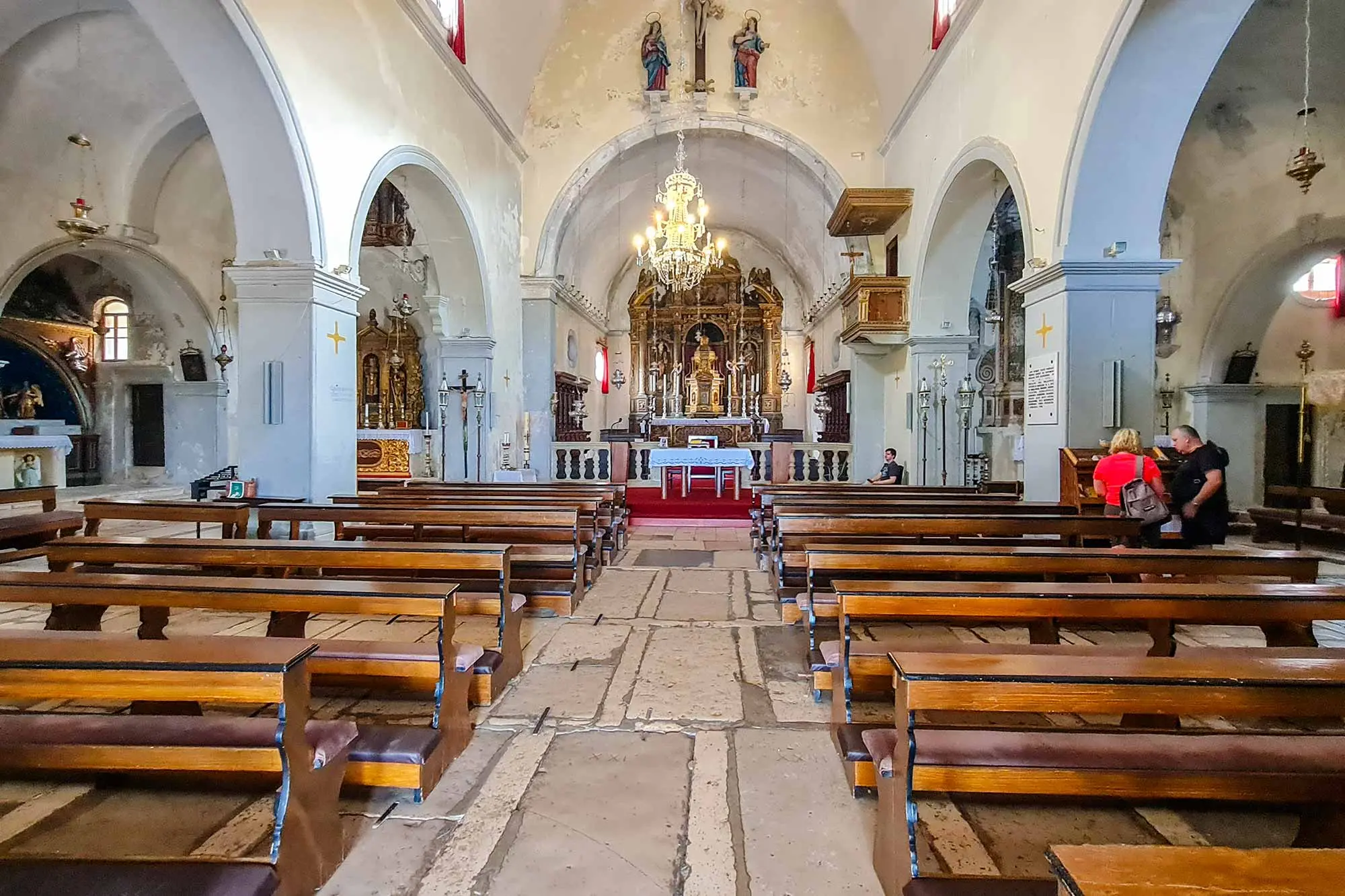
- Crkva sv. Nikole (St. Nicholas Church) – Muster Photo: Adria.fun
-
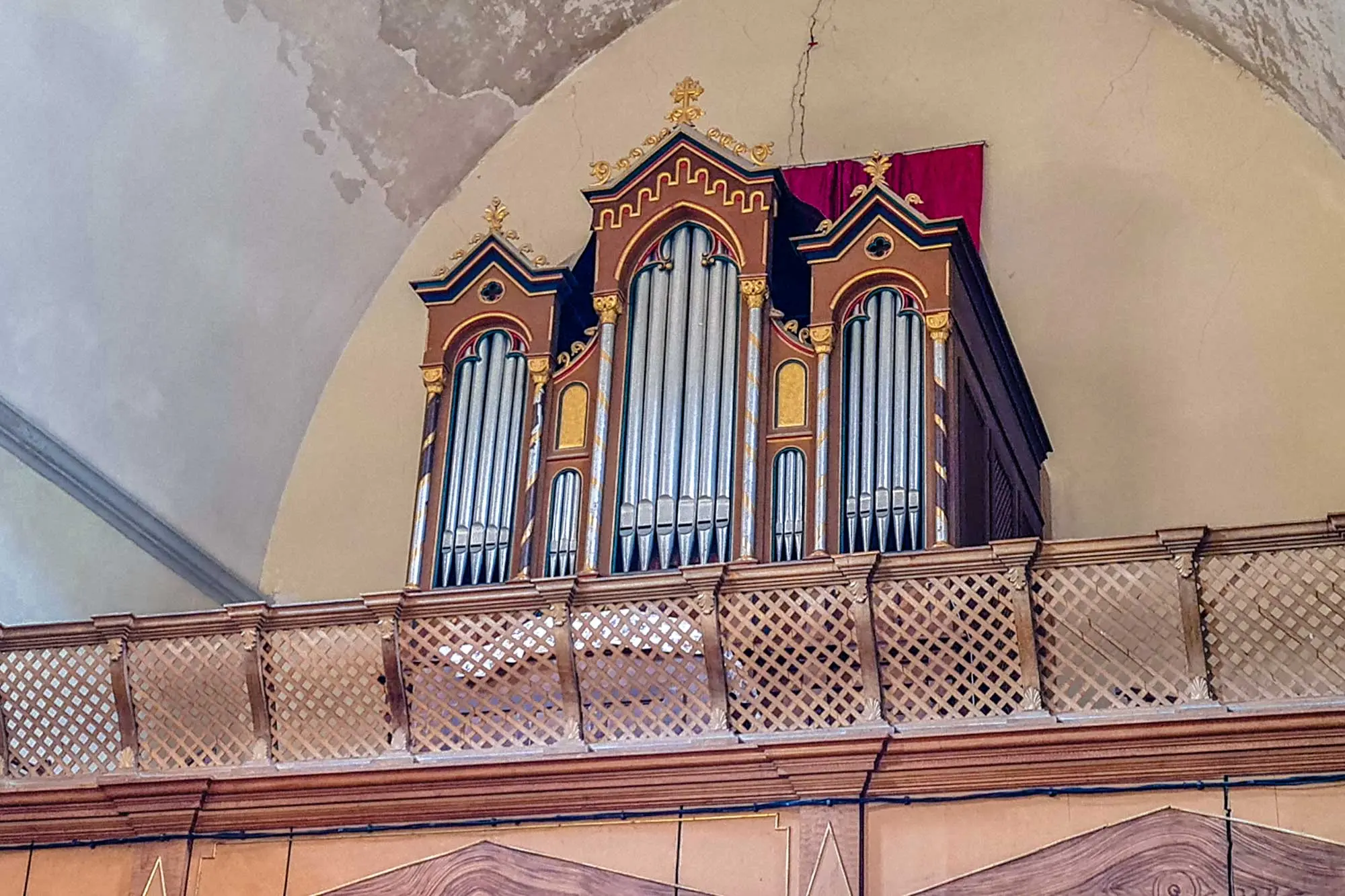
- Crkva sv. Nikole (St. Nicholas Church) – Muster Photo: Adria.fun
Muster is not just a church on a hill. It is a story told in stone. And if you ever find yourself in Komiža, try to climb up there. You do not even need a plan; just go. You will pass through the cemetery, maybe stop at a familiar name, and then everything will somehow fall into place. You will stand in front of a church that does not ask for your attention, but fully deserves it.
And when you step inside, maybe it will lead you further still.
Find out more about the stone towns of the island of Vis..

Zoran Kovačić
I do miracles right away, but the impossible still takes me a little time!

Leave a Reply