
The most important historical stone bridges in Bosnia and Herzegovina: from Mostar to Višegrad
In a land where East and West meet, where empires have come and gone, rivers were often both obstacles and stages of encounter. To cross those waters, the Ottomans left one of their most enduring and noble legacies in Bosnia and Herzegovina: stone bridges known as ćuprije. These bridges were not just feats of engineering; they became places of trade, meetings, farewells, legends, and historical turning points.
Built according to the principles of Ottoman architecture, often from locally quarried stone, their simple beauty hides deep symmetry, mathematical precision, and spiritual symbolism. Wealthy endowers, viziers, pashas, commissioned many, but also merchants and common folk. Today, these bridges are a vital part of the country’s cultural and historical identity, reminding us that even the hardest stone can become a path.
OLD BRIDGE IN MOSTAR – AN ARCH THROUGH TIME
Built in 1566 by the order of Sultan Suleiman the Magnificent, this bridge is the work of Mimar Hajrudin, a student of the famous architect Sinan. Its elegant stone arch crossing the Neretva once connected two parts of Ottoman Mostar and became the symbol of the city and later of the entire country. The name “Stari most” (Old Bridge) was not originally formal but became widely adopted over time. Destroyed in 1993 during the war, it was rebuilt in 2004 following the original plans and added to the UNESCO World Heritage List. Its nearly 30-meter span is more than an architectural achievement; it is a powerful metaphor, a bridge that connects people, cultures, and eras.

Mostar, Photo: Adria.fun
MEHMED PAŠA SOKOLOVIĆ BRIDGE IN VIŠEGRAD – A STONE ROOTED IN LITERATURE
Constructed between 1571 and 1577 over the Drina River, this bridge is likely the most monumental Ottoman-era bridge in Bosnia and Herzegovina. It was built by Mimar Sinan, on the order of Grand Vizier Mehmed Paša Sokolović, who was born a Christian near Višegrad and taken by the janissaries as a child. The bridge consists of eleven wide stone arches and is 179 meters long. Today, it is widely known as the Bridge on the Drina, thanks to the novel by Nobel laureate Ivo Andrić, which immortalized it in literature. Since 2007, it has been on the UNESCO World Heritage List.

Mehmed Paša Sokolović Bridge, Photo: Lazar Krstić
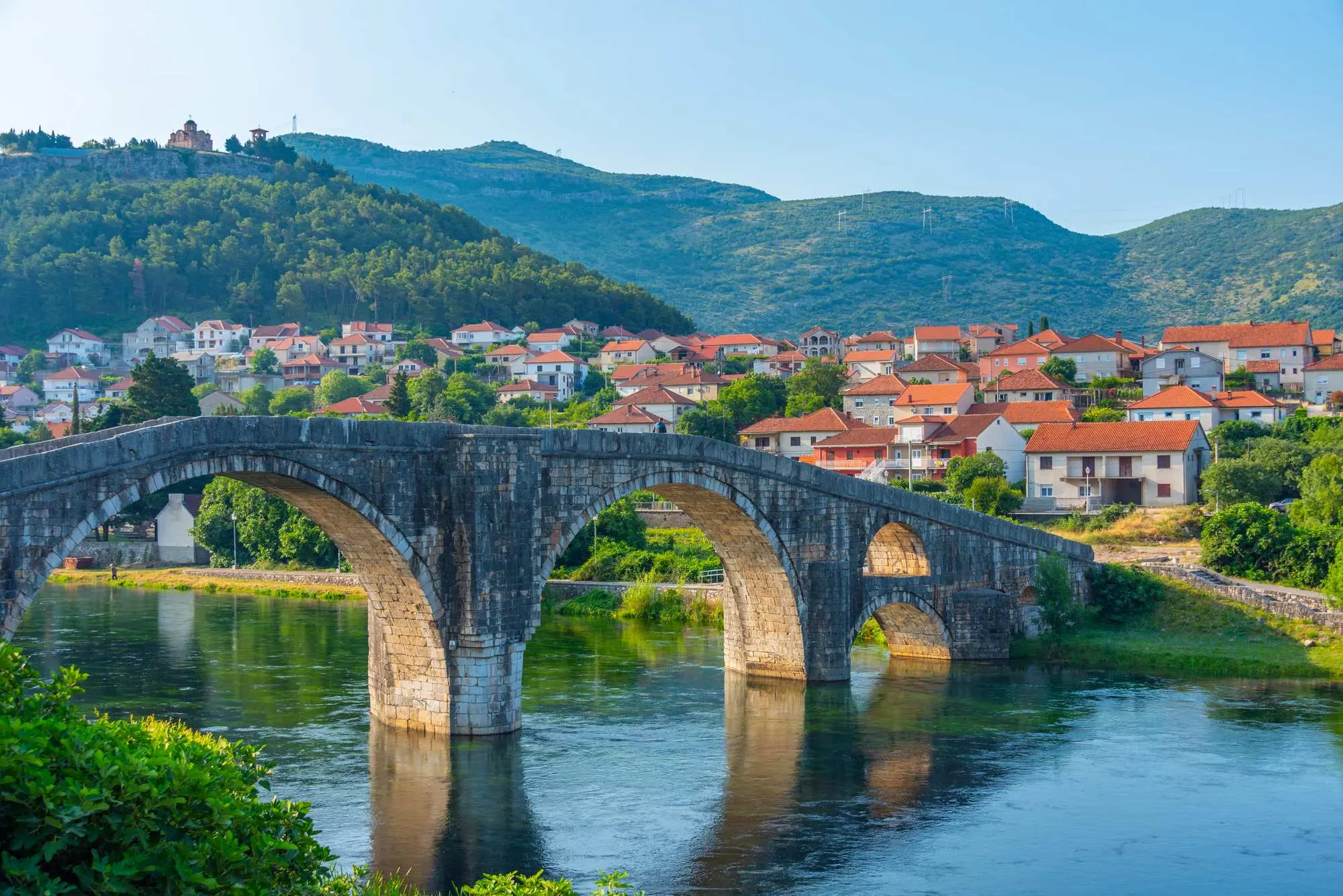
ARSLANAGIĆ BRIDGE IN TREBINJE, A BRIDGE BORN TWICE
Originally built in 1574 under the patronage of Mehmed Paša Sokolović, this bridge once spanned the Trebišnjica River several kilometers downstream from its current location. It was named after Pero Arslanagić, the man responsible for collecting bridge tolls during the Ottoman era. Due to the construction of a hydroelectric dam in the twentieth century, the bridge was dismantled and reconstructed in the center of Trebinje. Although no longer in its original position, it has retained its authentic architecture and remains a symbol of the town’s former importance in the trade and transport routes of Herzegovina.

Arslanagića Bridge, Trebinje, Photo: Mujo Hasanović, Unsplash
ŠEHER-ĆEHAJA BRIDGE IN SARAJEVO – A BRIDGE OF EVERYDAY LIFE
Located beside Sarajevo’s City Hall and Baščaršija, this bridge was built around 1585 and named after its endower, the šeherćehaja, or city governor. Though not large, it is deeply rooted in the life of the city. With multiple arches, it elegantly connects the two banks of the Miljacka River. For centuries, traders, artisans, and travelers crossed it daily, and even though it may be more modest than others, no image of old Sarajevo feels complete without it.

Šeher-ćehaja Bridge, Sarajevo, Photo: Adria.fun
GOAT BRIDGE NEAR SARAJEVO – A GUARDIAN ON THE ROAD TO ISTANBUL
Located east of Sarajevo, along the path to Dariva and Bistrik, this bridge was built in the late sixteenth century. Its name, according to legend, comes from the goats that were once herded in the area, though some believe it refers to the frequent goat crossings at this spot on the Miljacka. It features one main arch and two smaller side arches. It was part of the old caravan route from Sarajevo toward Istanbul, which gave it strategic importance. Today, it stands as a solitary but enduring trace of those once vital roads.
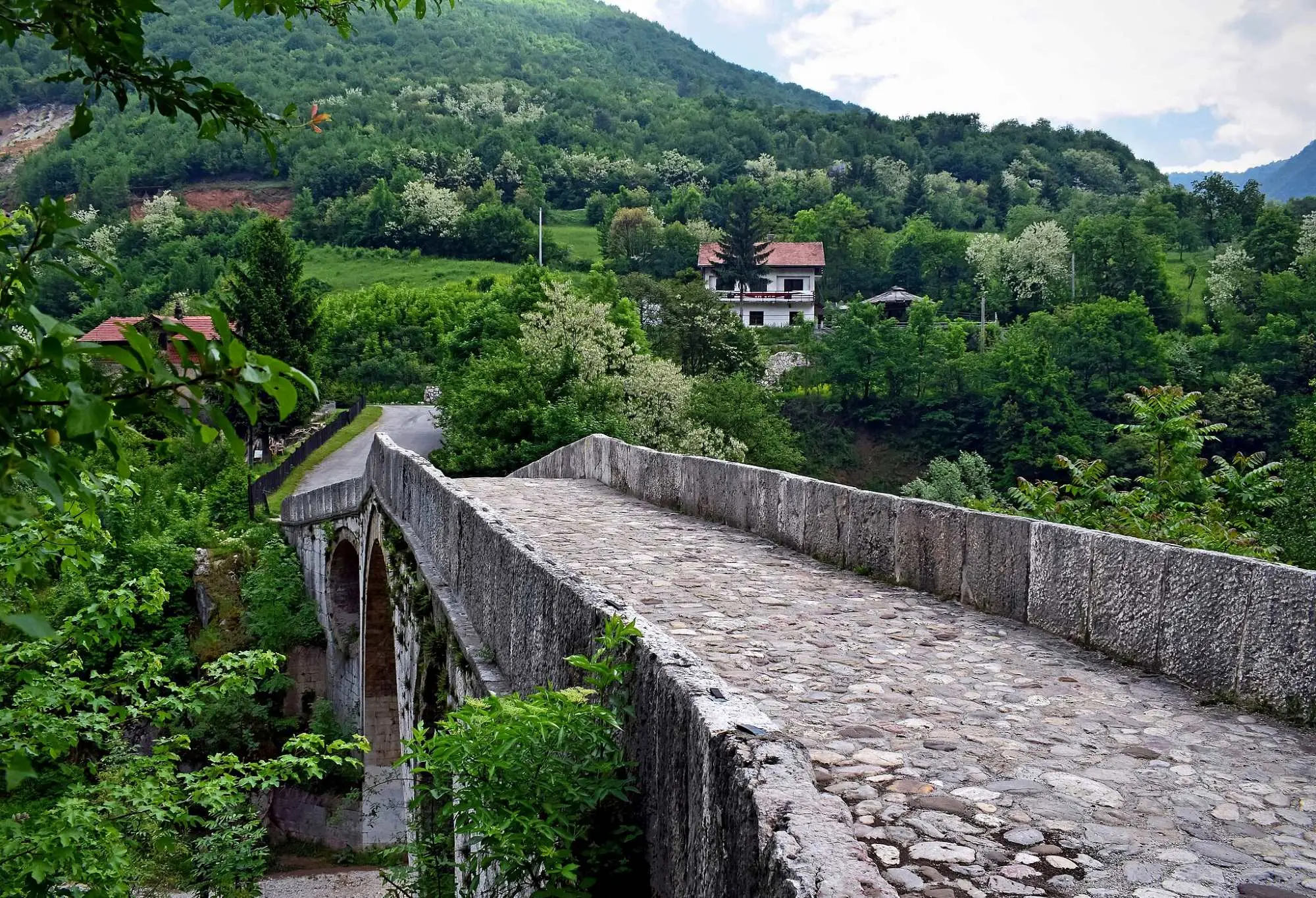
Goat bridge, Photo: Jocelyn Erskine-Kellie CC BY-SA 2.0
THE OLD BRIDGE IN KONJIC – A BRIDGE THAT SURVIVED WARS AND FLOODS
Built in 1682 as an endowment of Hadži Husein-aga, this bridge over the Neretva River in Konjic features six harmoniously shaped stone arches. It was destroyed in 1945 during the German army’s retreat, and rebuilt only in 2009 following its original design. Today, it stands as a proud symbol of the town, firmly embedded in its urban landscape. The bridge represents the connection between both banks of the river, and its reconstruction marks the restoration of dignity to a once-neglected monument.

Stone bridge, Konjic, Photo: Neven Divković, Pixabay
THE ROMAN BRIDGE NEAR ILIDŽA, A BRIDGE THAT CARRIES THE NAME OF EMPIRES
Although its name suggests Roman origin, the current shape of this bridge over the Željeznica River dates from the Ottoman period, likely the sixteenth or seventeenth century. It was built using Roman stone blocks transported from the nearby archaeological site of Aquae Sulphurae (modern-day Ilidža). Situated near the source of the Bosna River and the famous Great Alley, the bridge blends perfectly into the surrounding landscape. More ambient than monumental, it nevertheless carries the quiet dignity of a structure that has stood through many eras.

Roman Bridge, Ilidža, Photo: Pudelek (Marcin Szala), CC BY-SA 3.0
Stone bridges are not just river crossings; they are stories in stone, living pages of history. From the monumental elegance of the arch in Mostar to the humble whisper of Goat Bridge, each of these bridges tells a story about the people who built them, the times in which they were created, and the communities that preserved them.
In a country often marked by division, bridges carry a different message: one of connection, endurance, and the beauty that unites. Visit them all…

Ahmed Taha
Peace, love and music! ☮️
Leave a Reply