
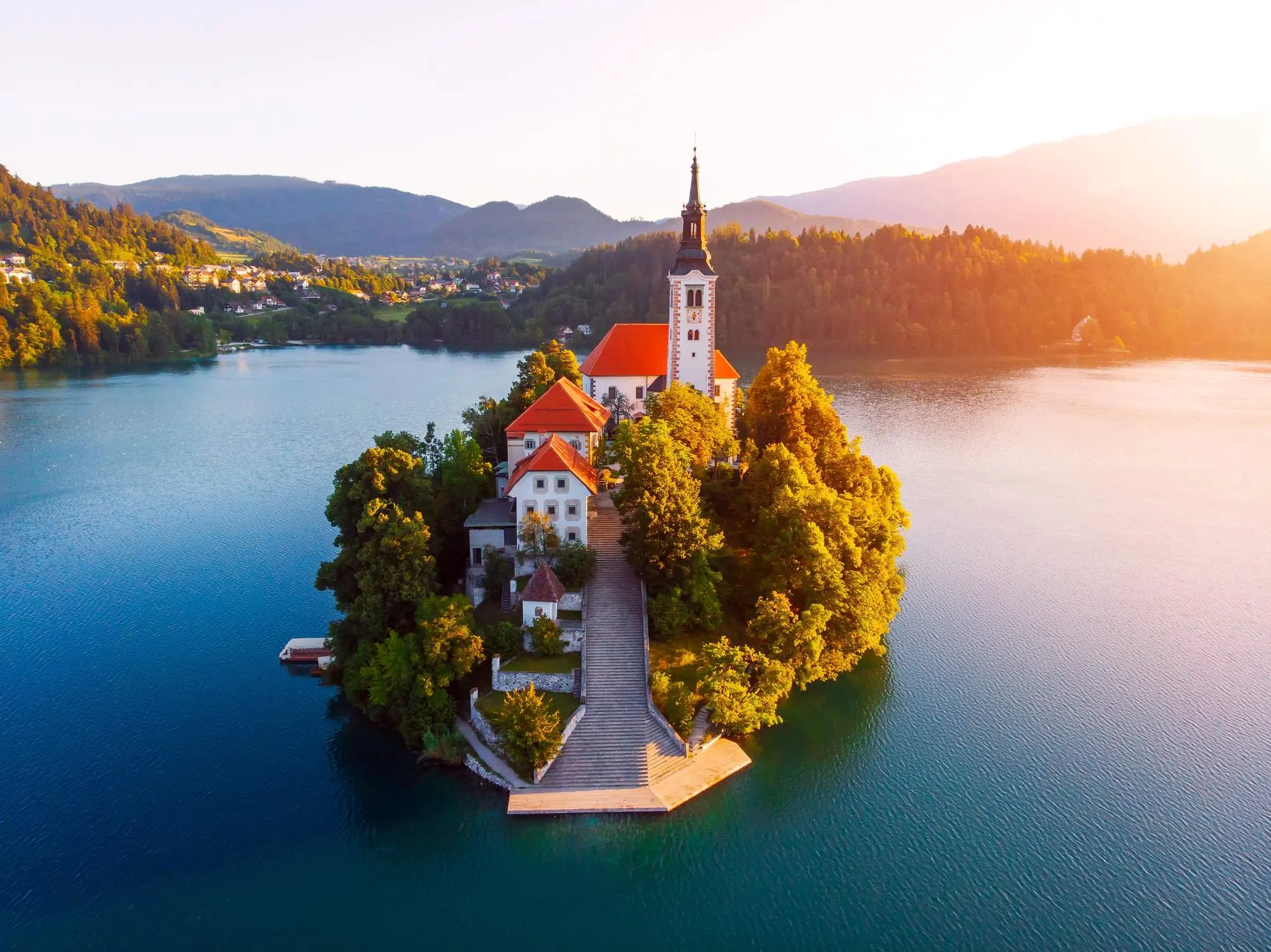
How did the church in Bled become a symbol of Slovenia?
Almost everyone has heard of Bled, one of the most visited places in Slovenia, with a lake that captivates at first sight. Yet in its center lies a small island with a church that is often spoken of less than it deserves. This is the Church of the Assumption of Mary, a place that for centuries shaped the faith, art, and traditions of the region. That is why it is worth looking into its history and discovering how it grew from a modest chapel into a symbol that makes Bled recognizable throughout the world.
The church on the island today is a shrine and a symbol, but also a protected cultural monument of national importance. Its status has been confirmed by a state decree, and the entire island with the church preserves the layers of centuries in which the sanctuary transformed from a simple chapel into a baroque ensemble.
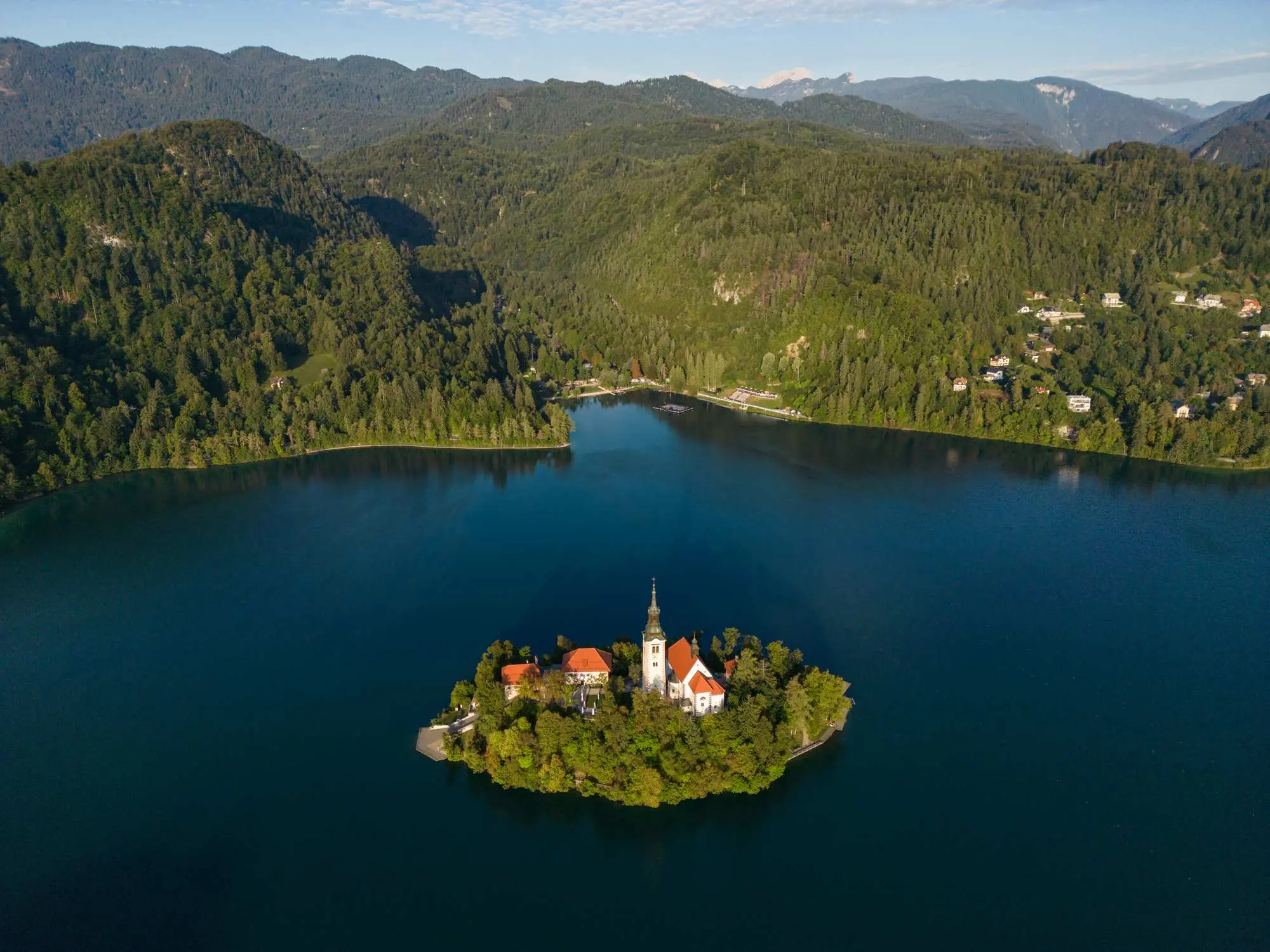
Church of the Assumption of Mary, Photo: Prace_snu Depositphotos
The earliest traces show that the place was sacred long before the present church. Archaeological research on the island uncovered an early Christian phase and a cemetery whose last grave was dated to the beginning of the eleventh century, oriented toward the first church. Scholars concluded that the island had even earlier been a site of source worship, which explains why the first wooden sanctuary was built here.
On the site of the wooden chapel rose a stone pre-Romanesque structure from the early period of Christianity’s spread, with parts of its foundations still preserved today. In the middle of the twelfth century, the island received its first masonry church, which was consecrated in 1142 by the Patriarch of Aquileia, Pellegrino. This made the island an important sacred center in the region.
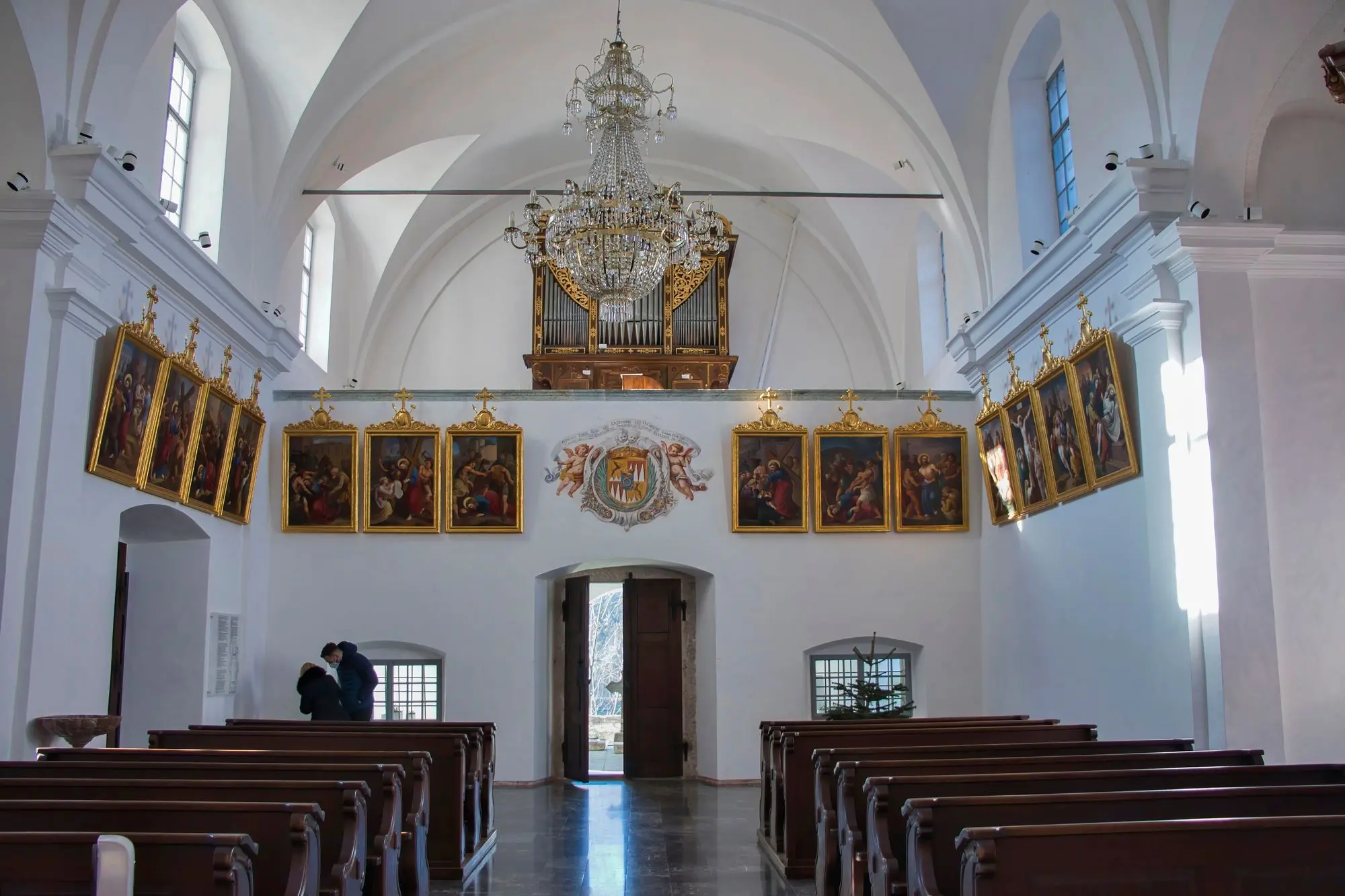
Church of the Assumption of Mary, Photo: kariahlers Depositphotos
In the fifteenth century, the church was renovated in Gothic style, and in 1465 it was consecrated by the first bishop of Ljubljana, Count Žiga Lamberg. Powerful earthquakes in 1511 and 1622 severely damaged it, but reconstruction gave the church the appearance we still recognize today. By the end of the seventeenth century, the building had been completely shaped in Baroque style, which left the strongest mark on its current identity.
The Baroque interior stands out through its altars and artistic furnishings. The main gilded altar, completed in 1747, features a statue of the Virgin Mary with Child in the central niche, while on the sides are depictions of Emperor Henry II and his wife Cunigunde, rulers connected to the history of Bled. Three stone side altars were made in 1699 by the Ljubljana sculptor Mihael Kuš, and the organ, dating from 1639, is the work of Paul Rottemburger, a master from Klagenfurt. Gothic frescoes have also been preserved in the presbytery, bearing witness to an older layer of the church.
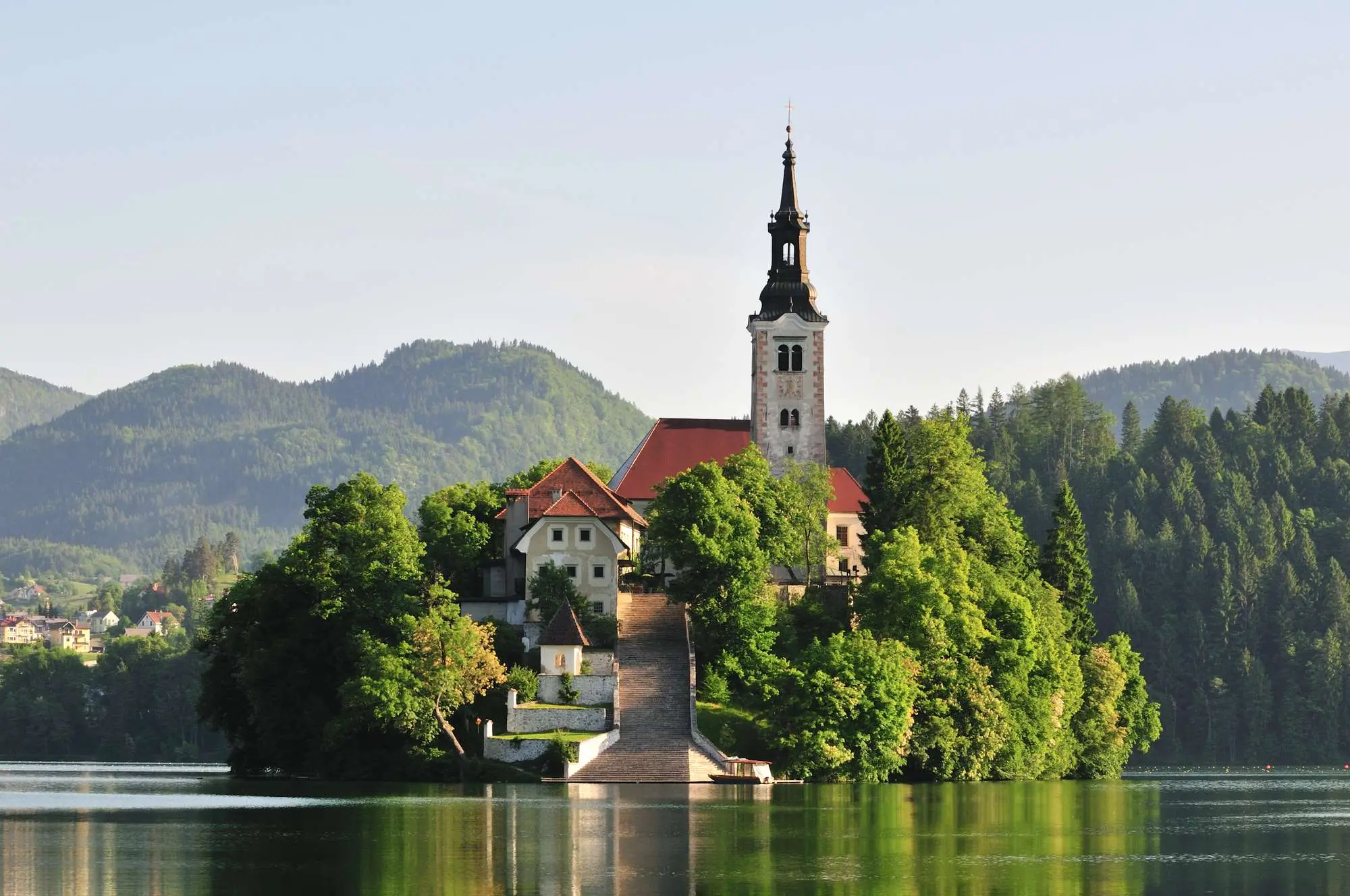
Church of the Assumption of Mary, Photo: ungorf Depositphotos
The church’s bell tower, 54 meters high, was built in the fifteenth century and has been restored several times, including after a lightning strike in 1688. Leading up to it is a monumental Baroque staircase with ninety-nine stone steps, which gives the island a solemn appearance and the impression of a processional approach.
A special place is held by the wishing bell, cast in Padua in 1534. According to tradition, whoever pulls the rope and rings it may make a wish that will come true. The legend of the sunken bell, passed down through generations, has further reinforced this practice, which continues to attract visitors today.
The Church of the Assumption of Mary is not just a picture-postcard motif, but a place where archaeological finds, historical events, and artistic achievements intertwine. From the first chapels and graves, through the Romanesque and Gothic phases, to the Baroque ensemble, it represents a living monument of faith and culture. For visitors to Bled, it is an unmissable attraction, and for Slovenia, a lasting symbol of identity.

Zoran Kovačić
I do miracles right away, but the impossible still takes me a little time!

Leave a Reply