
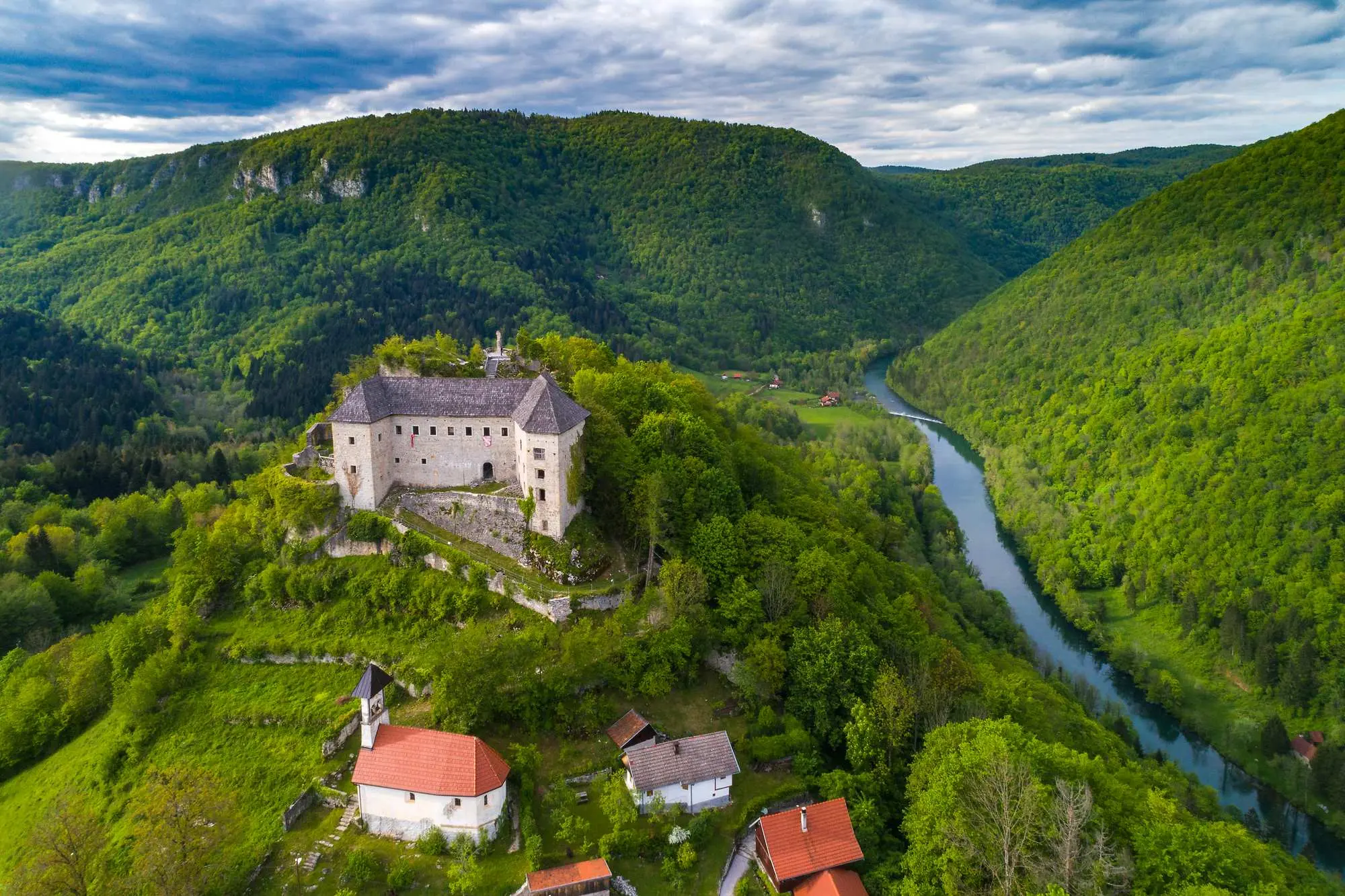
Do you know about Kostel Castle, the second-largest castle in Slovenia?
In the valley of the Kolpa River, on the very edge of Bela krajina, stands Kostel Castle, one of the most impressive medieval fortresses in Slovenia. Its walls, set high above the river, have guarded the border for centuries and protected the people from invading armies. The name Kostel comes from the Latin word castellum, meaning fortress, and in German it was known as Graffenwarth, which translates as “the count’s guard,” a name that perfectly describes its historical role.
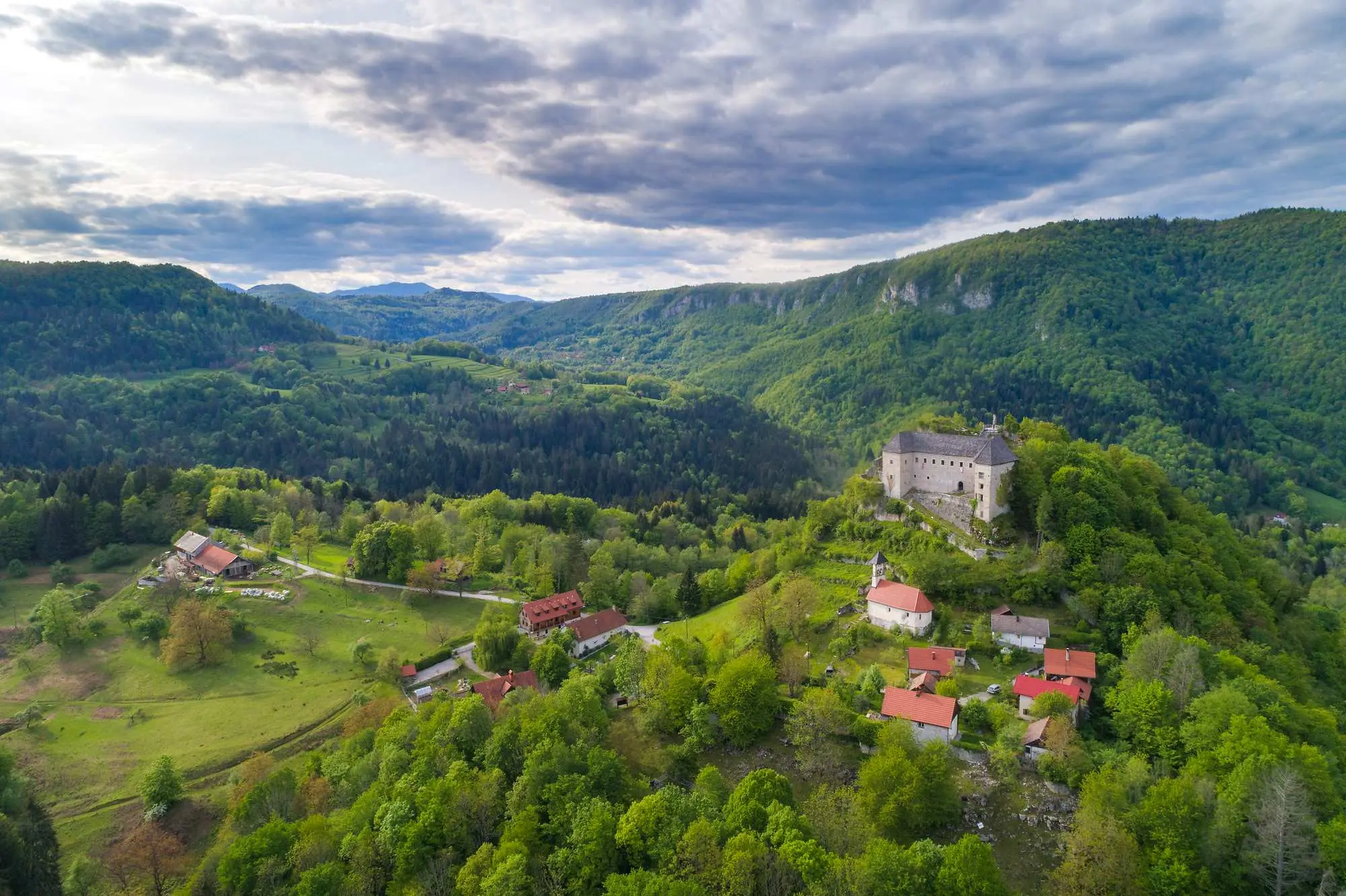
Kastel Castle, Photo: Jošt Gantar, www.slovenia.info
Strategically built on a hill above the Kolpa Valley, Kostel Castle has for more than seven centuries served as a refuge for many noble families, from the Counts of Ortenburg to the Langenmantls. The first written record of the castle dates back to the year 1336, a detail that curiously coincides with the modern postal code of the settlement, 1336 Kostel. Its size and commanding position made it nearly impregnable and an essential stronghold in the defense of Bela krajina against Ottoman incursions.
The renowned historian and polymath Janez Vajkard Valvasor, in the seventeenth century, included Kostel in his monumental work Topography of the Duchy of Carniola, published in 1679. His engraving depicts a vast complex of towers, ramparts, and a marketplace enclosed by stone walls. At that time, Kostel Castle, along with Celje Castle, was the second largest in Slovenia, and it remains the only castle in the country where people still live within the former fortified walls.
Throughout history, Kostel has been the stage for many battles and stories. One of the best-known legends tells of the trick played on the Turks, by which the defenders managed to save the castle from siege, while another, darker tale speaks of Mikula’s Devil, a spirit said to wander the surrounding forests to this day. These stories are still brought to life by local guides who pass on the atmosphere and courage of the place to visitors.
Kostel’s fate changed dramatically in 1809 when the castle was destroyed during the Napoleonic campaigns. Centuries of power and glory turned into silence and ruin. Yet, by the end of the twentieth century, partial restoration began, and some of the walls and towers were reopened to the public.
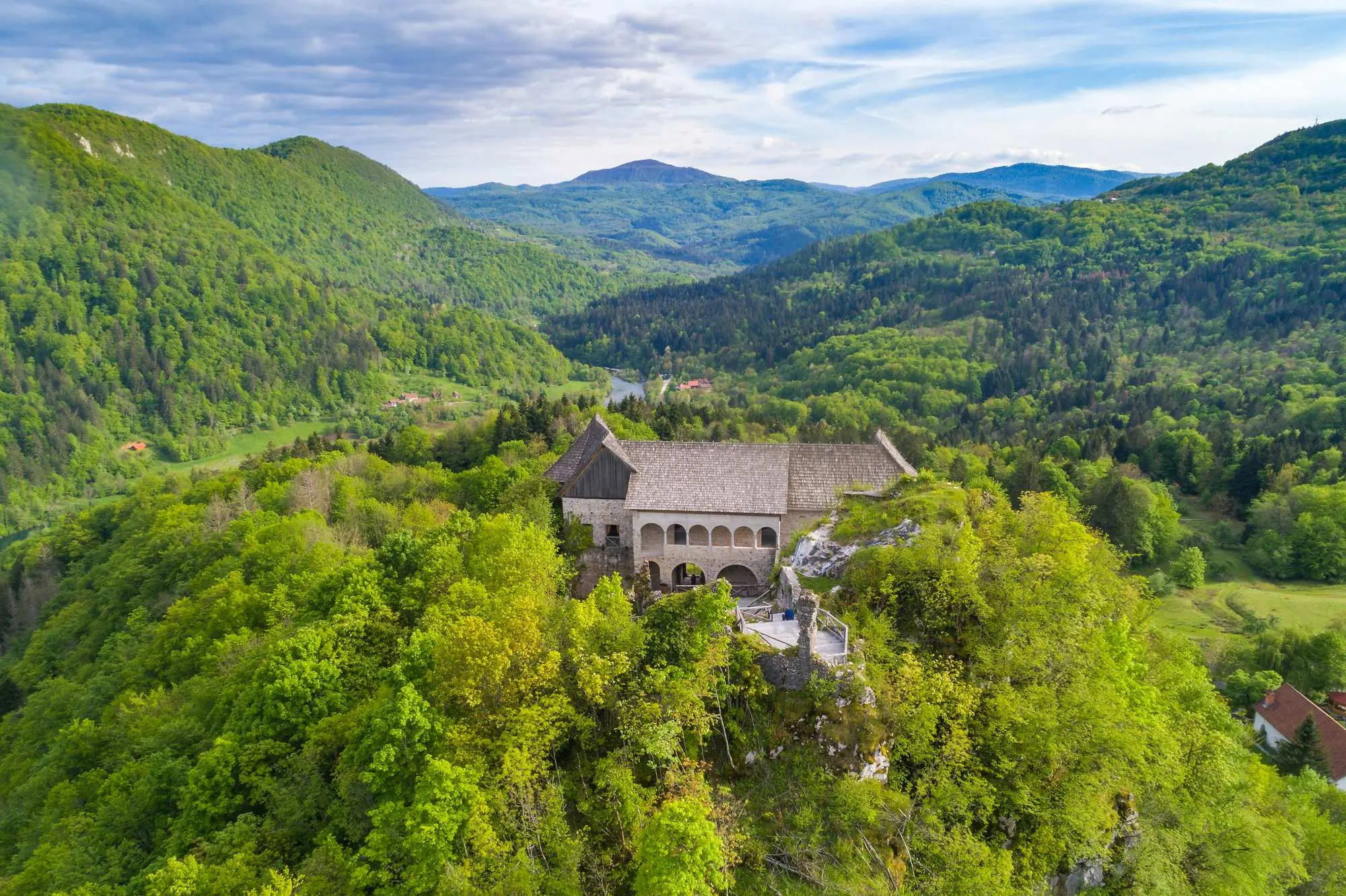
Kastel Castle, Photo: Jošt Gantar, www.slovenia.info
Today, the castle offers stunning views of the Kolpa Valley, endless forests, and villages blending seamlessly with nature. Within its complex, cultural events, exhibitions, and interactive activities take place, including a popular escape game that allows visitors to become part of a medieval story briefly. At the top of the hill, a peaceful picnic area awaits, while the old stone walls are filled with new life, connecting the past to the present.
A special part of the castle houses the ethnological collection Traces of Time, opened in 2020, which brings together around 160 artifacts showcasing the everyday life of the people of Bela krajina through the centuries. It reflects a time when life was modest but deeply connected with nature and community. Kostel Castle is more than just a historical monument.

Zoran Kovačić
I do miracles right away, but the impossible still takes me a little time!
Leave a Reply