
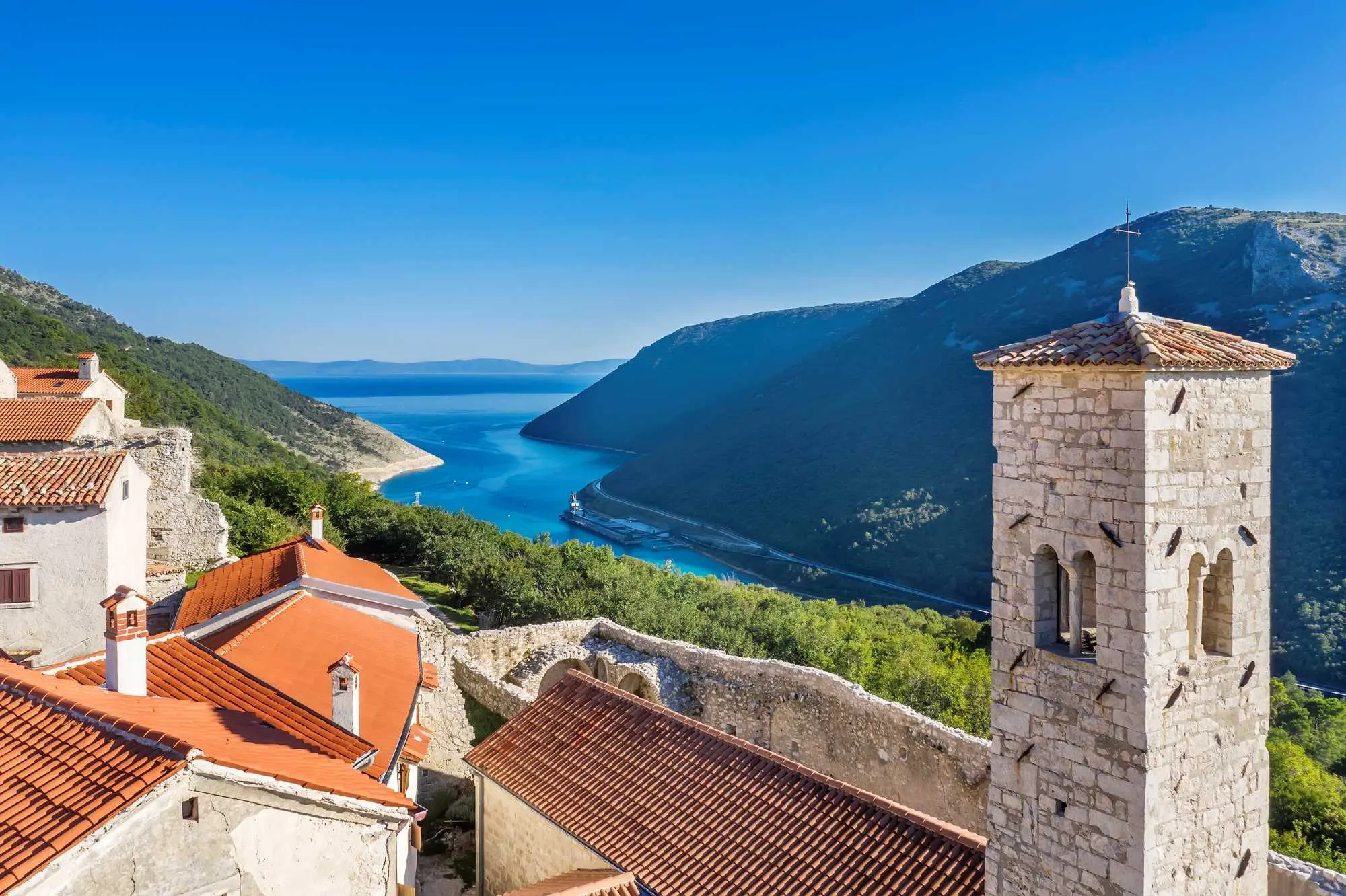
Plomin is a true guardian of the Glagolitic alphabet, hiding a thousand-year-old history
On the eastern coast of Istria, on the slopes of Mount Učka above Plomin Bay, lies the village of Plomin, one of the oldest continuously inhabited places in Istria. Although it has only about a hundred residents today, its stone walls hide a history that spans more than three thousand years.
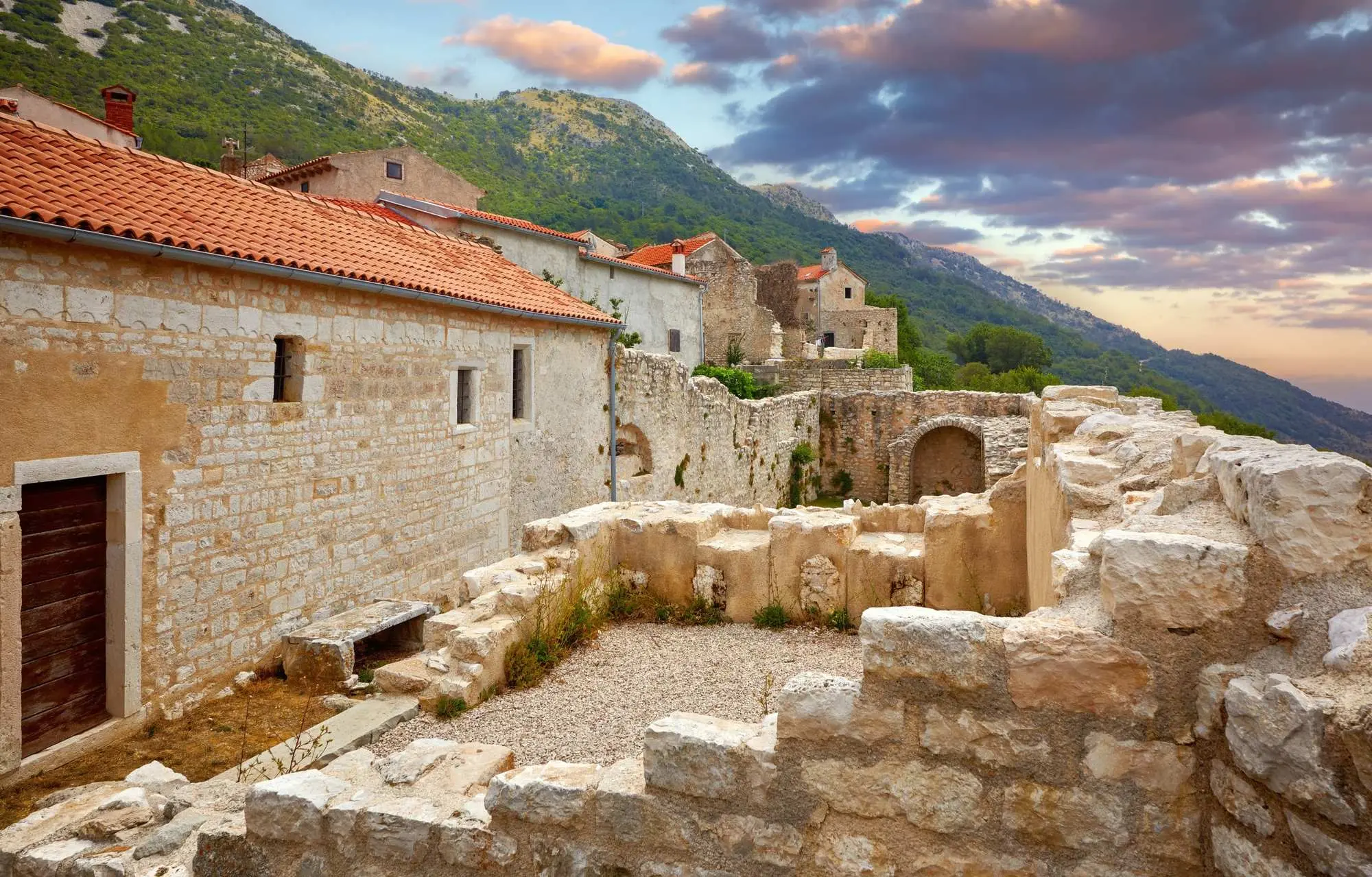
Plomin Photo: yasonya Depositphotos
Plomin was founded on the site of a prehistoric hillfort from the 2nd millennium BC, which in the 1st millennium BC was inhabited by the Liburnians, an Illyrian people from the eastern coast of Istria. During the Roman era, it was known as Phlanona, serving as an important maritime and trading center and marking the westernmost point of the Roman province of Dalmatia. Its ancient significance is confirmed by the writings of the Greek geographer Artemidorus of Ephesus, who mentioned it around 100 BC.
After the fall of the Roman Empire, Plomin came under the rule of the Ostrogoths, Byzantines, Lombards, and from 788 under the Franks. In the Middle Ages, it became a fortified town, surrounded by walls from the 13th and 14th centuries and Renaissance defensive ramparts from the 16th and 17th centuries. During Venetian rule, it was the most exposed Venetian stronghold on the eastern Istrian coast, often damaged in conflicts between Venice and Austria.
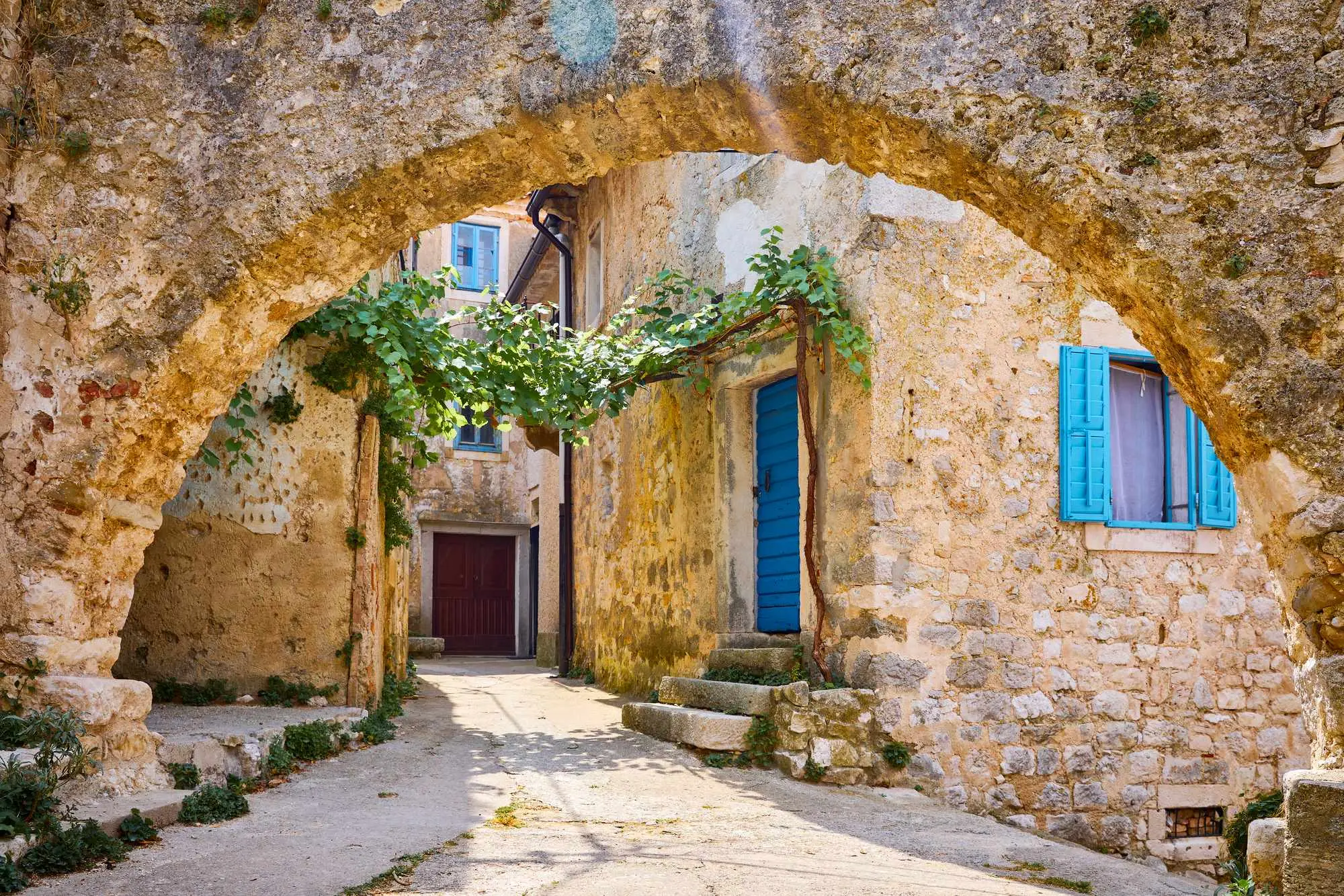
Plomin Photo: yasonya Depositphotos
At the heart of the village stands the Church of St. George the Elder, built in the 11th century, which preserves the Plomin Tablet. The stone relief depicts Silvanus, the ancient deity and protector of nature, later inscribed with a Glagolitic text in rounded script. This monument confirms the early presence of Slavs and Glagolitic literacy in Istria and is considered one of the earliest records of the Croatian language. A cast of the tablet can be seen on the church facade, while the original is kept in Zagreb.
Nearby stands the Parish Church of the Blessed Virgin Mary, dating from the 15th century, which houses a Gothic crucifix, the fresco of Our Lady of the Milk, wooden statues of saints, and Renaissance choir stalls. On its walls are frescoes painted by Albert Costanzo in 1475.
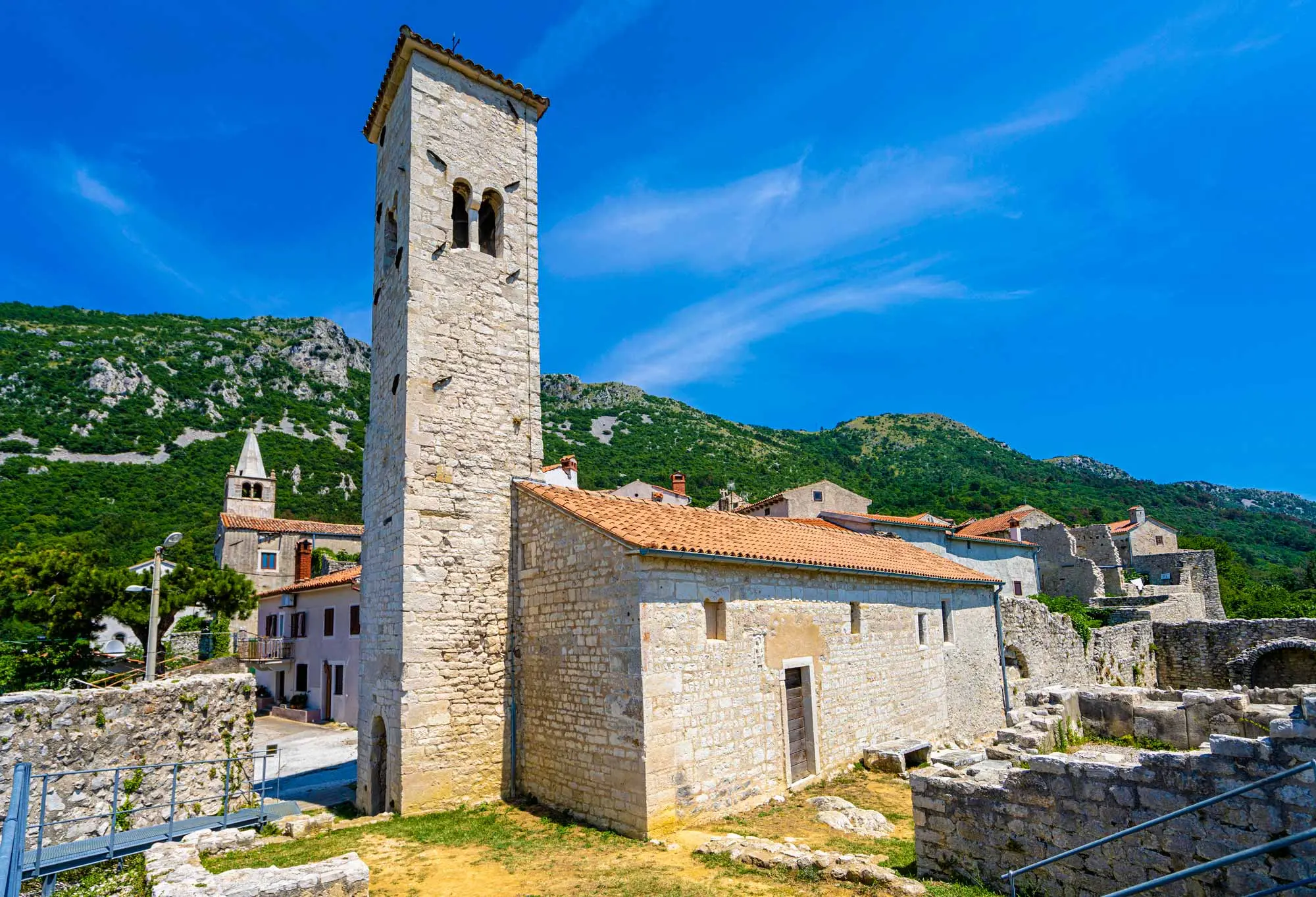
Church of St. George – Plomin Photo: sergiodv Depositphotos
At the entrance to the village, the northern town gate is still preserved, while the central square is dominated by the communal palace La Tura. From there, narrow stone streets branch out between houses built directly into the rock, giving Plomin its distinctive appearance. Each path leads to a viewpoint, wall, or church, forming a network that has retained its medieval layout to this day.
Throughout history, Plomin was part of the Venetian Republic, then Austria-Hungary, and between the world wars under fascist Italy. It reached the end of the Second World War almost destroyed, yet it managed to preserve its identity and its layered historical character that remains visible at every turn.
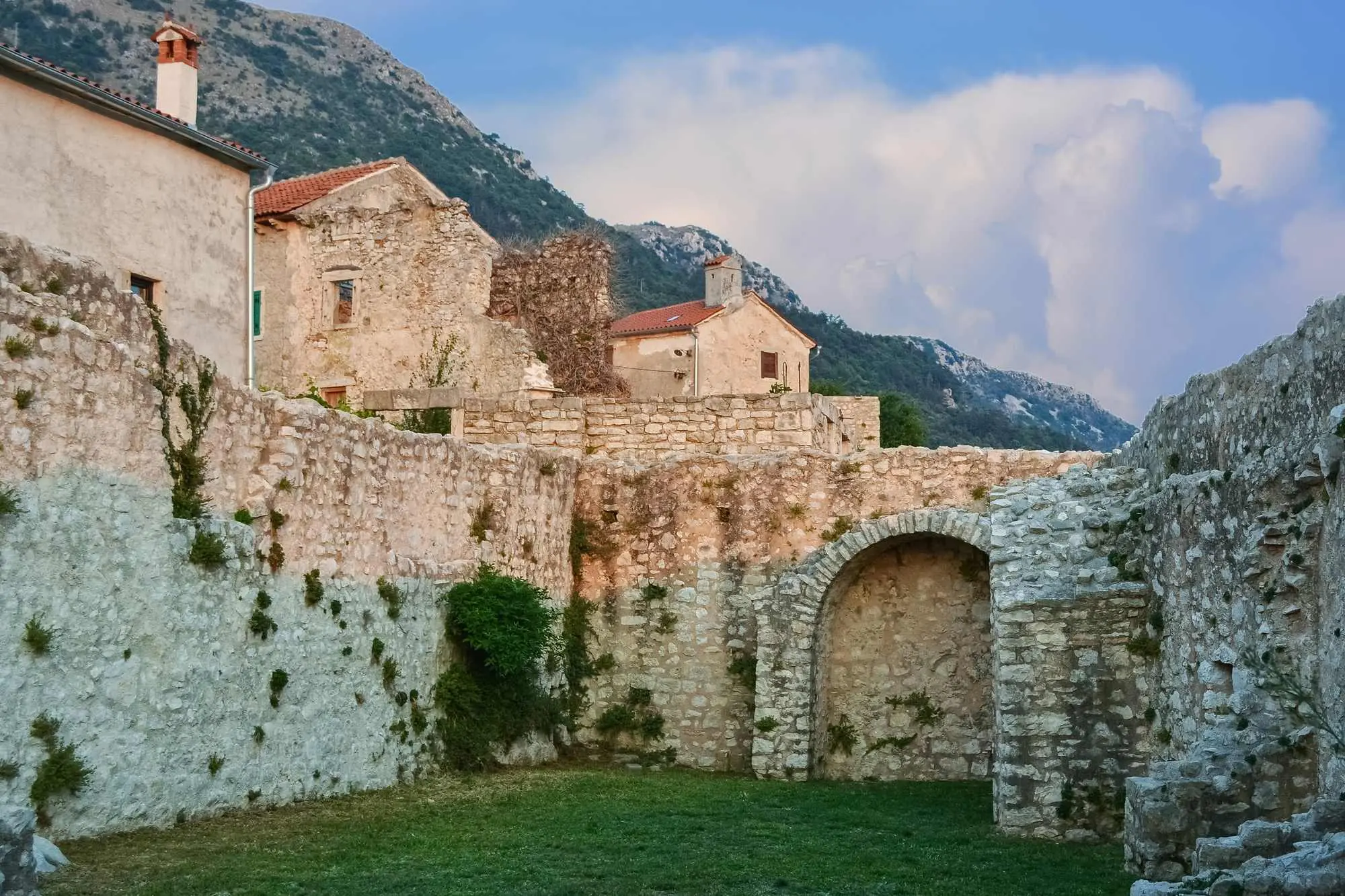
Plomin Photo: dotsent Depositphotos
Plomin was also a center of Glagolitic liturgy until the 19th century, as well as a meeting place for sailors and shipowners. Thanks to its rich cultural heritage, stone architecture, and the panoramic view that stretches from the hilltop across Cres, Lošinj, and Rijeka, this small Istrian village is increasingly attracting visitors seeking authentic historical sites beyond the usual tourist routes.
Walk through Plomin’s narrow stone streets and discover a village that has shaped the Istrian identity for centuries, quietly, steadfastly, and with the dignity of the stone from which it was built.
We explored Istria! Tour around Momjan, Oprtalj and Grožnjan

Sara Sedić
I plan to live in the moment :)

Leave a Reply