
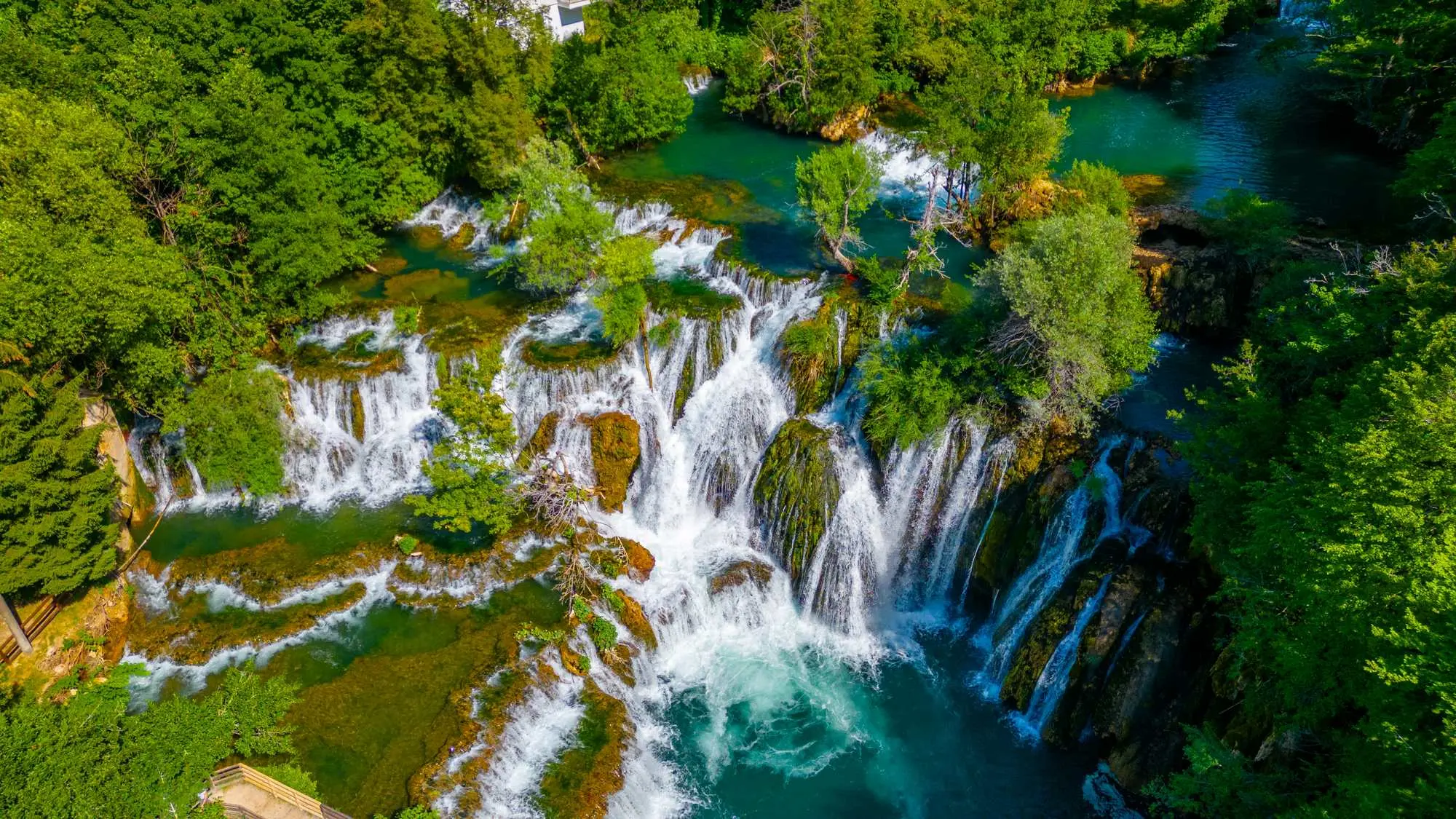
What does Una National Park hide beyond its most famous waterfalls?
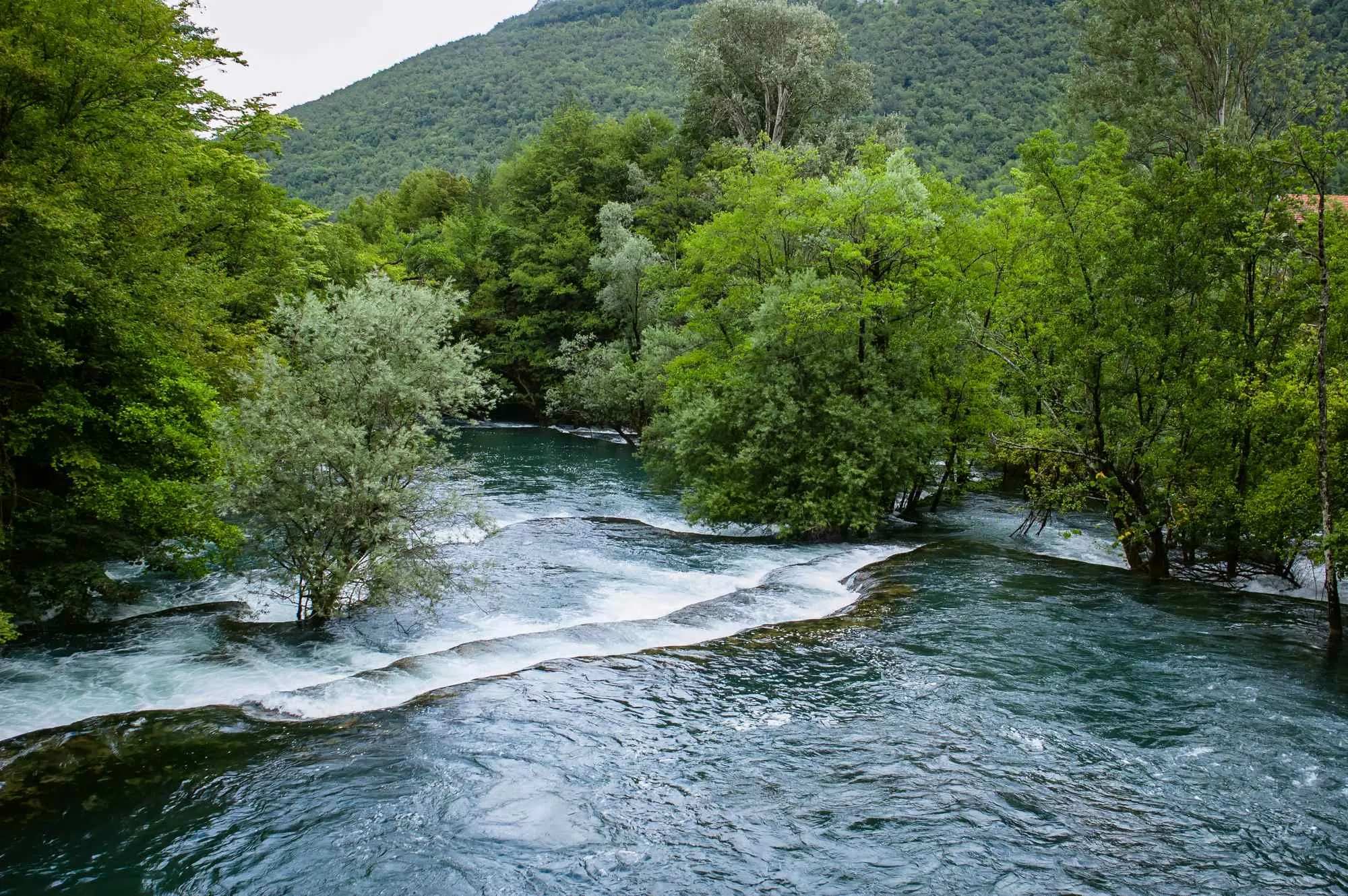
Within the park itself lies the Una River, the main star of the entire story and the foundation for which this area has been protected as Una National Park. Its exceptional purity, strong flow, and constant formation of travertine barriers have shaped waterfalls, rapids, and canyons that today define the landscape of western Bosnia and Herzegovina. According to tradition, the name Una originates from the Roman period and means one or unique, which is often associated with its beauty and clarity.
Una National Park covers almost twenty thousand hectares in the western part of the country, in the wider area around Bihać. It includes the valley sections of the Una River, its tributaries Unac, Sana, Krušnica, and Klokot, as well as broader forested and mountainous zones that together form a coherent natural whole. Diverse relief, karst springs, travertine formations, and well preserved aquatic systems make this area one of the most biologically valuable in the country.

Una Photo: Muhur Depositphotos
The area along the Una has been inhabited since prehistoric times and has played an important transport and strategic role throughout history. The Romans used the river valley as a natural route of movement, while during the medieval and Ottoman periods, fortified settlements and defensive systems were built along the Una. Traces of these periods are still visible today through the remains of towns, fortifications, and old urban structures that follow the course of the river.
One of the most impressive natural attractions in the park is Štrbački buk, the largest and most powerful waterfall on the Una River. About twenty-five metres high, Štrbački buk reveals the full strength of the river as it plunges in a wide cascade over travertine rocks. Surrounded by a steep canyon, the waterfall can be experienced from multiple perspectives thanks to arranged trails and viewpoints.
Una Photo: iiokua Depositphotos
In Martin Brod lies the largest and most complex system of waterfalls and travertine cascades in Una National Park. It is here that the Una receives its tributary Unac, and their confluence creates a complex network of waterfalls, rapids, and channels that flow through the settlement itself and its surroundings. Wooden paths, small bridges, and walkways allow movement along the water at close range, while the constant flow and rich fish population make this area one of the most recognisable parts of the park. Martin Brod is known for walking along the water and the possibility of fishing.
Kulen Vakuf is the largest settlement within the boundaries of the park and one of the historically most important places along the Una. Located in a large bend of the river, it developed as a transport and defensive centre, as evidenced by the remains of medieval and Ottoman fortresses that dominate the area above the settlement. The wider course of the Una and pronounced meanders create a more open landscape here, and today Kulen Vakuf serves as a natural link between cultural heritage and time spent by the river.
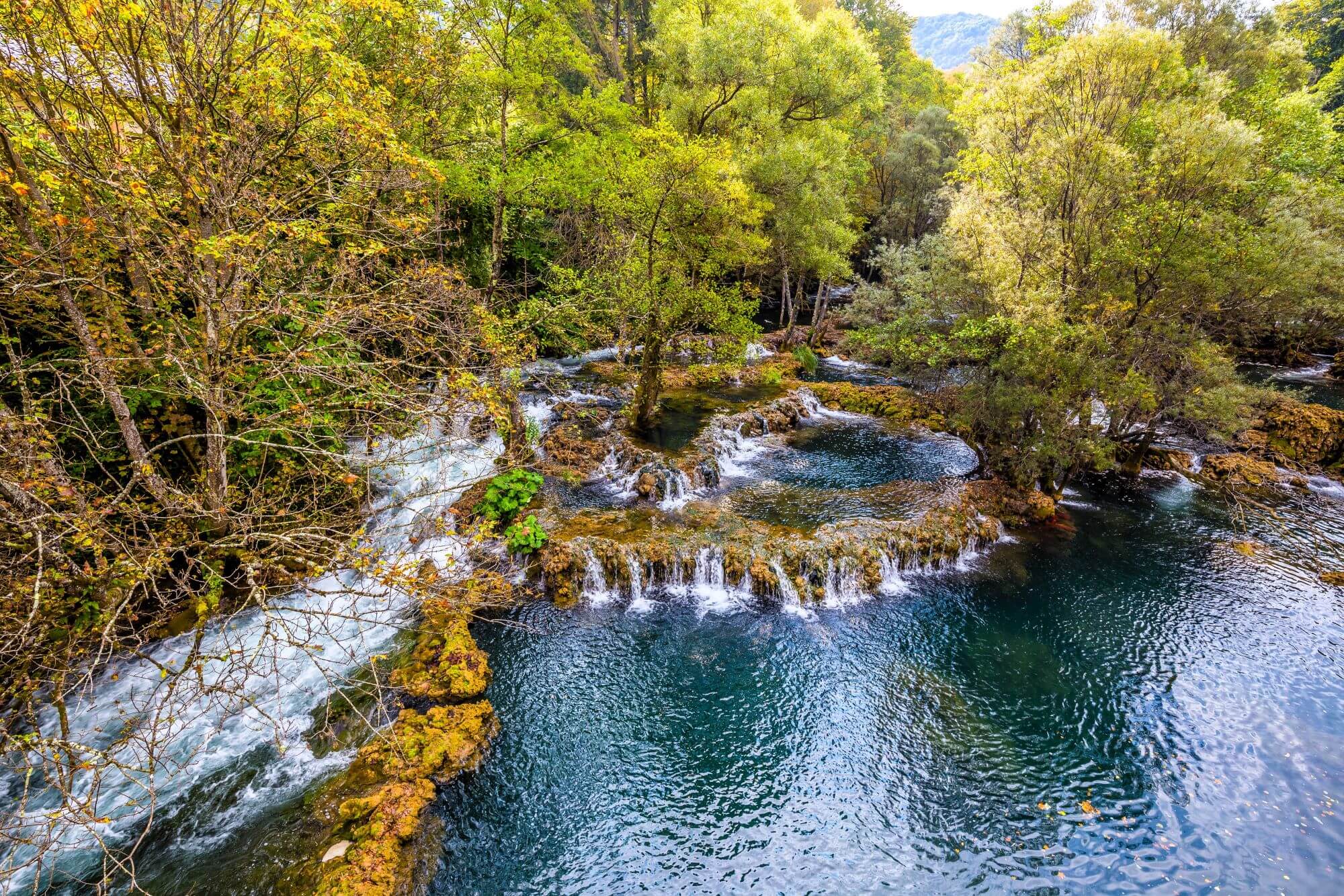
Travertine barriers on the Una River near Martin Brod, Photo: Zdeněk Matyáš, Dreamstime
Lohovo is one of the best-known entrance areas to the national park and a place with several easily accessible natural attractions. In its surroundings are Dvoslap and Troslap, smaller but highly picturesque waterfalls on the Una that can be reached on foot. This area is characterised by calmer sections of the river, exceptional water clarity, and arranged access points, making it particularly suitable for rafting, kayaking, and spending time by the water.
In Orašac, the natural environment of the Una intertwines with local life and tradition. The village can boast an abundance of homemade products and small local producers, adding an extra dimension to the visit. Above the settlement lie the remains of a medieval fortress that confirms the long-standing strategic importance of this area. Orašac is often a natural stop on the way to Štrbački buk, a place where landscape, history, and everyday life meet.
The flora and fauna of Una National Park reflect the preservation of natural conditions and the exceptional quality of the water. A large number of plant species grow within the park, including rare and endemic ones such as the Una bellflower and the Bosnian iris, while forested and mountainous areas form a rich green belt along the river. Wildlife includes numerous species of fish, birds, and mammals, and the presence of trout and other sensitive fish species is a direct indicator of the cleanliness of the Una.
Staying in the park offers a wide range of experiences. From walking and cycling along the river, through rafting and kayaking, to quieter moments by the riverbank or in the shade of forests, the park allows direct contact with nature without the need for major interventions in the landscape.
Una National Park represents a combination of a powerful river, diverse nature, rich history, and authentic local communities. It is a space not experienced from a single point or a single view, but through movement along the river, time spent in its settlements, and gradual discovery of a landscape that constantly changes yet remains equally striking.

Ahmed Taha
Peace, love and music! ☮️

Comments
Fedrick Julian
I think this is one of the most vital info for me. And i’m glad reading your article.
But want to remark on few general things, The site style is great, the articles is really great : D.
Good job, cheers

Shulerlin
Your way of telling all in this piece of writing is in fact fastidious, every one be able to easily be
aware of it, Thanks a lot.