
Why is Procida one of the most interesting islands in the Gulf of Naples?
Italy stands out for several beautiful places that tourists visit in large numbers year after year, but at the same time, there are still destinations that have managed to retain balance and character. In one of our earlier features on the most beautiful coastal villages in Italy that have not yet been overwhelmed by tourism, we also mentioned Procida. It is a small island area that does not rely on spectacle, yet very quickly shows why it is worth including in a travel plan.
Procida Photo: sepavone Depositphotos
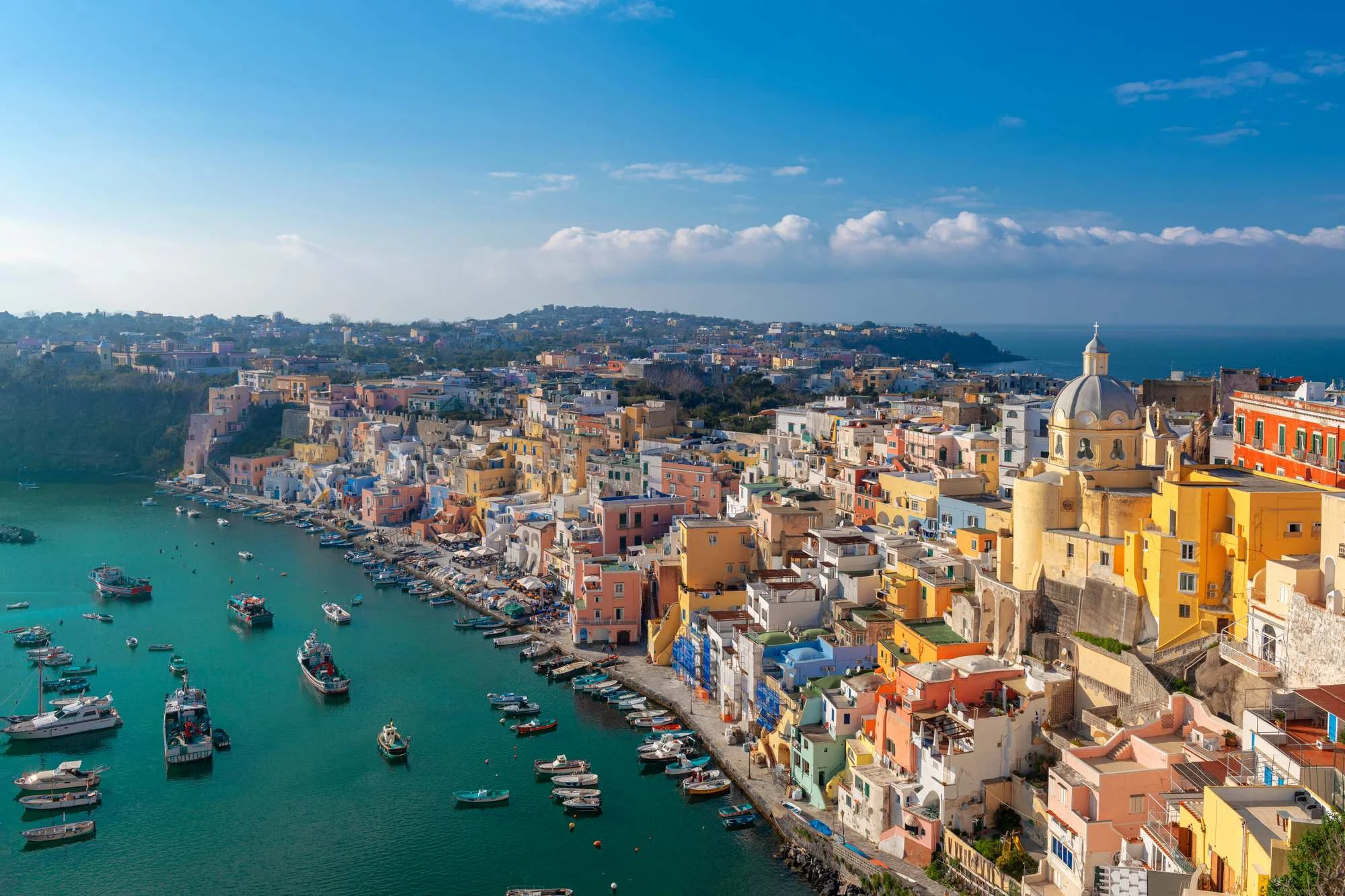
Procida is the smallest inhabited island in the Bay of Naples, located between Ischia and Cape Miseno, with an area of around four square kilometres. It is of volcanic origin, with gentle terrain, an irregular coastline, and several easily accessible beaches. The island is connected to Naples and nearby ports by regular ferry services, and due to traffic restrictions for non-residents, most of the area can be explored on foot or by local transport, which further simplifies a stay on the island.
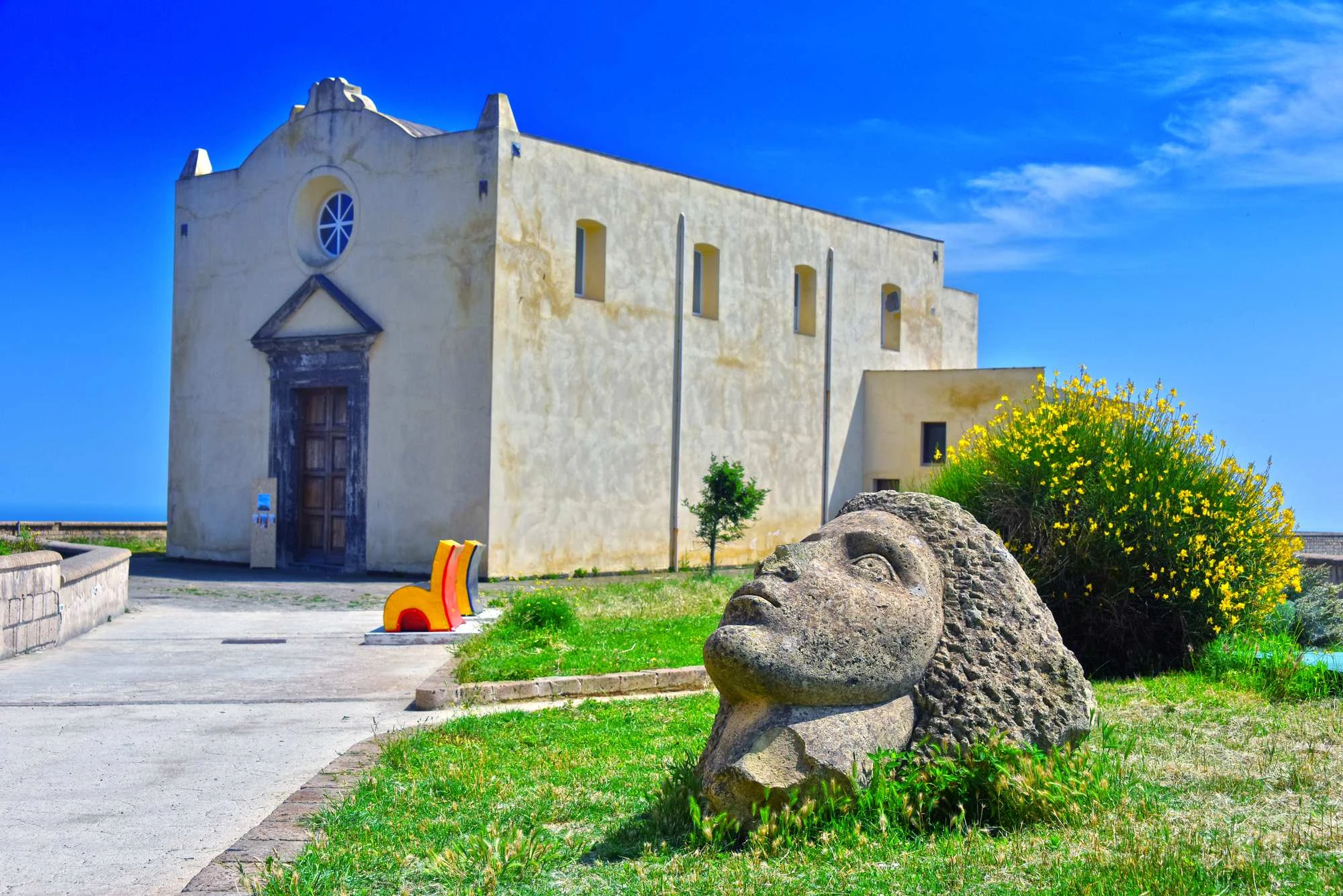
The historical development of Procida is clearly reflected in its structure. The oldest part of the island is Terra Murata, located at the highest point and originally formed as a defensive settlement. Instead of a classic fortress, security was achieved here through compact construction and an elevated position above the coast. Within Terra Murata are Palace Avalos, a massive sixteenth-century building that also served as a prison at times, and the Abbey of St. Michael the Archangel, one of the island’s most important religious and cultural centres. The Monastery of Santa Margherita Nuova is also located here. Together they form Procida’s main historical attraction and the area with the best views over the bay.
Monastery of Santa Margherita Nuova Procida Photo: monticello Depositphotos
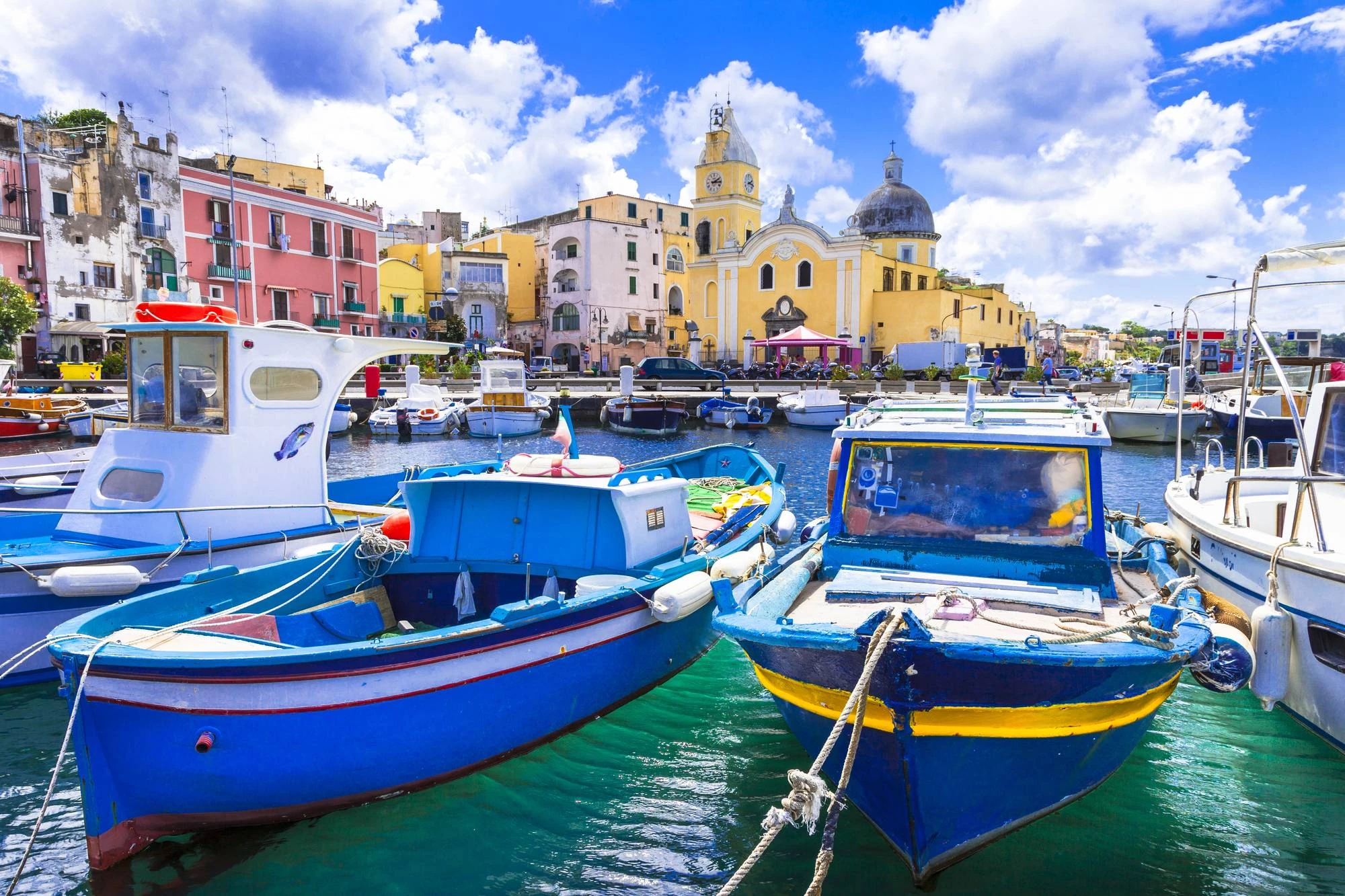
The lower parts of the island developed around its harbours. Marina Grande is the main gateway to the island and the centre of everyday life, while Marina Corricella is Procida’s most recognisable visual symbol. It is an active fishing harbour with tightly packed houses painted in strong colours, which were not intended as decoration but as a practical way for fishermen to recognise their homes when returning from the sea. The southern part of the island, Marina Chiaiolella, is more open and more developed for tourism, with a long sandy beach and most of the accommodation facilities.
Beaches are one of the key reasons to visit. Chiaiolella is the longest and most accessible, Chiaia is located closer to the centre, while Pozzo Vecchio, also known for being a filming location for the movie Il Postino, is quieter and distinctive for its dark volcanic sand. Nearby is the small island of Vivara, a protected nature reserve connected by a bridge, which further highlights the natural value of this area.
Easter procession Photo: fs.fotos Depositphotos
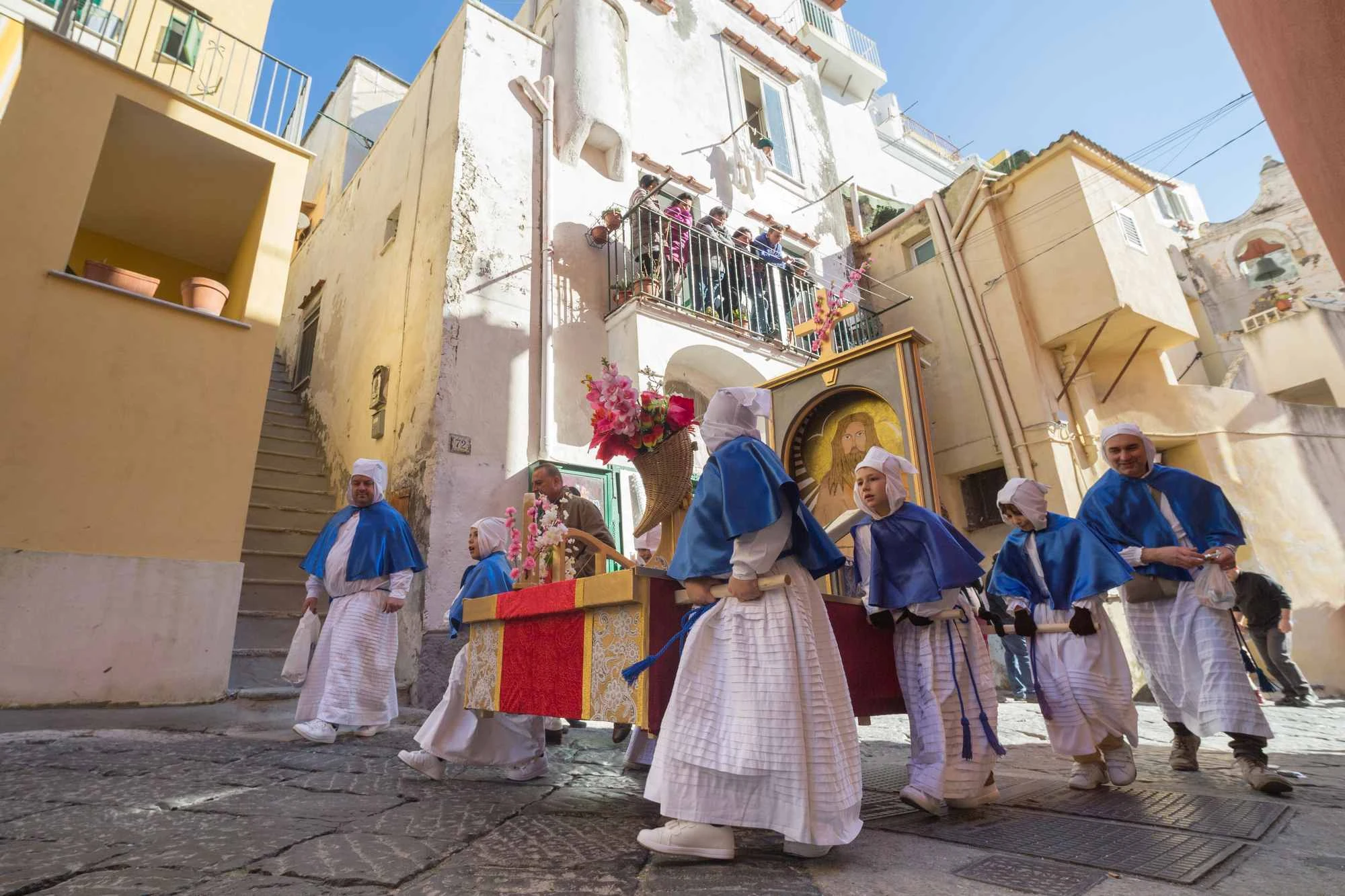
Throughout its history, Procida has remained strongly connected to the sea, which is also reflected in its local cuisine. It is based on fish, shellfish, vegetables, and lemons, along with several traditional dishes and desserts that have retained a local character. A special place in local life is held by the Easter processions, especially the Misteri procession on Good Friday, which has been held for centuries and brings together a large part of the island’s community. In 2022, the island was named Italy’s Capital of Culture, becoming the first island to receive this title, further confirming its importance without turning it into a mass tourism destination.
This island is a good choice for travellers who want to experience authenticity, a compact space without long distances, and a destination that can be explored over a few days without the feeling of being subordinate to tourism.

Zoran Kovačić
I do miracles right away, but the impossible still takes me a little time!
Leave a Reply