
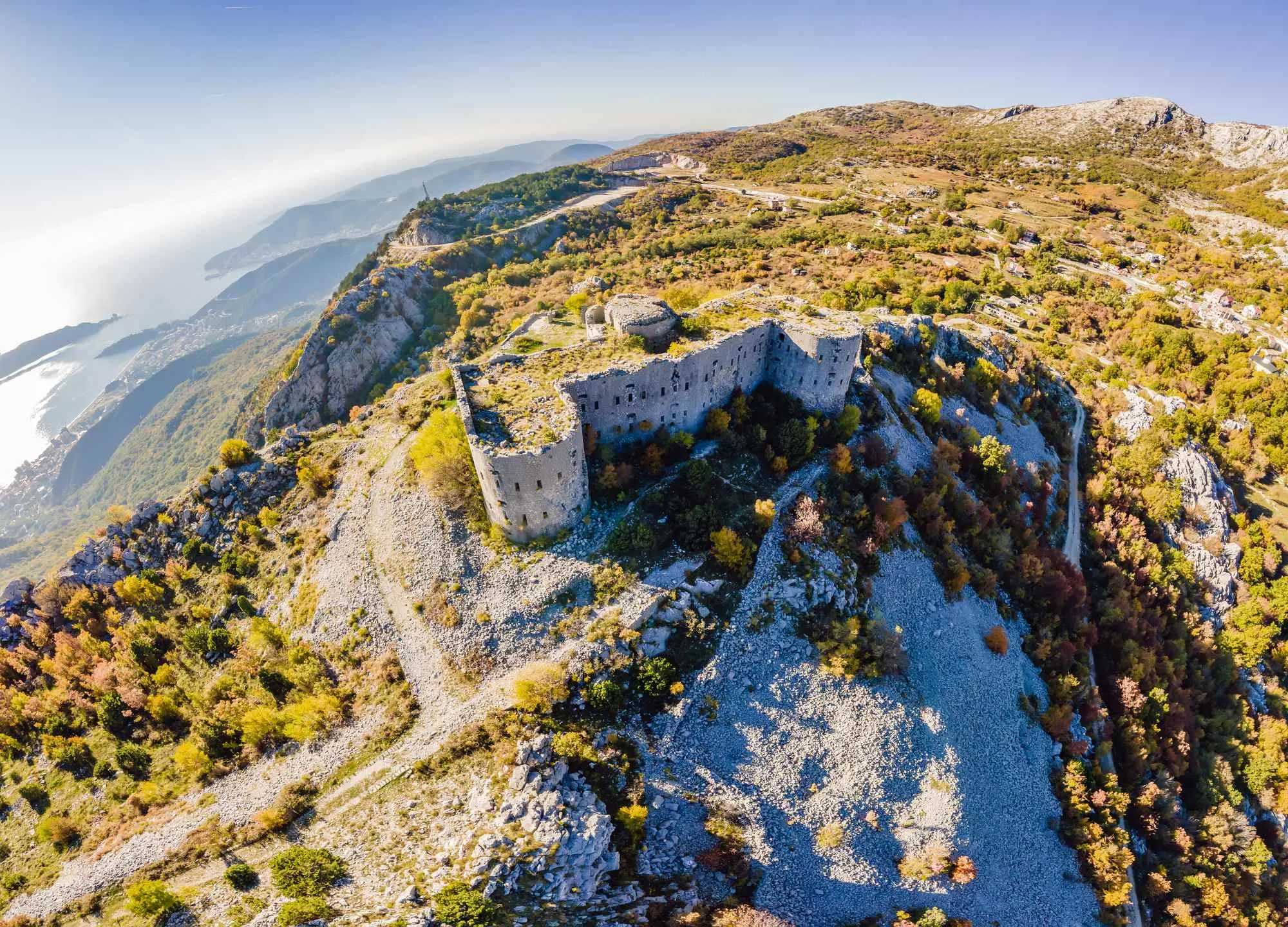
Ten of the most interesting fortresses in Montenegro that you must visit
In a land where mountains descend into the sea and stone preserves memories older than most nations, the fortresses of Montenegro stand as silent witnesses of time. From Illyrian settlements to Venetian bastions and Austro-Hungarian fortifications, each tells a story of struggle, pride, and the timeless beauty of stone.
These are, in our opinion, ten of the most fascinating fortresses worth visiting.
Kotor Fortress (San Giovanni)
High above the bay that has always lured conquerors, the Kotor Fortress, also known as San Giovanni, winds along the slopes like a crown of stone. Its walls, climbing high above the old town, reflect the centuries-old struggle between the sea and the mountains, while the view from the top over the Bay of Kotor takes your breath away.

Fortress of San Giovanni, Photo: fotokon, Depositphotos
Forte Mare, Herceg Novi
At the very entrance to the bay, Herceg Novi guards a fortress that has become one with its identity. Forte Mare, whose stone terraces descend to the sea, once protected the town from pirates and today hosts open-air film screenings and concerts. The view from its walls embraces the entire town and the mouth of the bay, while the sound of waves below creates the special rhythm of summer.
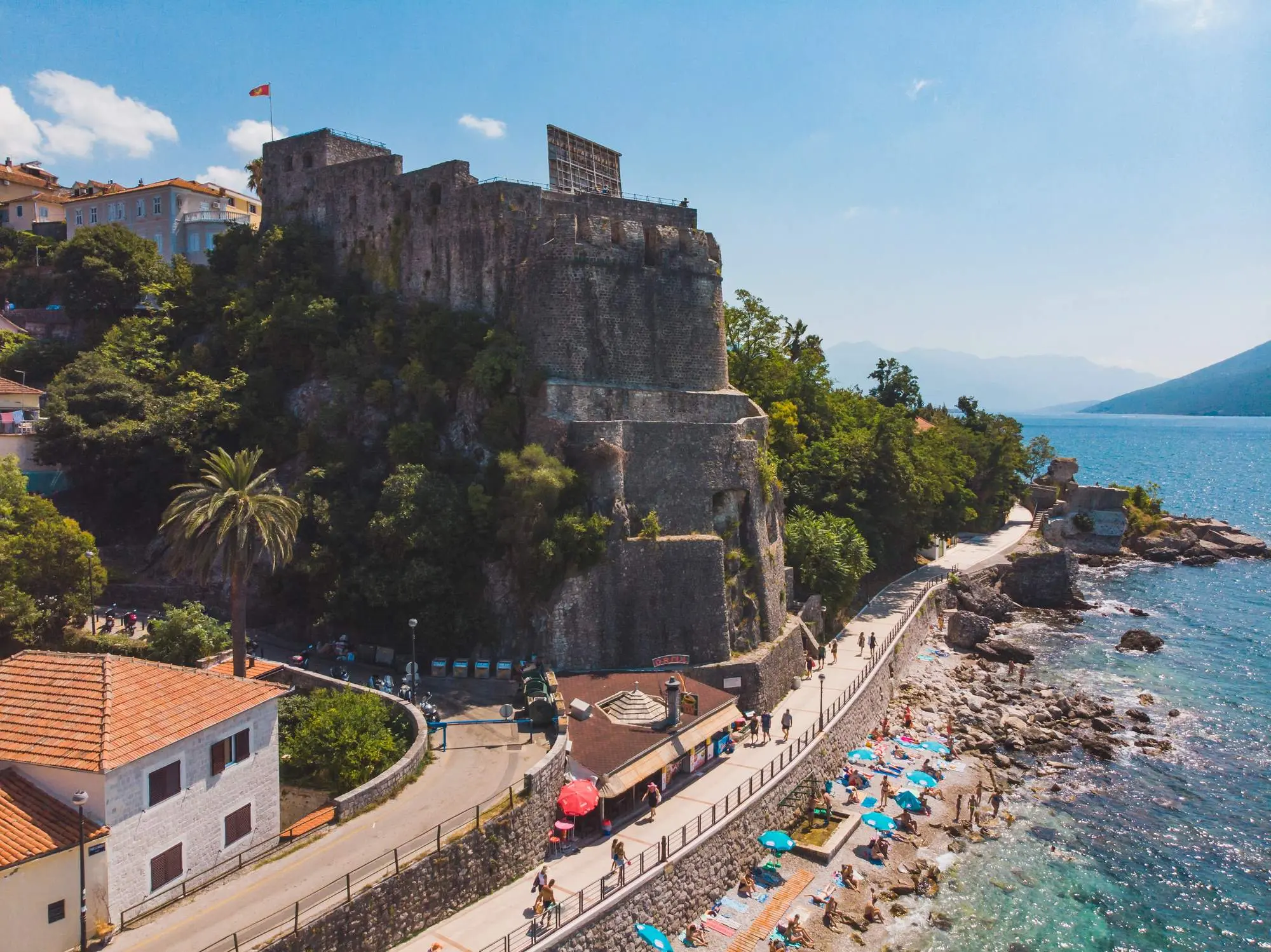
Forte Mare, Photo: Vera_Petrunina Depositphotos
Kanli Kula, Herceg Novi
Just a few steps higher stands Kanli Kula, a fortress that once served as a prison and is now a stage beneath the stars. Every crack in its walls tells of the eras that have passed, and the view from the top captures the red rooftops of the town and the endless blue of the sea. Today it is one of Montenegro’s most vibrant cultural landmarks.
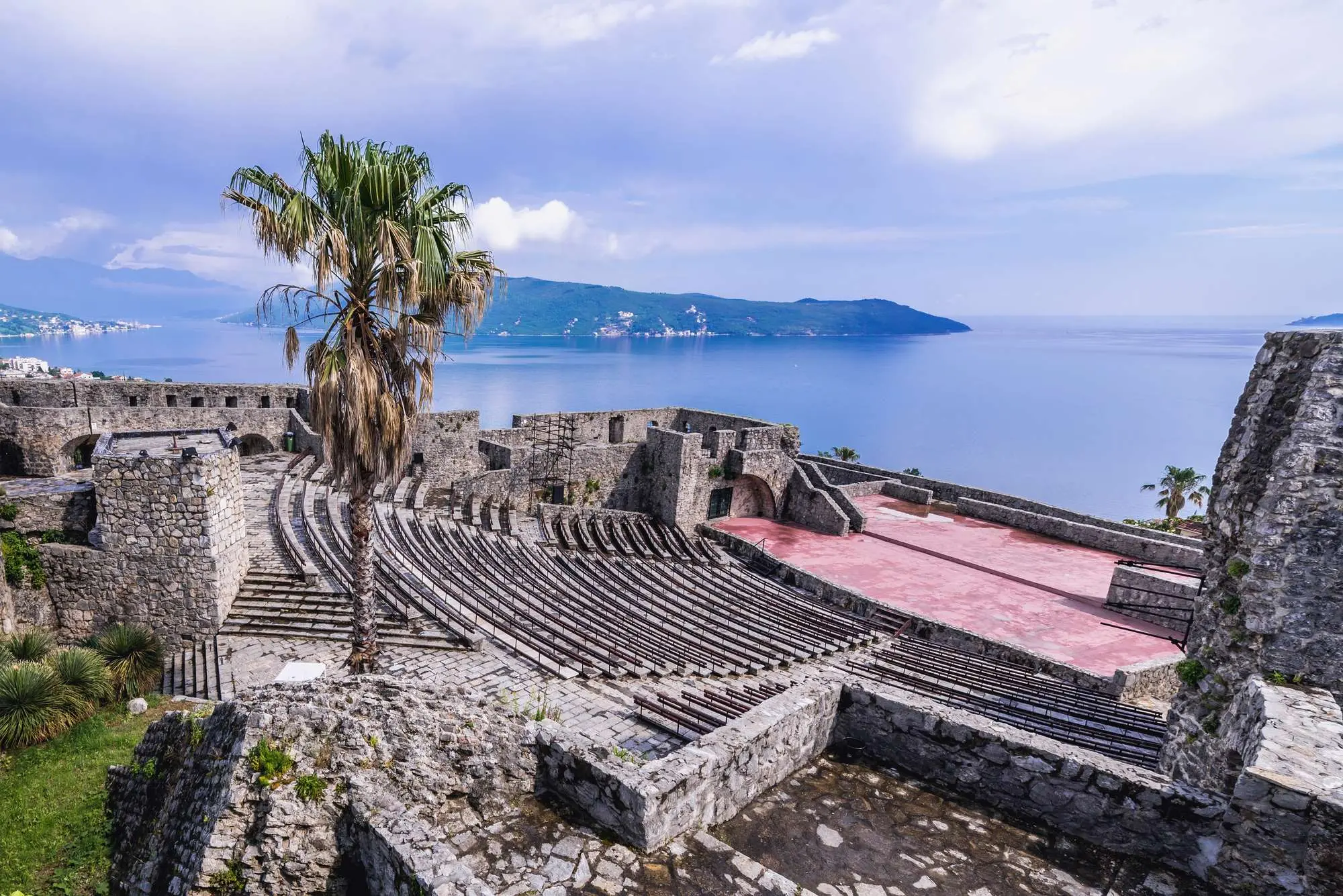
Kanli Kula, Photo: fotokon, Depositphotos
Mamula Fortress (Lastavica Island)
On the island of Lastavica, right at the entrance to the Bay of Kotor, stands Mamula, a circular Austro-Hungarian fortress from the 19th century. Its architecture reflects the military precision of the era, and during World War II it also served as a prison camp. Now restored yet still imposing, Mamula remains a symbol of strength rising above the sea.

Mamula, Photo: MilosB / Pixabay
Haj Nehaj Fortress (Sutomore)
Above Sutomore, on a 231-meter-high hill, stands Haj Nehaj Fortress. Although partially in ruins, its walls and the small Church of St. Demetrius have resisted the passage of time. From here, the view stretches over the Adriatic and the surrounding hinterland.
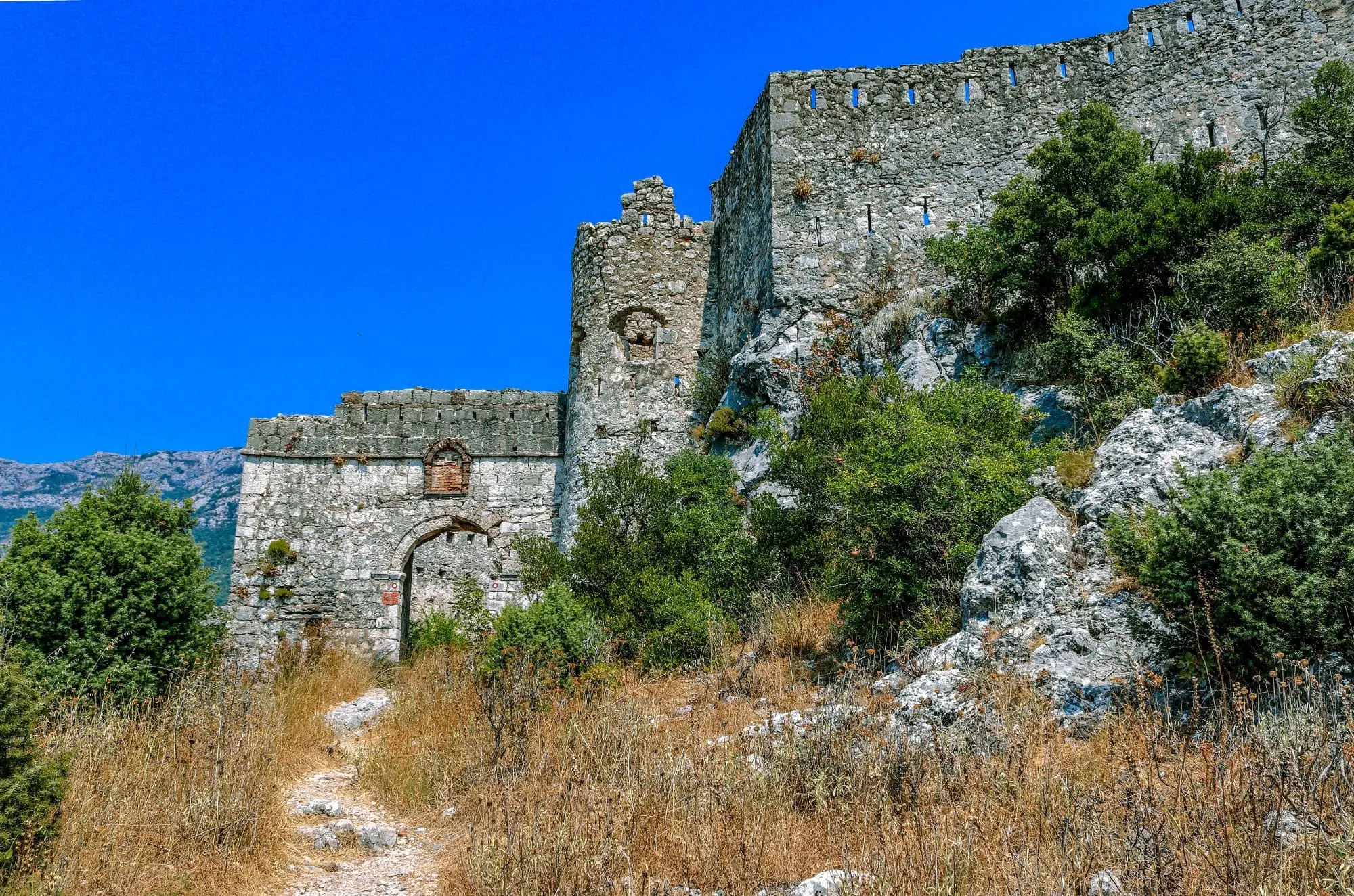
Haj Nehaj, Sutomore, Photo: Victoriel, Depositphotos
Walls of the Old Bar
At the foot of Mount Rumija, the Old Bar guards its ancient walls that have seen empires rise and fall. Byzantine mosaics, Turkish fountains, and Venetian arches within its ramparts tell of a history that is not read but felt. At dusk, when the lights from the sea meet the stone silhouettes of the town, Bar comes alive as a stunning stage of time.
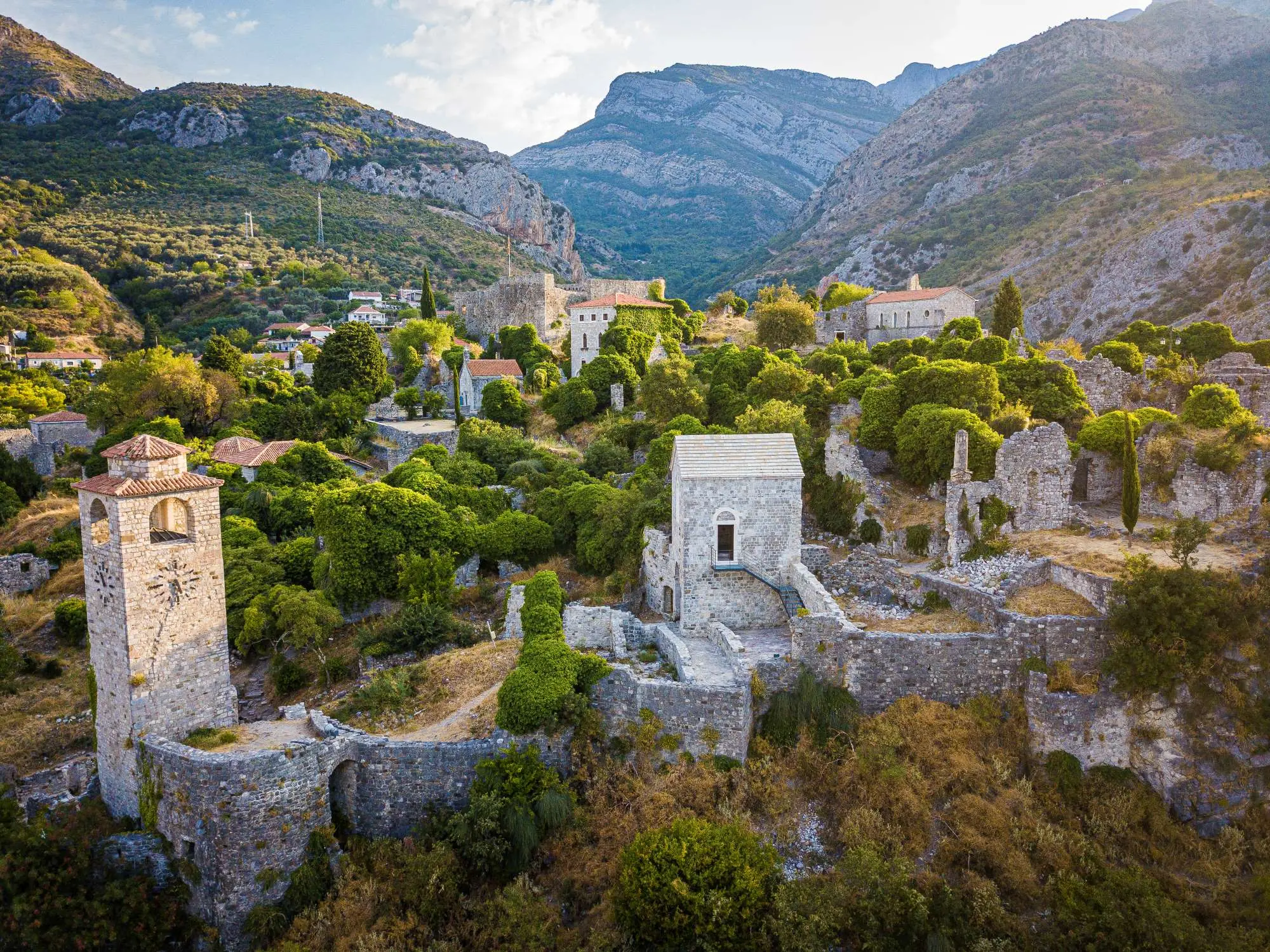
Old Town Bar, Photo: VejrikLukas, Depositphotos
Kosmač Fortress (above Budva)
High above Budva, the Kosmač Fortress dominates the landscape. Built during the Austro-Hungarian era, with views of both the sea and the mountains, it now stands abandoned, yet its massive walls still bear witness to a time when every rock had strategic value.
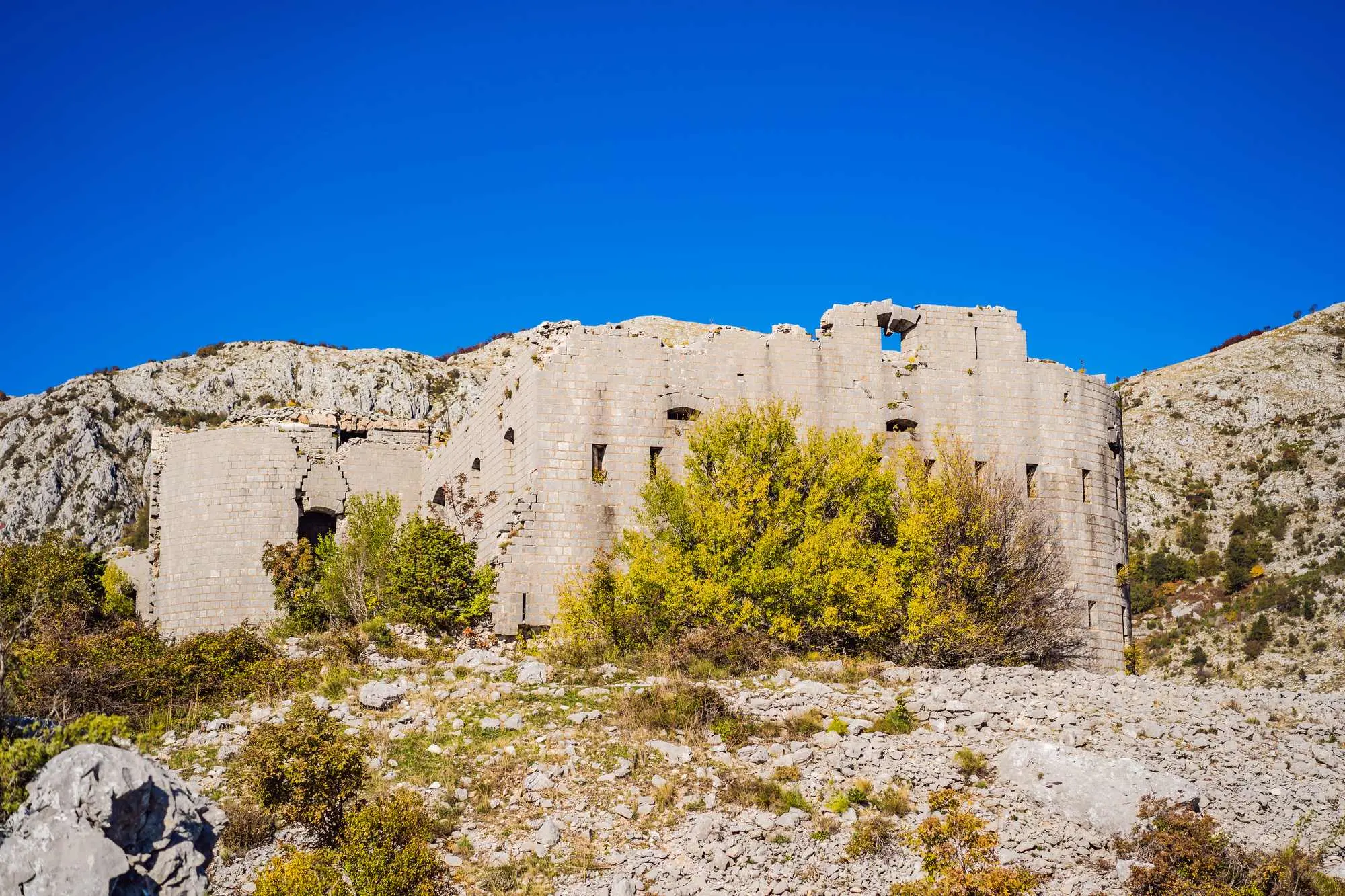
Kosmač, Photo: galitskaya Depositphotos
Lesendro Fortress (Skadar Lake)
On the water, among the reeds and birds of Skadar Lake, rises Lesendro, a fortress built by Petar II Petrović Njegoš. It served as a defensive outpost against the Ottomans and as a symbol of Montenegrin resistance. Its ruins still preserve the spirit of an era when borders were drawn by swords and honor meant more than life itself.

Lesendro Fortress, Lake Skadar, Photo: Adria.fun
Besac Fortress (Virpazar)
Above Virpazar, the Besac Fortress overlooks the same waters from a different perspective. Built during the Ottoman period, later restored and turned into a museum site, today it bridges the past and the present. The view from its walls stretches across the entire lake.
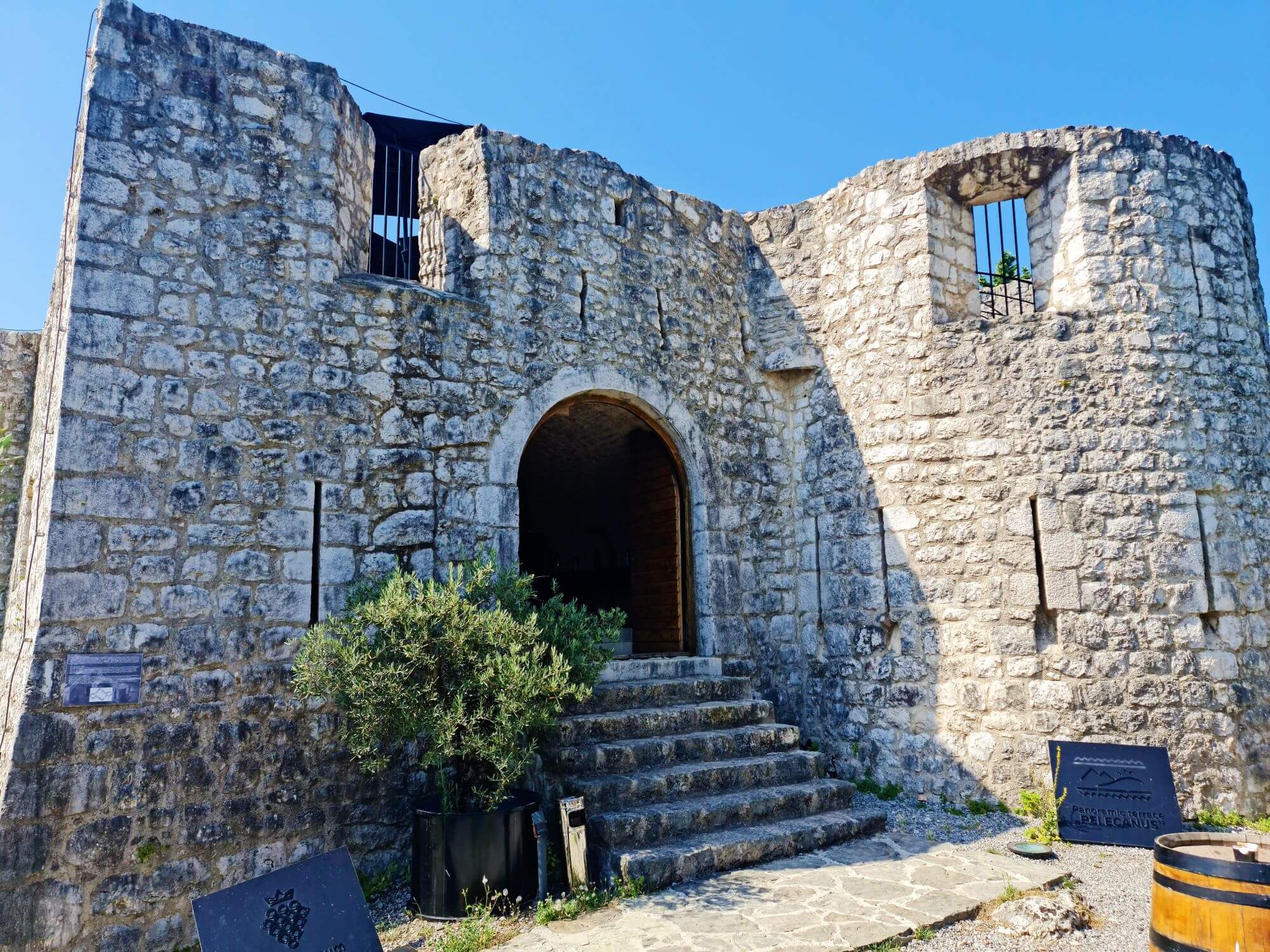
Besac Fortress, Virpazar, Photo: Adria.fun
Žabljak Crnojevića Fortress
Deeper in the heart of Montenegro, on a rocky hill above Skadar Lake, lies Žabljak Crnojevića, once the capital of the Crnojević dynasty. It was here that the fate of the land was once decided, and today its walls are overgrown with grass and fig trees. Yet they still radiate a dignity that centuries have not been able to erase.
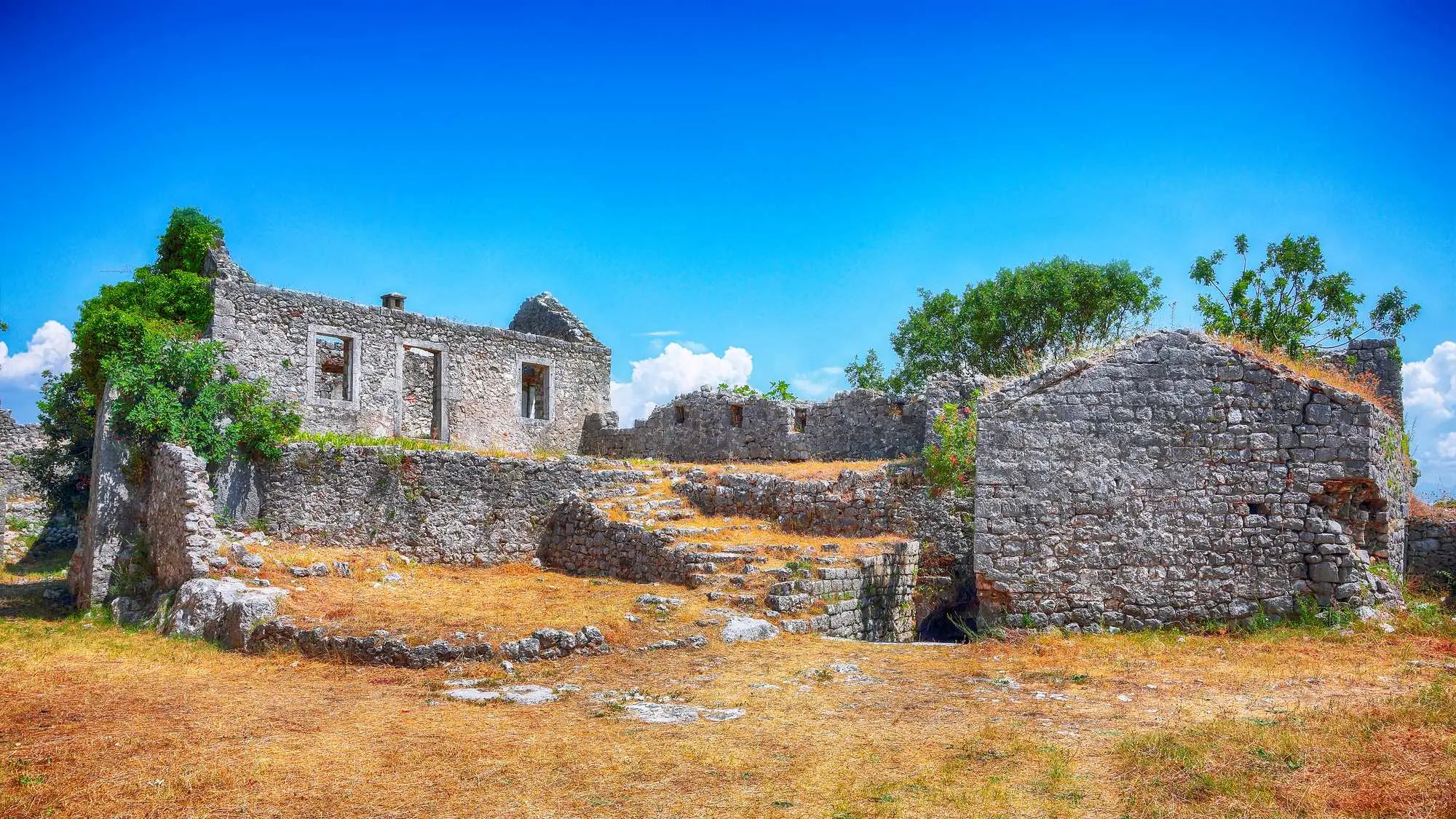
Žabljak Crnojevića, Photo: Pilat666, Depositphotos

Ahmed Taha
Peace, love and music! ☮️
Leave a Reply